

Vintage Mahogany Side Chests
Vintage mahogany side chests gather compact storage and rich timber grain in practical forms built to stand beside a bed or chair.
Vintage Mahogany Side Chests
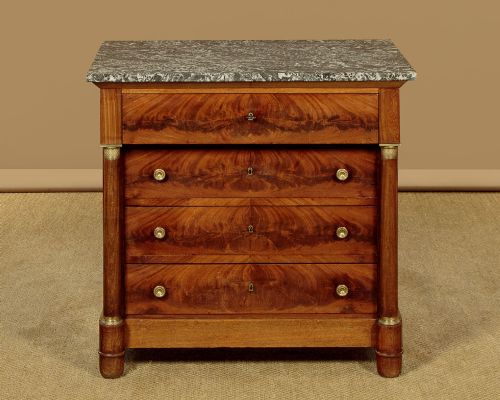
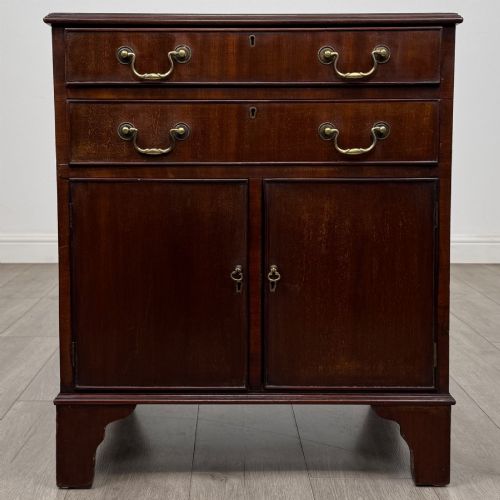
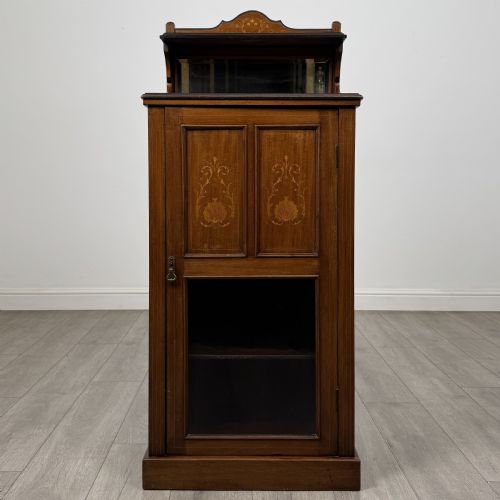
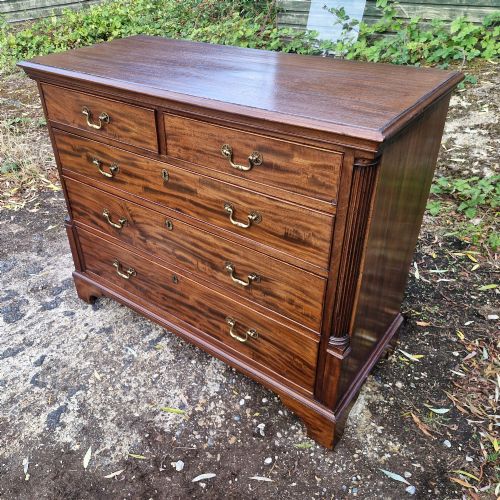
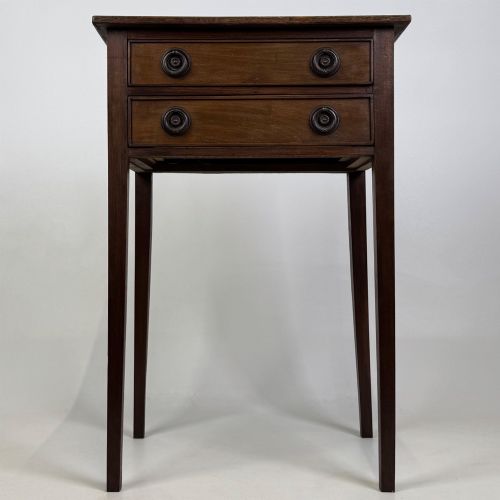
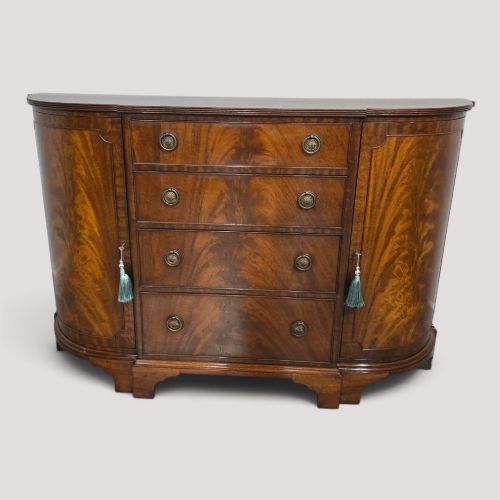
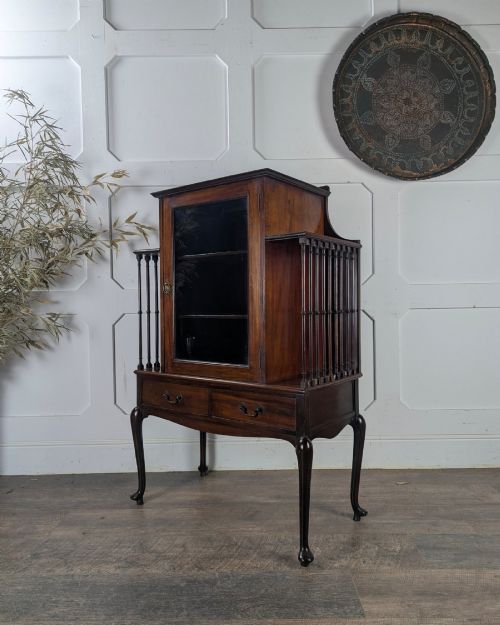
Vintage mahogany side chests encompass a variety of compact case furniture designed for domestic storage alongside beds and seating, spanning bedside cabinets, music cabinets, and small chests of drawers. You will frequently encounter Edwardian and Victorian pieces alongside Georgian and twentieth-century interpretations, showing how makers adapted the form across changing decades.
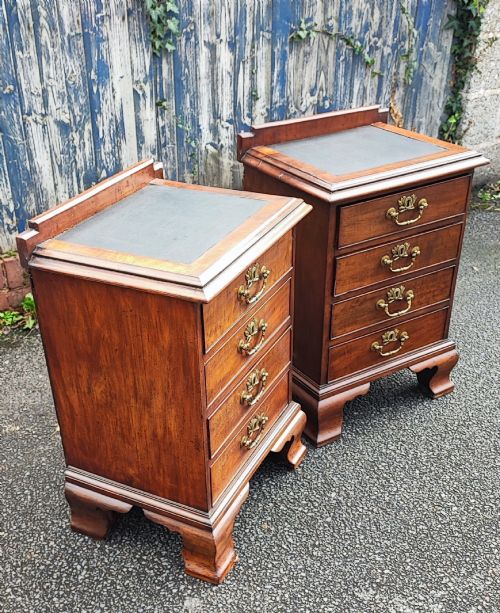
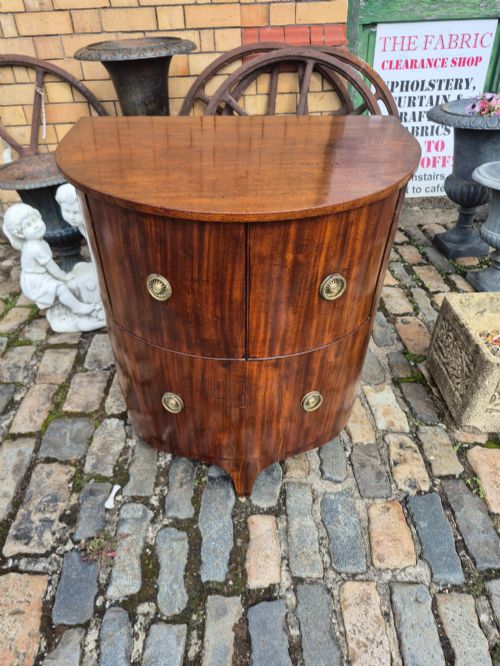
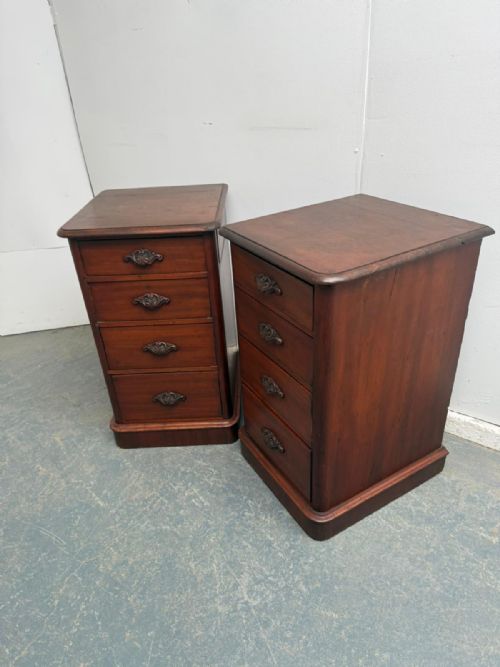
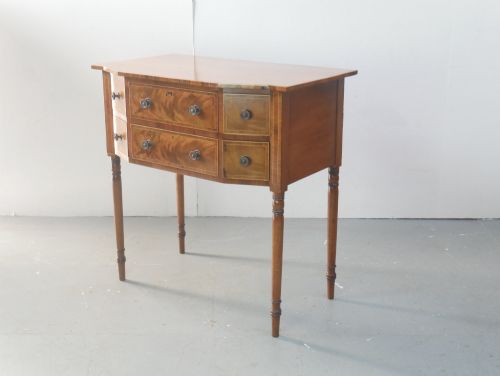
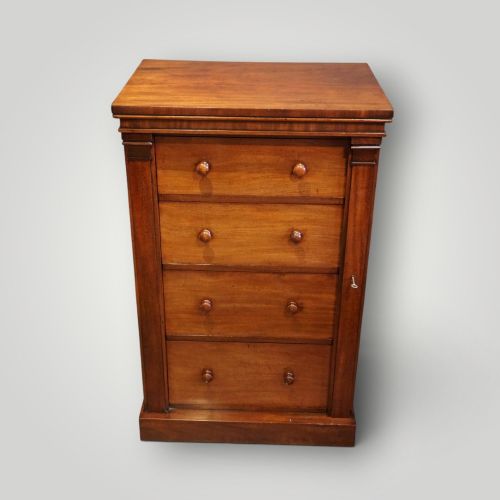
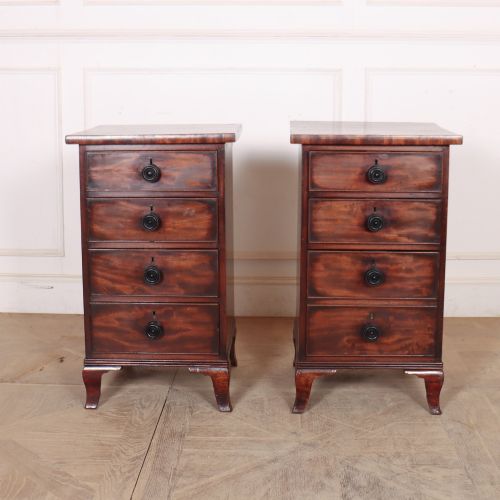
The selection ranges from narrow Wellington chests and serpentine commodes to low bedside tables and drop-flap cabinets. Many pieces arrive in pairs, reflecting how bedrooms were furnished with matching bedside storage during the nineteenth and early twentieth centuries.
Materials and Construction Methods
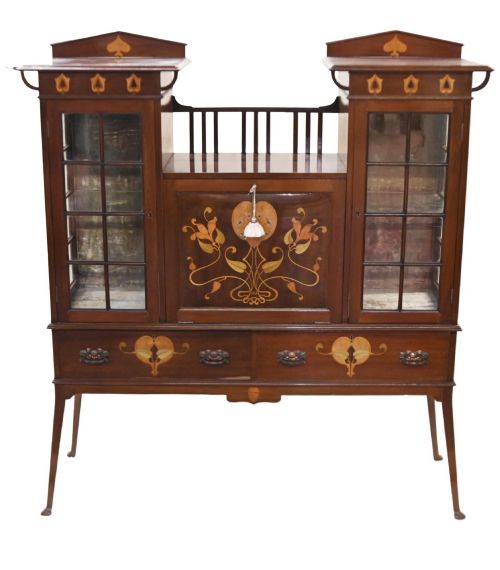
Cabinet makers utilised solid mahogany and applied flame mahogany veneer over secondary timbers to create rich, figured surfaces. Workshops incorporated satinwood inlay, marquetry, and brass fittings such as handles and mounts to add decorative contrast.
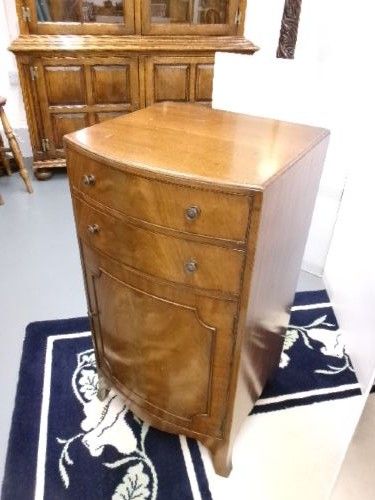
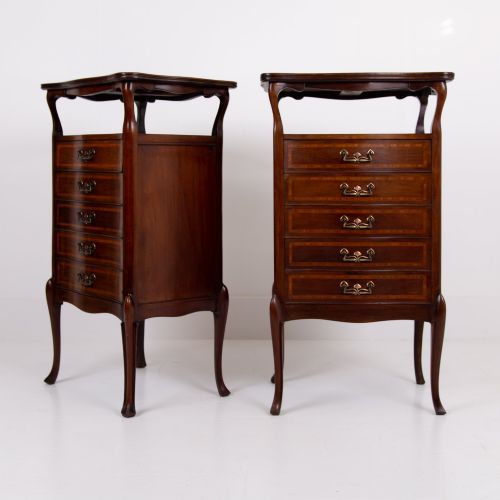
Structural variety includes curved bowfronts, serpentine shapes, and specialised internal configurations like hinged falls, drop flaps, and multiple shallow drawers intended for sheet music or small domestic items.
Vintage Mahogany Side Chests Retail Price Guide 2026
Typical asking prices for vintage mahogany side chests among the pieces listed under this phrase on Sellingantiques today, from the lower quarter to the upper quarter. They describe what is for sale here now, not the wider market.
Music cabinets originally built for Victorian sheet music now happily store tablets, charging cables, and modern clutter.
Distinguishing Quality in Timber and Execution
Quality rests upon the selection of timber, particularly the depth and movement found in flame mahogany veneers and the precision of contrasting satinwood inlay. Finer examples display thoughtful grain matching across drawer fronts and harmonious proportions that suit domestic spaces.
The execution of secondary details, such as solid brass hardware, neat dovetail joints, and well-fitted internal drawers or fall-fronts, separates standard commercial items from superior workshop productions.
Walker and Hall·Keeble London·Whytock and Reid
The Vintage Mahogany Side Chests Glossary
- Mahogany
- A durable tropical hardwood prized for its deep reddish-brown colour and stable working properties. It forms the primary structural and visual material across these cabinets.
- Wellington Chest
- A tall, narrow chest of drawers secured by a hinged vertical locking bar on one side. This design locks all drawers simultaneously with a single key.
- Flame Mahogany
- A veneer cut from the branch junctions of the mahogany tree to produce a dramatic, flickering flame-like pattern. It was selected for high-status drawer fronts and top panels.
- Satinwood Inlay
- Contrasting light yellow timber inserted into recesses within the mahogany surface to form geometric or floral borders. It is characteristic of Edwardian and Sheraton revival work.
- Serpentine
- A front profile that curves outward in the centre and inward toward the sides in a gentle 'S' shape. It requires skilled carpentry to execute cleanly on small chests.
Vintage Mahogany Side Chests: Frequently Asked Questions
What distinguishes a Wellington chest from a standard small chest?
A Wellington chest is notably taller and narrower than a standard chest of drawers, featuring seven or more shallow drawers secured by a locking side flap. This distinctive locking mechanism keeps the entire stack secure.
They were originally designed to hold linen or papers securely in a study or bedroom without taking up excessive floor space.
How do I identify an Edwardian music cabinet?
Edwardian music cabinets typically feature drop-flap doors or multiple shallow internal shelves specifically proportioned for holding sheet music. They often incorporate delicate satinwood inlay and slender legs.
Many examples date from the period around nineteen hundred to nineteen ten, reflecting the popularity of parlour music before the widespread use of recorded sound.
Are these chests generally found as single pieces or pairs?
While many chests of drawers and music cabinets were built as standalone items, bedside chests and lamp tables frequently appear as matched pairs. Finding a pair depends on whether the original bedroom suite remained together over the decades.
Single side chests work well independently as lamp tables or small hall storage units.
How should I care for mahogany veneer surfaces?
Mahogany benefits from minimal intervention, requiring only a soft, dry cloth for regular dusting and occasional treatment with quality beeswax to nourish the timber. Avoid placing pieces in direct sunlight or near heat sources to protect the veneer.
Proper humidity control prevents the wood and veneer from drying out or splitting over time.