





Late Victorian Bedside Pair
A late victorian bedside pair brings symmetry to a bedroom with practical storage and period character.
Late Victorian Bedside Pair
A late victorian bedside pair consists of matching dual furniture pieces designed for placement beside a bed, originating from the nineteenth century around eighteen eighty to eighteen ninety. These items serve to hold bedside necessities while anchoring the room's decor.
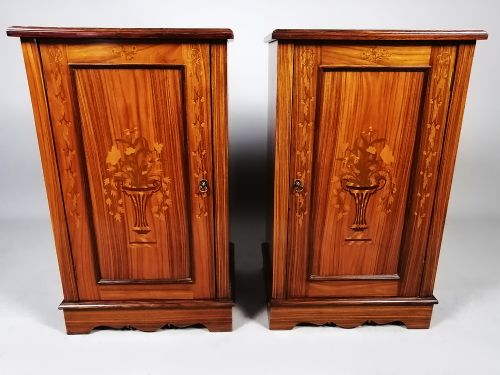
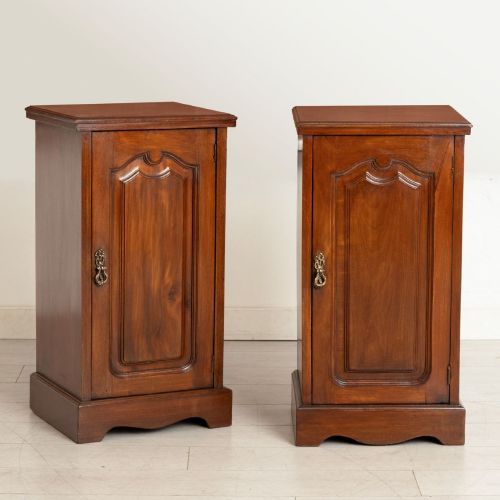
The selection ranges widely across forms, taking the shape of enclosed bedside cabinets, drawer chests, lockers, and open pedestals. Walnut, mahogany, rosewood, and ash provide the primary structural carcasses for these dual pieces.
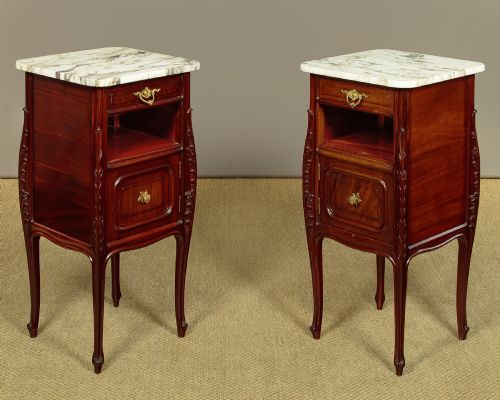
Stylistic expressions span simple aesthetic movement designs to elaborate french revival and louis xiv styles featuring marble tops. Buyers frequently encounter pieces incorporating marquetry or inlaid timbers alongside standard timber constructions.
How they were made
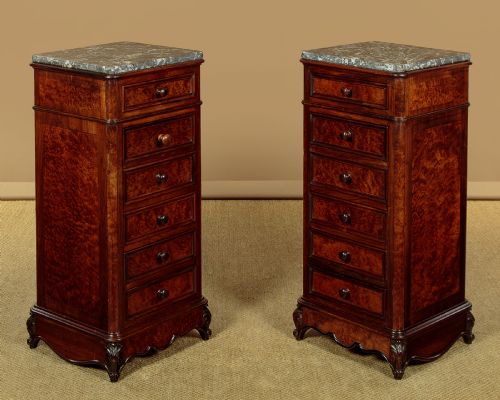
Cabinet makers utilised dense hardwoods including mahogany, walnut, and rosewood, frequently incorporating burr walnut, amboyna, or satin birch veneers for decorative surfaces. These timbers provided sturdy frames capable of supporting marble tops and heavy use.
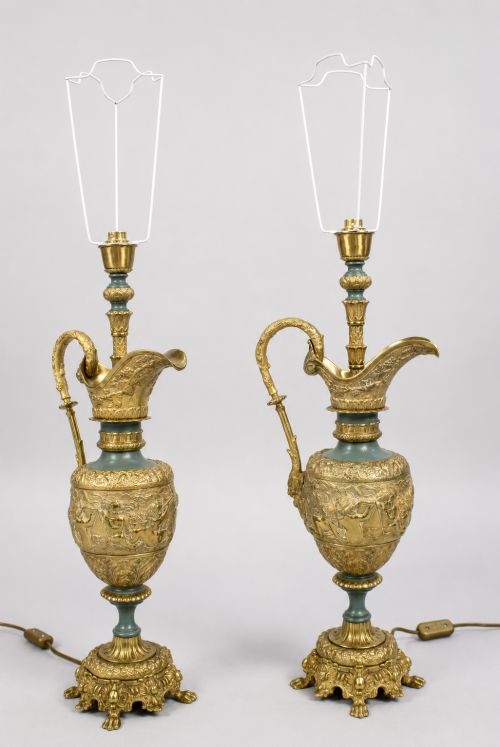
Construction techniques relied on traditional joinery methods combined with marquetry and parquetry inlay work. Brass mounts, handles, and gilt bronze details often finished the pieces, alongside porcelain panels found on associated lamp forms.
Late Victorian Bedside Pair Retail Price Guide 2026
Typical asking prices for late victorian bedside pair among the pieces listed under this phrase on Sellingantiques today, from the lower quarter to the upper quarter. They describe what is for sale here now, not the wider market.
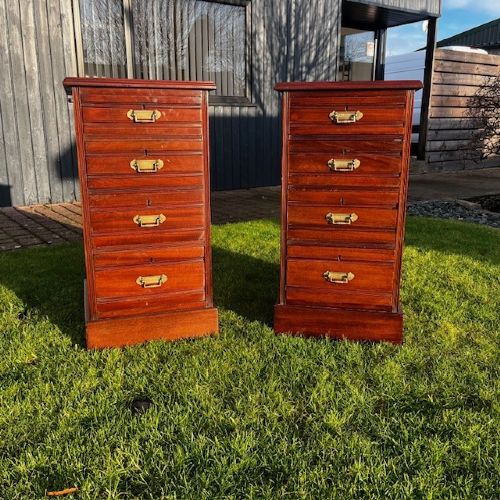
Listed designs encompass aesthetic movement chests, louis xiv style cabinets, and traditional mahogany drawers.
What varies in quality
Quality rests upon the selection of timber veneers and the intricacy of inlay work, such as marquetry or fine grain matching in burr walnut. Superior examples display careful timber selection across both matching items to ensure even figuring.
The incorporation of materials like inset marble tops, porcelain plaques, or hand-carved details elevates certain pairs above standard functional lockers. Structural integrity in the drawers and door hinges determines the lasting merit of each individual cabinet.
James Shoolbred·Maples
The Late Victorian Bedside Pair Glossary
- Burr walnut
- A figured timber grain prized for its swirling patterns. Cabinet makers utilised this veneer on prominent drawer fronts and cupboard doors.
- Marquetry
- The art of applying pieces of veneer to a structure to form decorative patterns. This technique frequently appears on rosewood and walnut surfaces.
- Bedside locker
- A Victorian term for a small bedside cabinet with a door enclosing a shelf. These items kept chamber pots or personal items concealed.
- Aesthetic movement
- A late nineteenth century design style emphasising art for art's sake. Pieces from this movement often show simpler lines and Japanese influences.
Late Victorian Bedside Pair: Frequently Asked Questions
What is a late victorian bedside pair?
A late victorian bedside pair comprises two matching small cabinets, chests, or lockers produced during the final decades of the nineteenth century.
These items were constructed to sit symmetrically on either side of a bed to hold lamps and personal items.
How were bedside cabinets used originally?
Original usage involved storing chamber pots, night clothes, and personal belongings within an enclosed cupboard or drawer.
The top surface provided a convenient spot for a candlestick, oil lamp, or glass of water during the night.
What woods should I look for?
Common timbers include mahogany, walnut, rosewood, and ash, often enhanced with burr walnut or amboyna veneers.
Some examples also feature decorative additions such as marble tops or porcelain inserts.
How do I identify french revival styles?
French revival pieces draw inspiration from louis xiv and louis xv aesthetics, showing curved lines and ornate mounts.
These items frequently include marble tops and elaborate gilt bronze or brass hardware.