

Vintage Mahogany Plant Stand
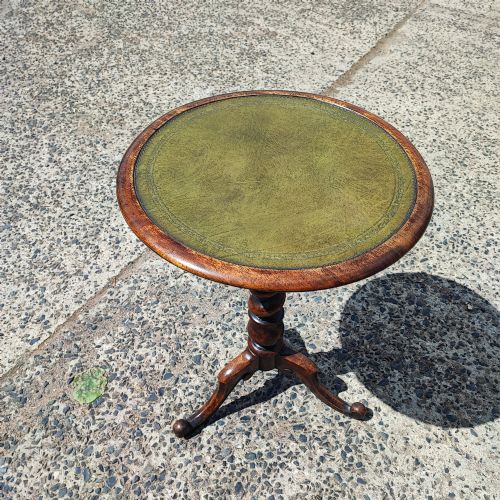
A vintage mahogany plant stand brings architectural height and rich timber grain to a corner that needs a focal point.
Vintage Mahogany Plant Stand
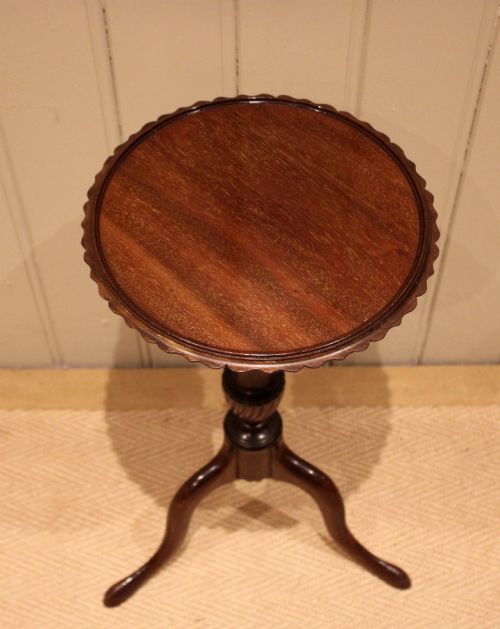
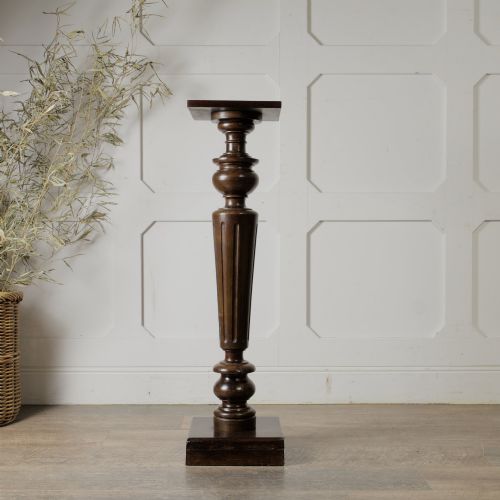
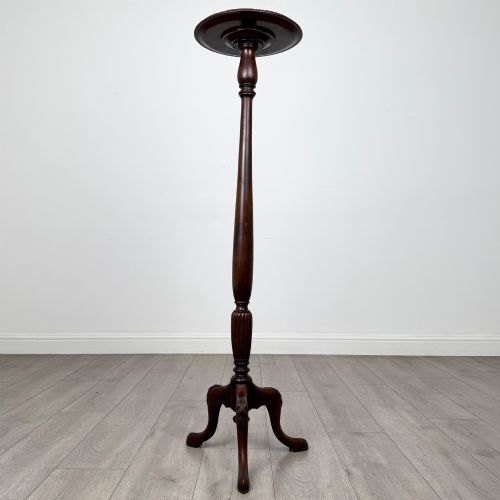
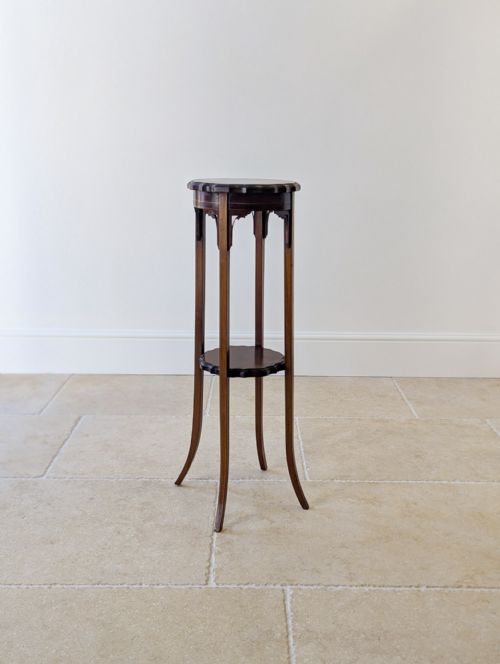
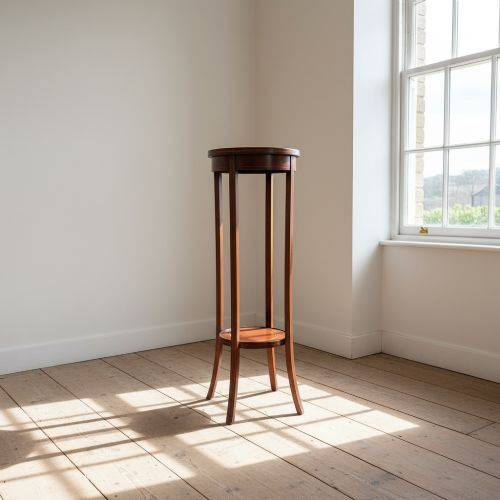
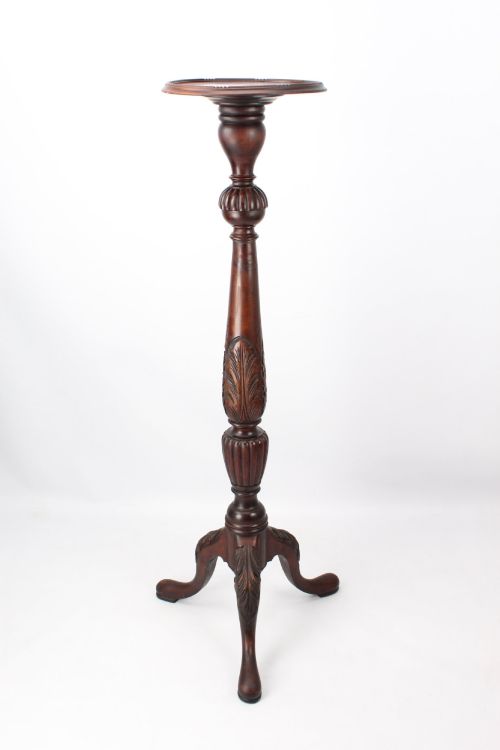
A vintage mahogany plant stand is a tall, elevated surface designed to display ferns, flowers, or lamps, appearing frequently in Edwardian and Victorian forms across this selection.
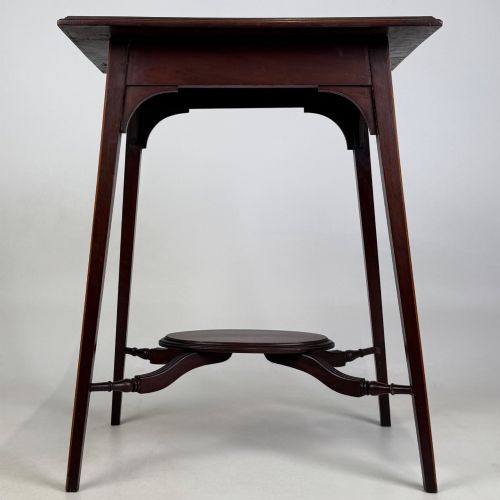
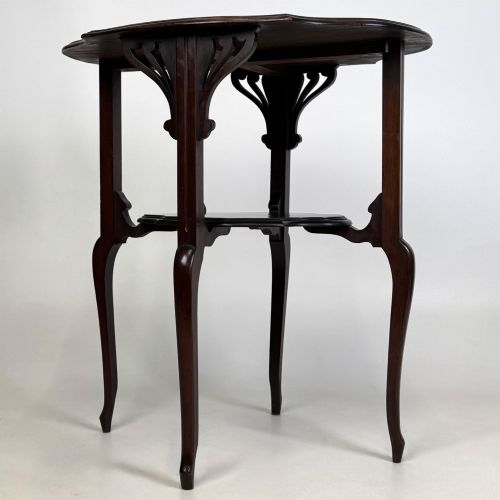
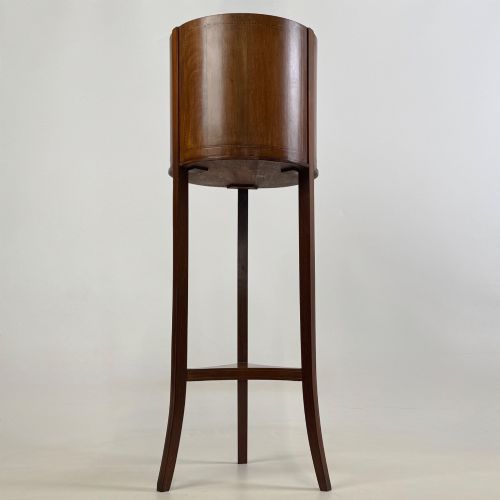
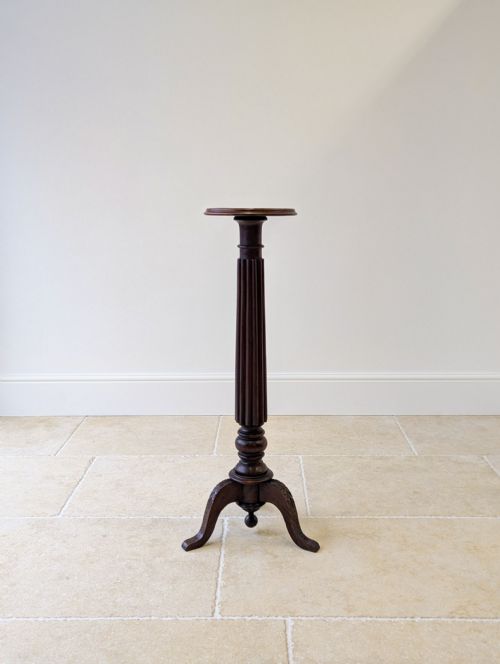
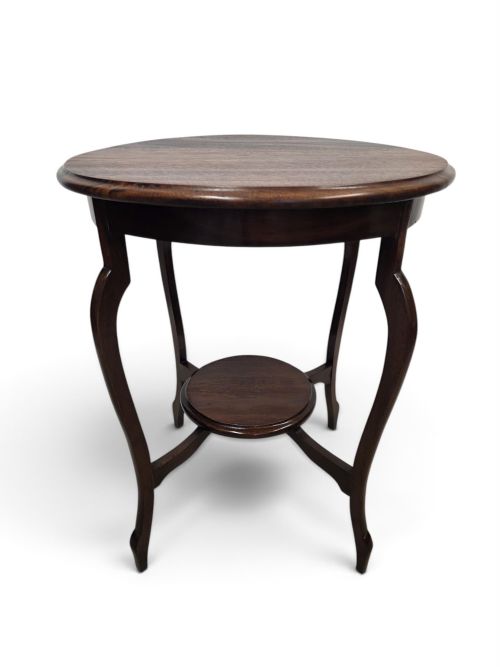
Makers shaped these supports as slender torchères, circular columns, and multi-tiered occasional tables intended to occupy unused corners or frame windows.
The objects span periods from the nineteenth century through the 1930s, showing how domestic display habits shifted from heavy Victorian carved timber to lighter Edwardian inlay.
Materials and construction methods
Cabinet makers utilised solid and veneered mahogany, frequently turning timber on a lathe to create slender, fluted columns and sturdy central pillars.
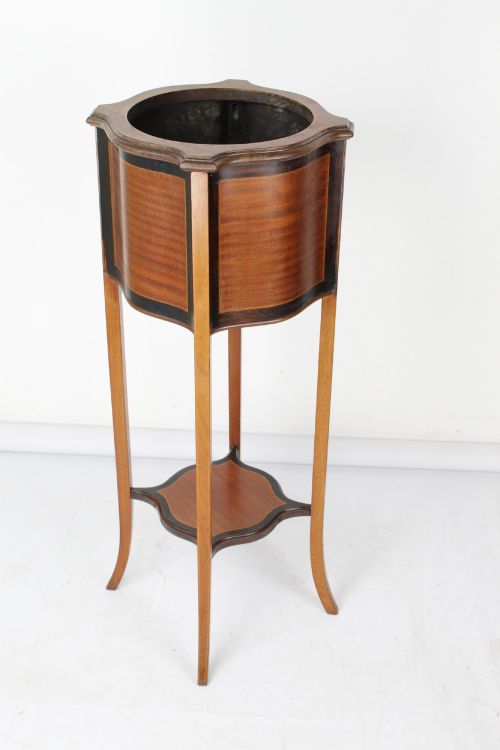
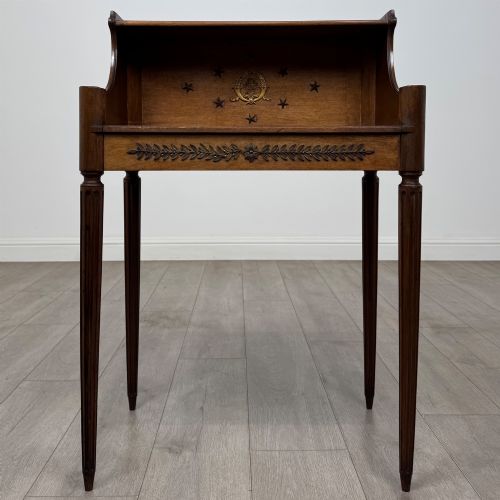
Surface decoration relies on contrasting boxwood and satinwood inlay, alongside inset marble tops and gilded brass details that provide textural variation.
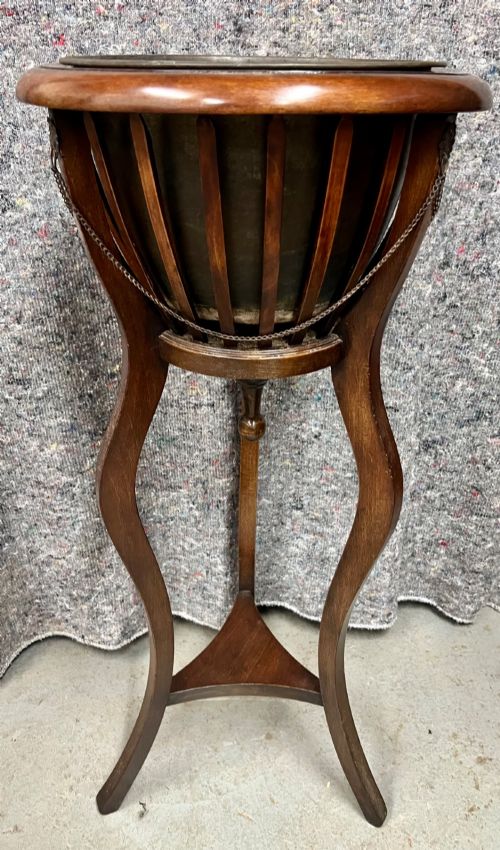
Certain tall stands double as indoor garden architecture, designed specifically to keep damp terracotta pots safely away from polished parlour carpets.
Distinctions in construction and design
Quality rests in the stability of the central stem and the precision of the turned joints, ensuring a tall pedestal supports a heavy ceramic pot without sway.
Refined examples display crisp boxwood stringing, delicate floral marquetry, or carved capitals that elevate a utilitarian stand into a decorative centrepiece.
Druce And Co London·Shapland And Petter
The Vintage Mahogany Plant Stand Glossary
- Torchère
- A tall, slender stand designed specifically to hold a light or a decorative vessel. These pieces use small top surfaces and heavy weighted bases for balance.
- Jardinière
- A decorative container for plants, which sits atop or integrates directly into the stand structure. The term often describes stands with sunken metal liners.
- Satinwood
- A pale, lustrous timber from tropical trees utilised for contrasting stringing and geometric inlay. Craftsmen set it into dark mahogany to create crisp borders.
- Turned
- Shaped on a rotating lathe using cutting tools to produce symmetrical rounded components like columns and pedestals. This technique creates smooth, repeating profiles along the vertical support.
Vintage Mahogany Plant Stand: Frequently Asked Questions
What is a plant stand used for?
These elevated surfaces lift potted ferns and trailing foliage to catch natural light in domestic rooms.
They also serve as display columns for small sculptures, lamps, and decorative ceramics.
How do I tell Edwardian from Victorian stands?
Victorian examples lean towards heavy carved timber, robust proportions, and substantial marble tops.
Edwardian pieces favour lighter frames, slender turned columns, and delicate boxwood inlay.
Can these stands hold heavy pots?
Solid mahogany torchères and turned plinths provide substantial weight distribution for dense ceramic vessels.
Slender occasional tables require careful weight management to ensure stability on uneven floorboards.
Where should I place a torchère?
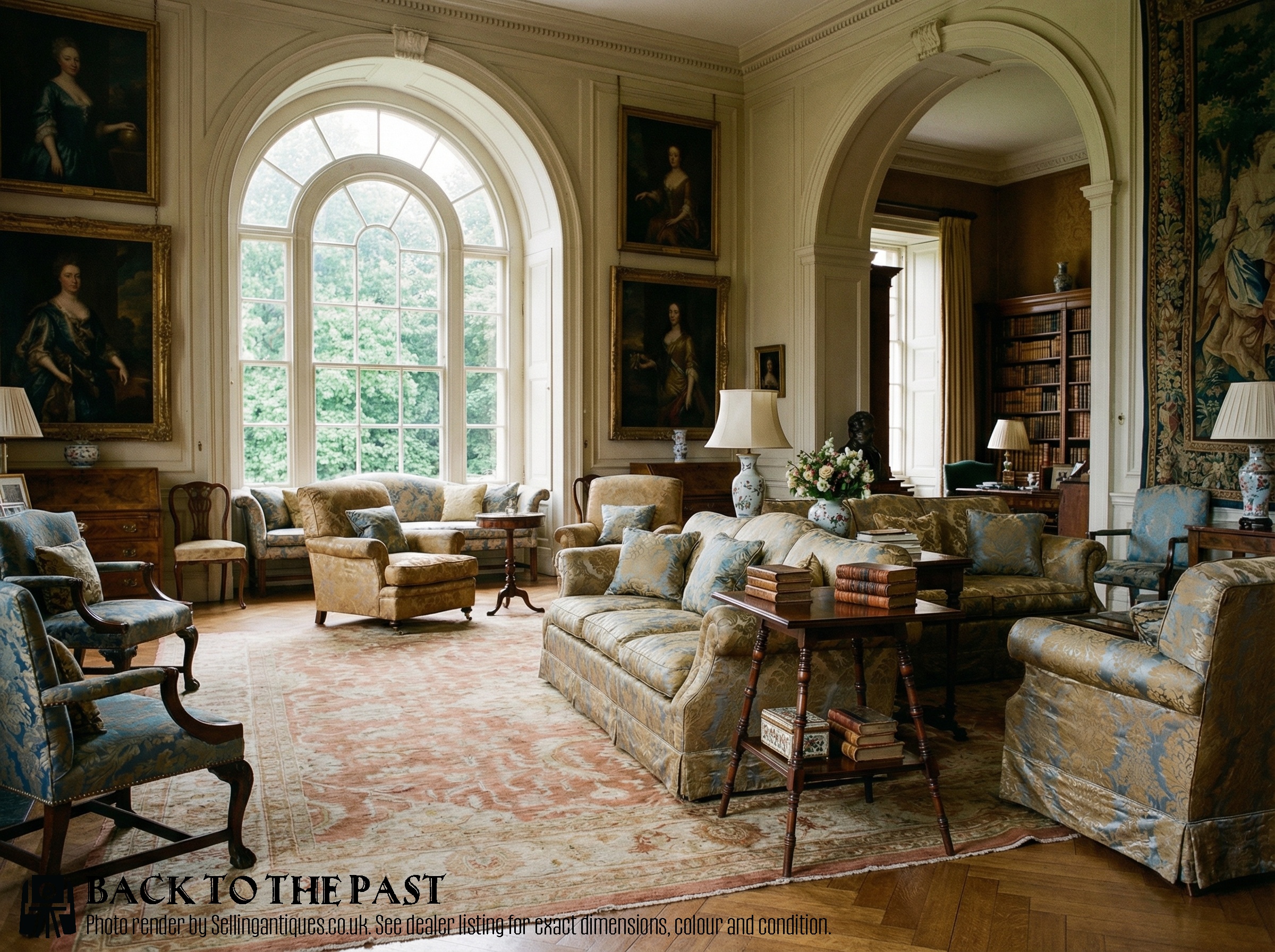
Tall columnar stands perform best in empty corners, framing doorways or flanking large pieces of furniture.
Their narrow footprint allows them to occupy tight spaces without cluttering a room layout.