




Vintage Mahogany Paper Rack
A vintage mahogany paper rack organises loose sheets and folios with practical division.
Vintage Mahogany Paper Rack
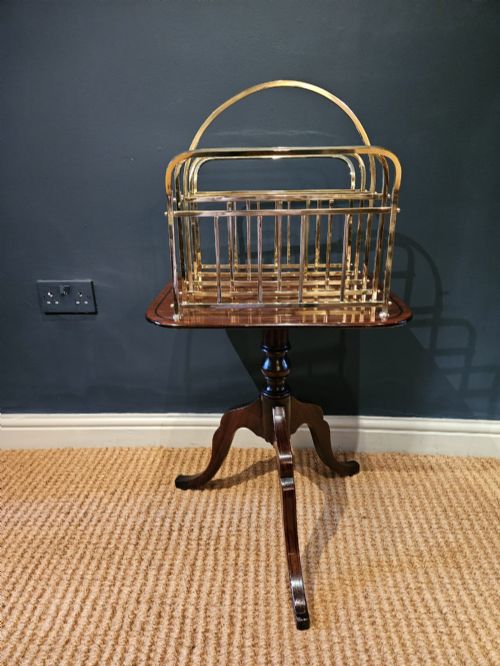
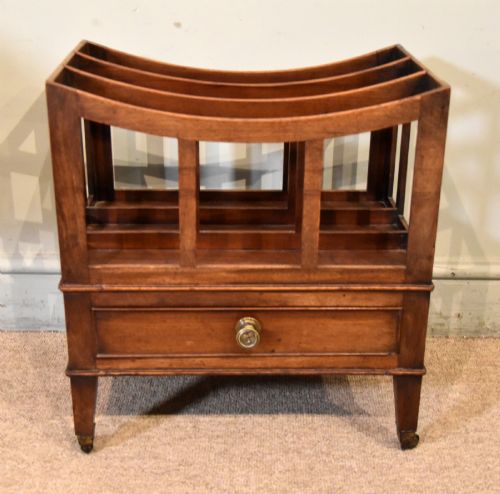
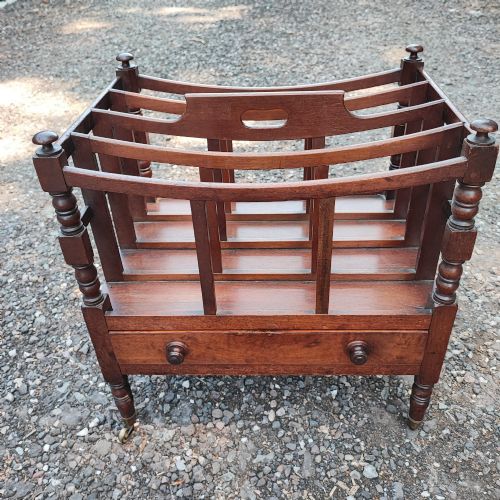
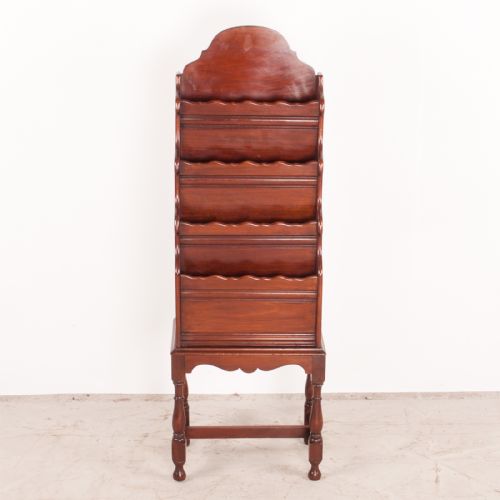
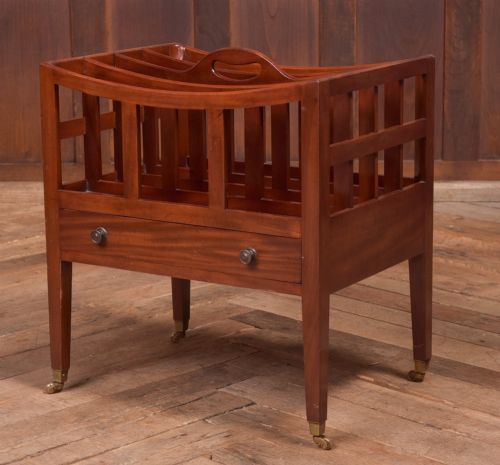
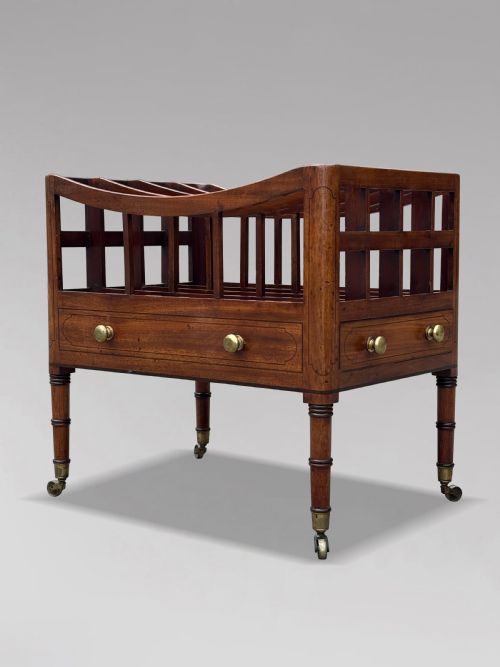
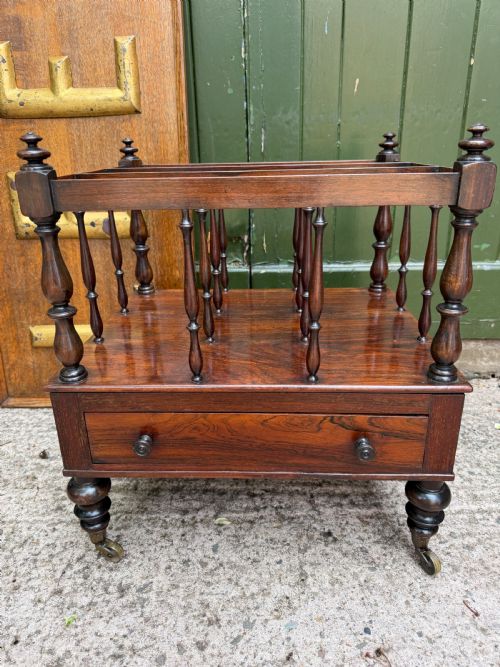
A vintage mahogany paper rack encompasses distinct forms designed for sorting folios, sheets and periodicals across domestic and office interiors. The listings show forms ranging from traditional canterburys and magazine racks to desk tidies, folio stands and revolving bookcases.
Buyers meet pieces spanning the 18th century through to the Edwardian period and 1920, with Georgian, Regency, William IV and Victorian eras strongly represented. These pieces serve as functional storage for papers and magazines while displaying period cabinet-making.
Materials and construction
Makers utilised solid mahogany and hardwoods, frequently incorporating rosewood, boxwood and satinwood inlay for decorative contrast. Structural stability relied on sound timber selection and traditional joinery.
Metal elements appear in brass fittings, tubular brass supports and metal wire divisions. Carved and pierced details enhance the woodwork on specific Edwardian and Victorian examples.
Vintage Mahogany Paper Rack Retail Price Guide 2026
Typical asking prices for vintage mahogany paper rack among the pieces listed under this phrase on Sellingantiques today, from the lower quarter to the upper quarter. They describe what is for sale here now, not the wider market.
Insurance agents kept order with dedicated desk tidies before paperless offices existed.
Distinctions in craftsmanship
Quality separates standard production from superior examples through the crispness of carved details, the precision of satinwood inlay and the weight of brass mounts. Finer pieces demonstrate careful timber selection with figured mahogany grains.
Structural integrity of the vertical slats, dividers and undercarriages defines durability. Well-executed joints and substantial timber thickness distinguish grand scale folio stands and country house canterburys from simpler utility items.
The Vintage Mahogany Paper Rack Glossary
- Folio stand
- A large piece designed to hold oversized books, maps or loose paper sheets upright or at an adjustable slant. These stands often appear in grand scale formats.
- Desk tidy
- A smaller tabletop organiser featuring compartments for letters, envelopes and stationery. Examples range from carved mahogany designs to insurance agent office letter organisers.
- Inlay
- A decorative technique where contrasting materials such as boxwood or satinwood are set into recesses flush with the mahogany surface. This method creates geometric or floral patterns.
- Regency
- A style period spanning the early 19th century characterised by classical revival motifs and refined proportions. Pieces from this era often display clean architectural lines.
Vintage Mahogany Paper Rack: Frequently Asked Questions
What is a canterbury?
A canterbury is a partitioned wooden stand designed to hold sheets, folios and periodicals off the floor. They typically feature multiple vertical compartments for easy sorting.
Originally developed in the Georgian period, these stands remain useful for organising contemporary magazines and papers in a living space.
How do I date a paper rack?
Dating relies on stylistic markers, construction methods and timber characteristics. Georgian and Regency pieces show classical proportions, while Edwardian examples often include inlaid satinwood or pierced carving.
Comparing the turning of the legs and the type of brass castors helps narrow the period of manufacture.
Where were desk tidies used?
Desk tidies served administrative functions in domestic libraries, country houses and offices. They kept letters, stationery and documents separated and accessible.
Insurance agents and clerks utilised these letter organisers to manage daily paperwork efficiently.
Can these racks hold modern magazines?
Most vintage racks and canterburys accommodate standard modern periodicals within their wooden or wire divisions. The partitioned spaces naturally separate different titles.
Grand scale folio stands offer larger capacities for oversized publications and art books.