



Vintage Mahogany Magazine Rack
A vintage mahogany magazine rack brings structured elegance to daily reading materials, combining functional division with rich cabinet-making history.
Vintage Mahogany Magazine Rack
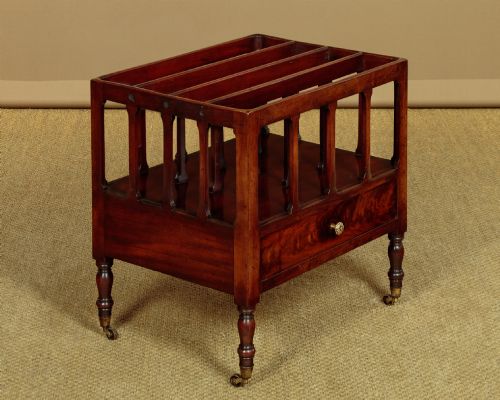
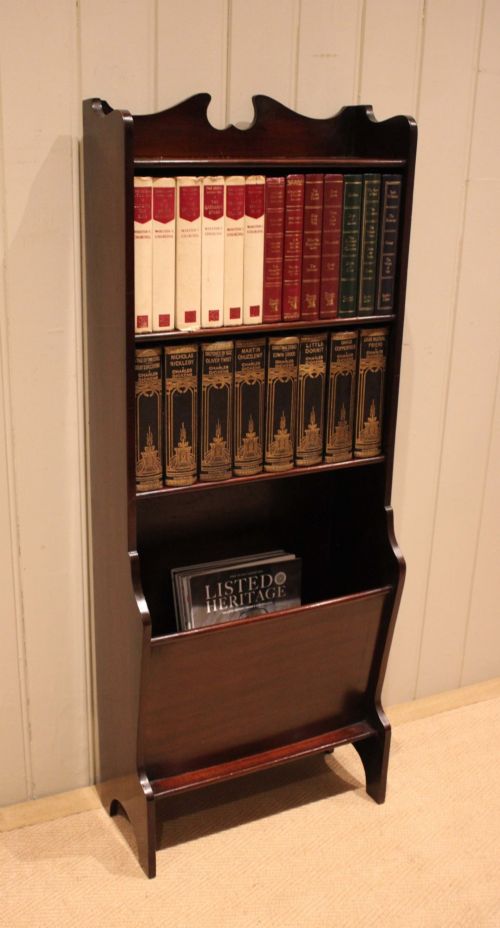
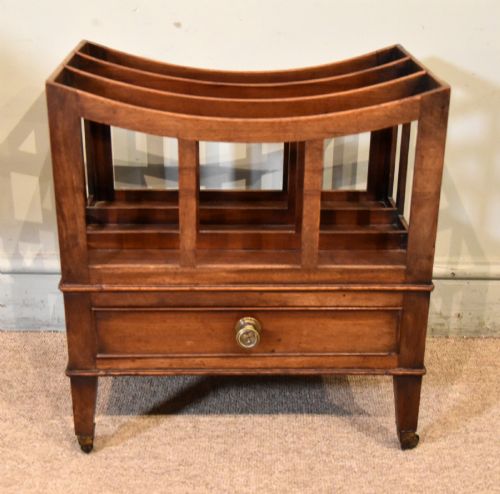
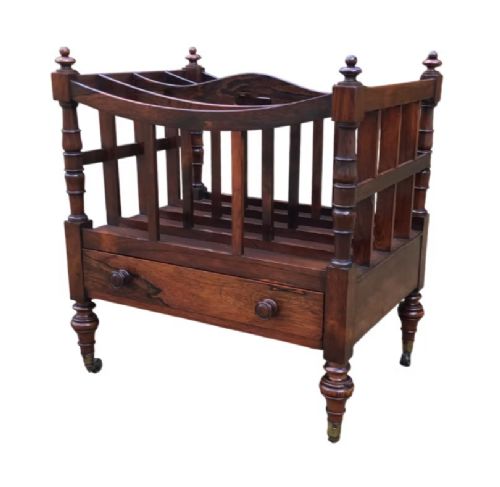
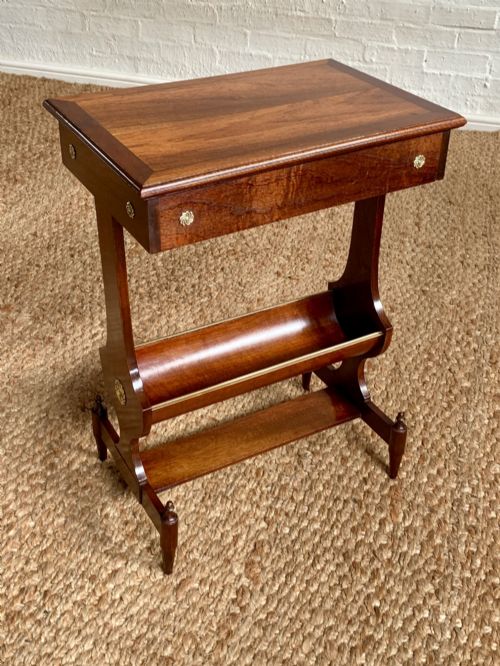
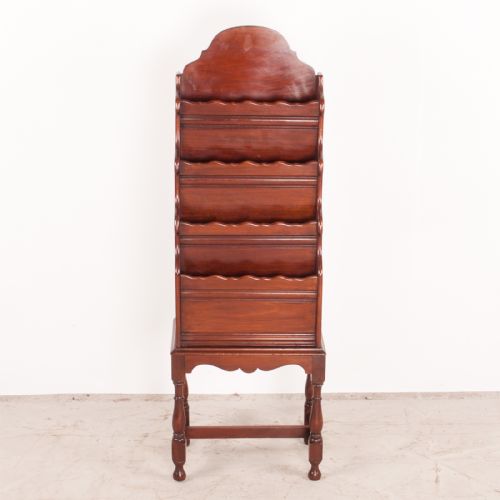
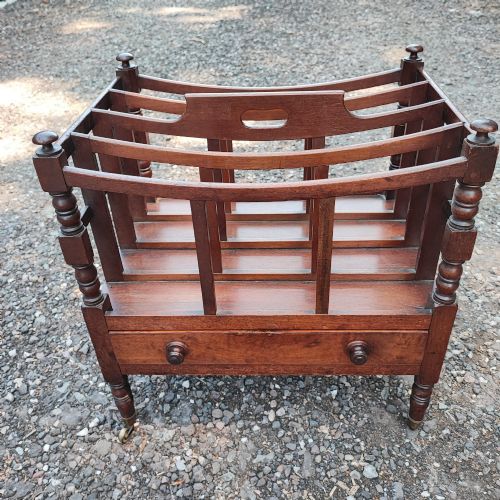
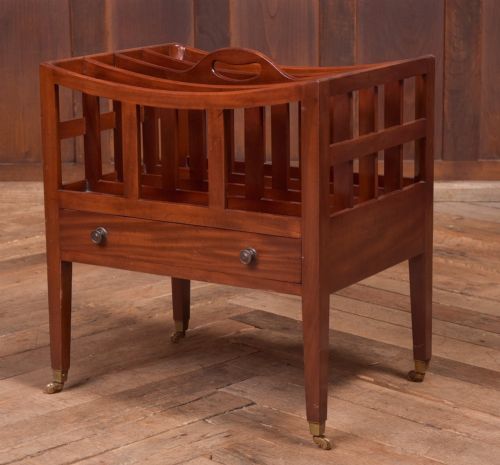
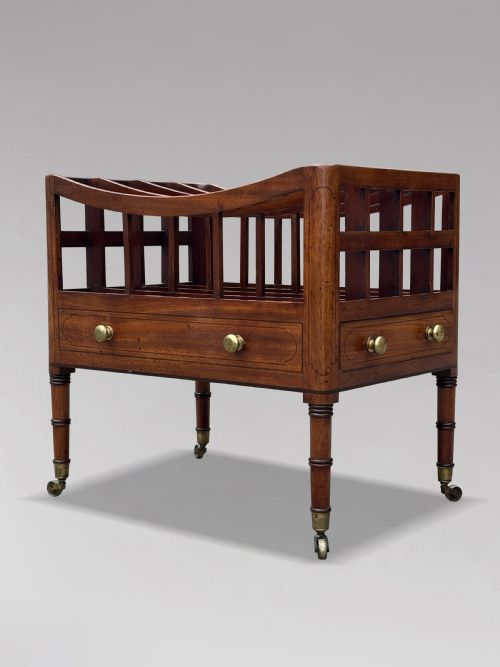
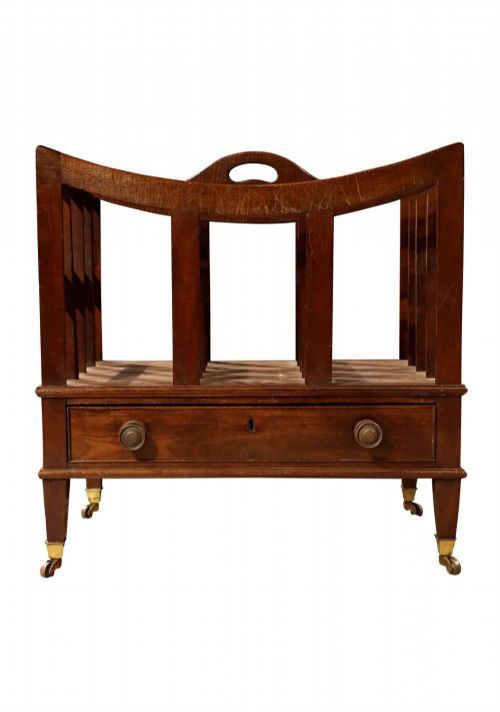
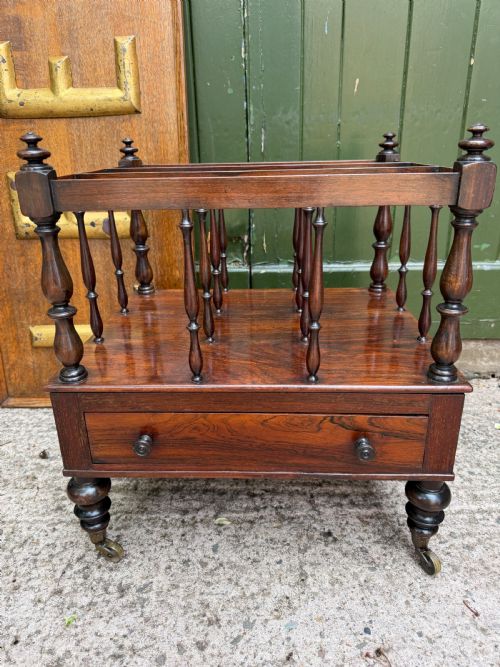
Buyers searching for a vintage mahogany magazine rack typically encounter multi-compartment pieces designed to hold periodicals, newspapers, and sheet music. These pieces span several centuries and styles, appearing frequently as traditional canterburys, freestanding book troughs, and specialised folio stands.
The selections available here range from formal George III and Regency pieces to Edwardian refinements and later 1920s iterations. Many examples incorporate divided sections, lower drawers, and turned supports fitted with castors for ease of movement across a room.
Materials and construction methods
Cabinet-makers relied heavily upon solid mahogany, Cuban mahogany, and flame mahogany veneers to build these stands, often selecting timber for its striking grain patterns. Selected examples utilise contrasting details such as satinwood inlay, rosewood accents, and brass or metal wire supports.
Structural integrity relied on joined divisions and slatted or panelled sides designed to support heavy volumes without sagging. Turning, carving, and fine joinery defined the production of these pieces across Georgian, Regency, and Edwardian workshops.
Legend connects the first canterbury to an 18th-century Archbishop of Canterbury who asked his cabinet-maker to design a tidy stand for his sheet music.
Distinctions in quality and execution
Superior examples separate themselves through the choice of timber, exhibiting intense flame figure or dense Cuban mahogany rather than plain stock. Refined carving, crisp satinwood inlay, and original brass castors elevate the standing of a piece considerably.
Construction depth also dictates worth, where integrated lower drawers operate smoothly and partitions remain robustly jointed to the frame. The fidelity of the period styling, whether strict Regency proportions or restrained Edwardian lines, determines the overall character.
The Vintage Mahogany Magazine Rack Glossary
- Folio stand
- An adjustable or fixed upright rack designed for large books, prints, and unbound papers. These items often display grand scale and sturdy timber framing.
- Flame mahogany
- A decorative veneer cut from the branch junction of the mahogany tree. The timber exhibits a distinctive, undulating pattern resembling flickering flames.
- Cuban mahogany
- A dense, heavy variant of mahogany prized for its dark colour and fine grain. Cabinet-makers used this material extensively in high-status 18th and 19th-century furniture.
- Satinwood inlay
- Contrasting blonde wood inserted into darker mahogany surfaces to create linear or geometric decorative motifs. This technique was popular during the Georgian and Edwardian periods.
Vintage Mahogany Magazine Rack: Frequently Asked Questions
What is a canterbury used for?
Originally created in the 18th century to hold sheet music near a piano or seating area, these pieces transitioned naturally into holding magazines and newspapers.
Their upright divisions keep periodicals neatly separated and upright, preventing them from curling or stacking in untidy piles on tables.
How do I date a mahogany magazine rack?
Dating relies on observing structural characteristics, timber types, and stylistic cues such as Regency curved sides or Edwardian inlay work.
Examining the construction of the base, drawer dovetails, and turned legs helps distinguish an 18th-century piece from a 1920s revival.
Can these stands support heavy books?
Most canterburys and magazine racks are built to hold lighter periodicals, sheet music, and weekly journals rather than encyclopaedias.
Book troughs and folio stands, however, are specifically engineered with heavier frames to accommodate large volumes and heavy folios securely.
Where should I place a rack in my home?
These compact pieces fit easily beside a reading chair, sofa, or desk where current reading material is frequently accessed.
Because many examples feature finished backs and castors, they can sit freestanding in the middle of a room or beside a library table.