






Vintage Mahogany Hanging Rack
These vintage mahogany hanging rack items offer practical wall-mounted storage and display space, bringing rich timber tones to hallways, kitchens, and studies.
Vintage Mahogany Hanging Rack
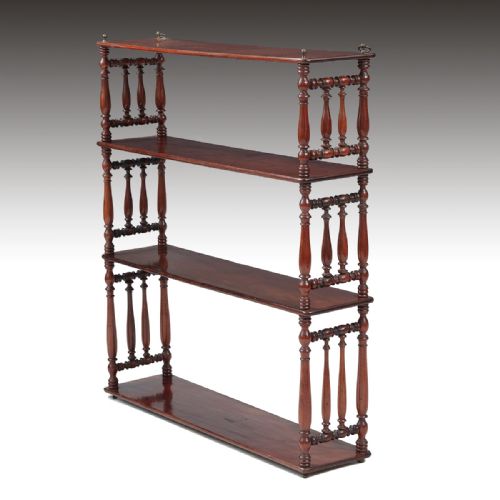
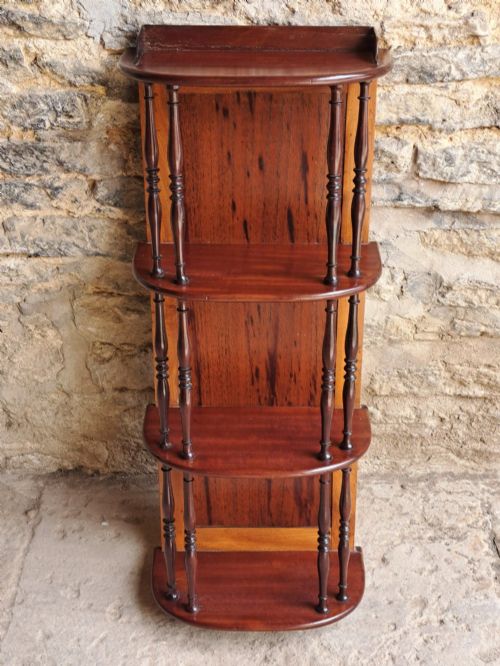
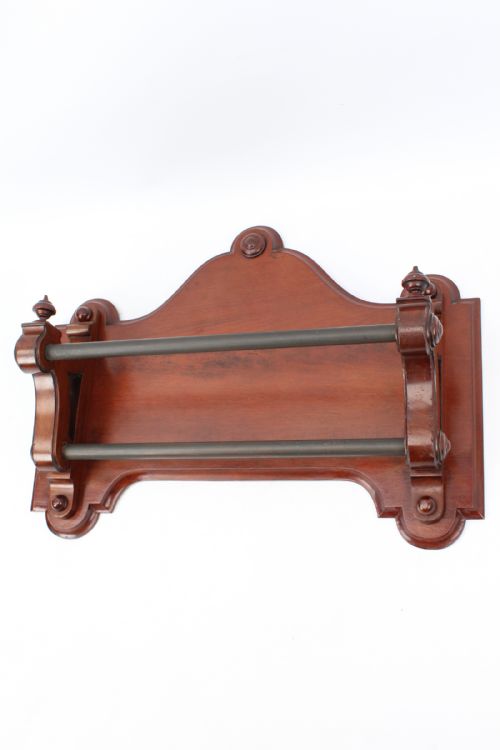
A vintage mahogany hanging rack encompasses wall shelves, coat racks, towel rails, and desktop pigeon holes originating from periods including the Georgian, Regency, Victorian, and Edwardian eras. You will most frequently encounter multi-tiered wall shelves and shelving units designed to utilise vertical wall space efficiently.
The pieces on this page span the 19th and early 20th centuries, taking various structural forms from simple two-tier boards to elaborate fretwork designs and waterfall configurations. These wall-mounted items reflect the domestic storage needs of past centuries, combining functional utility with period cabinet-making styles.
Quality and craftsmanship
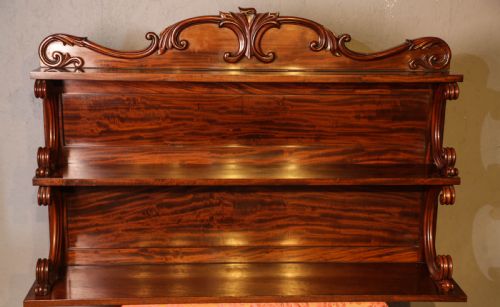
The distinction between standard domestic items and finer examples lies in the selection of timber grain, such as flame mahogany veneer, and the intricacy of decorative fretwork or brass galleries. Superior pieces display refined edge-moulding and careful attention to structural proportions.
Design complexity also separates different examples, ranging from utilitarian towel rails and coat racks to ornate Chippendale style wall shelves or French waterfall configurations. The integration of solid brass hardware and balanced tier spacing indicates higher workshop standards.
Vintage Mahogany Hanging Rack Retail Price Guide 2026
Typical asking prices for vintage mahogany hanging rack among the pieces listed under this phrase on Sellingantiques today, from the lower quarter to the upper quarter. They describe what is for sale here now, not the wider market.
Some shelves still harbour tiny ghost marks where porcelain knick-knacks rested a century ago.
The Vintage Mahogany Hanging Rack Glossary
- Mahogany
- A durable tropical hardwood prized for its deep reddish-brown colour and stable grain. It forms the primary structural material for the majority of these wall units.
- Flame mahogany veneer
- A thin slice of timber cut from the fork of the mahogany tree to create a distinctive flickering, flame-like pattern. It decorates the surface of finer display shelves.
- Brass gallery
- A small protective metal rail fitted along the edge of a shelf to prevent items from sliding off. This feature often appears on ship's shelves and superior wall units.
- Fretwork
- Openwork ornamentation cut from a thin board using a fretsaw, frequently seen in Chippendale style wall shelves. This decorative technique creates intricate geometric or floral patterns.
- Whatnot
- An open set of multi-tiered shelves designed for displaying ornaments and small objects. These freestanding or hanging units became popular during the Victorian and Edwardian periods.
Vintage Mahogany Hanging Rack: Frequently Asked Questions
What is a ship's shelf?
A ship's shelf is a maritime-inspired wall unit typically constructed with solid mahogany and fitted with a chunky brass gallery to keep items secure at sea. These robust pieces were built to withstand movement while offering practical storage in confined spaces.
The inclusion of brass galleries and heavy-duty mounting points distinguishes these nautical examples from standard domestic wall shelves. They bring a distinct maritime aesthetic to interior walls.
How do I distinguish Regency from Victorian shelves?
Regency hanging shelves tend to feature cleaner architectural lines, classical proportions, and restrained brass detailing reflecting early nineteenth-century design tastes. Victorian pieces often display heavier proportions, richer carving, and more elaborate structural configurations.
Examining the turning of the supports and the style of the brasswork helps determine the specific period of manufacture. Construction methods and timber finishing also shift subtly between the eras.
Can these racks hold heavy books?
Portable bookshelves and smaller wall-mounted shelving units are designed for modest volumes rather than heavy encyclopaedias. The structural capacity depends on the thickness of the mahogany boards and the strength of the wall fixings.
Lighter display shelves and pigeon holes suit correspondence and small ornaments rather than dense collections of books. Distributing weight evenly across the tiers helps protect the historical joinery.