

Vintage Mahogany Elbow Chairs
Vintage mahogany elbow chairs bring architectural timber and supportive seating together in libraries and studies.
Vintage Mahogany Elbow Chairs
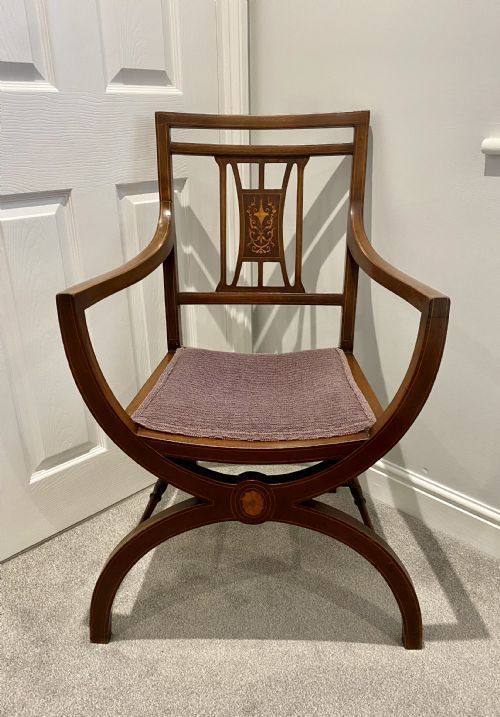
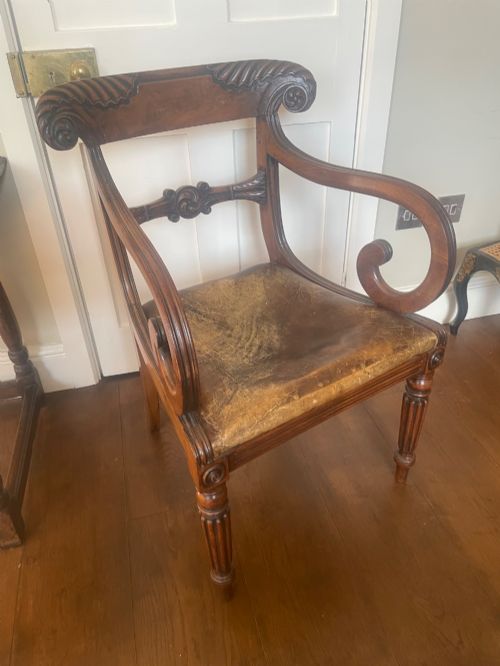
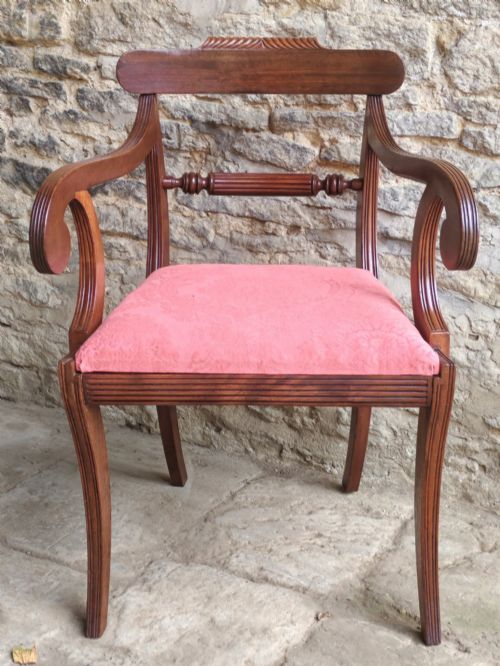
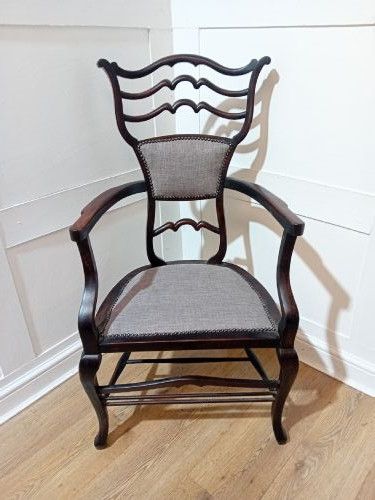
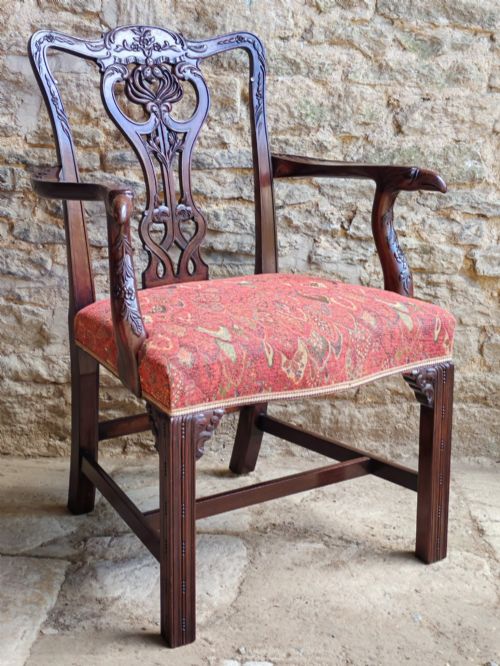
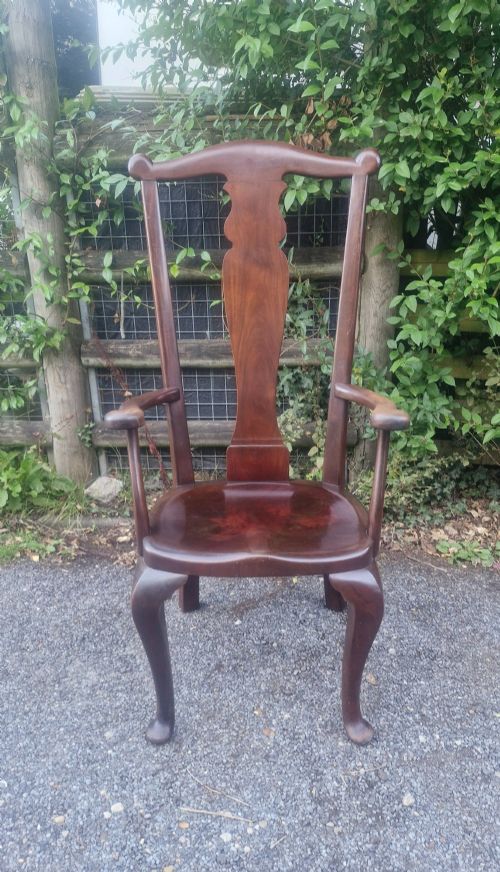
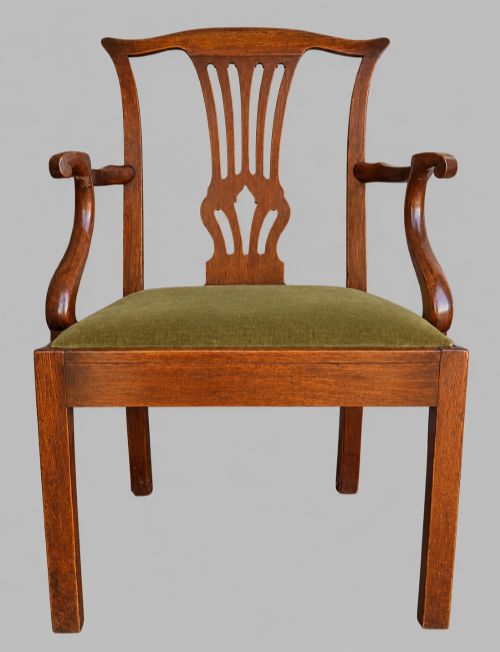
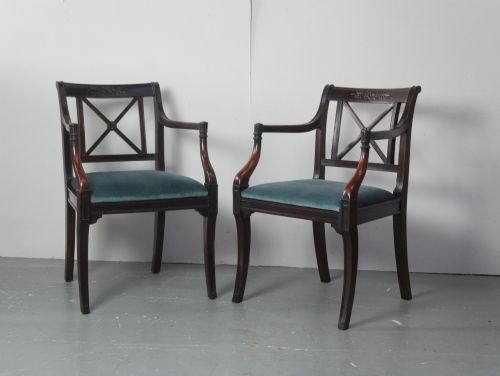
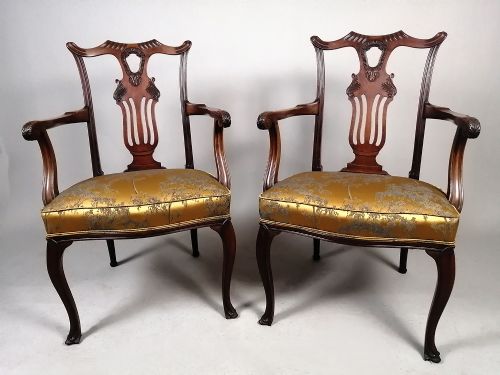
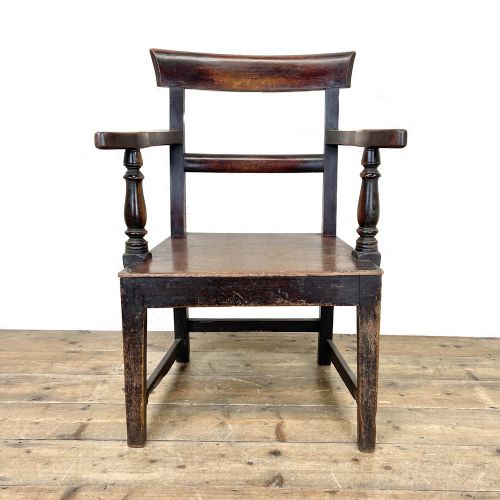
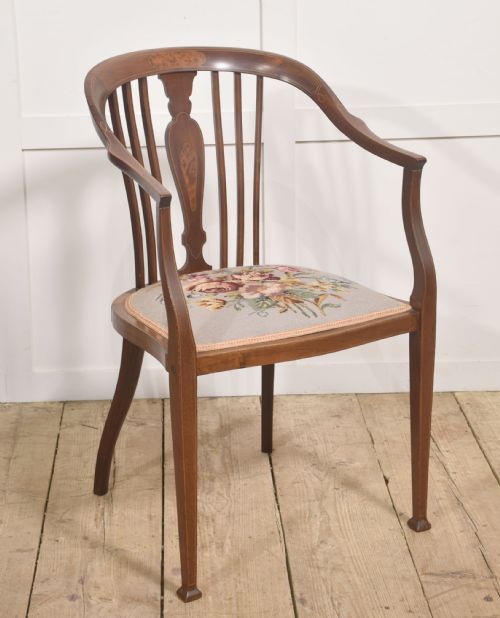
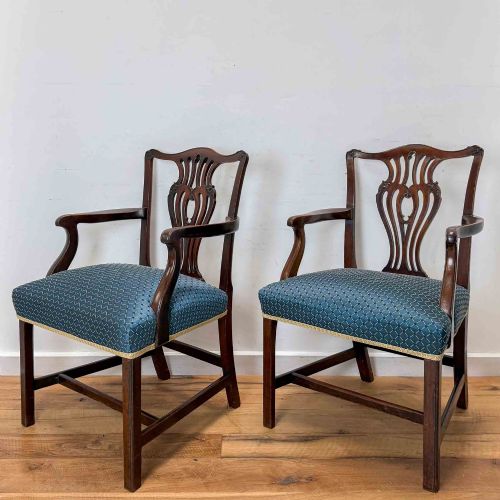
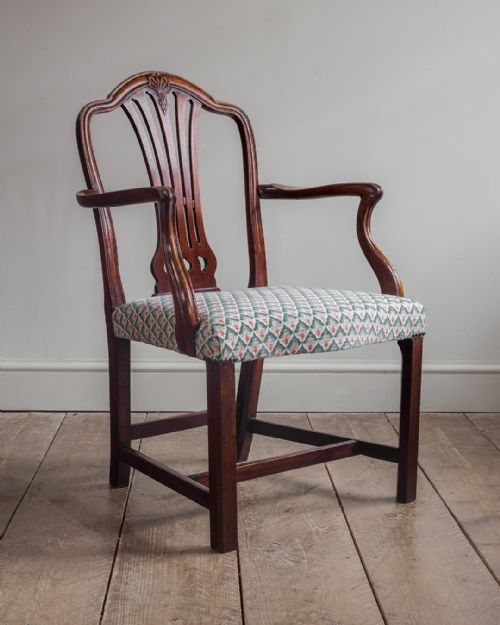
Vintage mahogany elbow chairs encompass seating designed with side rests, appearing in forms such as desk chairs, carver chairs, and library armchairs. These pieces emerge across several periods, including Victorian, Edwardian, and Regency eras, alongside revival styles spanning the eighteenth to early twentieth centuries.
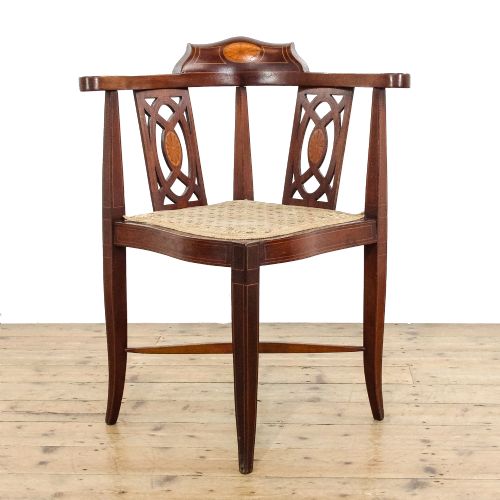
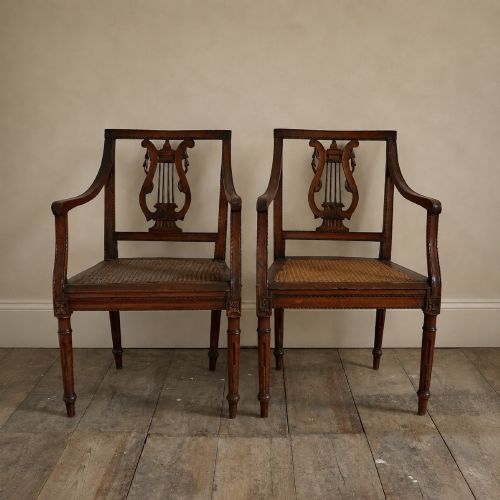
A buyer examining this page encounters open armchairs, tub chairs, and corner designs framed in rich timber. Many feature supportive upholstery in fabric, leather, or velvet, whilst others display cane seats or inlaid woodwork.
How they were made
Cabinet makers constructed these frames primarily from solid mahogany, frequently incorporating secondary timbers and satinwood inlay for decorative contrast. Joinery methods relied on traditional tenon and mortise joints to ensure structural stability under daily use.
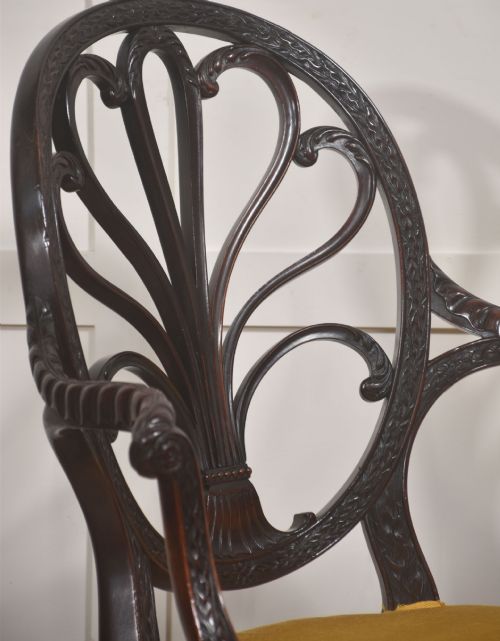
Upholstered versions utilised materials such as horsehair or wool stuffing secured beneath layers of fabric, leather, or velvet. Carved details on splats and arms demonstrate hand-chiselled execution across classical revival motifs.
Vintage Mahogany Elbow Chairs Retail Price Guide 2026
Typical asking prices for vintage mahogany elbow chairs among the pieces listed under this phrase on Sellingantiques today, from the lower quarter to the upper quarter. They describe what is for sale here now, not the wider market.
Listings feature mahogany frames paired with materials including leather, velvet, cane, and brass across Victorian and Edwardian periods.
What varies in quality
The degree of refinement in carved ornamentation and timber selection separates standard examples from exceptional pieces. Heavier framing stock and crisp execution of classical motifs indicate superior workshop output.
Proportion and architectural balance dictate the overall success of a design, particularly in revival pieces referencing Chippendale or Hepplewhite idioms. The integration of supportive arm structures with balanced leg forms determines the visual weight of each chair.
Howard and Sons·Shoolbred
The Vintage Mahogany Elbow Chairs Glossary
- Elbow chair
- An armchair featuring low arms designed to support the elbows rather than enclose the sitter entirely. These versatile seats frequently served at desks or dining tables.
- Carver chair
- A term traditionally denoting an armchair used at the head of a dining table or within a parlour setting. They share lineage with matching side chairs.
- Satinwood inlay
- Decorative wood veneer set flush into the mahogany surface to create contrasting patterns and lines. This technique flourished during the Edwardian and Sheraton revival periods.
- Lyre back
- A chair splat shaped in the symmetrical outline of a classical musical instrument. This motif appears frequently on Regency and nineteenth century chairs.
Vintage Mahogany Elbow Chairs: Frequently Asked Questions
What is an elbow chair?
An elbow chair is a seating design featuring armrests positioned to support the arms while seated at a desk or table.
These pieces bridge the gap between armchairs and dining seats, offering structural support without heavy upholstery.
How do I identify a Regency style chair?
Regency style chairs often incorporate classical motifs, sabre legs, and curved timber elements referencing nineteenth century aesthetics.
They emphasise clean structural lines and restrained classical ornamentation rather than heavy carving.
Where were these chairs used historically?
Historically, these seating forms populated drawing rooms, libraries, studies, and bedrooms as versatile occasional seats.
Their sturdy mahogany frames allowed them to function reliably in both formal and domestic spaces.
What materials are common in Edwardian examples?
Edwardian examples frequently combine mahogany frames with satinwood inlay, cane work, and upholstered pads.
Craftsmen during this period drew inspiration from earlier Georgian styles while integrating lighter framing proportions.