


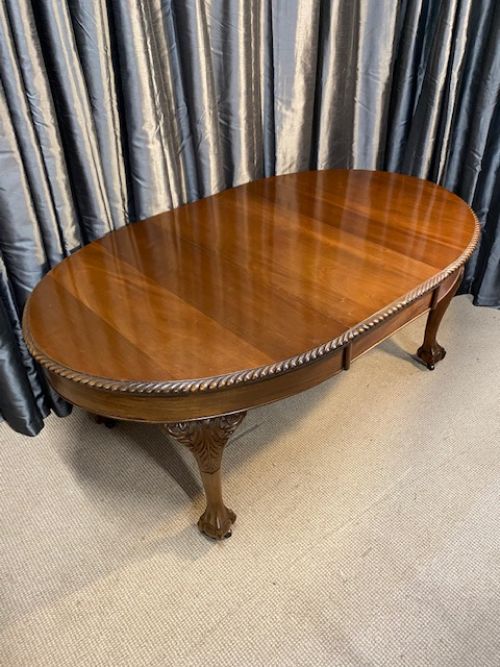
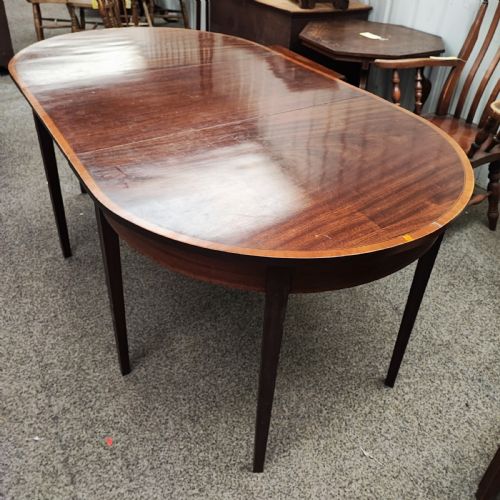

Vintage Mahogany Dinner Table
A vintage mahogany dinner table brings rich timber grain and period craftsmanship straight into the dining room, offering both durability and timeless host appeal.
Vintage Mahogany Dinner Table
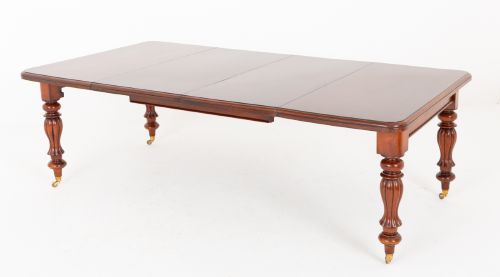
A vintage mahogany dinner table encompasses solid timber examples produced across the nineteenth and early twentieth centuries, spanning Victorian, Edwardian, and Georgian style periods. These pieces range from compact extending formats to large formats designed to seat ten or twelve guests comfortably.
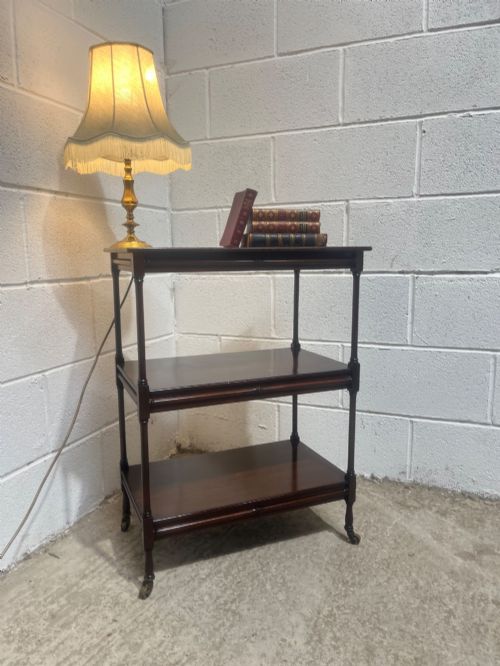
The most common versions met on this page are extending tables featuring removable leaves, allowing the surface to adapt for everyday family meals or larger gatherings. Alongside standard dining tables, related forms like trolleys, buffets, and dumb waiters appear in mahogany.
Originating from periods such as the Regency era and the wider nineteenth century, these tables showcase the enduring popularity of mahogany as a primary cabinet timber. Their construction reflects the practical demands of period dining rooms, prioritising modular length and sturdy leg supports.
Materials and construction methods
Cabinetmakers utilised rich mahogany timber, prized for its deep reddish-brown tone and stable grain, frequently accented with decorative satinwood inlay on select surfaces. This timber provided the structural integrity required for large extending mechanisms and heavy daily use.
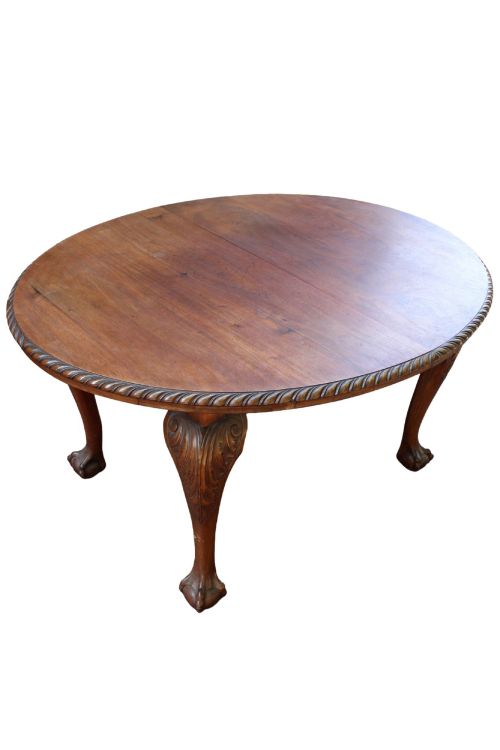
Brass fittings appear across mechanical extending joints and castor wheels, allowing heavy Victorian and Edwardian tables to move smoothly across floor coverings. Carved details, such as claw and ball legs, demonstrate the manual skill applied by period woodworkers to the primary support structures.
Several tables arrive with their original winding handles still tucked away in the drawer, ready to summon a nineteenth-century feast.
Distinguishing quality in mahogany dining furniture
Quality separates through the selection of figured mahogany timber, where striking grain patterns and rich natural depth elevate the visual presence of the tabletop. Superior pieces display careful matching of wood veneers across extending leaves to maintain visual continuity when fully opened.
The precision of the extending mechanism and the robustness of the underframe define structural excellence. Tables featuring solid carved legs, such as traditional claw and ball motifs, reflect a higher degree of artisan labour than simpler turned supports.
The Vintage Mahogany Dinner Table Glossary
- Extending table
- A dining table designed with a central gap and removable leaves that increase the surface length. This mechanism allows the table to expand or contract according to the number of diners.
- Satinwood inlay
- A contrasting decorative wood veneer inserted into the primary mahogany surface in geometric or floral patterns. It brightens the dark timber with a golden yellow sheen.
- Claw and ball
- A furniture foot carved to resemble an animal's talon grasping a spherical ball. This ornamental detail is frequently found on quality Victorian and Georgian style supports.
- Dumb waiter
- A tiered serving stand fitted with circular shelves on a central column. It allowed diners to access extra dishes or drinks without the presence of servants.
- Buffet
- A sideboard or serving piece used for displaying tableware and holding food during large meals. These low storage units complement the main dining table in period rooms.
Vintage Mahogany Dinner Table: Frequently Asked Questions
What rooms suit a large mahogany table?
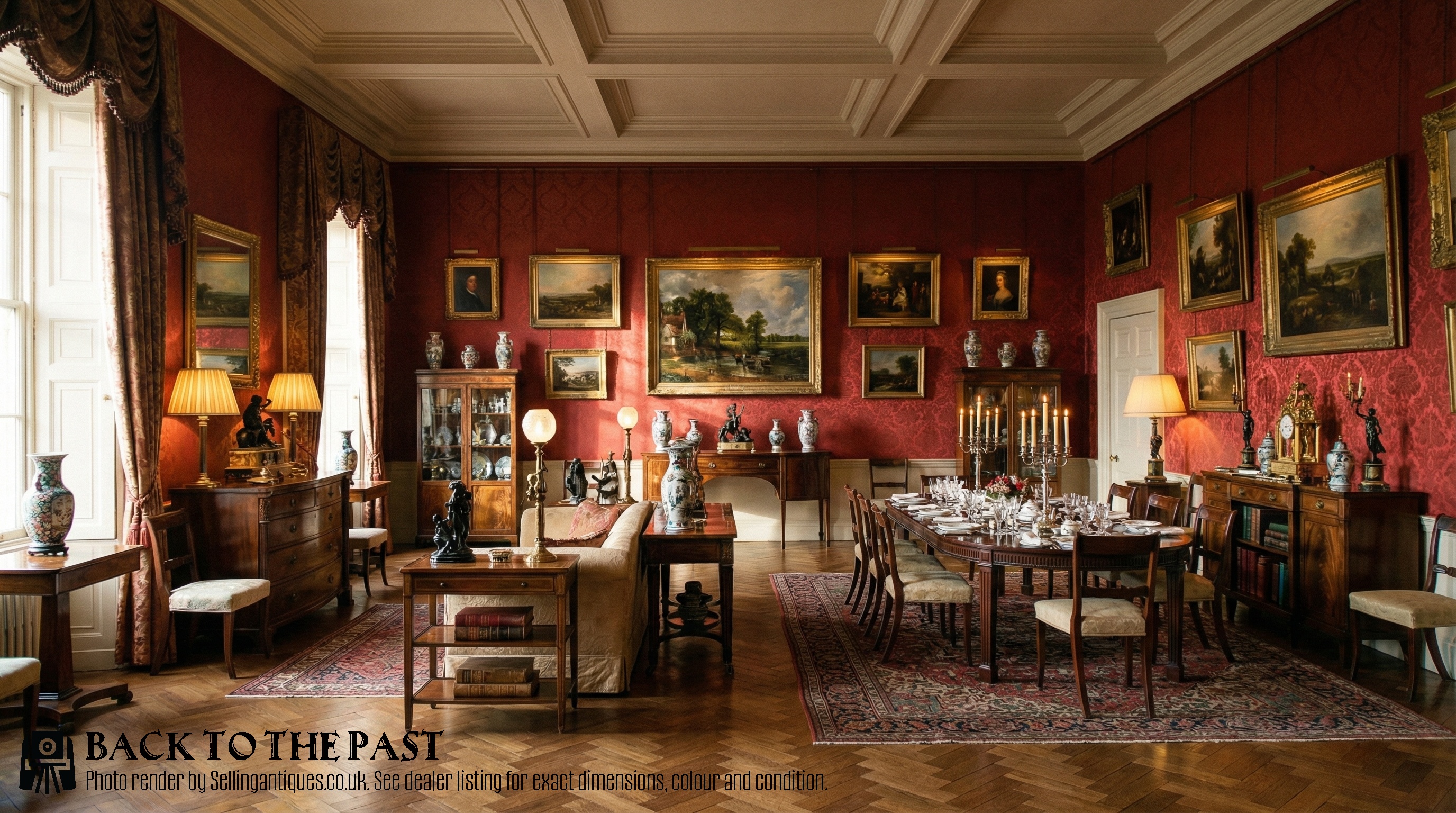
Large extending tables require a dining room with sufficient perimeter clearance to allow chairs to pull out comfortably even when fully expanded. High ceilings and traditional architectural details balance the deep colour and substantial visual weight of nineteenth-century timber.
Placing the table away from direct heat sources and strong sunlight preserves the polished finish and prevents the mahogany from drying out over time.
How can I tell a Victorian table from an Edwardian one?
Victorian tables often feature heavier proportions, darker finishes, and elaborate carvings like claw and ball feet. Edwardian examples tend to show lighter construction, occasional inlaid stringing, and simpler geometric forms.
Examining the underside reveals construction clues, such as hand-cut screws or mechanical stamps that point to specific nineteenth-century manufacturing traditions.
How do I care for the polished mahogany surface?
Wipe the surface regularly with a soft, dry cloth to remove dust and prevent micro-scratches from accumulating on the polish. Use placemats and coasters to protect the finish from heat marks and moisture rings caused by dinnerware.
Apply a traditional beeswax polish sparingly once or twice a year to nourish the timber and maintain a deep, natural lustre.