
Vintage Mahogany Desk Chairs
These vintage mahogany desk chairs span the eighteenth to the twentieth centuries, combining rich timber with leather, cane, and brass details to anchor a study.
Vintage Mahogany Desk Chairs
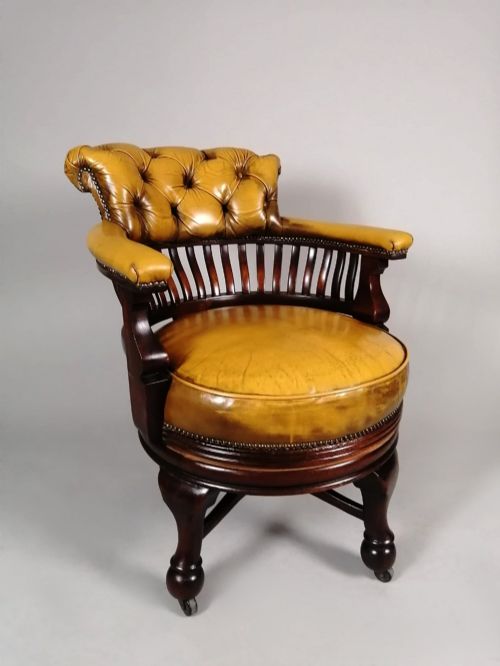
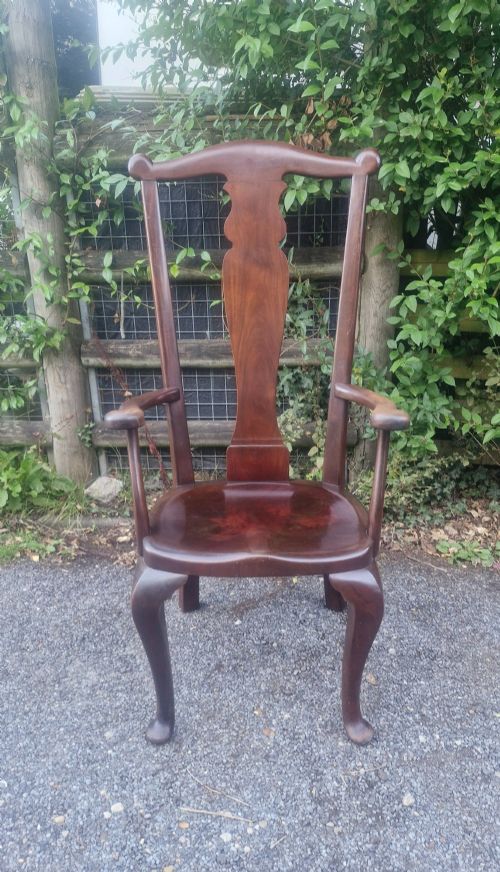
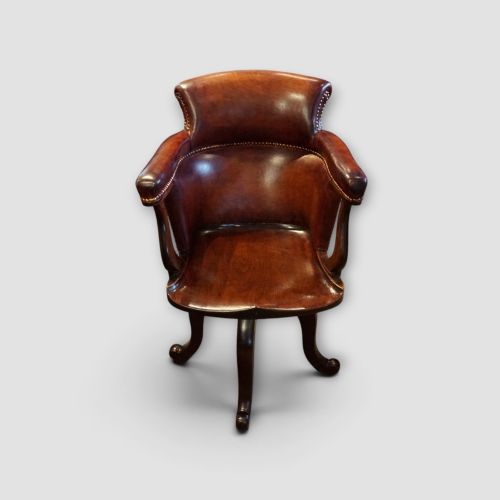
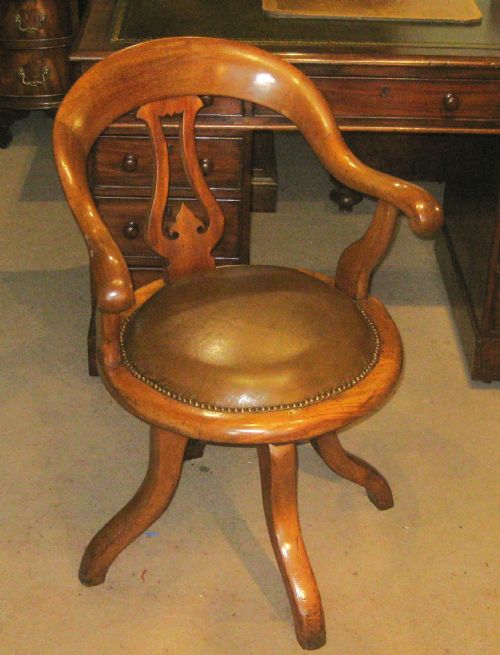
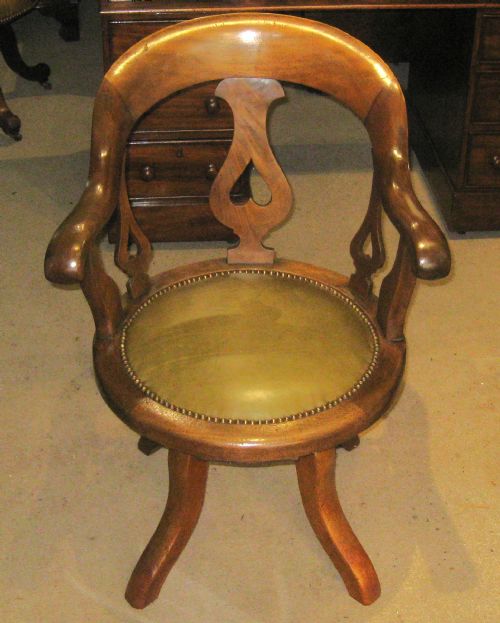
Vintage mahogany desk chairs encompass library armchairs, tub chairs, revolving office seats, and Gainsborough designs spanning the eighteenth, nineteenth, and early twentieth centuries. These forms reflect shifting domestic and professional needs, moving from expansive Georgian writing seats to compact Victorian and Edwardian swivel or tub variations.
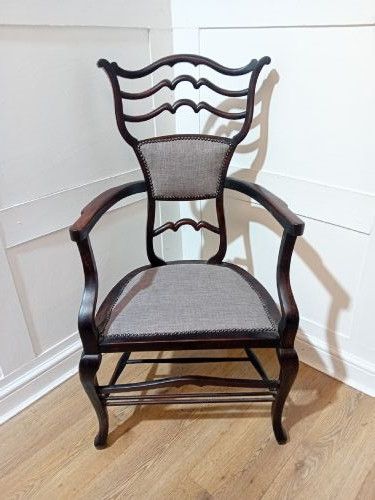
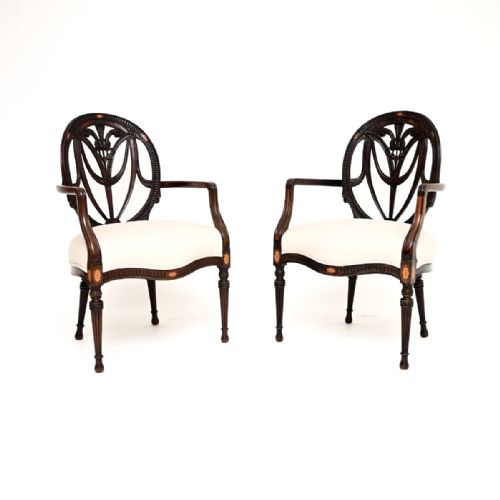
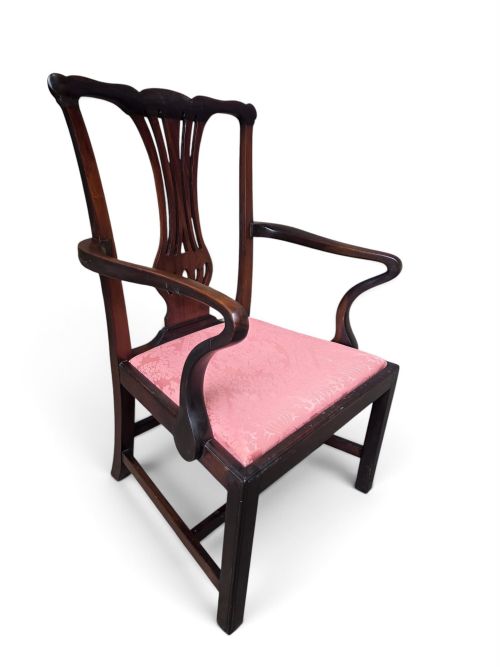
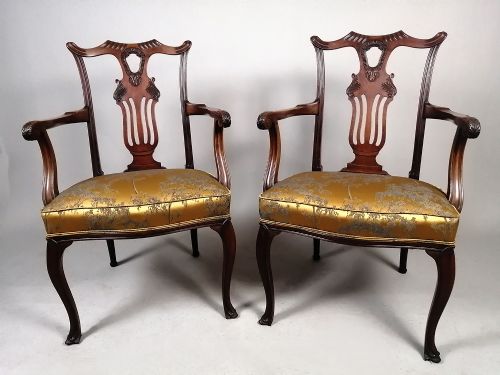
The selection on this page draws heavily from Victorian, Edwardian, and Regency revivals alongside authentic Georgian periods, offering both swivel mechanisms and static frames. Craftsmanship ranges from high-back architectural armchairs to delicate lyre-back and caned elbow chairs intended for studies, bedrooms, and offices.
Materials and construction
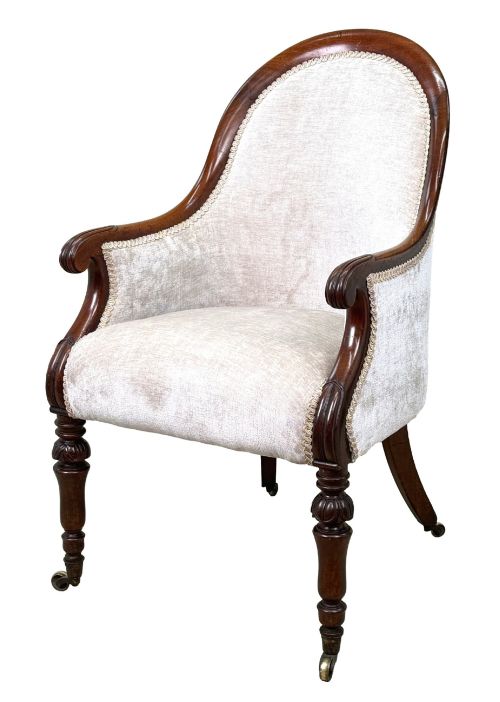
Makers utilised dense mahogany and Cuban mahogany, often framing seats with supple leather, woven cane, or velvet and upholstery fabric. Brass castors and hardware frequently support the timber framework, particularly on swivel or adjustable reading and library chairs.
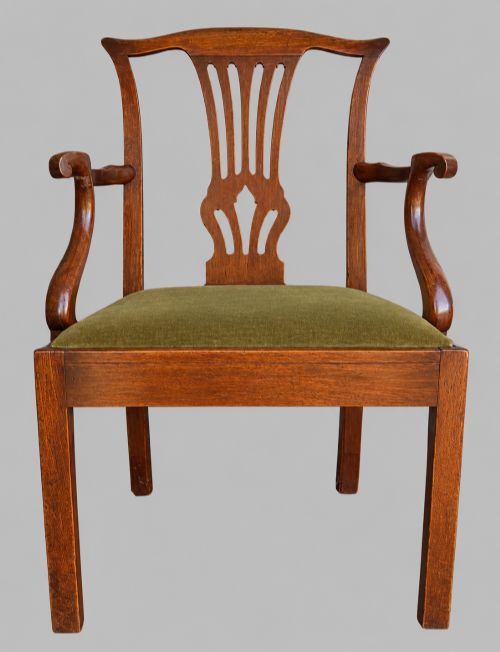
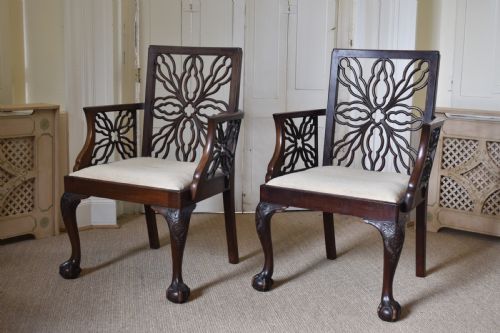
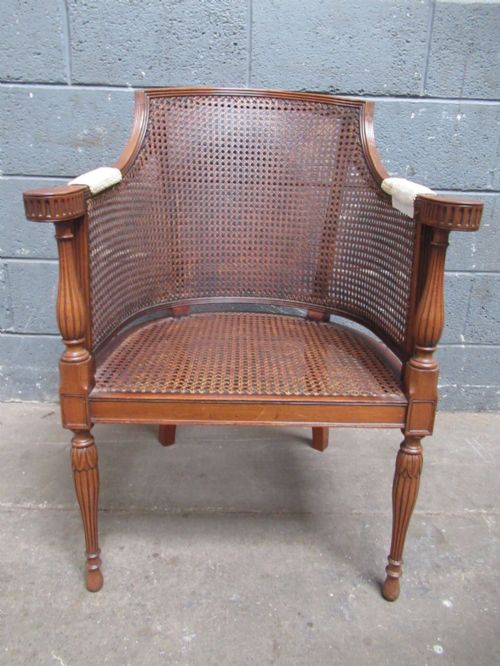
Joinery techniques rely on traditional mortise and tenon frames, complemented by hand-carved details such as Chippendale blind carving, scroll backs, and inlaid satinwood stringing. Caned panels are tightly hand-woven into the mahogany structures, whilst leather seats are traditionally nailed and hand-dyed.
Listings feature mahogany, leather, brass, cane, and velvet across Victorian, Edwardian, Regency, and Georgian styles.
Character and execution
Quality reveals itself in the depth of the mahogany grain and the crispness of the hand-carved details, from scroll arms to blind fretwork. Superior examples show thoughtful proportion and sturdy timber framing that withstands daily use without losing structural integrity.
The integration of secondary materials like hand-dyed hide, brass castors, and intact cane work separates standard production from finer artisan commissions. Original swivel mechanisms and unaltered nineteenth-century frames carry greater design integrity than later alterations.
Alfred Allen of Birmingham
The Vintage Mahogany Desk Chairs Glossary
- Gainsborough chair
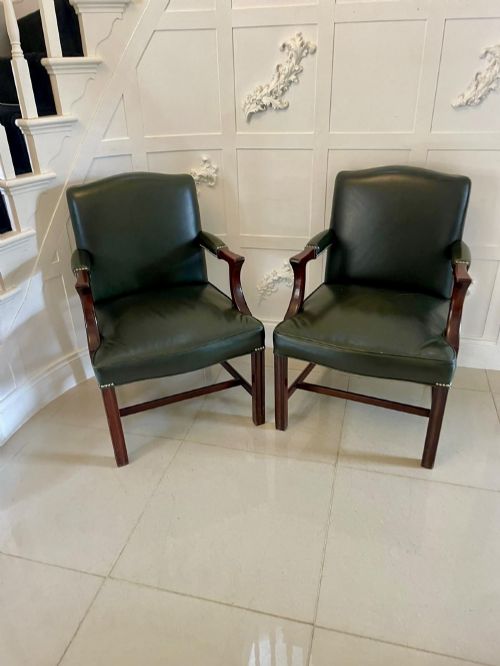
- A wide, upholstered armchair with an open-padded back and arms, standing on short cabriole or straight legs. It was designed in the eighteenth century specifically for writing desks.
- Tub chair
- An armchair featuring a continuous curved back and arms that form a protective, rounded enclosure. These often incorporate cane panels or deep leather upholstery.
- Bergère
- An enclosed armchair with stuffed upholstery and cane-work sides and back. Originating in France, these timber-framed seats became popular in British libraries during the Regency period.
- Cockpen chair
- A Chinese Chippendale style chair characterised by an open lattice-work back and straight legs. They are typically fashioned from mahogany and appear in eighteenth- and nineteenth-century inventories.
- Lyre back
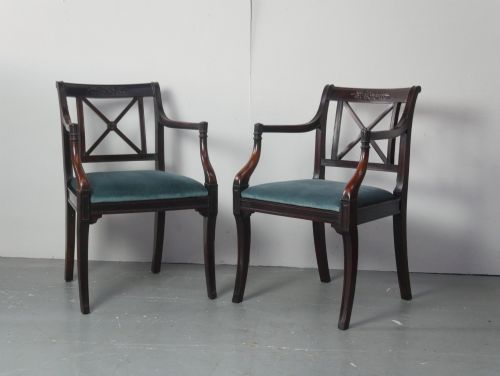
- A chair back featuring a central splat shaped like an ancient Greek lyre instrument. This motif is frequently seen on Regency and nineteenth-century mahogany elbow chairs.
Vintage Mahogany Desk Chairs: Frequently Asked Questions
How do I identify a genuine period desk chair?
Examine the timber construction, joinery methods, and wear patterns underneath the seat and along the legs. Period pieces display hand-cut joinery and dense mahogany grain consistent with eighteenth- or nineteenth-century cabinet-making.
Compare the style markers, such as Regency lyre backs or Georgian Chippendale carving, against documented historical designs. Secondary woods and hardware like brass castors also help anchor the piece to its stated era.
Are revolving desk chairs comfortable for daily use?
Many nineteenth-century and Victorian revolving desk chairs offer ergonomic curved backs and adjustable heights suited for modern workspaces. Their sturdy mahogany frames provide robust daily support.
Upholstered leather or padded seats enhance comfort during long hours at a desk. Checking the smoothness of the swivel mechanism ensures practicality alongside period character.
What is the difference between a Gainsborough and a library armchair?
Gainsborough chairs are traditionally lighter, open-armed writing chairs with low proportions designed to slide beneath a desk. Library armchairs are generally larger, heavier seats meant for reading and relaxing by the fire.
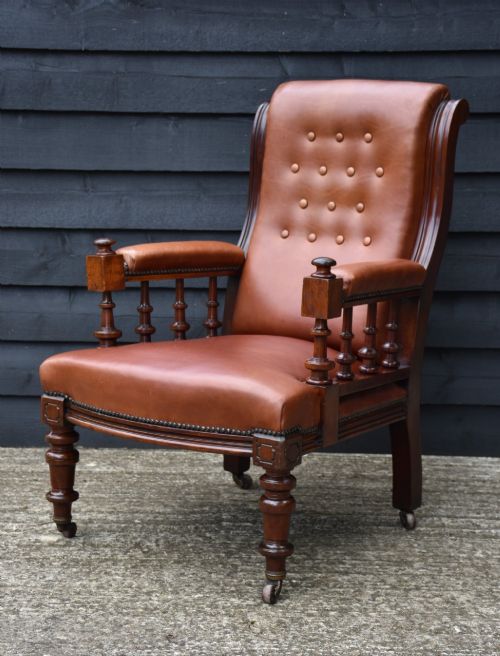
Library chairs often feature enclosed tub shapes or deep leather upholstery with brass studding. Both forms utilise mahogany frames but serve distinct functions within a study.
How should I care for mahogany and leather desk chairs?
Keep mahogany furniture away from direct sunlight and severe temperature fluctuations to prevent the timber from drying or cracking. Regular dusting and occasional application of appropriate wood wax maintain the finish.
Condition leather seats periodically with suitable balms to keep the hide supple. Protect cane panels from excessive weight and moisture to preserve the woven structure.