


Vintage Mahogany Card Table
A vintage mahogany card table is a versatile folding piece that transforms from a console into a dedicated gaming surface.
Vintage Mahogany Card Table
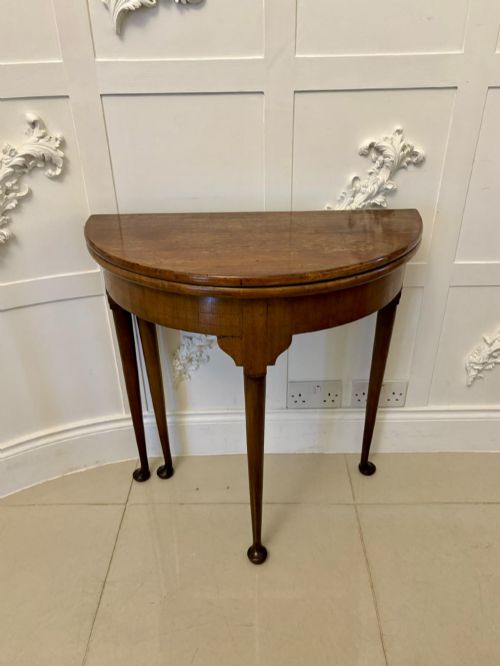
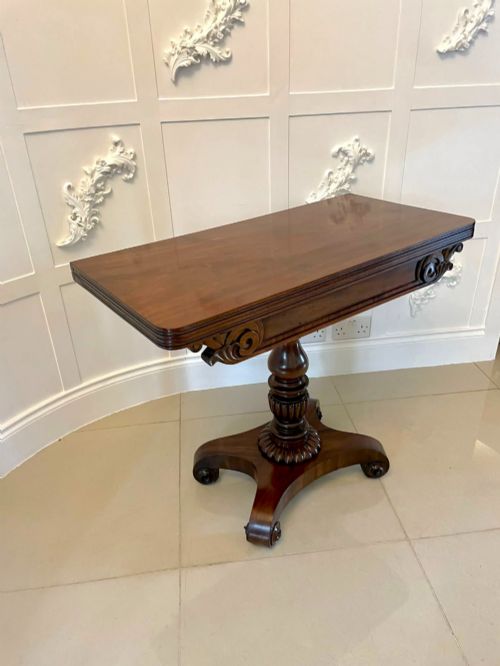
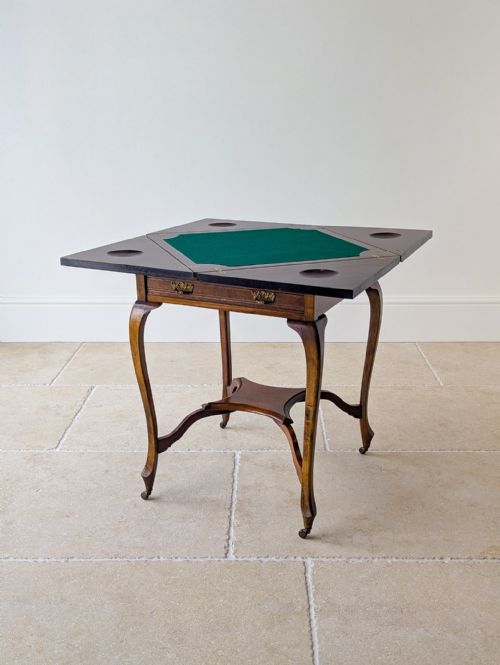
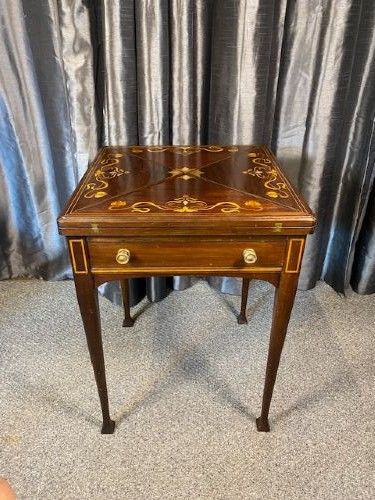
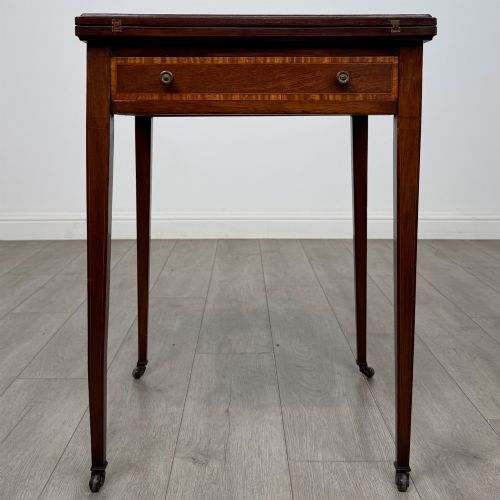
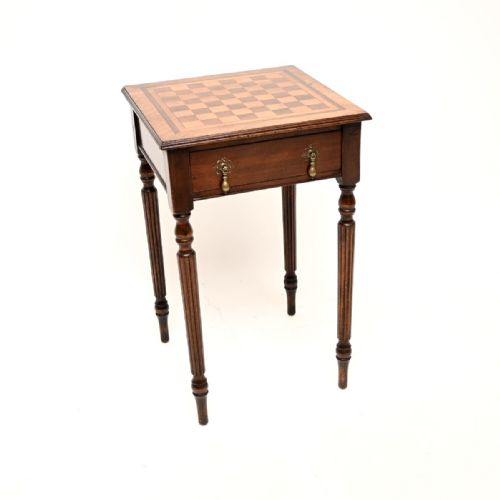
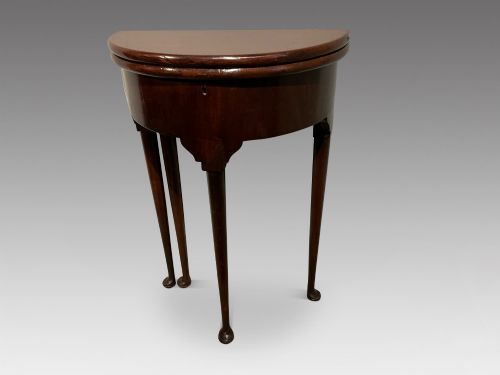
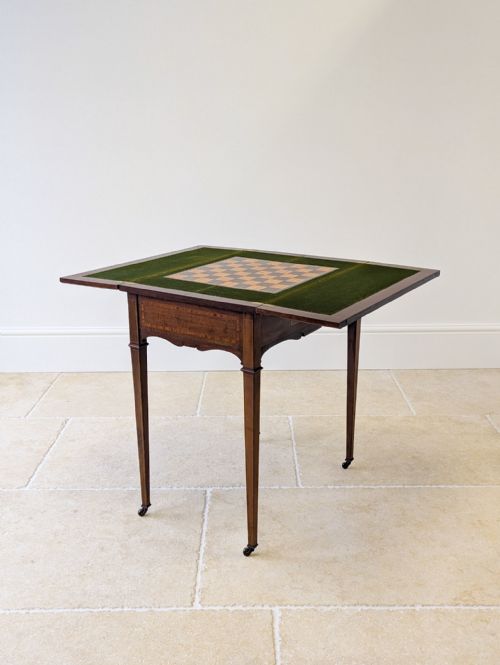
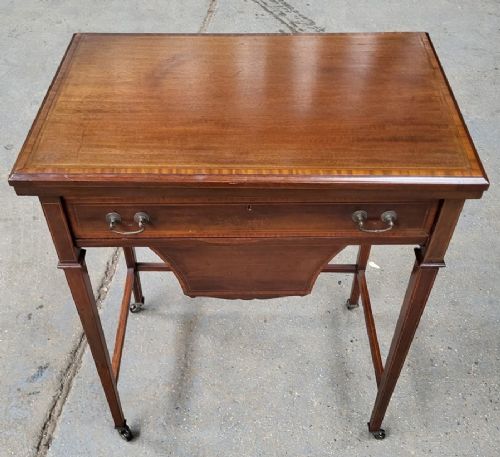
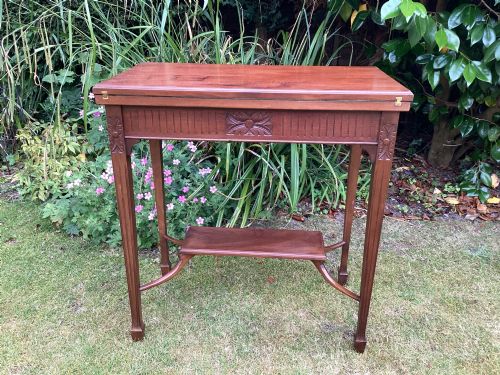
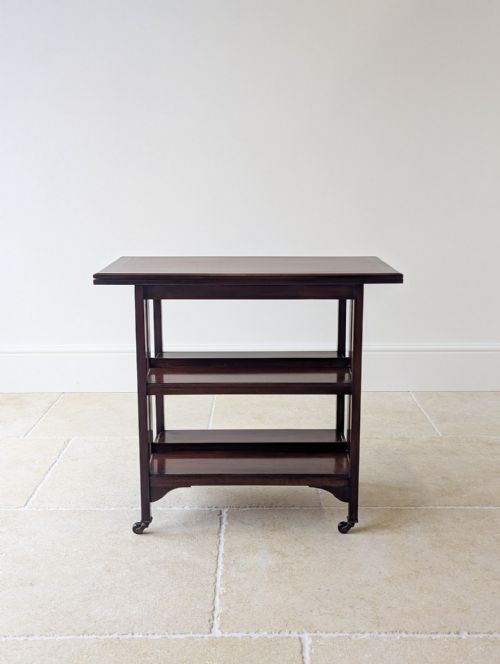
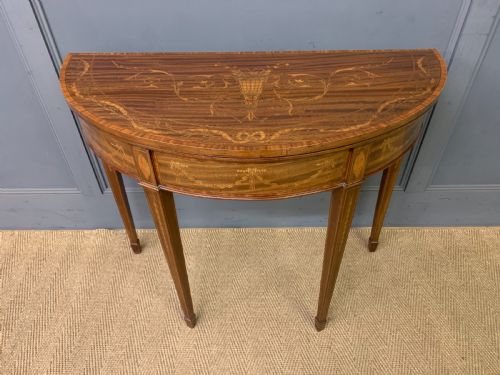
A vintage mahogany card table provides a folding surface designed for evening entertainment, appearing frequently in Edwardian envelope designs and Georgian fold-over formats. These pieces range from simple demi-lune shapes to complex tables incorporating chess boards and internal wells.
The selection includes pieces spanning from the 18th century through the Edwardian era and into the 1920s. Buyers frequently encounter Edwardian envelope tables alongside earlier Georgian and Victorian interpretations of Chippendale and Hepplewhite styles.
Materials and construction methods
Makers utilised solid mahogany and flame mahogany veneer, often enhanced with contrasting stringing in satinwood and boxwood. Structural integrity relied on dense timber frames that supported folding leaves and swivel tops.
Playing surfaces were traditionally lined with baize to provide a tactile surface for cards and counters. Brass mounts, hinges and hand-painted details frequently completed the construction of higher-tier pieces.
Many tables retain secret interior wells beneath their folding leaves designed specifically for hiding stray playing cards and ivory counters.
Factors influencing quality
The sophistication of the timber figure and the precision of the cross-banding dictate the visual appeal of an example. Finer pieces display carefully matched flame mahogany veneers and crisp inlay work rather than plain timber surfaces.
Mechanical ingenuity separates standard tables from superior ones, particularly in the smooth operation of envelope mechanisms, dual-action folding leaves and stable pivoting frames that endure repeated use.
Howard And Son·Maples Of London
The Vintage Mahogany Card Table Glossary
- Envelope card table
- A square table with a four-flap folding top that rotates and opens to reveal a baize-lined interior. This clever mechanism became especially popular during the Edwardian period.
- Demi-lune
- A half-moon shape used for console and card tables that sit flat against a wall when closed. Opening the fold reveals a full circular or serpentine playing surface.
- Baize
- A coarse woollen felt material historically used to line the playing surface of gaming tables. It provides a soft, non-slip texture for cards and counters.
- Cross-banding
- A decorative border of veneer laid with the grain running perpendicular to the surrounding wood. This technique creates a distinct visual frame around the top of the table.
- Chippendale style
- A revival or period design style characterised by carved cabriole legs and ball-and-claw feet. It draws inspiration from the influential 18th-century cabinet maker Thomas Chippendale.
Vintage Mahogany Card Table: Frequently Asked Questions
What is the difference between a tea table and a card table?
Tea tables and card tables both utilise fold-over tops, but their internal surfaces differ according to their primary function. Card tables typically retain a baize or felt lining for games.
Tea tables often feature plain polished wood interiors sometimes fitted with small coasters or candle recesses for evening refreshment.
How do I distinguish Edwardian pieces from Georgian ones?
Edwardian versions often feature lighter satinwood inlay, hand-painted floral motifs and envelope mechanisms dating around 1900. They tend to reflect revival styles rather than original 18th-century construction.
Georgian examples display heavier solid mahogany frames, simpler geometric lines and timber patination developed over centuries of actual use.
Where should I place a demi-lune table in my home?
A demi-lune table sits flush against a wall in a hallway or drawing room as a decorative console when closed. Its curved profile softens straight architectural lines in a room.
When guests arrive, the top unfolds to create a circular table positioned in the centre of the room for games or drinks.