
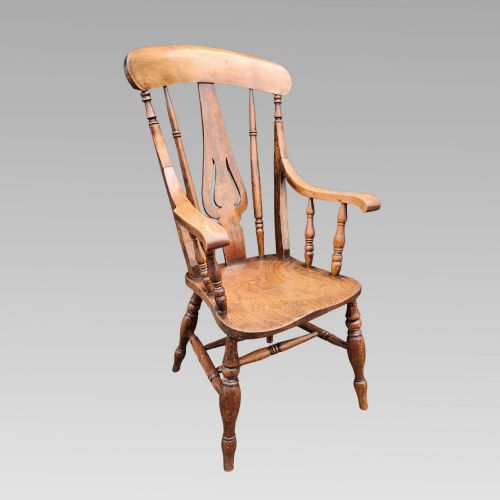


Vintage Lyre Back Armchairs
Vintage lyre back armchairs combine classical restraint with robust comfort, offering collectors a striking silhouette shaped by centuries of revival design.
Vintage Lyre Back Armchairs
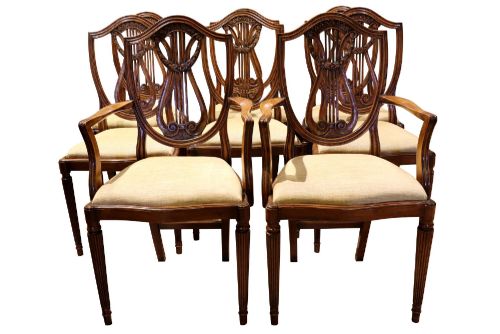
Vintage lyre back armchairs draw their defining motif from classical antiquity, featuring a splat or frame shaped to resemble a ancient Greek lyre. These seating forms appear across several eras, encompassing nineteenth-century library and desk chairs as well as twentieth-century dining sets.
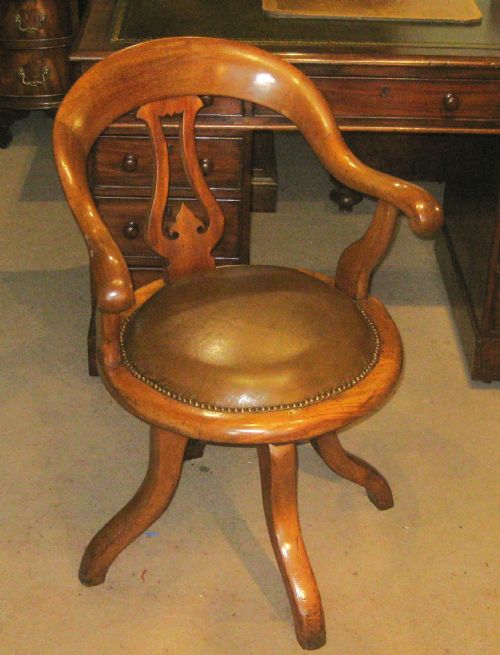
The versions most commonly met on this page span the nineteenth and twentieth centuries, taking various structural forms from revolving office seats to farmhouse armchairs. Makers adopted the lyre motif liberally, applying it to elbow chairs, carvers, and library seating.
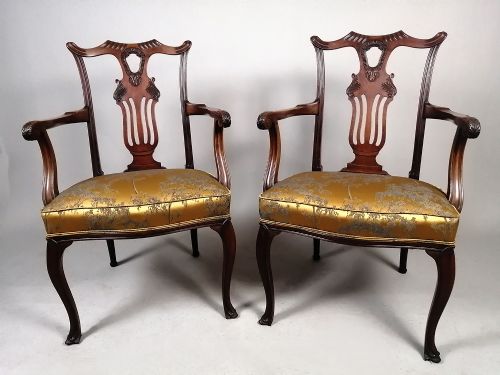
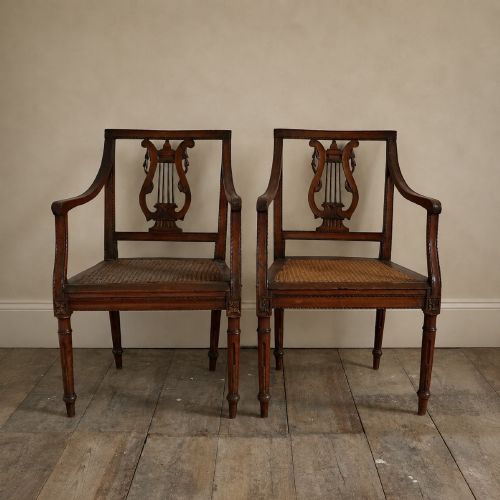
Examples range from grand Regency and Victorian pieces to Edwardian interpretations and later revival pieces. Buyers encounter them dressed in leather, cane, or upholstered fabric, reflecting diverse domestic and institutional settings.
How they were made
Construction relies heavily on dense timbers, with mahogany dominating the stylistic revivals alongside structural elm, beech, and oak. Cabinetmakers shaped these woods to form the delicate curves of the lyre splat while ensuring the frame supported daily use.
Detailing often incorporates turned elements, brass fittings, and cane work or leather inserts. Joinery methods varied from traditional pegged farmhouse construction to refined cabinet work suited to formal library and desk chairs.
Even sturdy library chairs sometimes feature surprisingly delicate musical carvings hidden behind the sitter's back.
What varies in quality
Quality rests upon the crispness of the carving within the lyre motif and the integrity of the timber selection. Finer pieces display deeply figured mahogany and well-proportioned arms that integrate harmoniously with the backrest.
The mechanical sophistication of revolving desk chairs and the tightness of cane or upholstery work further distinguish standard workshop output from exceptional examples. Timber choice alone signals the original tier of production, shifting from sturdy regional elm to select golden mahogany.
The Vintage Lyre Back Armchairs Glossary
- Lyre back
- A chair back featuring an openwork central splat shaped like a musical lyre. This classical motif gained prominence during the Regency period and returned in later revival styles.
- Carver chair
- An armchair designed to match a set of dining chairs, typically positioned at the head of a table. These pieces share stylistic traits with their smaller side chair counterparts.
- Bergere
- An enclosed upholstered armchair with wooden framing exposed around the sides and back. Cane panels frequently fill these wooden frames for a lighter appearance.
- Splat
- The vertical central strip of wood down the middle of a chair back. In these pieces, the splat takes the specific form of a musical instrument.
- Elbow chair
- A traditional term for an armchair with low armrests intended for relaxed seating at a desk or table. They offer support without the bulk of heavy upholstered easy chairs.
Vintage Lyre Back Armchairs: Frequently Asked Questions
How do I date a lyre back chair?
Dating relies on timber selection, structural joinery, and stylistic markers such as turned legs or carved splats. Nineteenth-century examples often employ dense mahogany and hand-cut joinery, while later twentieth-century revivals show different tooling marks.
Context also matters, as nineteenth-century pieces lean towards heavier Regency and Victorian proportions, whereas later variations incorporate lighter Edwardian interpretations or regional farmhouse idioms.
Were lyre back armchairs used at desks?
Many surviving examples served as library or desk chairs, occasionally featuring revolving mechanisms and brass hardware. Their sturdy frames accommodated the movement required in working spaces.
Makers adapted the classical backrest for practical utility, pairing the distinctive splat with upholstered leather seats suited to prolonged periods of sitting.
What woods were used for these chairs?
Mahogany is the predominant timber found in these listings, favoured for its strength and rich grain during revival periods. Cabinetmakers also utilised oak, beech, and English elm.
Regional pieces often feature native hardwoods like elm, while formal library and dining chairs rely on imported tropical timbers capable of holding intricate carved details.
How do I maintain cane seats?
Cane seating requires occasional light cleaning and gentle moisture to prevent the natural fibres from becoming brittle. Keeping them out of direct sunlight preserves the flexibility of the material.
Natural sagging over decades is common, but proper environmental humidity helps maintain the tension of the woven panels without needing immediate intervention.