






Vintage Low Nursing Chair
A vintage low nursing chair offers compact seating, and these nineteenth and early twentieth-century examples bring low-slung comfort and period character to a bedroom.
Vintage Low Nursing Chair
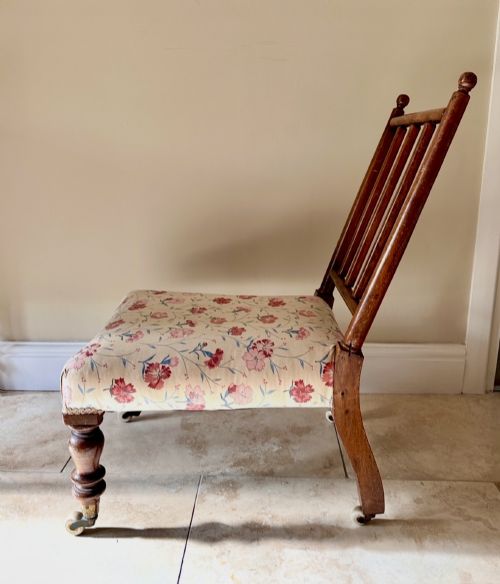
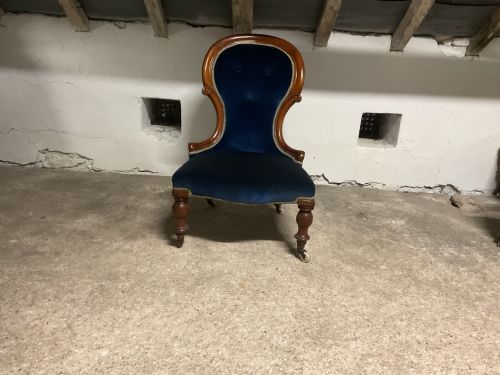
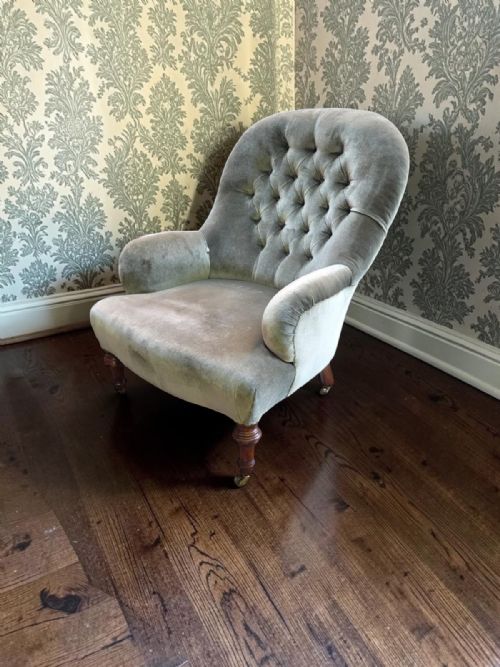
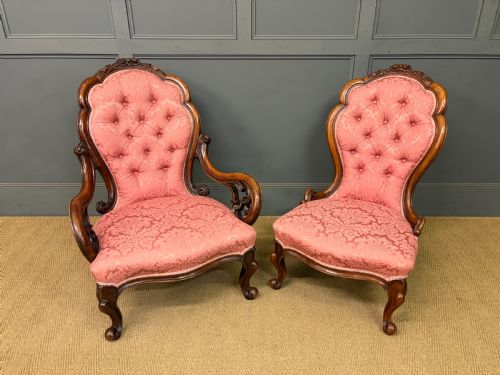
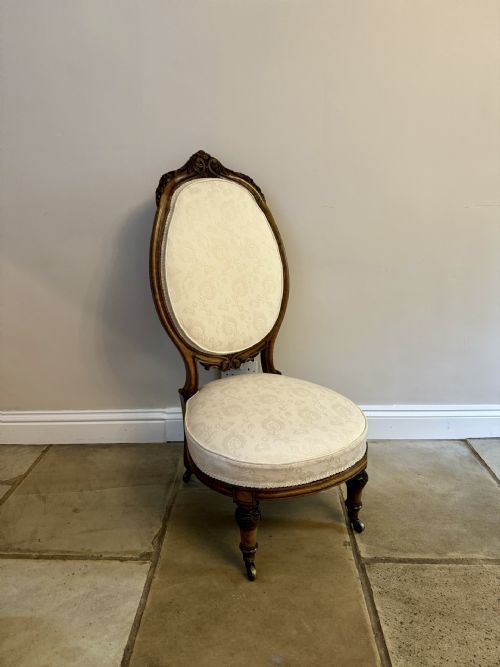
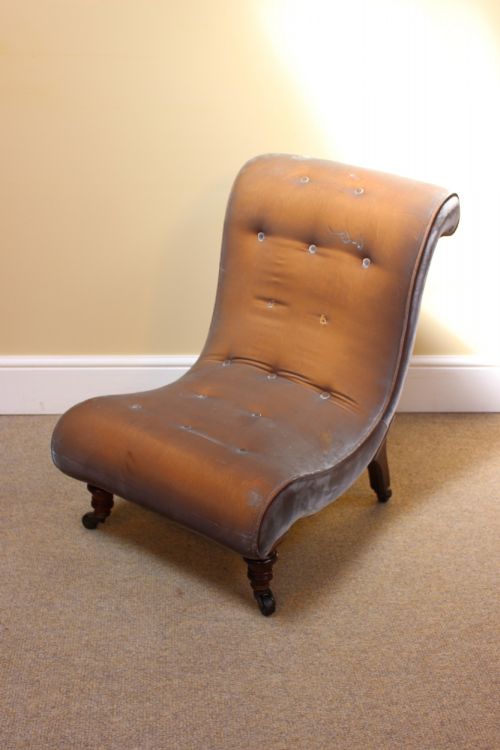
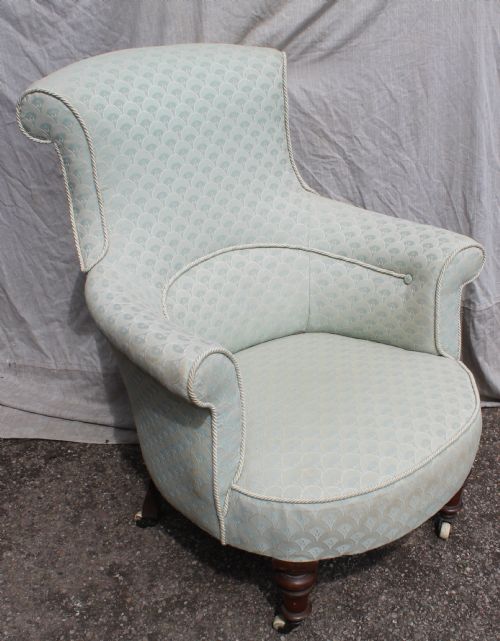
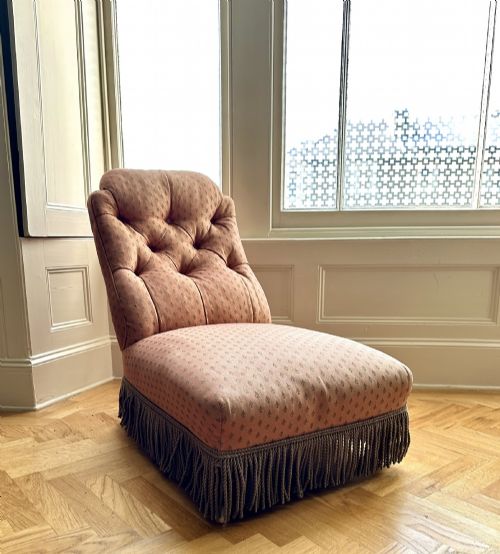
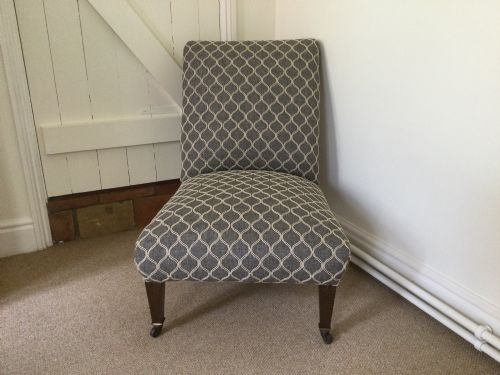
A vintage low nursing chair is a compact, low-to-the-ground seat designed originally for nurseries and bedrooms, and buyers today primarily encounter Victorian and Edwardian examples. These low-slung seats appear across several forms, including slipper chairs, salon chairs, boudoir chairs, and gossip chairs.
The evidence shows origins spanning Victorian, Edwardian, William IV, Regency, and Arts and Crafts periods, alongside regional styles such as Scottish Vernacular and Scandinavian Country. Makers such as Wheelers of Arncroach and Gillows occasionally emerge through distinctive regional framing or attribution.
How they were made
Frames are constructed from hardwoods like mahogany, walnut, rosewood, and oak, occasionally incorporating carved details, barley twist supports, or inlaid mahogany. Structural elements are sometimes finished with brass, ceramic castors, or gilt and ebonised treatments.
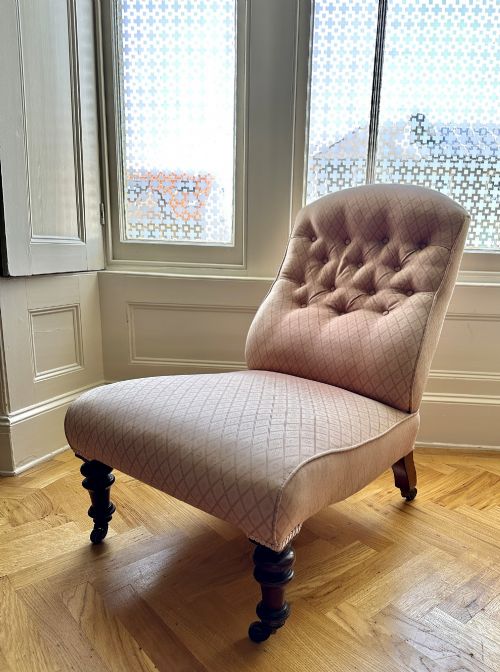
Upholstery relies on traditional techniques supporting button backs, fringe detailing, and various textile coverings, including velvet, leather, tapestry, and linen. Frames range from solid oak and carved walnut to burr walnut and rosewood.
Listings demonstrate a prevalence of walnut and mahogany frames, with Victorian and Edwardian periods dominating the available inventory.
What varies in quality
Quality rests in the sculptural execution of the timber frame, seen in crisply carved walnut, intricate inlay work, or well-turned barley twist supports. Superior examples display balanced proportions and robust joinery beneath the upholstery.
The sophistication of the original frame design separates standard bedroom seating from exceptional workshop production. Pieces bearing recognisable regional attribution or refined Victorian carving stand apart from simpler vernacular pieces.
Wheeler Of Arncroach·Gillows
The Vintage Low Nursing Chair Glossary
- Spoon back
- An upholstered chair back shaped like the bowl of a spoon to fit the human spine. This ergonomic contour appeared frequently during the Victorian period.
- Button back
- An upholstery technique where depressions are formed in the padding by pulling buttons deep into the stuffing. This method secures the filling and creates a tufted pattern.
- Barley twist
- A turning technique resembling a twisted rope, used on wooden furniture legs and stretchers. It gained popularity during the seventeenth century and saw revival in later periods.
- Prie Dieu
- A devotional chair featuring a low seat and an upper rail designed for kneeling and prayer. These nineteenth-century pieces often double as low occasional seating.
Vintage Low Nursing Chair: Frequently Asked Questions
Where were nursing chairs used originally?
These low seats were kept primarily in bedrooms and nurseries for practical domestic tasks.
Their reduced height provided stability and comfort for mothers attending to infants.
How do I identify a Victorian nursing chair?
Victorian examples typically feature low wooden frames made of walnut or mahogany with sprung upholstery.
Common markers include button backs, turned legs with castors, and carved spoon back profiles.
What is a gossip chair?
A gossip chair is an informal, low-slung seat designed for sitting sideways or conversing in bedroom and boudoir settings.
Edwardian iterations often display compact frames and inlaid woodwork.
Can I use a vintage low nursing chair in a modern room?
Their compact dimensions allow these seats to fit easily into smaller bedrooms, dressing rooms, and fireside corners.
They function well as accent seating alongside contemporary furnishings.