




Antique Slipper Fireside Chair
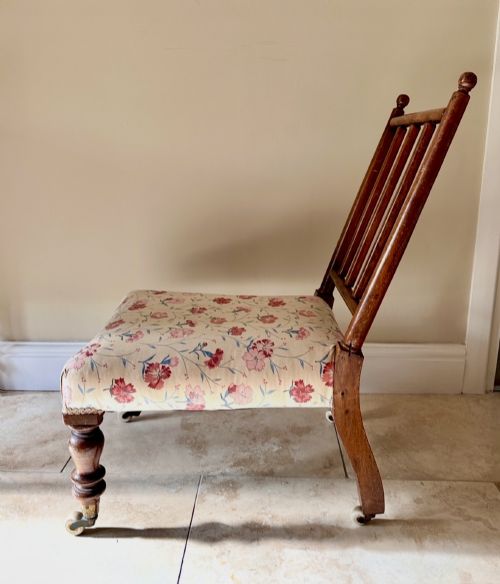
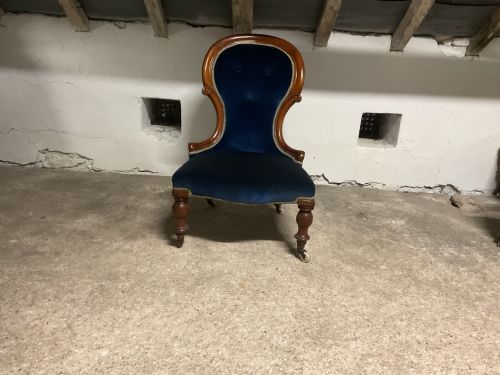
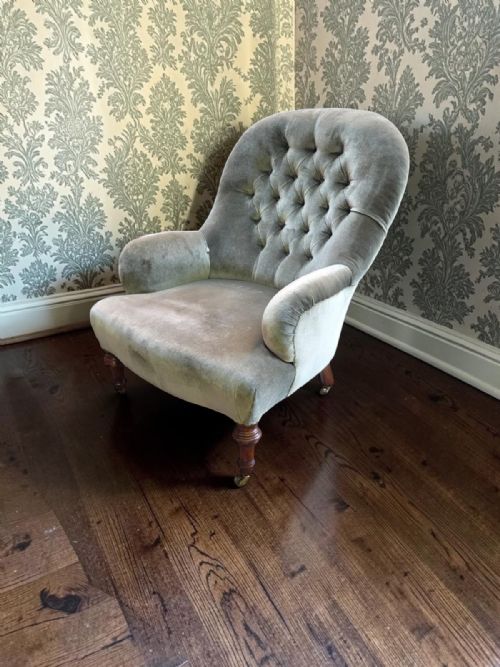
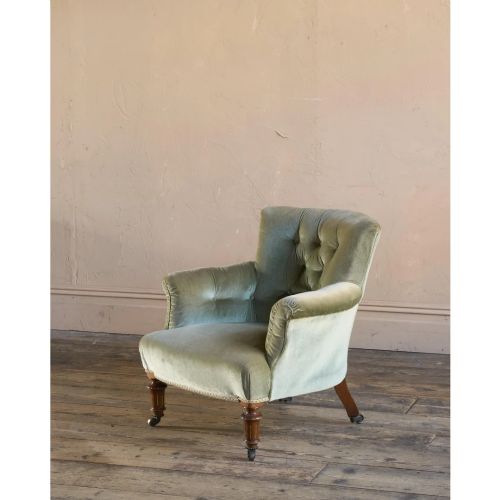
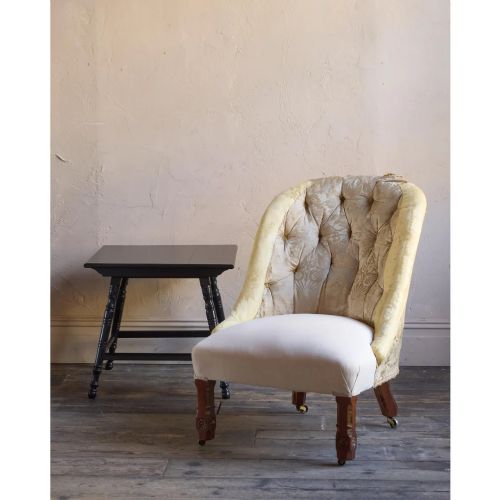
These low-slung antique slipper fireside chairs offer compact comfort by the hearth, designed historically to make dressing by the fire easier.
Antique Slipper Fireside Chair
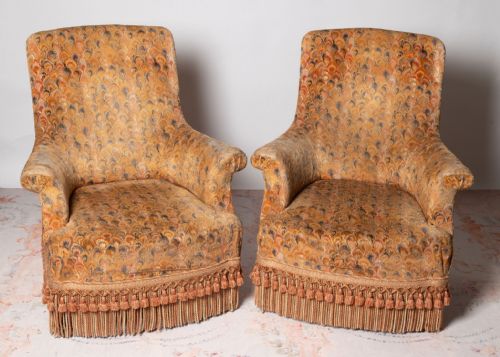
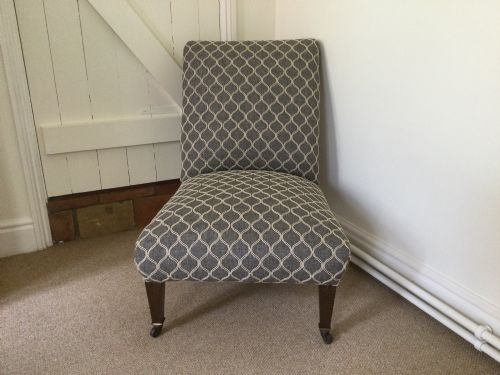
An antique slipper fireside chair is a low-seated upholstered chair designed for comfort near the hearth or in the bedroom. These pieces are frequently catalogued under related forms such as nursing chairs, salon chairs, and petite armchairs.
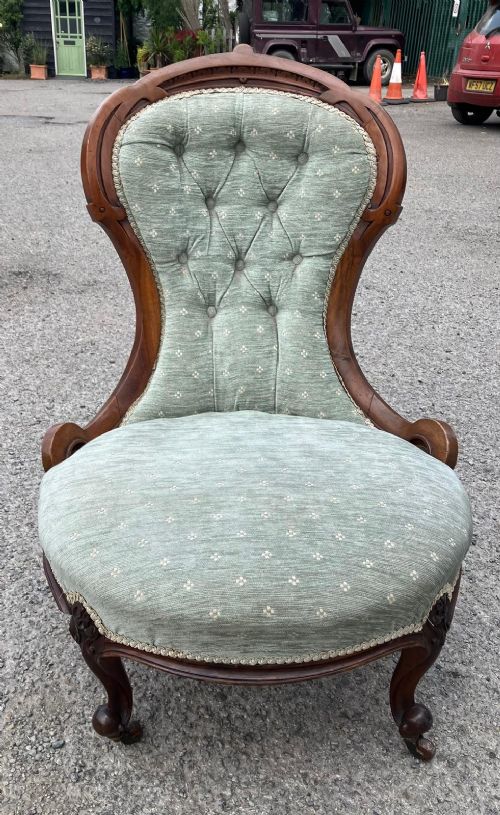
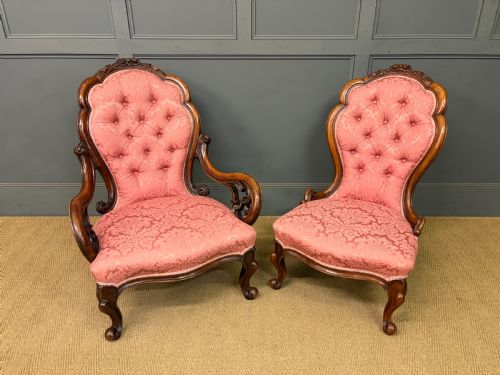
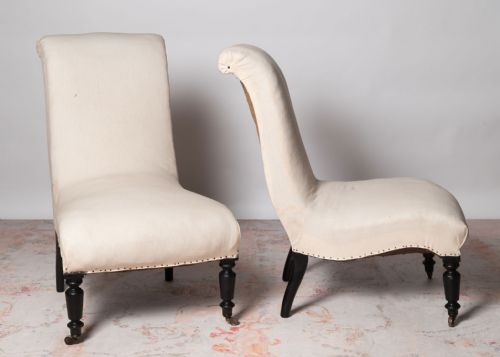
The selections on this page span the 19th century, Victorian, and Edwardian eras, encompassing English and French origins. Buyers encounter low-backed, spoon-backed, and button-backed forms upholstered in fabric, velvet, leather, and cotton.
Makers and regional styles vary from simple vernacular framing to sophisticated cabinet work. The overriding characteristic is the low seat height, which distinguishes these chairs from standard parlour seating.
How they were made
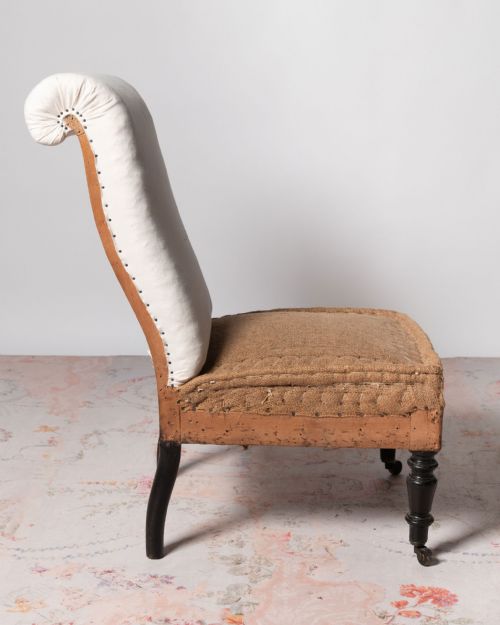
The frames of these low chairs are constructed primarily from timber such as mahogany, walnut, rosewood, and ebonised wood, occasionally supplemented by iron supports. Cabinetmakers shaped these hardwoods into scroll backs, spoon backs, and hoop backs.
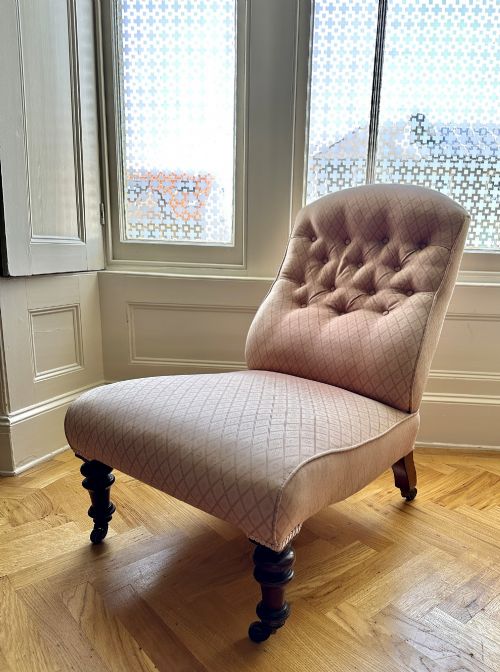
Upholstery techniques define the character of the seating, utilising traditional stuffing finished in velvet, cotton, fabric, leather, and brass detailing. Button-backing is a recurrent method used to secure deep padding within the Victorian and Edwardian examples.
The listings show chair frames fashioned from mahogany, walnut, rosewood, and iron, spanning the Victorian, Edwardian, and Napoleon III periods.
What varies in quality
The calibre of the timber framing sets the baseline, with finely figured walnut, rosewood, and carved mahogany sitting above simpler pine or mixed-wood structures. Structural integrity in the legs and back frames dictates the resilience of the chair.
Upholstery execution and the retention of original framing elements, such as bobbin legs or ceramic castors, influence the character of the piece. Refinement in proportion, particularly in diminutive or petite frames, separates standard regional work from high-workshop production.
Gillows·Howard and Sons
The Antique Slipper Fireside Chair Glossary
- Spoon back
- A padded chair back shaped in the concave contour of a spoon to fit the human spine. This style is particularly common in Victorian walnut seating.
- Button back
- An upholstery method where tufts or buttons are pulled deep into the padding in a diamond pattern. This technique secures the internal stuffing while creating a textured surface.
- Nursing chair
- A low-seated chair traditionally used in bedrooms for resting or tending children. The low height made tasks near the floor more manageable.
- Bobbin leg
- A turned furniture leg shaped to resemble a string of wooden bobbins or spools. This decorative turning appears frequently on 19th-century frames.
- Napoleon III
- A 19th-century French style spanning the reign of Napoleon III, known for eclectic revivals and plush upholstery. Pieces from this period often display scroll backs and exposed frames.
Antique Slipper Fireside Chair: Frequently Asked Questions
What is an antique slipper fireside chair used for?
These low seats were originally intended for bedrooms and dressing rooms, providing a comfortable place to put on shoes or tend to children by the fire. Today, their compact footprint makes them popular as accent chairs in living spaces.
Their reduced height also suits low ceilings and smaller rooms where standard armchairs might overwhelm the floor plan.
How do I date an antique slipper fireside chair?
Dating relies on timber choices, frame shapes, and upholstery styles recorded across the 19th century and Edwardian eras. Early Victorian examples often feature rosewood or walnut with spoon backs, while later Victorian and Edwardian pieces introduce ebonised finishes and simpler turned legs.
Hardware such as brass castors and construction methods within the frame provide further chronological clues.
Are nursing chairs and slipper chairs the same thing?
While both terms describe low-seated Victorian and 19th-century chairs, they overlap significantly in historical and modern cataloguing. Slipper chairs often emphasise a low profile for dressing, whereas nursing chairs traditionally feature slightly taller backs for infant care.
Both types share the defining characteristic of a low seat height designed for relaxed indoor seating.
How do I incorporate these chairs into a modern interior?
Their diminutive scale allows these chairs to fit into corners, bedrooms, or beside fireplaces where space is limited. Pairing them with contemporary furnishings highlights their historic carved wood frames and traditional textiles.
Many examples also serve as statement pieces when re-upholstered in contemporary cotton, velvet, or vintage fabrics.