




Vintage Long Floor Runner
A vintage long floor runner brings depth and historical character to a hallway, drawing the eye along extended spaces with traditional patterns.
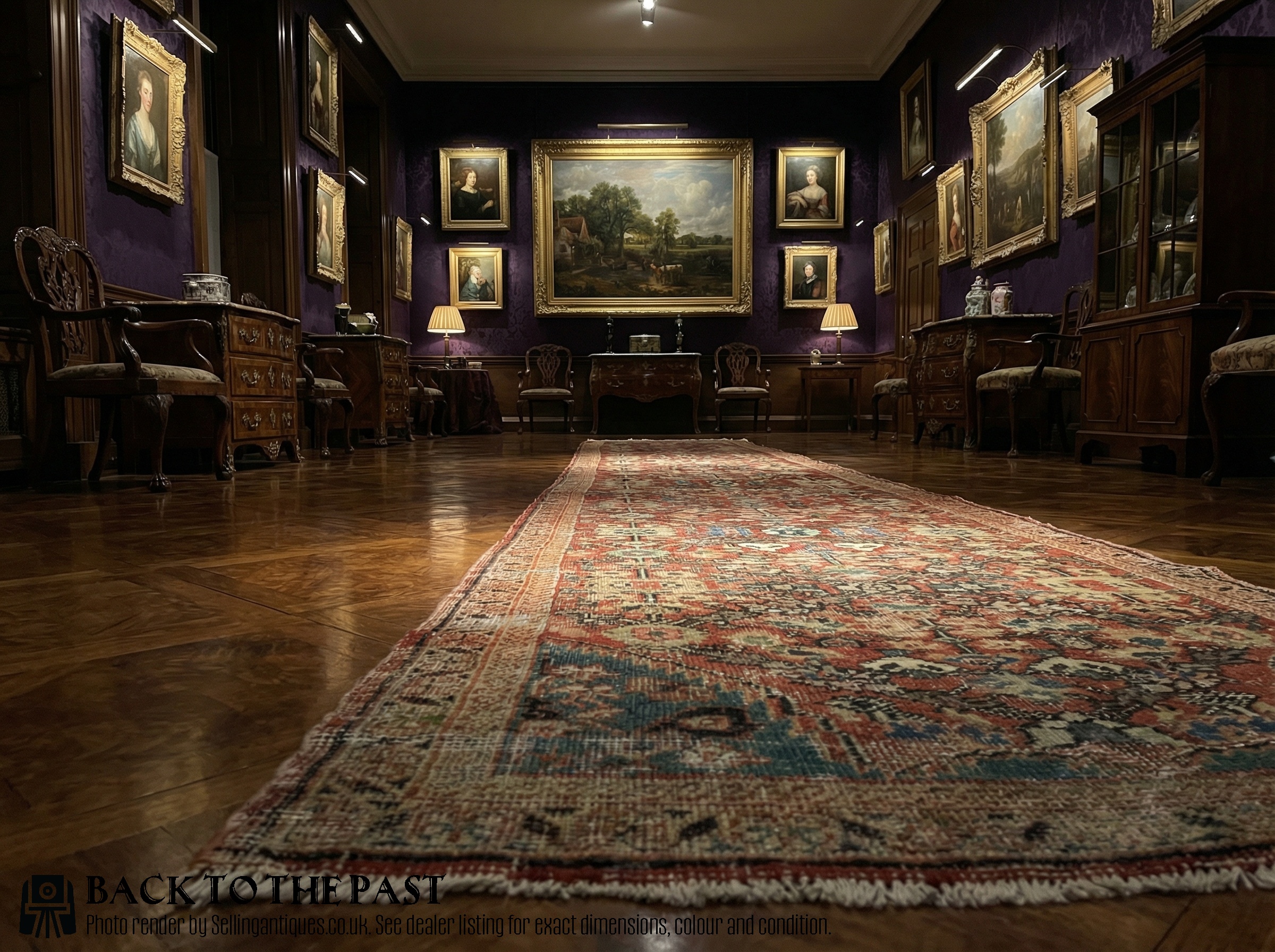
Vintage Long Floor Runner
A vintage long floor runner is a narrow, elongated textile designed specifically for corridors, hallways, and extended gallery spaces. These pieces combine practical floor coverage with intricate cultural weaving traditions from Persia, the Caucasus, and Turkey.
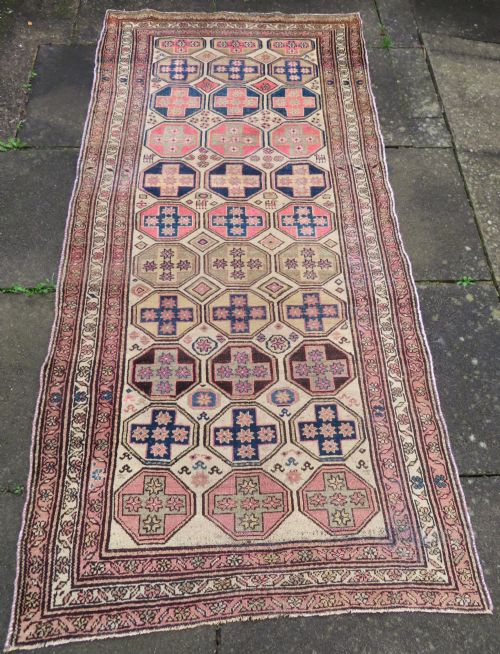
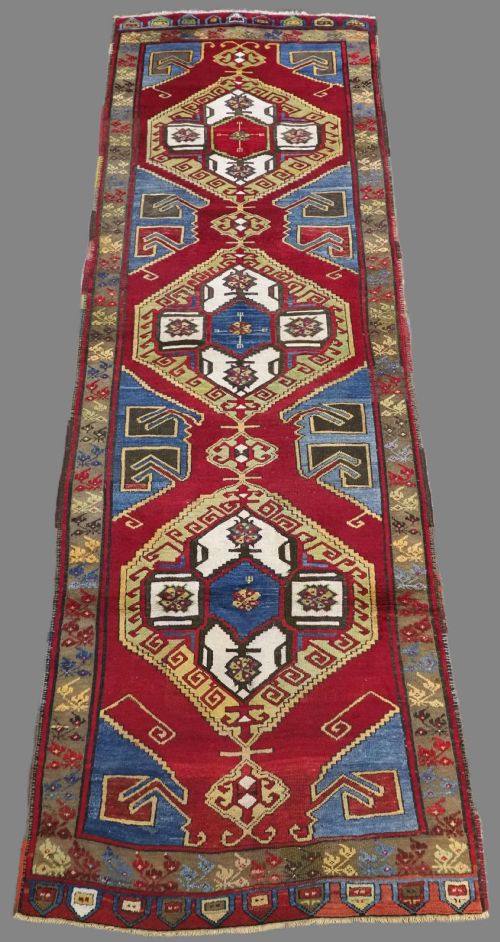
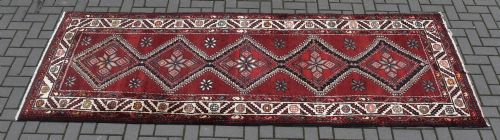
The selections available here span from the late nineteenth century through to the 1930s, encompassing regional workshops and tribal nomad output. Buyers encounter Heriz, Bidjar, Ushak, and Caucasian village formats measuring several metres in length.
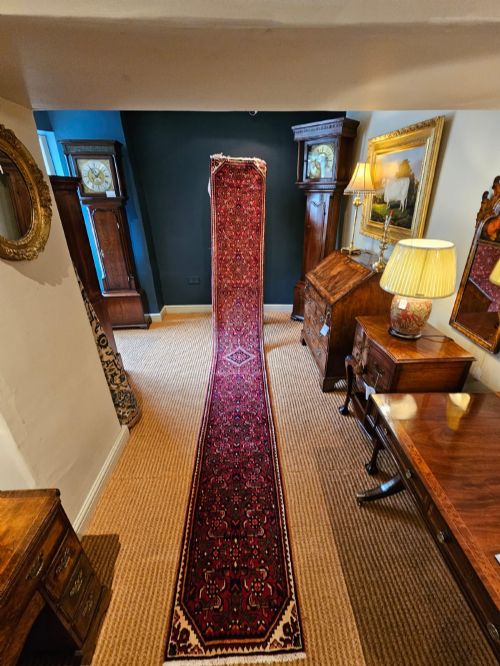
Narrow formats dominate the offerings, often proportioned specifically for traditional nineteenth and early twentieth-century architectural corridors. These textiles provide an authentic foundation for high-traffic walkways while retaining distinct historic artistic merit.
Materials and construction methods
Weavers constructed these runners almost entirely from wool and hand-spun wool, yielding resilient piles capable of enduring decades of heavy corridor foot traffic. Cotton foundations frequently support the denser Persian city weaves, ensuring structural stability along extended linear dimensions.
Traditional handweaving techniques dominate the inventory, utilising natural dye stuffs to achieve the characteristic deep navy blues, mellow reds, and muted earth tones. Flatweave Soumak and pile-knotted structures reflect distinct regional techniques passed down through generations of tribal and village artisans.
Listings feature wool and hand-spun wool floor runners originating from 1870 through the 1930s.
Distinguishing quality across examples
Quality in these extended textiles rests upon the tightness of the knotting, the precision of the geometric or floral layout, and the integrity of the foundation. Finer city workshops achieve crisper detail in medallion and lattice designs compared to looser village or tribal interpretations.
The depth and ageing of the wool pile dictate tactile and visual success, where even distressed surfaces retain structural soundness and pleasing colour oxidation. Edge binding condition and the preservation of original kilim ends heavily influence the desirability of an antique runner.
The Vintage Long Floor Runner Glossary
- Runner
- A long, narrow carpet format traditionally utilised for hallways, corridors, and stairs. These pieces guide movement through domestic architectural spaces.
- Kelleh
- A large rectangular or elongated carpet format produced in Persian workshops. These substantial pieces offer wider proportions than standard narrow runners.
- Soumak
- A flatweaving technique producing a durable textile without a cut pile. This method creates a textured surface with distinctive wrap-around stitch details on the reverse.
- Boteh
- A traditional teardrop or almond-shaped motif representing a floral cluster or cypress tree. This ancient symbol appears frequently across Persian and Caucasian weaving.
- Karaja
- A specific village workshop style originating from the Heriz region. These carpets display bold geometric medallions rendered in saturated primary tones.
Vintage Long Floor Runner: Frequently Asked Questions
Where should I place a long runner?
These narrow textiles suit hallways, corridors, landings, and wide gallery spaces where linear floor coverage enhances the room. They protect high-traffic wooden floorboards while softening acoustics in long stone or timber passages.
Ensure you measure both the length and width of your corridor carefully, leaving a consistent margin of exposed floor around the perimeter of the rug.
How do I care for antique wool runners?
Vacuum your textile gently on a low suction setting without a rotating brush bar to protect the aged wool pile and original edges. Professional specialist cleaning remains essential every few years to remove embedded grit from the foundation.
Utilise a breathable underlay beneath the runner to prevent slipping and reduce friction between the historic wool and the hard floor surface.
How do I identify a Heriz runner?
Heriz runners typically feature bold, geometric central medallions constructed with sturdy, large-scale motifs rather than delicate curved florals. The palette often incorporates strong terracotta, navy blue, and ivory tones woven onto robust cotton foundations.
Look for a characteristic rustic stiffness and heavy structural weight that allows these nineteenth and early twentieth-century pieces to lie flat in busy hallways.
What is a Caucasian long rug?
Caucasian pieces originate from the mountainous region between the Black Sea and the Caspian Sea, characterised by striking geometric abstraction. Designs frequently incorporate stepped polygons, latch-hooks, and rigid diagonal lattice patterns executed in vibrant, contrasting dyes.
These village and tribal runners offer a more primitive, graphic aesthetic compared to the curvilinear floral output of urban Persian weaving centres.