

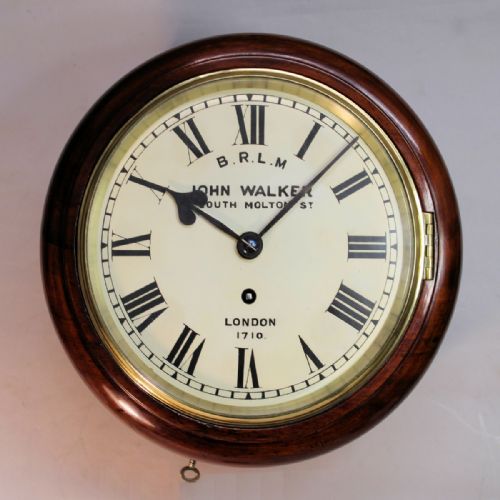


Vintage London Wall Clock
These vintage london wall clock pieces are timepieces that bring historic mechanical craft to interior walls, answering the need for functional horology.
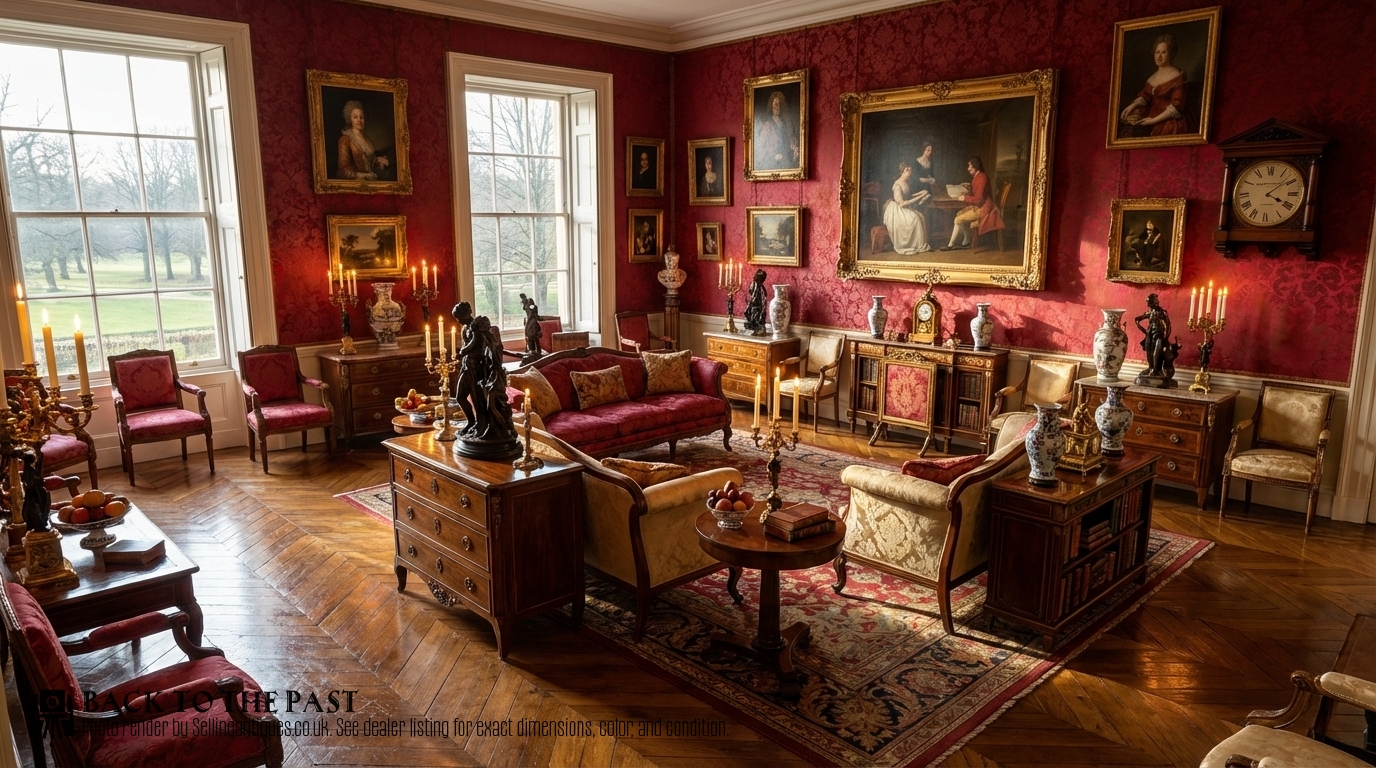
Vintage London Wall Clock
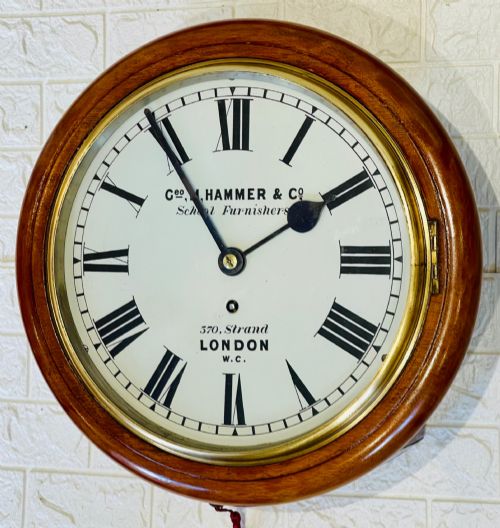
A vintage london wall clock encompasses timepieces originating from London makers across multiple centuries, including Victorian, Regency, and Georgian periods. These pieces appear frequently as round dial clocks, drop dial wall clocks, and railway or station timepieces.
Buyers encounter fusee movements housed in mahogany, walnut, or painted wooden cases, often bearing the names of notable London clockmakers on the dial face. The selections range from compact eight-inch dials to large advertising and transport board clocks.
How they were made
London makers utilised traditional joinery and brass gear cutting to produce reliable wall hanging timepieces designed for public spaces, railways, and domestic interiors.
Listings feature materials such as mahogany, brass, glass, enamel, iron, steel, and rosewood across the Victorian, Regency, and Georgian periods.
What varies in quality
Quality rests in the original maker's signature on the dial, the crispness of the timber case carving, and the complexity of the fusee movement. Retaining original painted dials and unpolished mahogany grain distinguishes superior examples.
The degree of historical provenance, such as railway or municipal service records, alters the character of the piece while case wood selection dictates the overall visual weight.
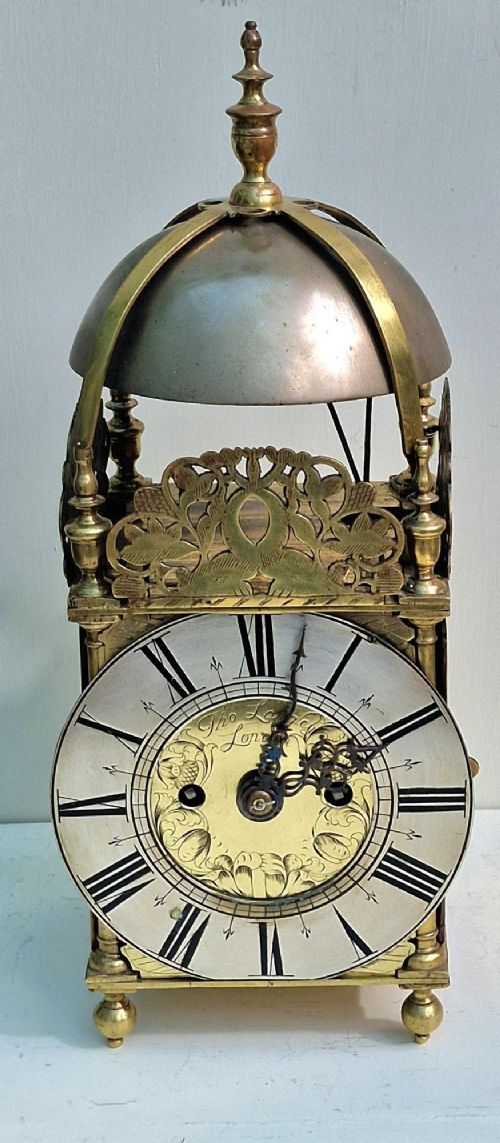
Thomas Langley·D and J Wellby·John Walker·Ganthony of London·Kelvin White and Hutton·Smiths of London·John Wilson·Kleyser of London·R Roberts of London·Dent of London·Francis Perigal·Haley and Milner·Palmer and Co·Camerer Cuss·C Coleman·J Beckett·Sansom·Webster·Peter Debaufre
The Vintage London Wall Clock Glossary
- Fusee
- A conical pulley used with a chain or cord to maintain even tension on the gear train as the mainspring unwinds. This mechanism ensures accurate timekeeping throughout the power reserve.
- Drop dial
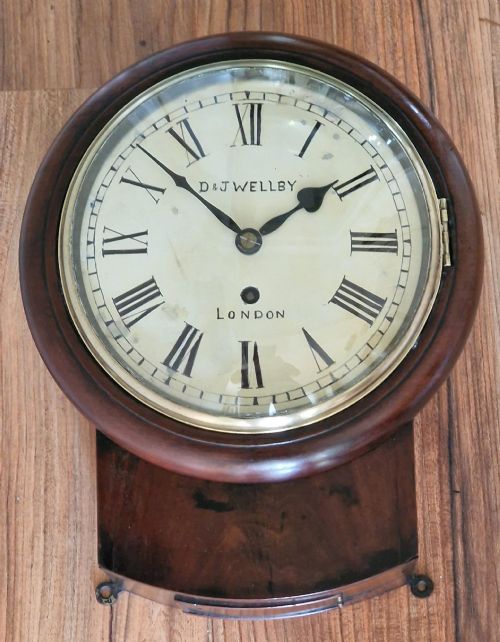
- A wall clock case featuring an extended lower trunk or box below the circular dial. This shape accommodates the pendulum swing in a compact wall-mounted format.
- Verge
- An early escapement type utilising a crown wheel and pallets. It permits a traditional ticking action found in older timepieces.
- Silver gilt
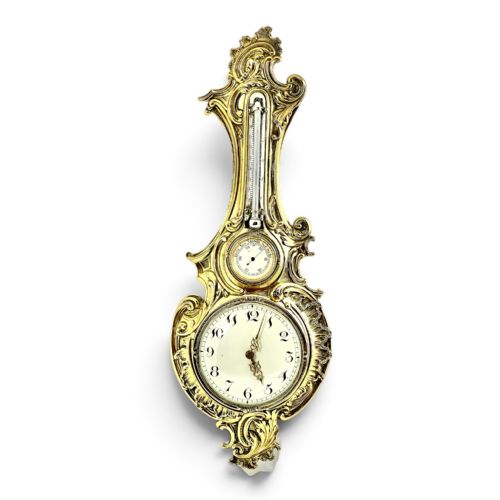
- Silver that has been plated with a thin layer of gold. This finish appears on decorative barometer and clock combinations.
- Convex dial
- A clock face that curves outward toward the viewer. This shape reduces glare from interior lighting.
Vintage London Wall Clock: Frequently Asked Questions
How do fusee wall clocks work?
A fusee movement uses a conical pulley and chain to equalize the force of the mainspring as it runs down. This design delivers steady power to the escapement for reliable timekeeping.
winding the clock requires a key inserted directly into the dial face to tension the spring via the fusee chain.
Where were these station clocks used?
Railway companies, municipal offices, and public transport boards installed these dials in waiting rooms, offices, and platform spaces. Their clear numbering allowed passengers and staff to read the time from a distance.
many bear inscriptions or company initials on the dial surface recording their operational history.
How do I hang a heavy wall clock?
Mounting requires securing a heavy wooden or brass cased clock directly into wall studs or using heavy duty masonry anchors. The weight of mahogany and brass movements demands robust support.
ensure the case hangs plumb so the pendulum swings freely without catching on the interior backboard.
What is a drop dial clock?
A drop dial clock combines a circular upper dial frame with a lower wooden trunk that houses the pendulum. This configuration protects the mechanism while providing a balanced silhouette on the wall.
the side doors on the trunk allow easy access to regulate the pendulum.