


Vintage Locking Drawers
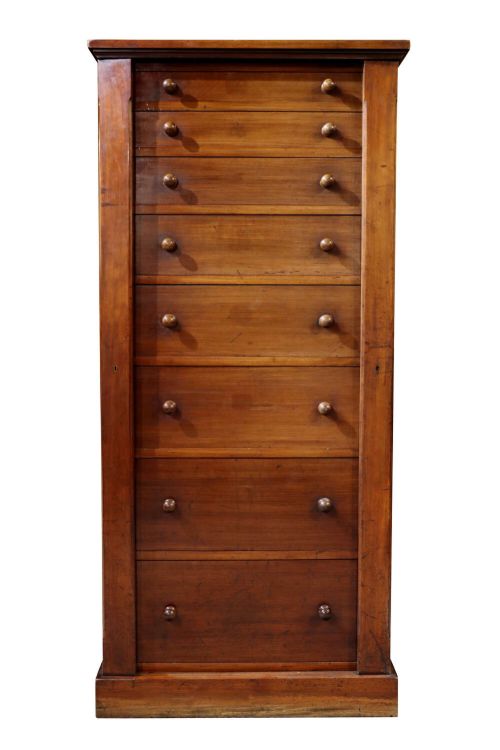
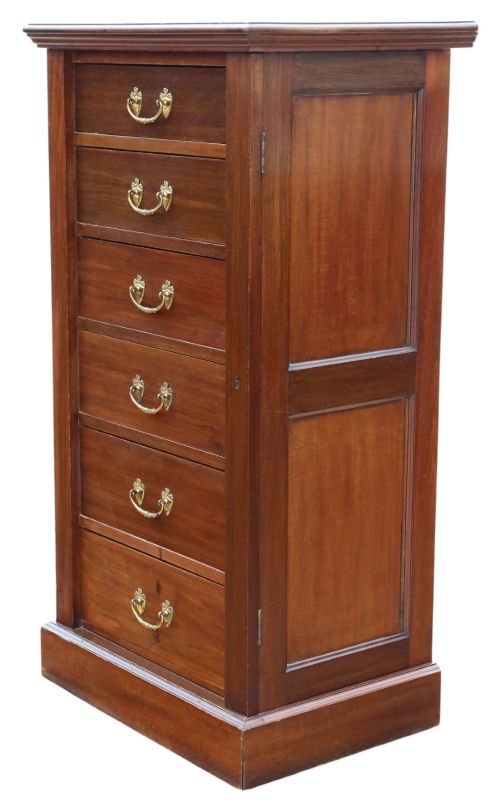
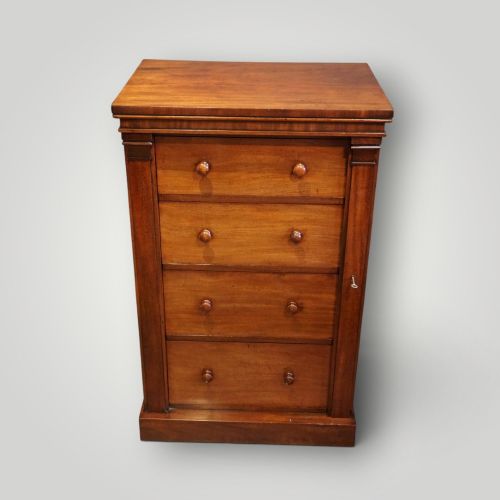
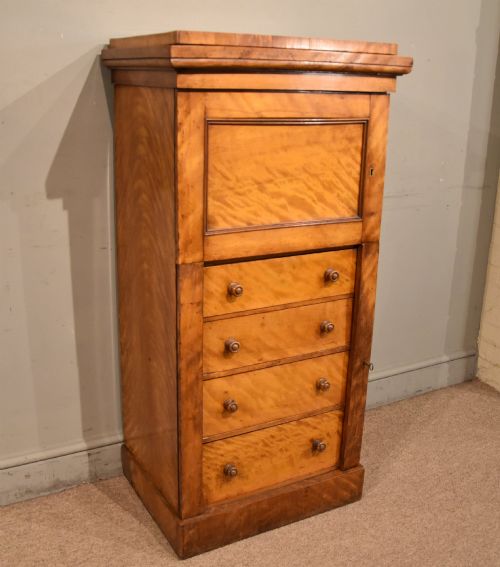
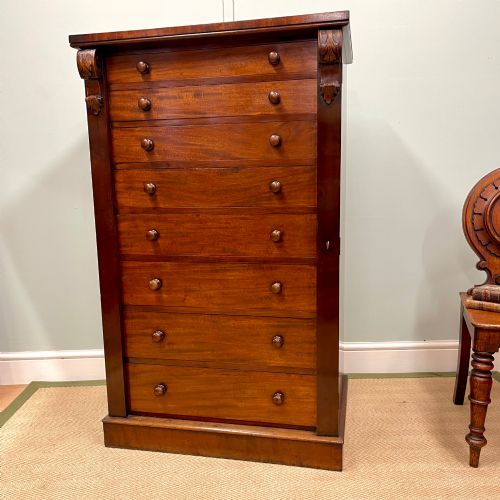
Vintage locking drawers are secure storage pieces designed to protect valuable contents, and the Wellington chest is the most common form you will find here.
Vintage Locking Drawers
Vintage locking drawers most frequently appear on this page in the form of the tall, narrow Wellington chest, alongside apothecary boxes, humidors, and collectors cabinets. These pieces span periods from the nineteenth century through the Edwardian era and the twentieth century, bringing secure compartment storage into domestic and professional interiors.
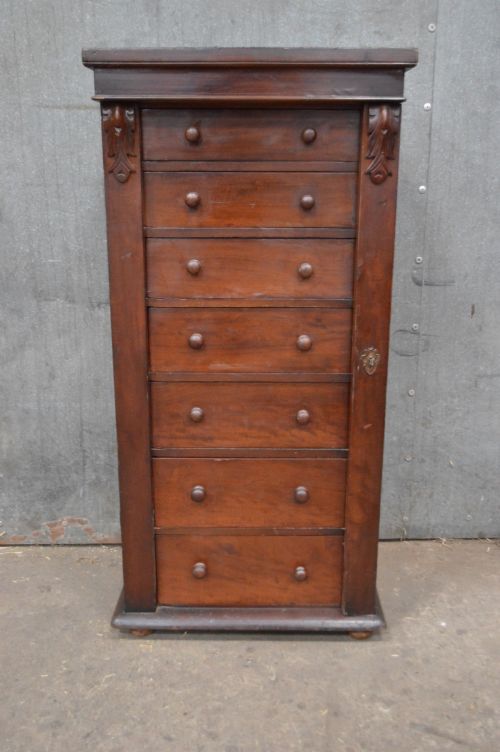
The format is dominated by tall chests featuring a hinged vertical locking stile that secures all the drawers at once with a single key. Cabinet makers constructed these vertical designs to maximise storage capacity whilst taking up minimal floor space in a room.
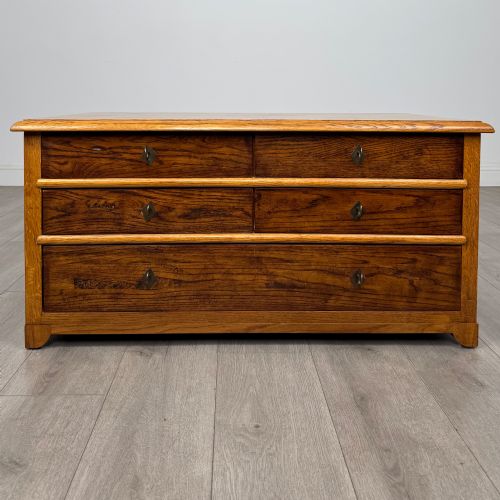
While mahogany is the most typical timber encountered, examples also emerge in walnut, oak, satin birch, burr elm, ash, and rosewood. Variations range from simple country house pieces with scumble paint to highly figured examples featuring satinwood inlay or fall-front secretaire drawers.
How they were made
Cabinet makers utilised dense hardwoods such as mahogany, oak, and walnut for the primary carcases, often applying flame mahogany veneer, burr walnut, or pollard oak to the drawer fronts to create striking grain patterns. Brass hardware, including escutcheons, drop handles, and locking mechanisms, provides functional contrast to the polished timber surfaces.
Construction relies on traditional joinery techniques to house multiple shallow drawers within a slender frame that must support the weight of the locking stile. Interior fitments sometimes include hinged fall-front writing surfaces or specialised dividers for collectors and apothecaries.
Listings feature locking drawer units from the Victorian, Edwardian, and 19th-century periods, constructed in mahogany, oak, walnut, and rosewood.
What varies in quality
The integrity of the locking mechanism and the smooth operation of the vertical stile determine daily utility. Pieces retaining their original working key and intact locking bar hold greater structural and historical completeness.
Gillows of Lancaster·Maple and Co·Druce and Co
The Vintage Locking Drawers Glossary
- Wellington chest
- A tall, narrow chest of drawers characterised by a hinged locking arm or stile on one side that secures all the drawers when locked. This form typically contains six or seven drawers.
- Secretaire
- A cabinet or chest incorporating a pull-out or hinged drawer front that serves as a writing desk, often revealing small inner compartments and pigeonholes.
- Scumble paint
- A decorative paint technique applied over a base coat to imitate the grain of more expensive wood or to create a mottled finish. It is frequently found on country house furniture.
- Escutcheon
- A protective plate surrounding the keyhole of a drawer or cabinet door, usually cast in brass to prevent wear to the surrounding wood.
- Humidor
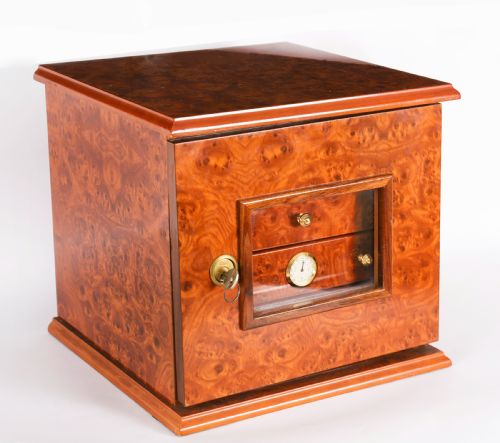
- A specialised cabinet or box designed to store cigars at a regulated humidity, often lined with moisture-retentive timbers.
Vintage Locking Drawers: Frequently Asked Questions
What were apothecary boxes used for?
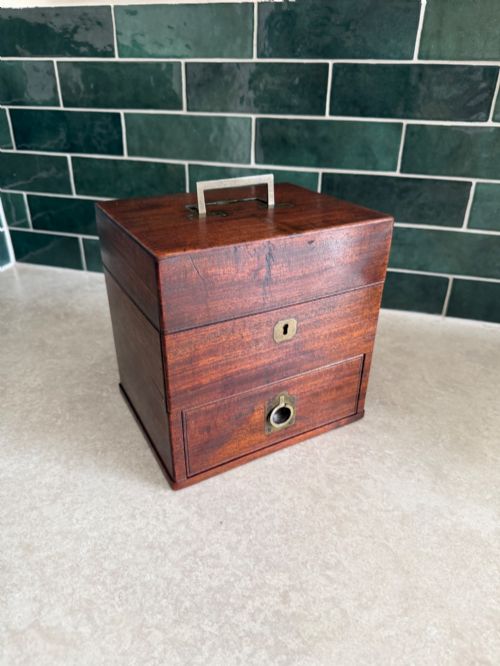
Apothecary boxes were portable or tabletop storage chests used by medical practitioners to house medicinal bottles, scales, and compounding ingredients safely. They feature fitted internal compartments tailored for glass phials.
These boxes represent a specific category of locking storage designed for travel and professional practice.
How do I date an oak Wellington chest?
Dating an oak Wellington chest involves examining the timber preparation, handle styles, and construction methods used inside the drawer linings. Pieces from the Victorian period often display hand-cut dovetails and specific secondary timbers.
Comparing the overall proportions and decorative details against known nineteenth-century design patterns helps narrow the decade of manufacture.
Where should I place a collectors cabinet?
Collectors cabinets require stable environmental conditions away from direct sunlight and rapid temperature changes to protect sensitive timber surfaces and contents. Placing them against an interior wall in a principal room ensures they are both safe and visible.
The slender footprint of these locking pieces makes them suitable for studies, hallways, and drawing rooms.