
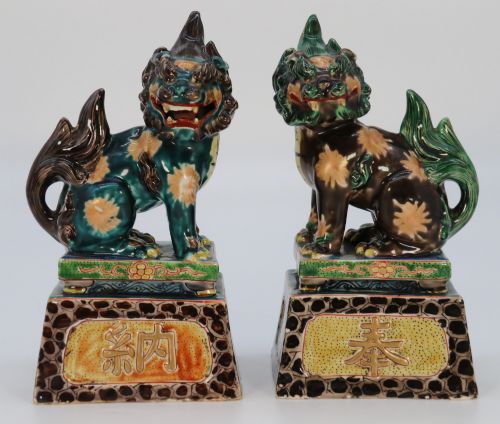
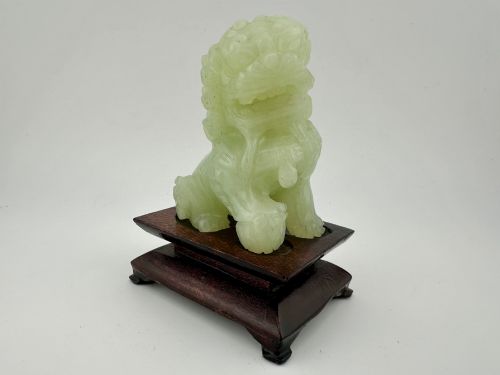
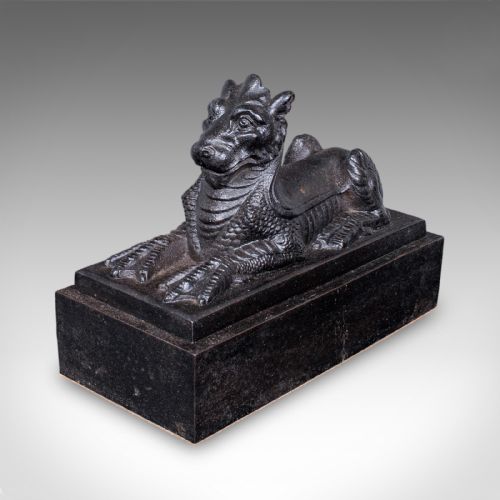
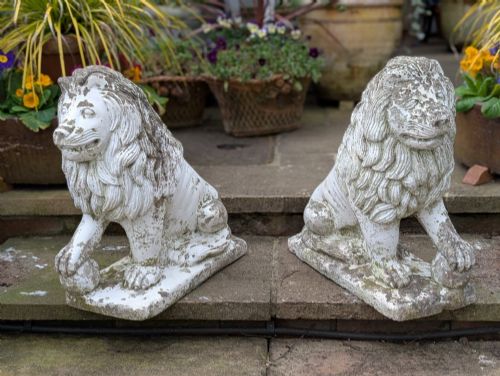


Vintage Lion Ornaments
These vintage lion ornaments range from heavy iron doorstops to grand garden statues, offering domestic character and classical presence.
Vintage Lion Ornaments
Vintage lion ornaments encompass a diverse array of decorative objects, garden sculptures, and functional items such as doorstops, bookends, and desk seals. The selection spans the nineteenth century through the mid-twentieth century, drawing on Victorian, Regency, Neoclassical, and Art Deco design idioms.
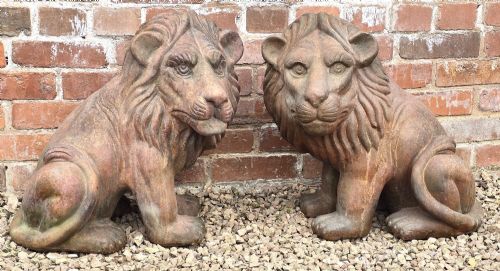
Domestic interiors frequently yield cast iron doorstops, ceramic bookends, and small bronze or silver desk figures. Exterior spaces accommodate larger pairs of reconstituted stone, terracotta, and marble guardians, reflecting traditional architectural ornament.
Materials and Technique
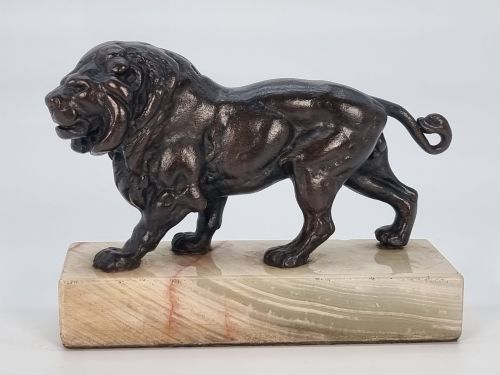
Metalwork pieces utilise cast iron, bronze, brass, and silver, often shaped through traditional foundry casting or detailed chasing. Iron doorstops and brass ornaments demonstrate robust industrial and workshop methods from the Victorian and Regency eras.
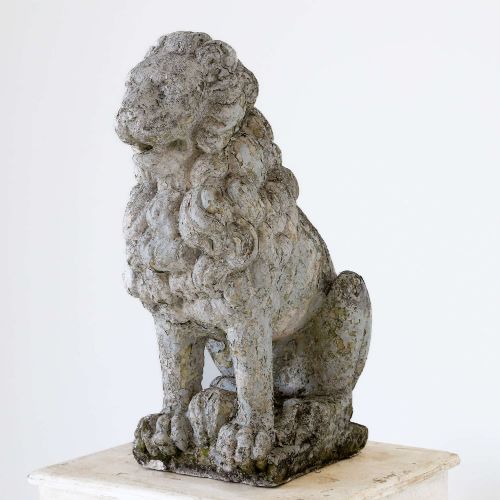
Stone and ceramic examples employ reconstituted stone, terracotta, earthenware, and marble, shaped through hand sculpting, composite casting, and glazed finishes. Terracotta and stone garden figures rely on durable outdoor aggregates and fired clays designed to weather over time.
Listings feature iron, bronze, brass, terracotta, stone, marble, and ceramic, showing how diverse materials shaped nineteenth- and twentieth-century animal ornaments.
Judging Quality
Scale and proportion dictate the presence of architectural and decorative pieces, where well-balanced pairs command greater architectural impact. The integrity of the material, from dense marble and bronze to patinated cast iron, governs the longevity and visual weight of the ornament.
Lancaster and Sons of Hanley·Mario Bucellati·Louis Riche
The Vintage Lion Ornaments Glossary
- Animalier
- A nineteenth-century artistic movement focusing on the realistic portrayal of animals in sculpture. Practitioners worked primarily in bronze to capture naturalistic movement and tension.
- Medici Lion
- A classic sculptural form modelled on the ancient marble lions guarding the Villa Medici in Rome. These figures typically appear as a symmetrical pair with one paw resting upon a sphere.
- Shi Shi
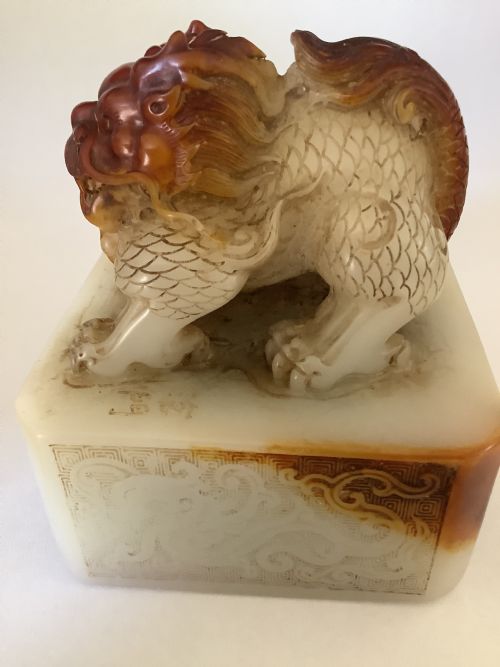
- A traditional guardian lion figure originating in Chinese art, often depicted seated and acting as a protective symbol. They appear carved in soapstone or jade-type materials.
- Rampant
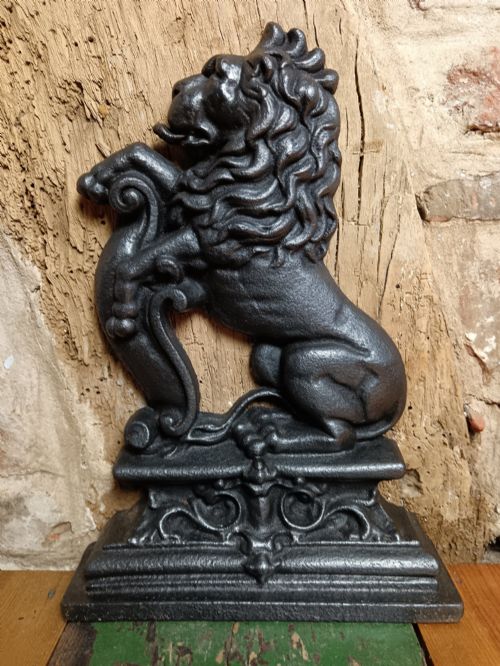
- A heraldic posture showing a beast standing on its hind legs with forelegs elevated. This stance frequently appears on iron doorstops and cast metal plaques.
- Recumbent
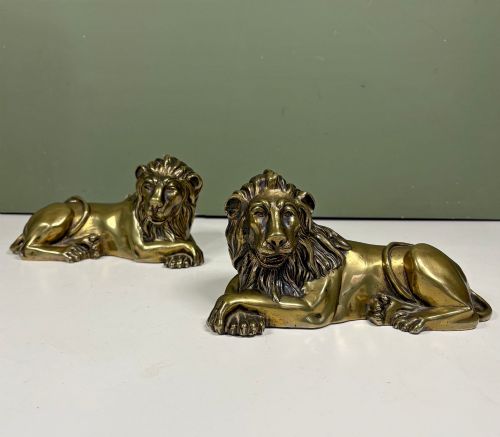
- A sculptural pose depicting an animal lying down while remaining alert. Pairs of recumbent lions often function as bookends or mantel ornaments.
Vintage Lion Ornaments: Frequently Asked Questions
How do I identify a cast iron lion doorstop?
Cast iron doorstops from the nineteenth century exhibit substantial weight, magnetic properties, and often show surface oxidation beneath layers of old paint. Look for a flat or recessed back designed to sit flush against doors.
Maker marks are uncommon, but the casting quality and heft distinguish genuine period examples from lighter modern reproductions.
Where should I place stone lion garden ornaments?
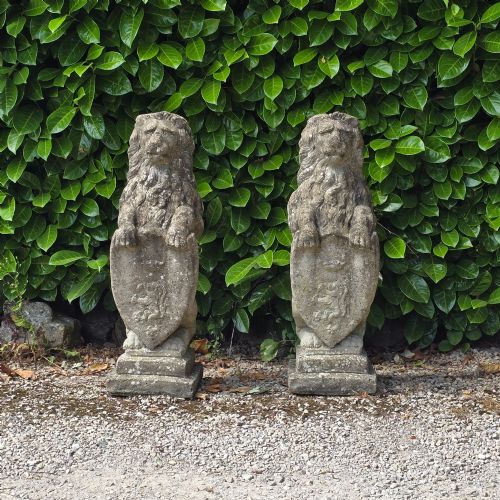
Reconstituted stone and terracotta lions suit garden entrances, patio steps, and porch flanks where they act as traditional guardians. Ensure they rest on stable, level footings to support their substantial weight.
Allow the stone to weather naturally outdoors, protecting delicate terracotta from severe winter frosts if local temperatures drop significantly.
What is the difference between bronze and brass lion figures?
Bronze is an alloy of copper and tin that develops a rich, dark patina over decades and yields a heavier, deeper metallic resonance. Brass contains copper and zinc, producing a brighter, more golden hue when polished.
Victorian and Regency desk ornaments utilise both metals depending on the desired decorative finish and workshop tradition.
How do I care for antique ceramic and Staffordshire lions?
Staffordshire pottery figures and ceramic bookends require gentle dusting with a dry, soft brush to preserve painted details and glaze surfaces. Avoid using liquid cleaners or abrasive cloths that can degrade historic pigments.
Keep ceramic pieces away from direct sunlight and areas prone to high humidity to prevent crazing in the glaze.