




Antique Animal Bookends Pair
An antique animal bookends pair holds shelves together with character, bringing sculpted lions, bears and dogs directly into the library.
Antique Animal Bookends Pair
An antique animal bookends pair brings sculptural subjects into the library, using creatures from domestic dogs and cats to exotic elephants, lions and goldfish to keep volumes upright on the shelf. These pieces range from the 19th century through the Edwardian period and into the 1930s, reflecting changing domestic tastes across Victorian, Art Deco and Black Forest styles.
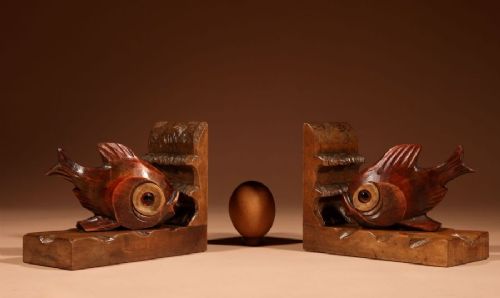
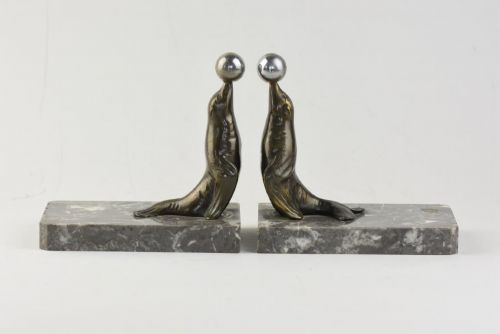
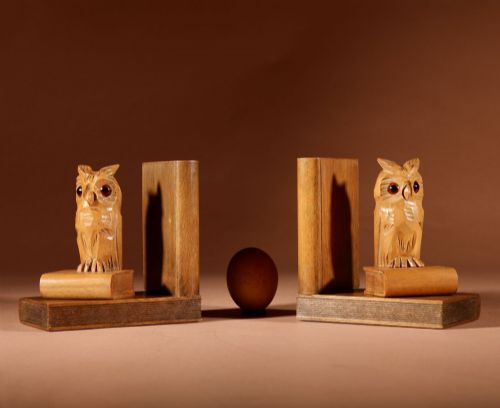
The most common form encountered here is the Black Forest carved wooden pair depicting owls, bears, elephants or goldfish, dating from around 1900 to 1920. Alongside these carved wooden examples, buyers frequently meet cast metal, bronze, brass, ceramic and marble pairs depicting dogs, sea lions and classical animals.
Makers and workshops across Europe and Asia produced these functional sculptures from durable materials, mounting heavy creatures like stone lions and marble dogs securely onto sturdy bases. Their primary role shifted from purely decorative mantel figures into functional desk and bookshelf accessories as personal libraries expanded in the late 19th and early 20th centuries.
How they were made
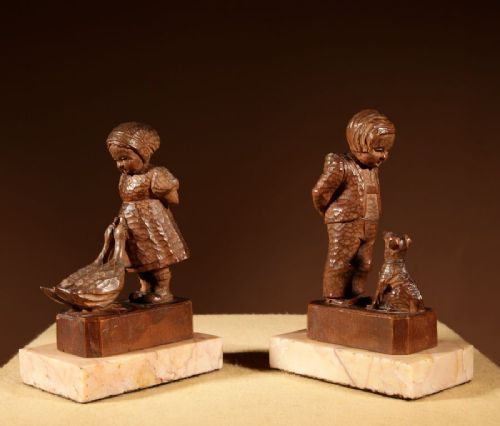
Carvers shaped Linden wood, ebony, pine and coromandel into detailed animal forms, frequently applying glass eyes or painted finishes to bring expression to Black Forest bears, owls and goldfish. Woodworking techniques involved hand-tooling every feather, fur texture and facial feature directly into the solid timber.
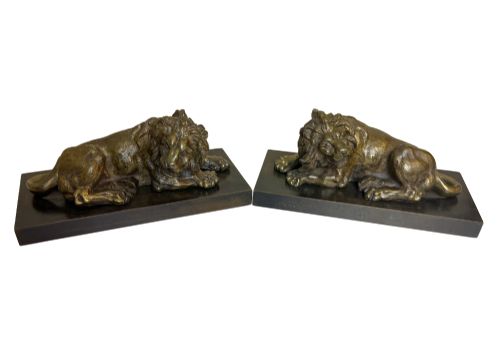
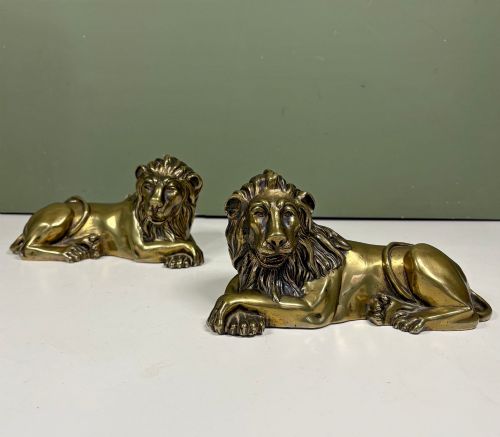
Foundries cast bronze, brass, cast iron and silvered bronze into robust figures using traditional metalworking methods, mounting the heavier metallic creatures onto marble, olive wood or stone bases for stability. Ceramic and plaster versions received treacle glazes, paint or smooth finishes before firing or curing in Victorian and Edwardian kilns.
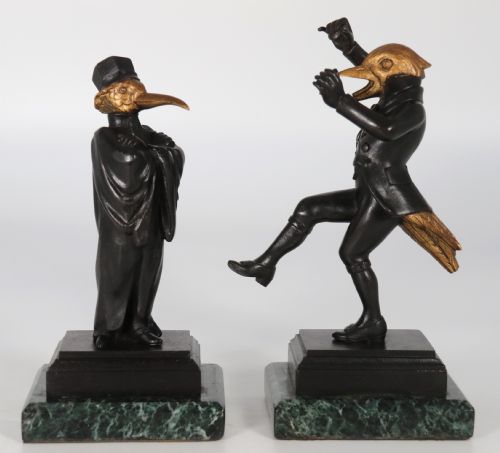
Goldfish and theatrical birds join the usual lions and dogs on the bookshelf.
What varies in quality
Carving depth and anatomical expression separate standard production pieces from exceptional works, particularly within Black Forest wooden animals where hand-tooled fur and lifelike posture dictate the level of artistry. Metal castings show similar variation, where crisp chasing on bronze and brass details retains sharpness that cheaper mass-produced iron misses.
Material selection and base construction govern the structural integrity of the pair, distinguishing solid hardwoods, heavy marbles and genuine bronzes from lighter plaster and hollow substitutes. The harmony between the two matching figures and the weight of their respective bases determine how effectively the pair performs its practical task on the shelf.
C Omin·Karl Hagenauer
The Antique Animal Bookends Pair Glossary
- Black Forest
- A style of intricate wood carving originating from the mountainous region of central Europe, famous for lifelike bears, owls and woodland creatures. These carved items often utilise Linden wood and feature glass inset eyes.
- Treacle glaze
- A dark, glossy brown lead-based or ceramic glaze applied to pottery and earthenware to achieve a rich, translucent sheen. This lustrous coating appeared frequently on Victorian ceramic animal figures.
- Green Serpentine Marble
- A dense, mottled green ornamental stone often quarried in Italy and utilised for classical pedestals, architectural models and heavy bookend bases. Its distinctive serpentine veining mimics serpent skin.
- Grand Tour
- A cultural journey undertaken by wealthy young Europeans through France and Italy to collect classical antiquities, bronzes and souvenirs. These travels inspired many of the bronze lions and classical animal models found on this page.
Antique Animal Bookends Pair: Frequently Asked Questions
What animals appear most often?
Lions, elephants, dogs and owls dominate the selection across wood, bronze and ceramic materials. These creatures reflect popular Victorian and Edwardian tastes for exotic subjects alongside familiar domestic pets.
Scottish terriers, Westies, spaniels and greyhounds represent the dog figures, while Black Forest workshops specialised in bears, owls and goldfish carved from Linden wood.
How heavy are these bookends?
Weight varies entirely by the primary material and the density of the base supporting the sculpture. Metal castings and marble models provide natural heaviness to anchor heavy rows of books.
Wooden carvings often utilise dense timbers like ebony or coromandel, or sit upon weighted wooden platforms to ensure stability when holding volumes upright.
Are these pieces functional?
Every pair served a practical purpose on desks, side tables and bookshelves to keep collections of literature neatly aligned. Their sturdy construction allowed them to bear the weight of heavy hardback volumes.
Many double as standalone decorative sculptures or doorstops when removed from the library shelf, combining utility with decorative display.
How do I identify a Black Forest pair?
Black Forest pieces display hand-carved wooden construction, typically utilising Linden wood, with deep texturing that depicts fur, feathers or scales. They frequently incorporate glass eyes and playful expressions.
Originating from central European woodworking traditions around 1900, these carvings often depict bears, owls, elephants or goldfish in amusing poses.