




Vintage Leather Travel Chest
A vintage leather travel chest carries the weight of past journeys, offering robust storage built for nineteenth-century movement and twentieth-century voyages.
Vintage Leather Travel Chest
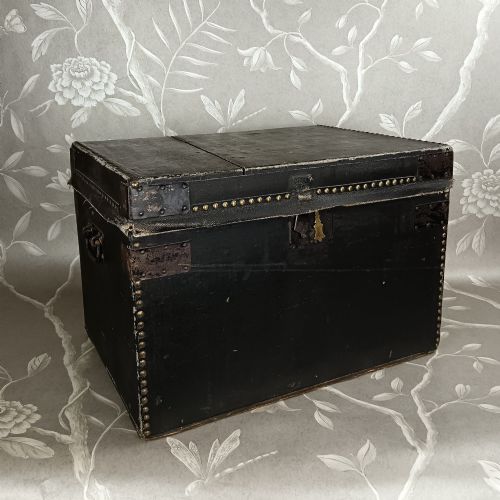
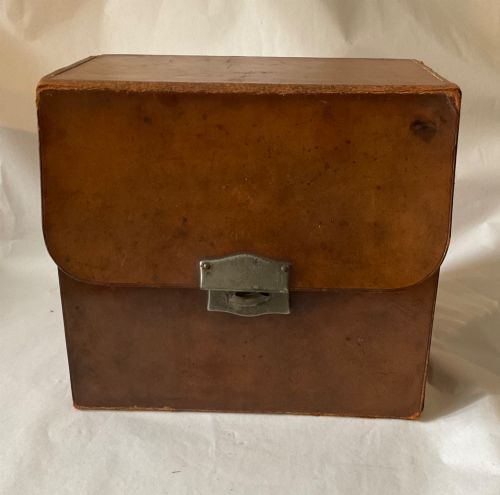
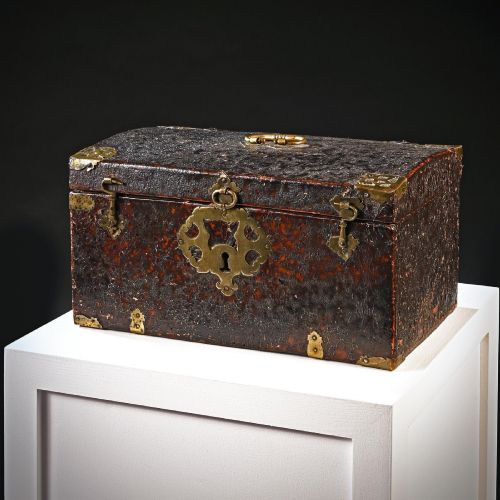
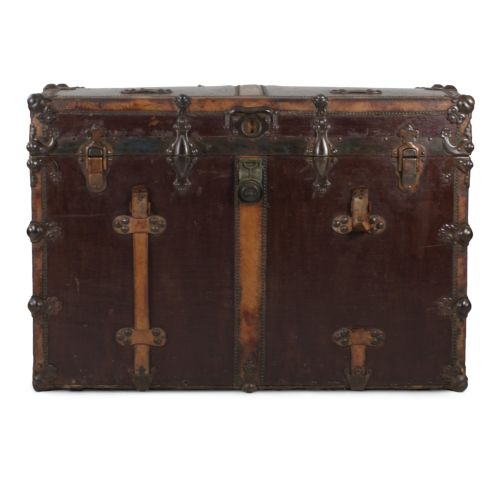
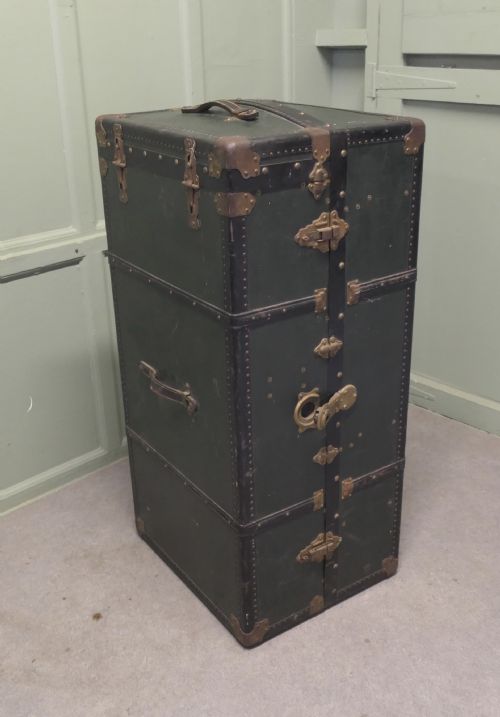
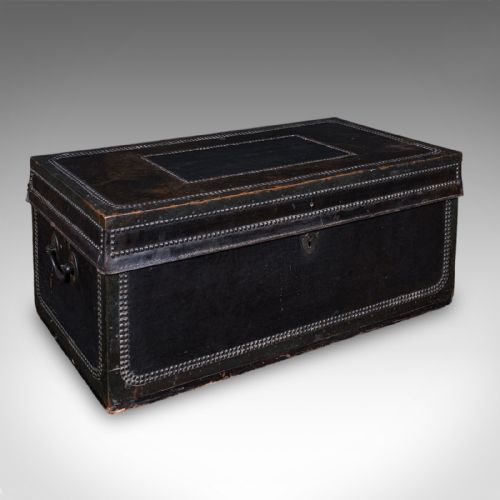
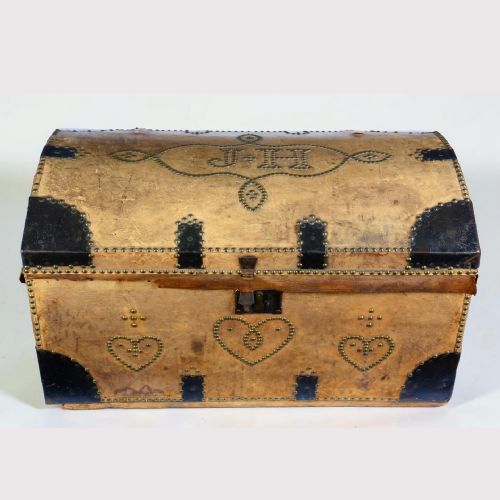
A vintage leather travel chest encompasses heavy coaching trunks, domed coffers, and fitted wardrobe luggage designed for transit by road, rail, and sea. Buyers searching this phrase encounter substantial pieces originating from the seventeenth century through to the 1930s.
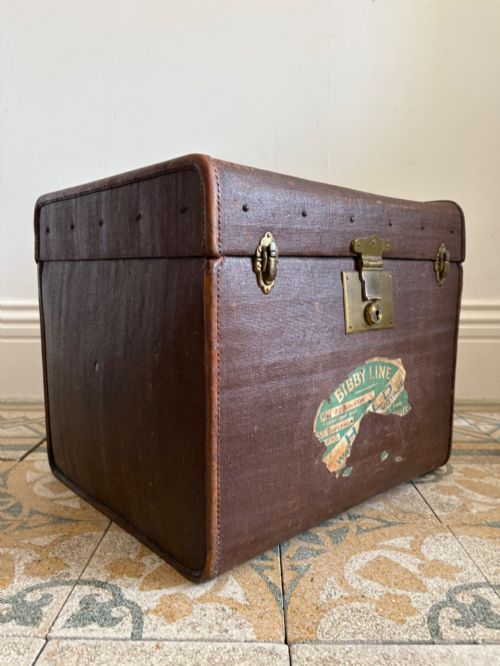
The most common examples on this page date from the Victorian and Edwardian eras, often constructed with reinforced corners and travel labels reflecting previous journeys. These utility pieces double as decorative storage tables and blanket boxes in modern interiors.
Materials and Construction
Maker workshops combined heavy timber frameworks with durable outer coverings of leather, hide, or canvas, secured using iron, brass, and metal studs. Brass bindings and corner brackets protected the edges from heavy handling during transit.
Internal compartments often utilised camphorwood, pine, or oak, occasionally fitted with specialised trays, hat boxes, or apothecary sections for personal belongings.
Listings span from the 17th Century to the 1930s, incorporating materials such as camphorwood, brass, iron, and canvas alongside traditional leather.
Assessing Quality
The distinction between standard utility luggage and superior examples lies in the integrity of the framing, the weight of the brass or iron hardware, and the execution of the studwork. Workshop markers, maker stamps, and original fitted interiors elevate the standing of a piece.
The retention of original leather surfaces, working locks, and authentic travel labels distinguishes well-preserved specimens from heavily altered or restored items.
Samuel Pratt·Wm. Insall of Bristol·Arthur Wannop·Drew and Sons·John Pound·Louis Vuitton·Goyard·Aux Etats Unis
The Vintage Leather Travel Chest Glossary
- Coaching trunk
- A heavy storage chest designed to be strapped to the roof of a horse-drawn coach or carriage. These date primarily from the eighteenth and nineteenth centuries.
- Steamer trunk
- A lower-profile luggage chest built to fit beneath the cabin berths of ocean liners during the early twentieth century. They often feature hinged lids or wardrobe compartments.
- Camphorwood
- An aromatic timber utilised for trunk interiors to deter insects and protect stored garments. It appears frequently in pieces with maritime or colonial origins.
- Portmanteau
- A large leather travel case that opens into two distinct packing compartments. They were standard baggage for Edwardian and Victorian travellers.
- Coffer
- A heavy box with a lid, traditionally used for holding valuables. Early examples frequently employ pegged timber covered in hide.
Vintage Leather Travel Chest: Frequently Asked Questions
How were these trunks transported?
These chests travelled on the roofs of horse-drawn coaches, inside railway carriages, and in the holds of steamships. Their robust construction of timber, leather, and metal protected contents against rough handling.
Luggage labels applied by hotels and transport companies often remain attached, documenting the specific journeys each chest undertook.
Can I use a travel chest as a coffee table?
Many buyers repurpose these sturdy trunks as coffee tables or end tables in living spaces. Their flat or domed lids provide a stable surface while the interior offers concealed storage.
Flat-topped steamer trunks and reinforced wooden chests adapt particularly well to domestic furniture use.
How do I identify the period of a trunk?
Dating relies on materials, construction techniques, and hardware styles. Earlier seventeenth and eighteenth-century pieces often feature exposed timber, hand-wrought iron, and pegged joints.
Victorian and Edwardian examples introduce stamped brass hardware, canvas coatings, and occasionally maker stamps or paper workshop labels inside the lid.
What is the difference between canvas and leather trunks?
While both materials served as protective outer layers over wooden frames, leather offered traditional durability for nineteenth-century coaching luggage. Waterproofed canvas gained popularity in the early twentieth century for lighter steamer trunks.
Both finishes were frequently bound with metal strips and secured with brass studs to withstand transit.