


Edwardian Leather Suitcase
An edwardian leather suitcase offers genuine travel history, combining robust construction with period character for modern storage and display.
Edwardian Leather Suitcase
An edwardian leather suitcase represents durable period travel gear, appearing in forms such as gentleman's valets, fitted travel cases, vanity boxes, and traditional luggage trunks. These pieces span the Edwardian era alongside surrounding periods from the late Victorian years through the 1930s, reflecting the luggage styles of early twentieth century travellers.
Buyers encounter varied formats, from small picnic cases and weekend overnight bags to large steamer trunks and graduated sets of vellum covered luggage. Many examples show extensive travel labels, offering a tangible record of historical journeys across Britain and beyond.
How they were made
Makers built these pieces primarily using thick leather, canvas, and vellum over sturdy wooden or iron frames, often reinforcing edges and corners with brass hardware. Interiors frequently incorporate fitted compartments made from wood or textile linings to hold specific travel accessories.
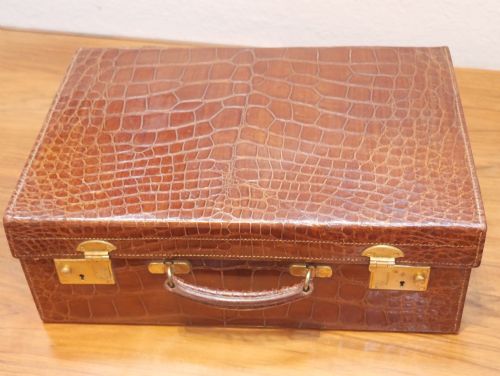
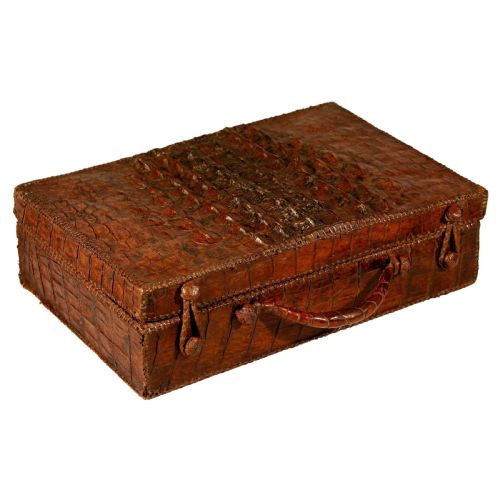
Specialist variations utilise exotic materials such as crocodile skin and hornback alligator leather, paired with metal clasps and lock mechanisms designed to withstand rigorous transit.
The listings feature traditional materials including brass, iron, wood, canvas, and crocodile skin alongside standard leather.
What varies in quality
The standard of a piece rests on the complexity of its internal fittings and the integrity of its structural materials, ranging from simple storage trunks to elaborate gentleman's valets with complete silver dressing table boxes. Pieces bearing established retail names or maker stamps carry distinct provenance.
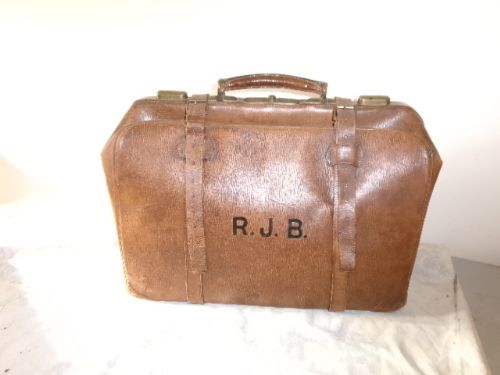
The presence of original travel labels, monograms, and intact leather patination distinguishes well preserved examples from those with heavy replacement parts or degraded surfaces.
Finnigan's Manchester·John Pound·Harrods·C.Antrobus·Finnegans of Bond Street London·JW Allen Strand·Bradshaws of Soho
The Edwardian Leather Suitcase Glossary
- Fitted interior
- An internal arrangement featuring dedicated compartments, trays, or containers designed to hold specific grooming items, bottles, or documents. This layout ensures items remain secure during transit.
- Vellum
- Fine calfskin or parchment stretched over a rigid core, providing a smooth, durable outer surface for luxury luggage. It often ages to a warm tone.
- Steamer trunk
- A lower profile travel chest designed to fit easily in the cabin or hold of a steamship. These trunks use robust wooden frames and metal banding.
- Gladstone bag
- A light portmanteau formed on a rigid metal frame that opens wide into two equal compartments. It remains a classic shape for short journeys.
- Gentleman's valet
- A specialised travel case equipped for personal grooming and wardrobe maintenance on the move. They frequently include silver mounted jars and brushes.
Edwardian Leather Suitcase: Frequently Asked Questions
How do I clean an old leather case?
Dust the surface gently with a soft dry cloth to remove loose particles. Apply a suitable leather conditioner sparingly to nourish the dry hide and preserve the original finish.
Avoid using modern chemical detergents or excessive water, which can permanently stain the leather and weaken the stitching along the seams.
Are these suitcases suitable for modern travel?
While these pieces were built for early twentieth century transport, their rigid wooden frames and brass latches offer sturdy storage solutions at home. Many buyers use them as decorative trunks or coffee tables.
Frequent modern airline travel may subject the delicate vintage leather and original hardware to handling damage, so gentle domestic use is generally advised.
What is a fitted interior?
A fitted interior contains custom compartments, straps, and holders designed to secure specific items such as glass bottles, silver brushes, or writing materials during a journey. These arrangements reflect the exact packing needs of Edwardian travellers.
Complete interiors with all original components intact are particularly valued by collectors for their completeness and craftsmanship.
How can I tell an Edwardian case from a Victorian one?
Edwardian pieces often feature lighter construction, brighter brass hardware, and interior layouts tailored to early motoring and streamlined rail travel. Victorian luggage tends to be heavier, employing dark wood frames and robust iron reinforcements.
Makers' stamps and associated travel labels can also help narrow down the specific decade of manufacture.