

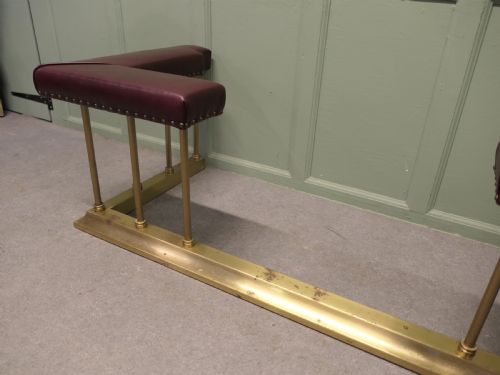


Vintage Leather Fireplace Seat
A vintage leather fireplace seat brings warmth and grounded comfort right to the hearth, offering a sturdy perch where fireside tradition meets enduring craftsmanship.
Vintage Leather Fireplace Seat
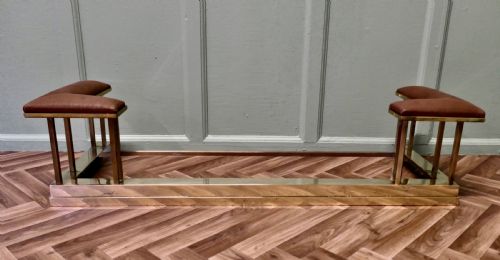
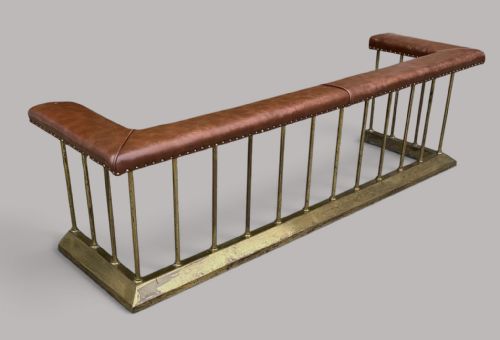
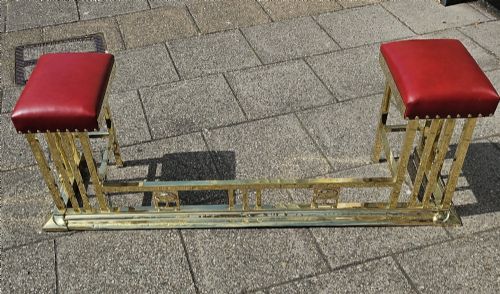
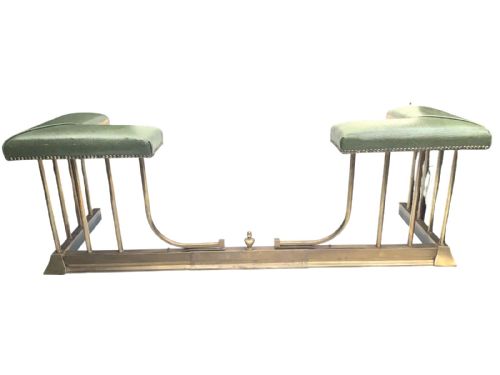
A vintage leather fireplace seat most commonly takes the form of a club fender, positioning padded seats low to the ground around the hearth. These pieces bridge the gap between architectural hardware and functional fireside furniture.
The selections available span from the nineteenth century through the Edwardian era and into the Art Deco period, capturing traditional English forms alongside Arts and Crafts designs.
While club fenders dominate the categories seen, occasional armchairs also appear, yet the quintessential low fender remains the primary focus for buyers seeking authentic fireside seating.
Materials and construction
Makers built the structural frameworks of these seats using robust metals including brass, steel, iron, copper, and wrought iron, paired with solid hardwoods such as mahogany and oak.
Upholstery relies on durable leather, often finished in mature tan or green shades, stretched over supportive padding to withstand the heat and daily use characteristic of the hearth.
Vintage Leather Fireplace Seat Retail Price Guide 2026
Typical asking prices for vintage leather fireplace seat among the pieces listed under this phrase on Sellingantiques today, from the lower quarter to the upper quarter. They describe what is for sale here now, not the wider market.
Listings feature periods spanning the nineteenth century, Victorian era, Edwardian period, and the 1920s through to the 1940s.
Assessing quality and character
Quality reveals itself in the substantial weight of the metal framework and the depth of finish in the timber and leather components. Heavier brass, iron, and steel structures demonstrate superior substance.
The integration of the upholstered top with the metal base dictates the overall refinement of the piece, separating standard utility items from more ambitious Arts and Crafts or Art Deco commissions.
William Birch
The Vintage Leather Fireplace Seat Glossary
- Club fender
- A low, U-shaped fireside seat featuring upholstered top rails supported by a metal frame. It allows people to sit directly around the hearth.
- Brass
- A durable alloy of copper and zinc commonly utilised for the structural balustrades and frames of period fenders. It polishes to a bright finish or ages with a dark patina.
- Art Deco
- A design style spanning the early twentieth century characterised by geometric forms and stylised details. Pieces from this era often combine heavy iron or brass with clean lines.
- Arts and Crafts
- A movement prioritising traditional craftsmanship and honest materials, frequently seen in solid oak frameworks. These works emphasise utility combined with simple decorative restraint.
Vintage Leather Fireplace Seat: Frequently Asked Questions
What is a club fender?
A club fender is a low-level seating structure built around an open fireplace. It provides a warm vantage point close to the flames.
Originally designed to maximise heat absorption in large rooms, these seats combine metal frames with padded leather tops.
How do I style a fireplace seat?
Position the fender directly against the hearth to frame the fireplace opening. It acts as both a functional seat and a decorative anchor for the room.
Pair the metal finish with matching fireside accessories like companion sets or coal buckets for a cohesive look.
How do I care for the leather?
Maintain the leather by keeping it away from direct, intense heat sources that might dry the hide. Regular conditioning preserves the supple texture.
Clean the surface gently with a dry or slightly damp cloth, avoiding harsh chemical cleaners that strip the natural finish.
How do I date these pieces?
Dating relies on identifying stylistic markers, such as the geometric lines of Art Deco or the exposed joinery typical of the Arts and Crafts movement. Metal casting techniques also shift from the nineteenth century onward.
Examining the underlying materials like wrought iron versus tubular steel helps narrow down the period of manufacture.