
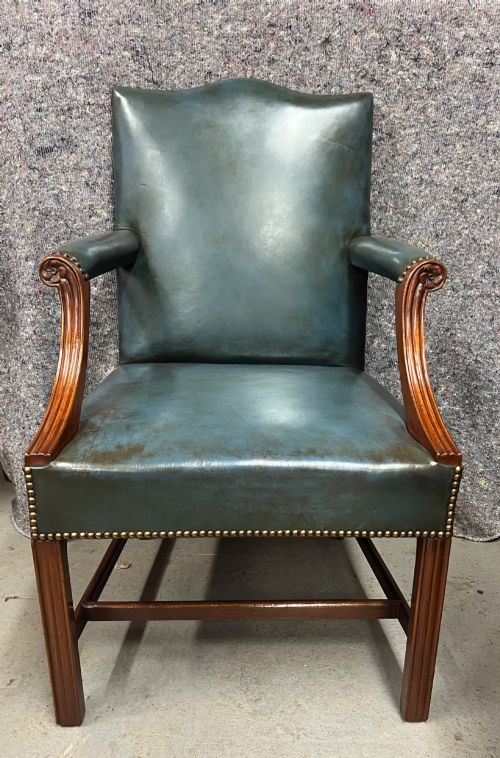
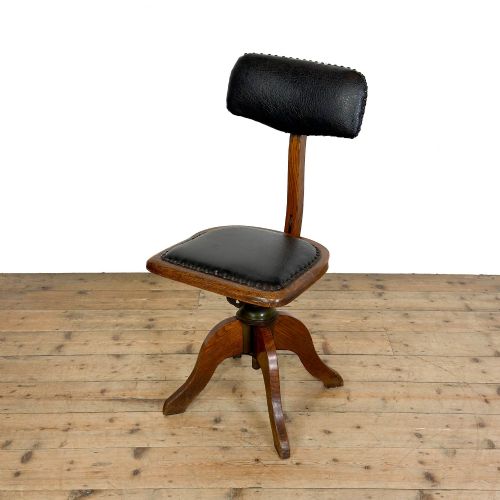
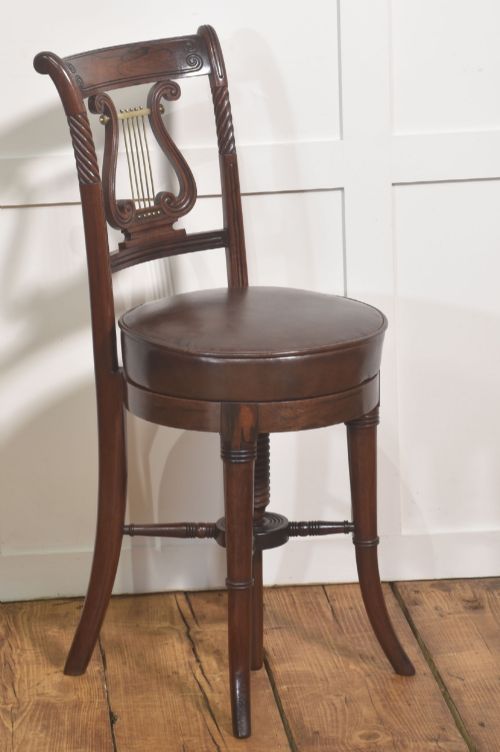
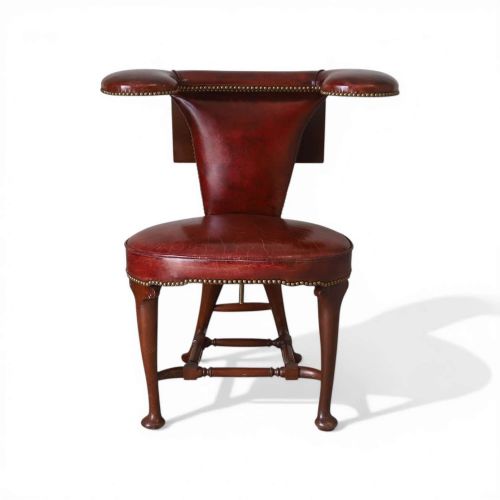
Vintage Leather Desk Seat
A vintage leather desk seat offers the daily comfort of traditional craftsmanship combined with the rich character of aged hide.
Vintage Leather Desk Seat
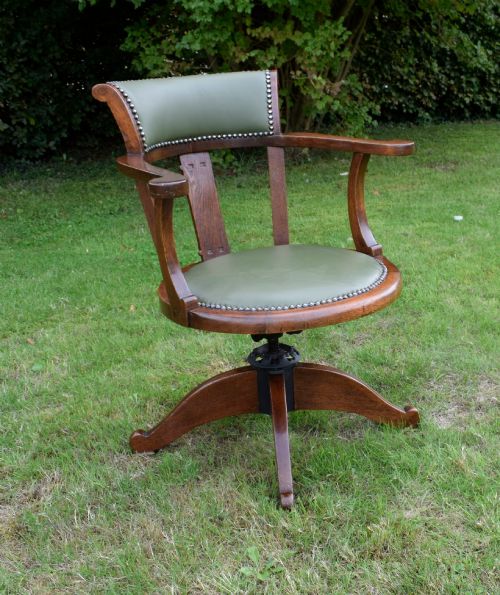
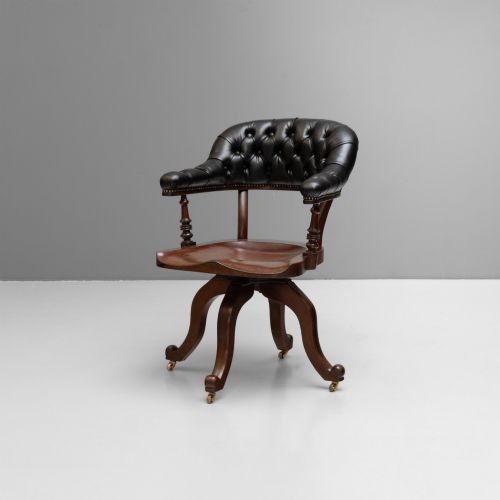
A vintage leather desk seat encompasses a variety of antique and period forms, ranging from revolving office chairs to library armchairs and reading chairs. When searching this phrase, buyers encounter seating designed for study and writing across several centuries.
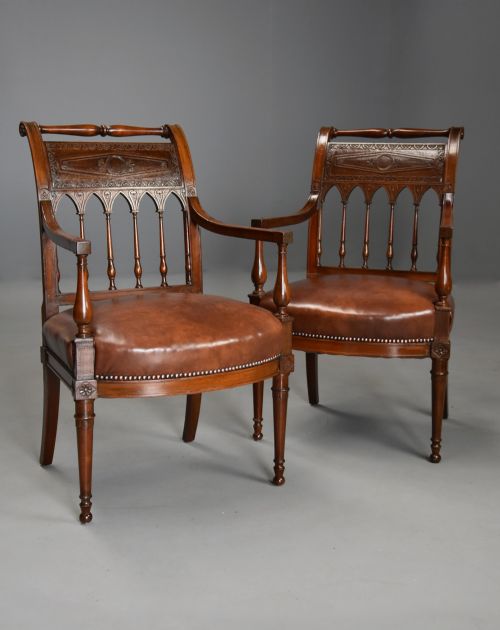
The selections on this page draw from periods including the Victorian, Edwardian, and Art Deco eras, alongside earlier Georgian and Regency designs. Oak, mahogany, and walnut provide the structural frames for seats upholstered in green, red, or tan leather.
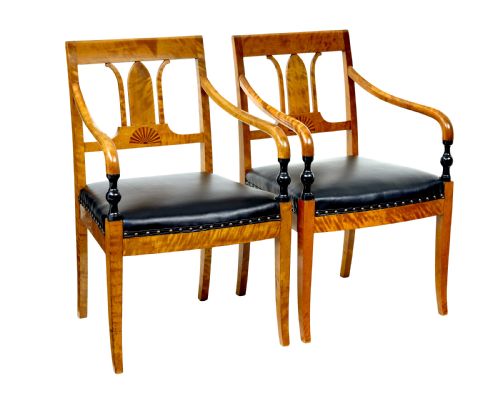
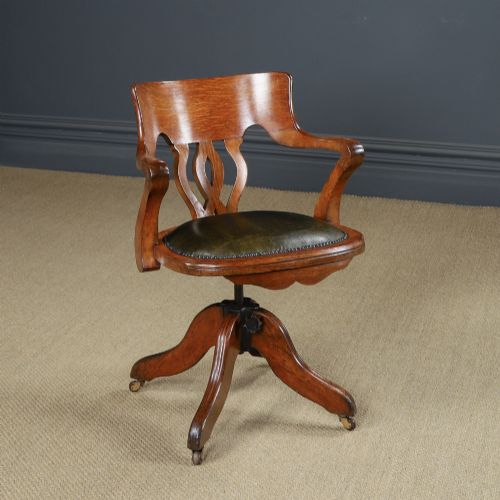
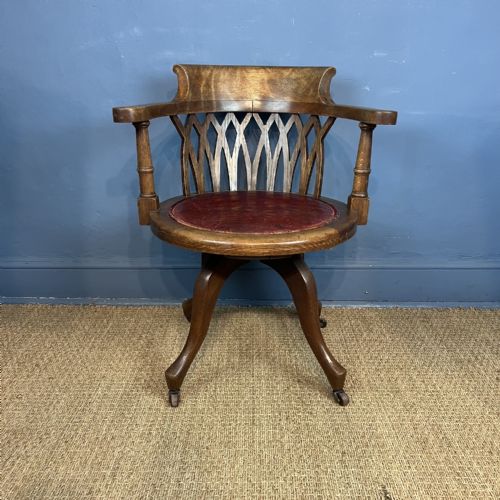
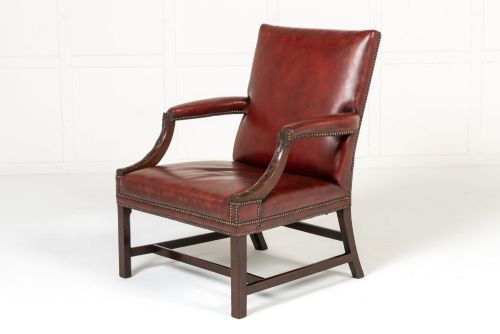
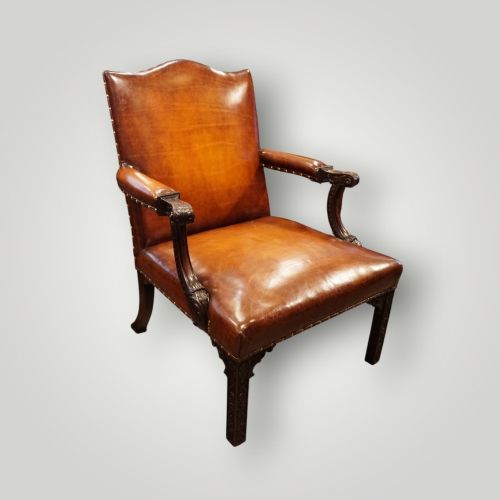
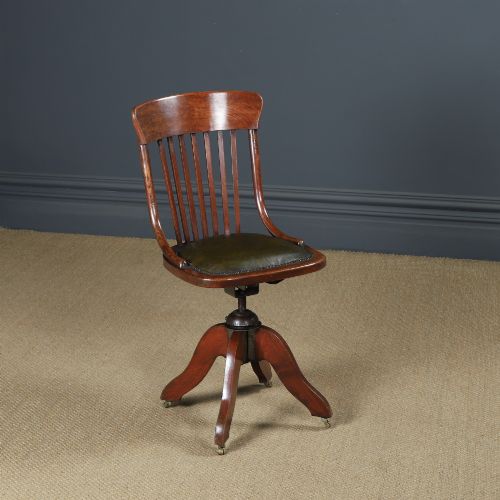
Revolving mechanisms and swivel bases appear frequently in early twentieth-century examples, while open armchairs and Gainsborough styles represent the larger library forms. Buyers find both simple side chairs with studded leather and adjustable office seating.
Materials and construction
Makers built the frames of these chairs using solid hardwoods such as oak, mahogany, walnut, and beech, joining them with traditional woodworking joints like mortise and tenon. Turnings, carvings, and bentwood elements shaped the structural supports and armrests.
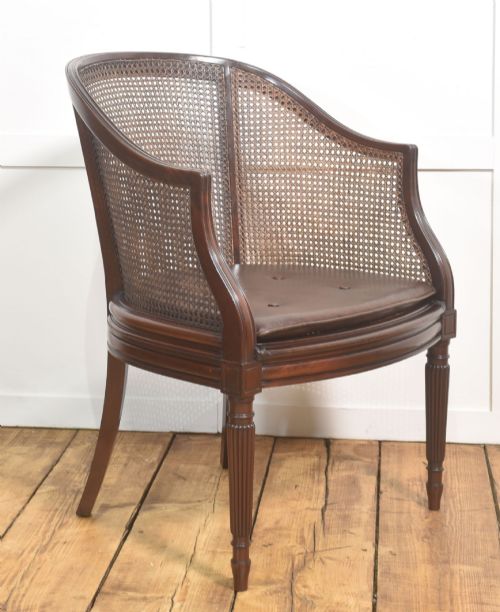
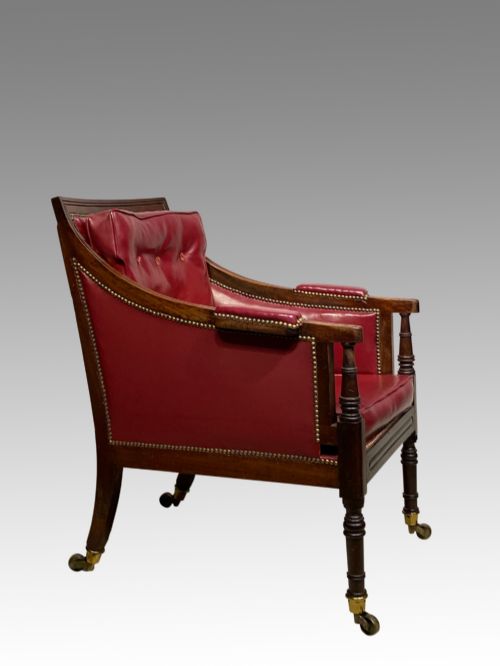
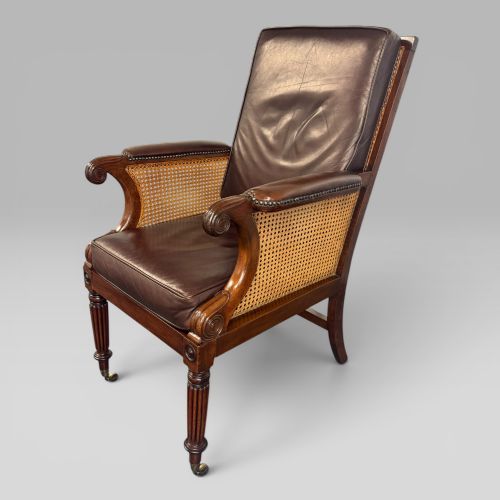
Upholstery relied on natural materials, incorporating leather hides secured with brass studs or decorative nailing. Caned panels and horsehair stuffing frequently supplemented the leather surfaces to provide support and cushioning in library and desk seating.
Several oak swivel chairs come equipped with tilt mechanisms designed to keep nineteenth-century clerks rocking through their ledgers.
Distinctions in quality
Quality reveals itself in the integrity of the timber frame and the depth of the carved detailing, such as blind fretwork or turned spindles. Superior examples maintain rigid joinery and fluid movement in their swivel or tilt mechanisms.
The character of the leather hide and the neatness of the hand-applied studding distinguish finer pieces from standard utilitarian seating. Original patination on both wood and leather indicates careful preservation over time.
Harry and Lou Epstein·Hille
The Vintage Leather Desk Seat Glossary
- Gainsborough chair
- A wide, open armchair with a padded seat and back, low arms, and mahogany legs, originating in the eighteenth century.
- Bergère
- An enclosed armchair with upholstered back and sides, often featuring cane work panels set within a wooden frame.
- Swivel desk chair
- A revolving seat mounted on a central pillar, frequently adjustable in height and dating largely from the late nineteenth and early twentieth centuries.
- Cockfighting chair
- A low, heavily padded reading chair with a distinctive horseshoe-shaped backrest designed originally for spectators of seated events.
- Patina
- The surface sheen and colour developed on wood and leather through age, handling, and regular polishing.
Vintage Leather Desk Seat: Frequently Asked Questions
What makes a desk seat vintage?
A desk seat earns its vintage status through age, typically originating from the nineteenth or early twentieth centuries. These pieces reflect the manufacturing methods and design styles of periods such as the Victorian, Edwardian, and Art Deco eras.
The use of solid hardwoods, hand-finished leather, and traditional joinery distinguishes these older chairs from modern mass-produced alternatives. Each piece carries the marks of its history in the timber and the hide.
How do I choose the right desk chair?
Consider the height of your desk and the space available in your room before selecting a seat. Swivel and adjustable models offer practicality for daily office use, while fixed library armchairs provide a more formal aesthetic.
Matching the period of the chair to your existing furniture helps maintain a cohesive interior style. The choice between an open armchair and a compact side chair depends on your comfort preferences and the amount of room at your workstation.
Were these chairs used for offices?
Many of these chairs served as functional office furniture in studies, libraries, and commercial premises from the Victorian period onwards. The inclusion of swivel mechanisms, castors, and tilt functions catered specifically to working environments.
Simpler side chairs and tub armchairs also served administrative roles where mobility was less essential. Their sturdy construction ensured they could withstand daily professional use.
How do I care for antique leather?
Antique leather requires gentle cleaning and regular conditioning to prevent the hide from drying out and cracking. Avoid placing leather seating in direct sunlight or close to heat sources which can damage the natural material.
Applying a suitable leather balm helps maintain the suppleness and preserves the existing patina. Professional restoration should be considered only for significant structural repairs or severe damage.