

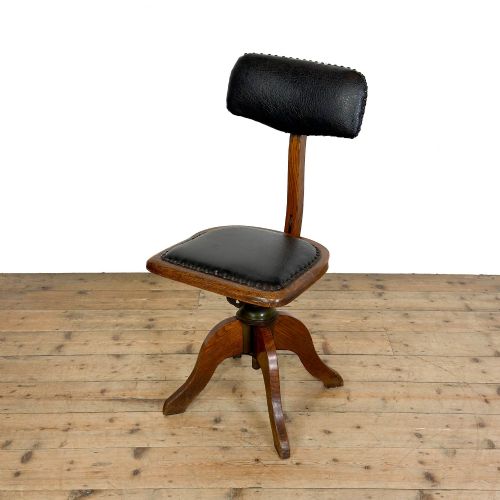
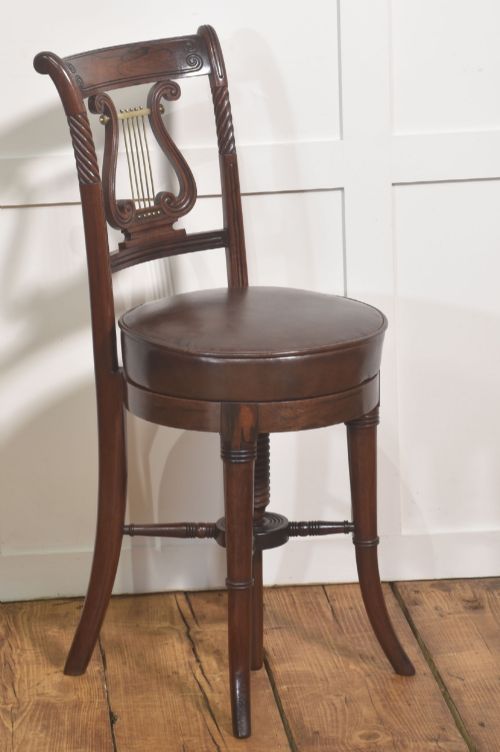
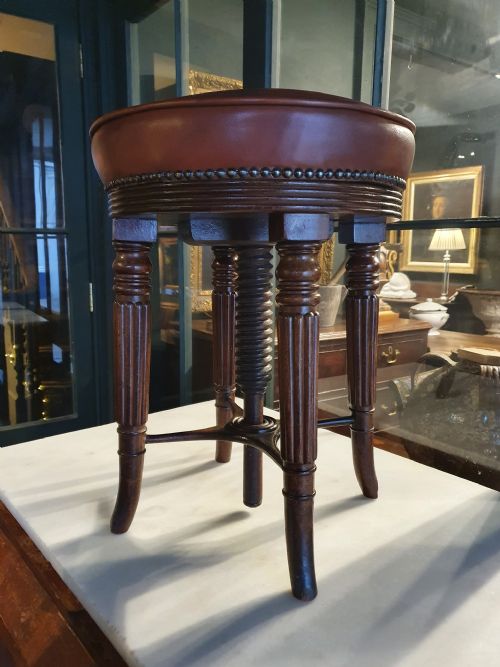
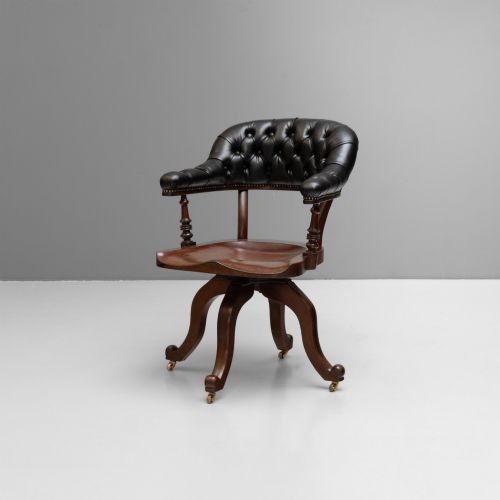
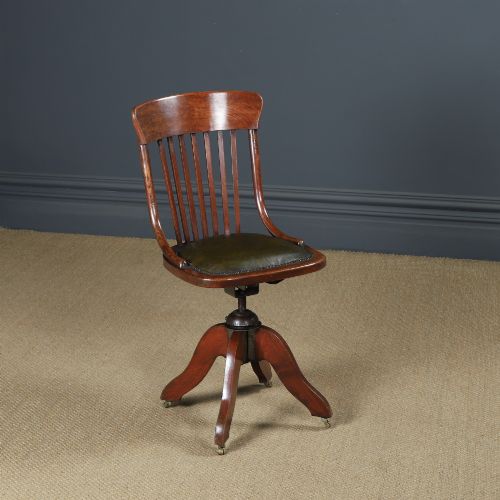


Leather Revolving Chair
A genuine leather revolving chair brings practical nineteenth and early twentieth century function and rich tactile materials directly to your study.
Leather Revolving Chair
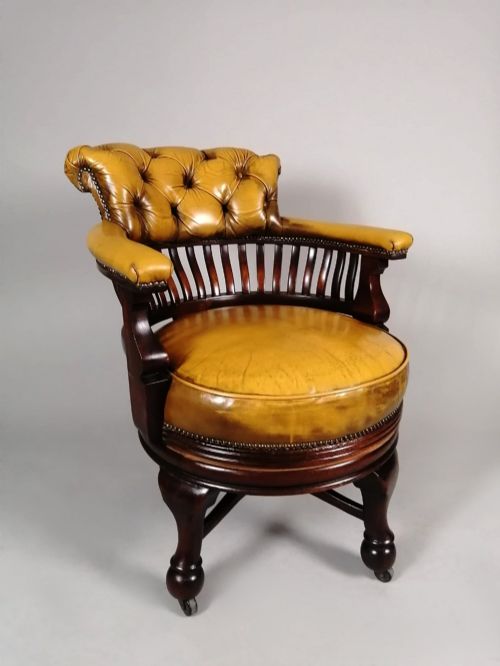
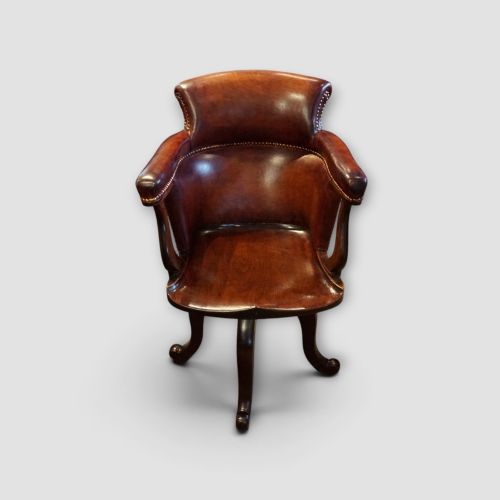
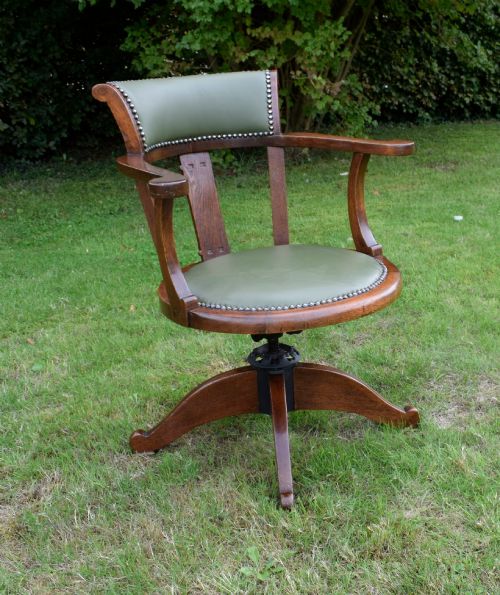
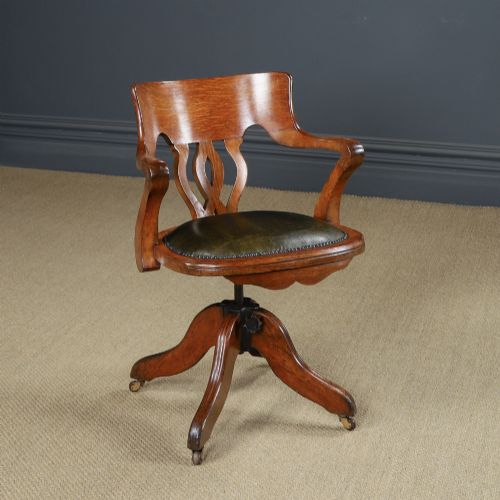
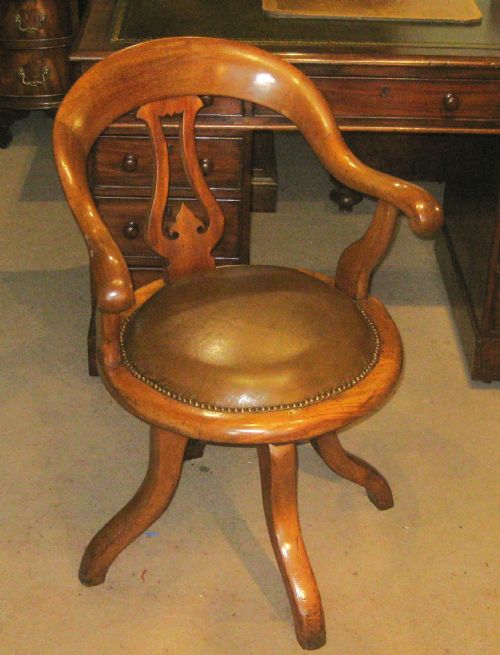
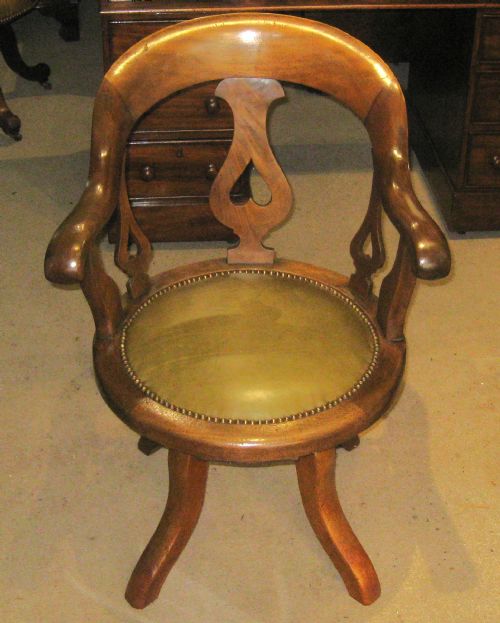
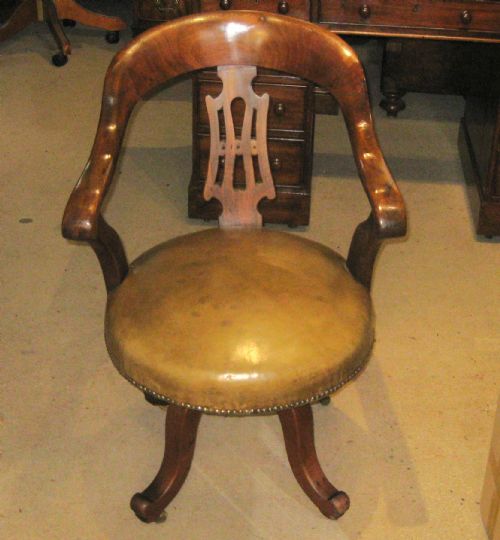
A leather revolving chair serves as a sturdy, functional seat designed for the study, office or library. These pieces appear primarily as Victorian, Edwardian and early twentieth century designs, spanning desk chairs, office armchairs and piano stools.
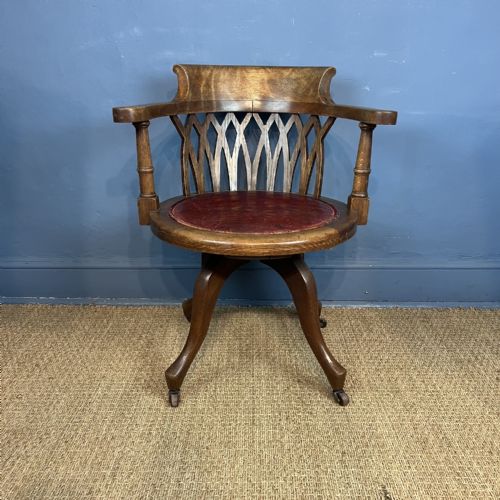
The selection ranges from heavy mahogany and golden walnut models of the nineteenth century to oak and beech Edwardian and George V swivel armchairs. Common forms include captain's chairs, tub chairs, and adjustable dressing stools featuring inset leather seats.
Makers and workshops constructed these seating options for daily utility, combining robust timber frames with rotating mechanisms. Buyers will find variations from simple armless side chairs to heavily carved ship's chairs and upholstered swivel seats.
How They Were Made
Craftsmen built the frames using solid timbers such as mahogany, oak, walnut, beech and satinwood, frequently employing carved details and bentwood techniques. Iron and brass hardware formed the swivel and tilt mechanisms that allowed these chairs to rotate and adjust in height.
Upholsterers fitted the seats and backs with leather, sometimes incorporating deep buttoning and brass tack accents. The integration of durable metals with dense hardwoods ensured the mechanical components could withstand constant office or library use.
Listings feature woods including mahogany, oak, walnut, beech, iron and brass, paired with leather upholstery across Victorian, Edwardian and George V periods.
What Varies in Quality
The caliber of a leather revolving chair depends heavily on the selection of timber and the complexity of the frame construction. Pieces featuring figured mahogany or finely carved oak exhibit superior cabinetmaking compared to utilitarian variants.
The engineering of the revolving and tilting mechanism dictates the operational smoothness and longevity of the piece. Superior examples retain robust, original iron and brass hardware that operates without excessive play in the swivel joint.
Kendrick & Jefferson·Bell Barn Furniture·William Birchcraft·Cooke’s of Finsbury
The Leather Revolving Chair Glossary
- Swivel
- A mechanical joint allowing the upper portion of the chair to rotate completely around its vertical axis. This permits lateral movement without shifting the base.
- Captain's Chair
- A sturdy wooden armchair with a rounded backrail supported by vertical spindles, often fitted with a leather seat. These pieces provide stable support for long hours at a desk.
- Bentwood
- Wood softened by steam or boiling water and then bent into curved structural forms. This technique created smooth, continuous curves for chair backs and frames.
- Tub Chair
- An upholstered armchair characterised by a low, curved back that wraps continuously around to form enclosed arms. This design offers a compact, enveloping seat.
- Deep Buttoning
- An upholstery technique where twine is pulled through padding and secured with buttons in a diamond pattern. This secures the filling and creates a textured surface.
Leather Revolving Chair: Frequently Asked Questions
How do I adjust the height?
Most antique swivel models rely on a central threaded iron spindle beneath the seat. Turning the chair body clockwise or anticlockwise raises or lowers the seating position.
Heavier mechanical versions utilise tilt mechanisms operated by levers or tension screws located beneath the wooden seat base.
Are they comfortable for daily work?
These seating options were originally engineered for prolonged administrative tasks in nineteenth and early twentieth century offices and libraries. The inclusion of supportive wooden armrests and padded leather seats aids extended sitting.
Ergonomic comfort varies depending on the specific period design, with tub chairs and deep buttoned models offering more enveloping support than rigid side chairs.
How do I care for the leather?
Maintaining historical leather requires gentle cleaning with a soft, damp cloth and the sparing application of traditional wax or leather conditioner. Avoid harsh modern chemical cleaners that strip natural oils from the hide.
Keeping the chair away from direct heat sources and strong sunlight prevents the leather from drying out and cracking over time.
How can I tell the period?
Dating relies on identifying the primary wood species, construction methods, and stylistic cues present in the frame. Victorian examples frequently utilise solid mahogany or walnut with deep buttoned upholstery.
Edwardian and George V pieces often feature oak or beech construction, sometimes incorporating bentwood components and simpler mechanical hardware characteristic of early twentieth century production.