


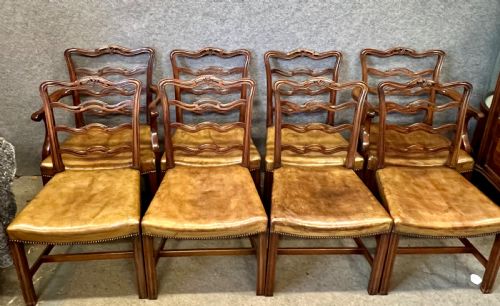


Vintage Leather Carver Chair
A vintage leather carver chair provides sturdy elbow support and tactile seating, grounding a room in traditional craftsmanship.
Vintage Leather Carver Chair
A vintage leather carver chair is a seated furniture piece featuring armrests, historically positioned at the head of a dining table or utilised at a desk. These chairs emerge across multiple eras, including the Victorian, Edwardian, and Art Deco periods, spanning from the eighteenth century into the twentieth century.
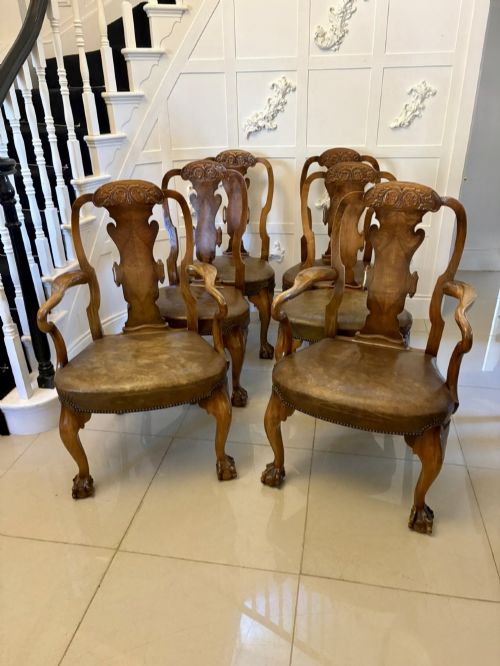
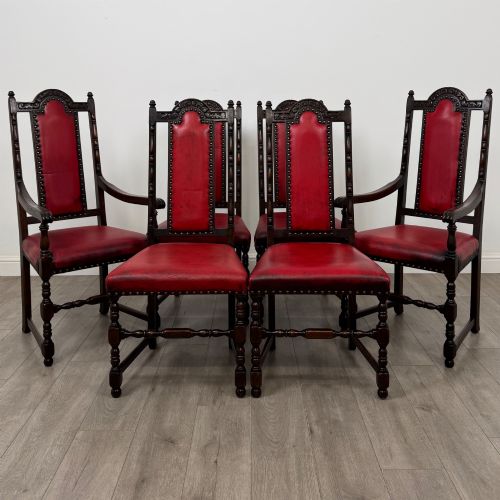
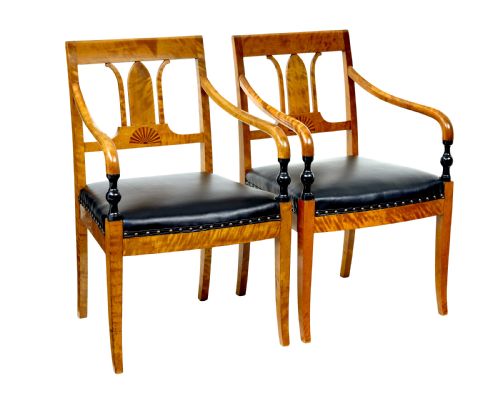
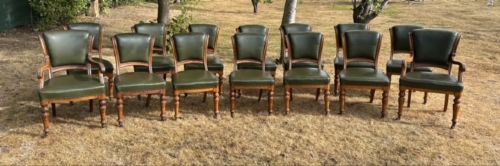
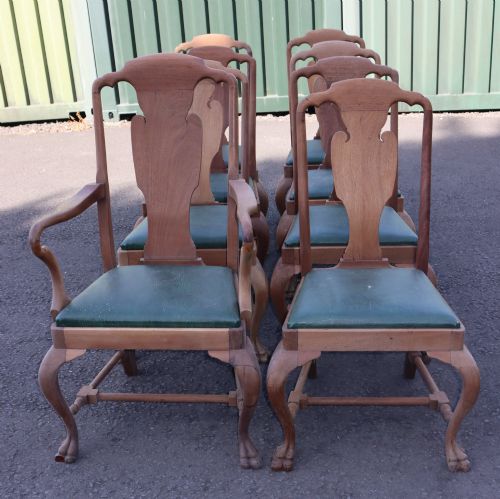
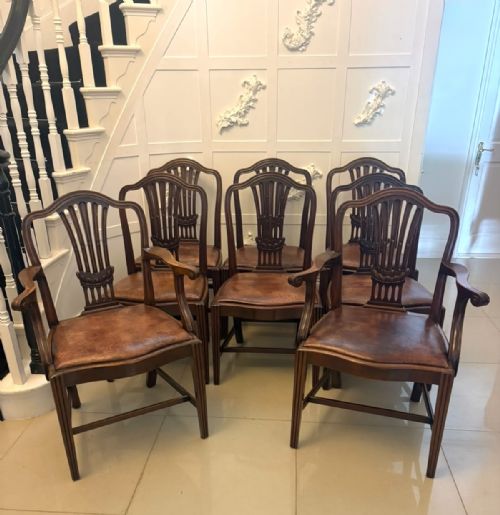
The selections on this page encompass various configurations, from single library armchairs and matched pairs to large dining sets. Mahogany and oak dominate the structural framing, while leather provides the upholstered seat pads and backrests.
Makers and workshops of different scales produced these forms, applying revival styles such as Chippendale, Hepplewhite, and Jacobean alongside clean-lined Arts and Crafts and modernist Art Deco designs.
How They Were Made
Cabinetmakers constructed the frames primarily from dense hardwoods like mahogany, oak, walnut, and burr walnut, occasionally employing ebonised wood or flame birch for decorative effect. Joinery relied on traditional mortise and tenon joints to ensure structural rigidity under daily use at the desk or dining table.
Upholstery techniques involved stretching leather over stuffing and securing the edges directly to the timber frame with brass studs, or setting drop-in pads into the wooden rails. Artisans also incorporated carved detailing, scrolling arms, and inlaid wood to articulate the specific revival style or period aesthetic.
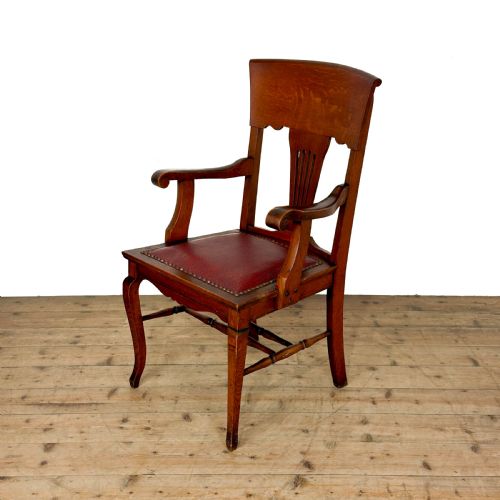
Several armchairs incorporate brass studding along the leather edges, acting as tiny metallic sentries for the entire seat.
What Varies in Quality
Quality rests upon the selection of timber and the precision of the frame's construction, where dense, well-figured mahogany or burr walnut with tight joinery signals superior workshop production. Chairs that retain their original structural integrity without excessive timber shrinkage or loose joints represent higher craftsmanship.
The treatment of the upholstery also dictates the standing of a piece, distinguishing between plain utilitarian seating and examples featuring hand-dyed leather, careful stud work, and harmonising period details.
W.Williamson & Sons·Epstein·Lamb Of Manchester·Shoolbred
The Vintage Leather Carver Chair Glossary
- Carver chair
- An armchair designed with elbow rests, traditionally placed at the ends of a dining table while matching the simpler side chairs in a set.
- Elbow chair
- An alternative term for an armchair, often used in historical records to describe seating with supportive armrests for a desk or drawing room.
- Shield back
- A chair backrest shaped like a heraldic shield, popularized during the late eighteenth century by designers such as Hepplewhite.
- Cockpen chair
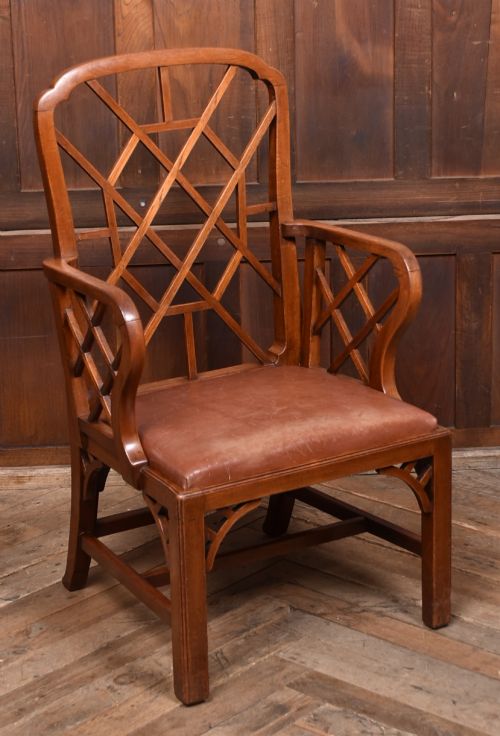
- A lattice-backed chair design influenced by Chinese Chippendale styles, featuring open geometric wooden fretwork.
- Burr walnut
- Timber sliced from walnut tree growths, producing an intricate, swirling grain pattern utilised for decorative veneer on high-end furniture.
Vintage Leather Carver Chair: Frequently Asked Questions
How do I use a carver chair?
These armchairs serve effectively at the head and foot of a dining table, or as singular accent pieces in a study or hallway.
The supportive armrests also make them practical as desk chairs for daily writing tasks.
How do I care for vintage leather?
Maintain the material by applying specialised leather balms periodically to prevent the hide from drying out or cracking under indoor heating.
Keep the timber frames dusted and protected from direct sunlight to preserve the original polish.
What is the difference between Victorian and Edwardian chairs?
Victorian examples tend to feature heavier proportions, darker polished woods, and elaborate carvings reflecting revival movements.
Edwardian pieces often display lighter frames, simplified proportions, and occasionally brighter inlaid details.
Are these chairs suitable for daily seating?
Solid hardwood frames and sturdy joinery ensure these pieces withstand regular domestic use when properly maintained.
The supportive backs and upholstered leather pads offer practical comfort for long periods at a table or desk.