

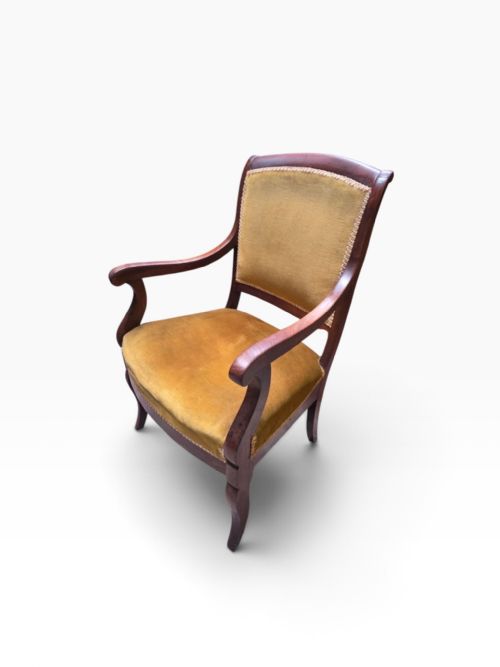
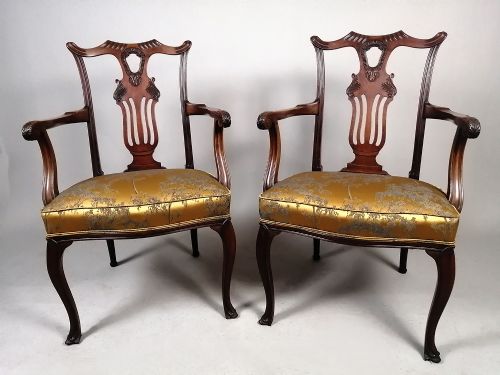
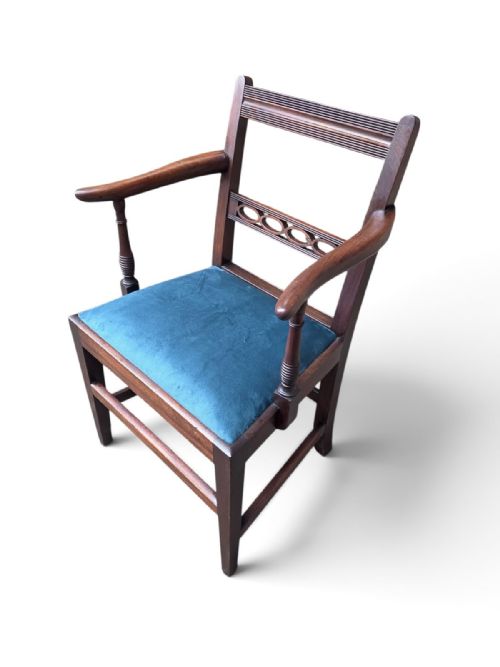
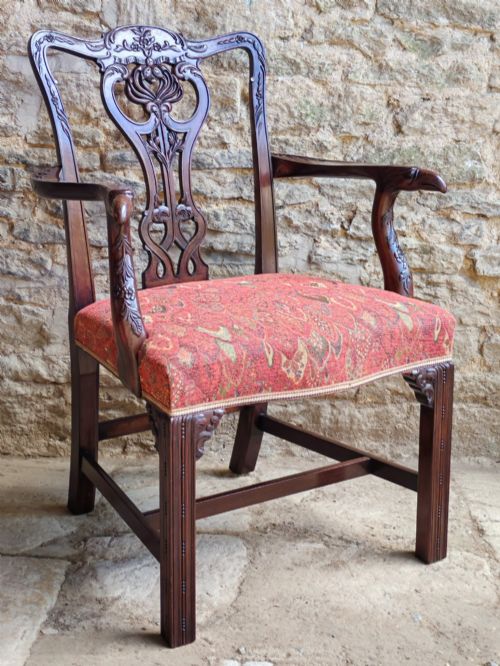
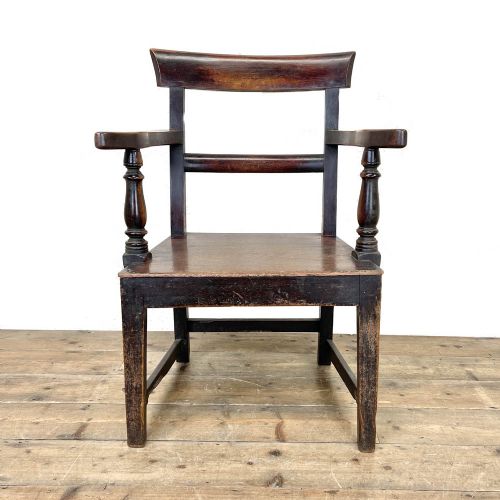


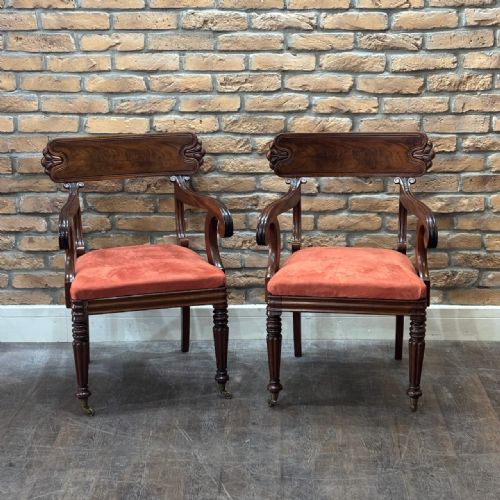


Victorian Mahogany Elbow Chair
These robust seats provide sturdy support for daily sitting while bringing rich timber tones into a room.
Victorian Mahogany Elbow Chair
A victorian mahogany elbow chair is a sturdy seat designed with armrests, appearing primarily in nineteenth-century and Edwardian forms. These pieces serve practical seating needs in studies, libraries, and parlours while displaying distinct period characteristics.
The selection here encompasses various seating forms including carver chairs, desk chairs, and tub chairs. Makers drew upon diverse historical tastes, producing examples influenced by Chippendale, Regency, and Georgian revivals alongside standard Victorian designs.
Materials and construction
Makers relied on mahogany as the primary hardwood for frames, valued for its strength and rich grain. Timber components frequently feature carved details such as scroll arms and lyre backs.
Upholstery forms an integral part of many pieces, utilising fabric, velvet, and leather. Brass elements and inlaid decorative work often accent the structural woodwork.
Victorian Mahogany Elbow Chair Retail Price Guide 2026
Typical asking prices for victorian mahogany elbow chair among the pieces listed under this phrase on Sellingantiques today, from the lower quarter to the upper quarter. They describe what is for sale here now, not the wider market.
One remarkably niche survivor among these seats is a designated musician's chair intended for Victorian parlour performances.
Assessing quality and execution
The distinction between standard examples and superior pieces rests in the crispness of the wood carving and the balance of proportions. Finer items exhibit careful attention to detail in scrollwork, inlay, and structural joinery.
Upholstery execution and the selection of secondary materials like quality leather or patterned fabric further separate utilitarian items from workshops producing higher-end furnishings.
Howard and Sons·Jenks and Wood·Jas Shoolbred
The Victorian Mahogany Elbow Chair Glossary
- Carver chair
- An armchair, typically designed as a matching armrest-equipped counterpart to a set of dining chairs. These items often sat at the head of a dining table.
- Elbow chair
- An alternative term for an armchair, referencing the supportive rests positioned for the sitter's arms. Such seating appears across multiple nineteenth-century and Edwardian styles.
- Lyre back
- A chair backrest shaped to resemble the ancient musical instrument. This decorative motif appears frequently in nineteenth-century seating designs.
- Scroll arm
- An armrest curved inward or outward in a spiral scroll formation. This carved timber feature characterises many Victorian and later seating forms.
- Tub chair
- A curved armchair featuring a continuous back and armrest structure resembling the shape of a barrel. These enclosed seats offer a distinct enveloping form.
Victorian Mahogany Elbow Chair: Frequently Asked Questions
What is a carver chair used for?
A carver chair provides seating with integrated armrests for added comfort during meals or desk work. Historically, these pieces often occupied the head positions at a dining table.
Today, they function equally well as standalone accent chairs in living spaces or studies.
How do I identify a Victorian elbow chair?
Victorian elbow chairs typically feature rich mahogany timber frames combined with period upholstery materials like velvet, leather, or woven fabric. Stylistic details often include scroll arms, carved backrests, and revival influences.
Examining the construction methods and wood ageing helps confirm the nineteenth-century origin.
Where should I place an elbow chair?
These chairs suit studies and home offices when equipped with leather upholstery for desk use. In living rooms or bedrooms, they serve as comfortable reading seats.
Their decorative timber frames allow them to stand effectively as feature pieces against a wall.
What is the difference between an armchair and a tub chair?
Standard armchairs feature open armrests attached to a distinct upright backrest structure. Tub chairs incorporate a fully enclosed, curved back and armrest assembly.
This continuous enclosure creates a rounded, barrel-like silhouette distinct from open-frame seating.