

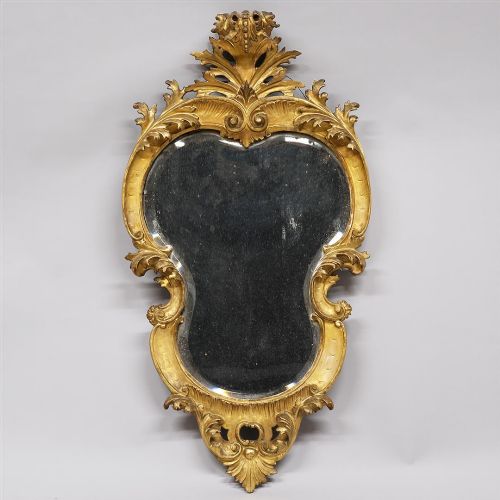

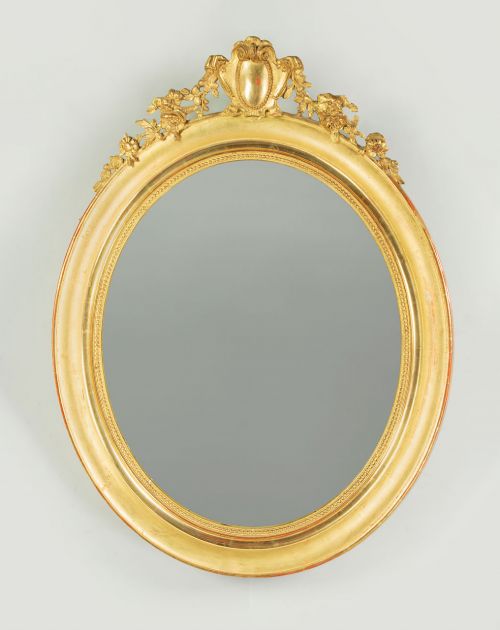
Vintage Leaf Crest Mirror
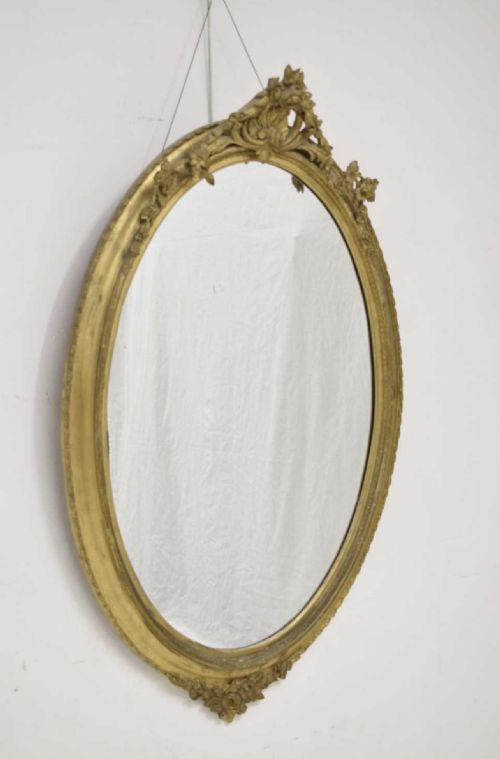
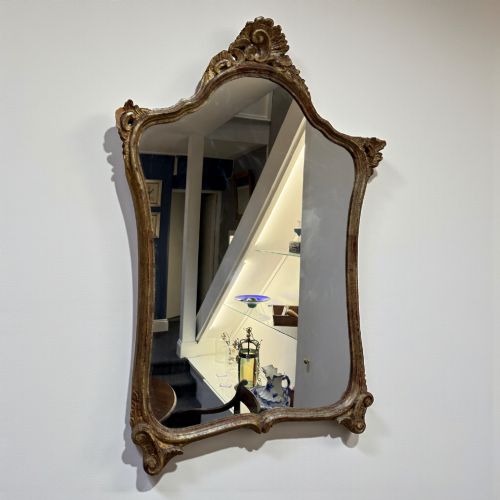
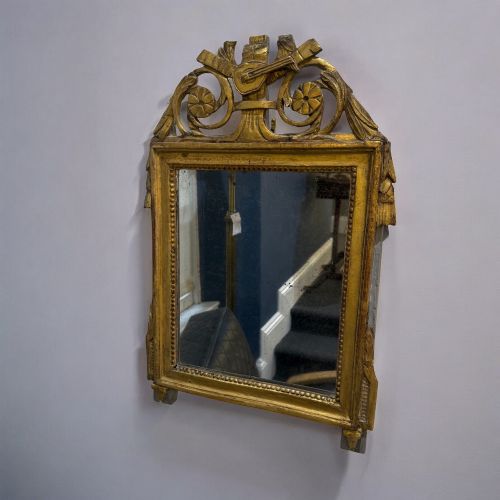
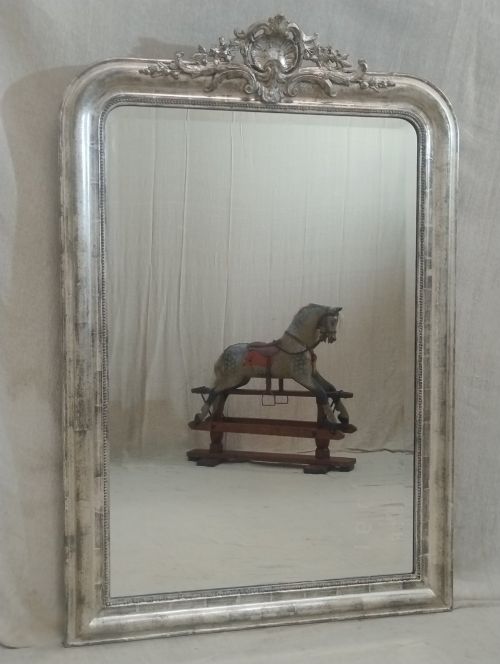
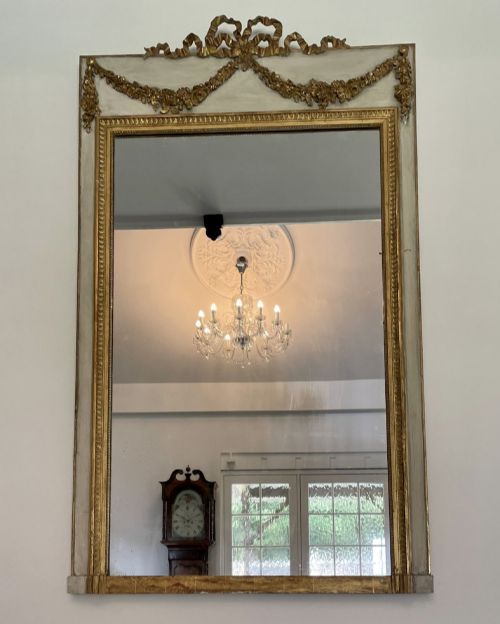
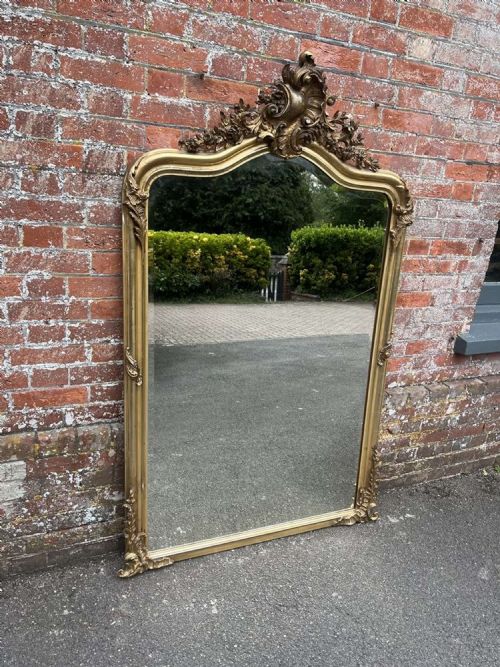
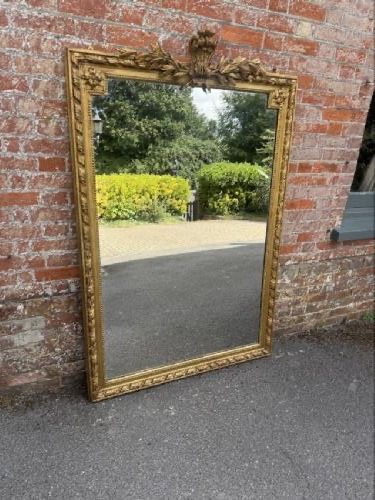
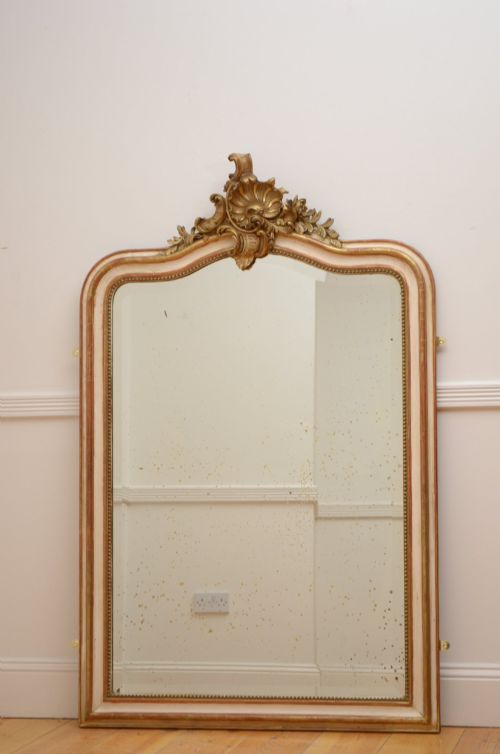
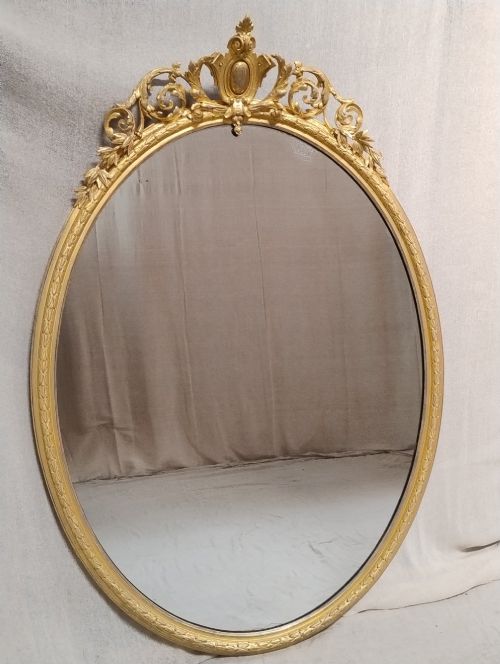
A vintage leaf crest mirror brings nineteenth-century French and English wall presence into a room through carved giltwood and gesso.
Vintage Leaf Crest Mirror
A vintage leaf crest mirror is a wall hanging designed to catch and reflect light while adding sculptural detail to an interior. The selection on this page centres on nineteenth-century pieces alongside early twentieth-century examples.
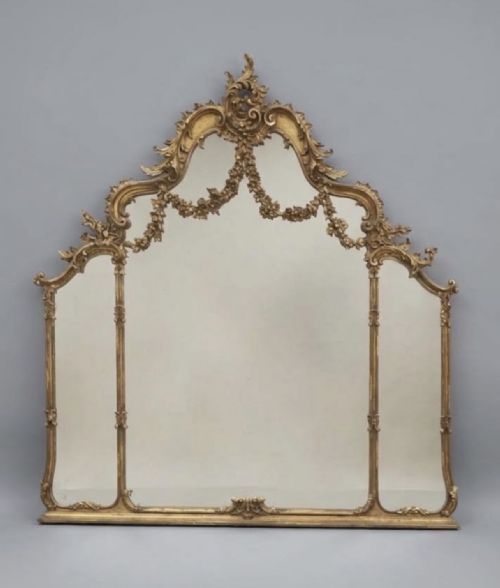
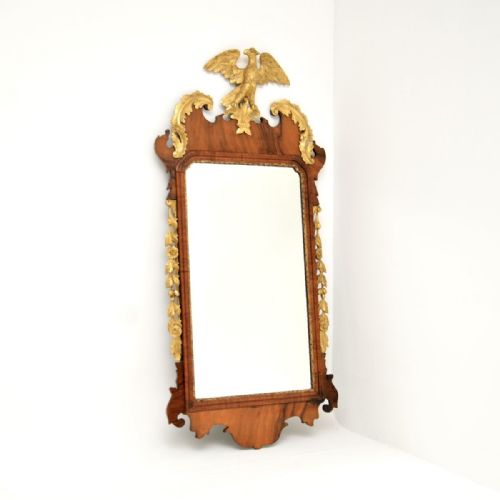
Buyers encounter wall mirrors, overmantel mirrors, and pier mirrors originating from French and English workshops. Styles range from Rococo Revival and Victorian to Louis XVI and Baroque interpretations.
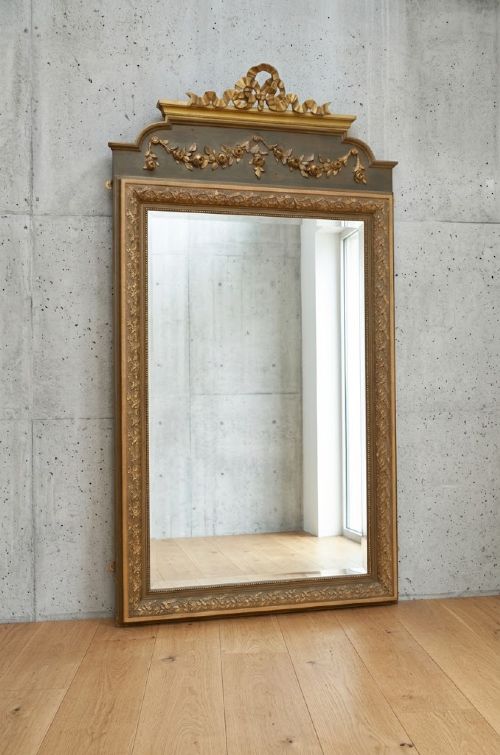
The forms vary from grand arched shapes to neat ovals and rectangular frames topped with carved foliage or ribbon motifs. These objects serve both practical reflection and decorative focal points in domestic rooms.
How they were made
Frames rely on carved wood, gesso, and composition applied over a timber base to build up intricate relief ornament. Artisans then gilded these surfaces using gold leaf or silver leaf to achieve a lustrous metallic finish.
Glass plates, including mercury plate in earlier examples, sit within the rebates and are secured from the rear. Carvers shaped wooden elements by hand before applying layers of gesso for crisp leaf and scroll detailing.
Marriage mirrors were traditionally commissioned in France to celebrate weddings, carrying symbolic motifs of love and union into the home.
What varies in quality
The depth and crispness of the hand-carving in the wood and gesso determine the refinement of the surface ornament. Crisp undercut foliage and sharply defined scrolls separate finer work from softer, mould-cast repetition.
The integrity of the original gilding and the character of the mirror plate itself define the visual weight of the piece. Retained gold leaf with natural ageing reads differently than later repainting or modern replacement glass.
The Vintage Leaf Crest Mirror Glossary
- Giltwood
- Wood covered with gold leaf or gold paint. This finish creates the characteristic golden sheen seen on antique frames.
- Gesso
- A plaster mixture applied to wood frames to create a smooth surface for carving and gilding. It allows artisans to model fine details like leaves and scrolls.
- Pier mirror
- A tall wall mirror designed to hang on the narrow wall space between windows. These pieces often match console tables positioned below them.
- Overmantel mirror
- A large horizontal mirror designed to sit directly above a fireplace mantelpiece. They reflect light across the room at hearth level.
- Mercury plate
- An early type of mirror glass backed with a tin and mercury amalgam. It produces a mottled, deep reflection distinct from modern aluminium backing.
Vintage Leaf Crest Mirror: Frequently Asked Questions
Where should I hang a large overmantel mirror?
Position the piece directly above a fireplace mantelpiece to anchor the wall and reflect light downwards into the room.
Ensure the fixings are secured into solid wall studs to support the weight of the timber and glass frame.
How do I clean an antique giltwood frame?
Dust the carved surfaces gently with a soft dry brush to remove particles without disturbing the delicate gesso or leaf layers.
Avoid liquid cleaners and damp cloths, as moisture damages aged gilding and exposed composition ornament.
What is the difference between a pier mirror and a wall mirror?
A pier mirror is specifically proportioned to fit the narrow wall space between two windows or above a pier table.
General wall mirrors take broader proportions suited to hanging above sofas, sideboards, or open wall expanses.
How can I tell if the mirror plate is original?
Look for subtle foxing, tiny dark spots, and uneven reflection depth across the glass surface caused by age and early silvering methods.
Modern replacement glass appears completely uniform, clear, and free from the characteristic distortions of nineteenth-century manufacture.