
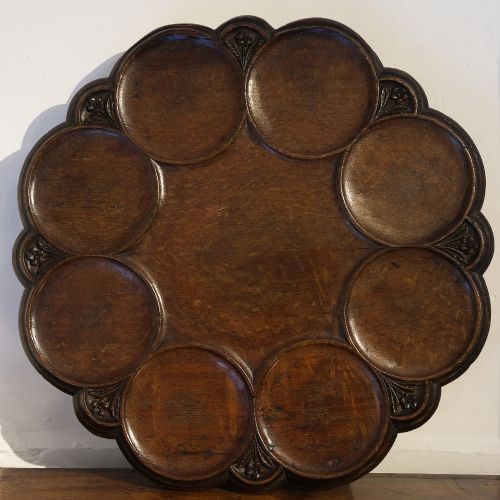


Vintage Lazy Susan
These vintage lazy susan pieces are rotating wooden trays designed to make sharing food effortless at the dining table.
Vintage Lazy Susan
When you search for a vintage lazy susan, you are looking at rotating serving accessories designed to sit in the centre of a dining table. These pieces allow diners to pass dishes around easily without reaching across one another during a meal.
You are most likely to meet round timber trays on this page, originating from the eighteenth, nineteenth and early twentieth centuries. The selection includes traditional oak and mahogany table top stands alongside occasional Art Deco pieces.
Forms range from simple round serving trays to more substantial revolving table top stands and dumb waiter styles. English country and formal Victorian versions appear frequently among the listings.
How they were made
Cabinet makers constructed these revolving trays primarily from dense timbers such as mahogany and oak, often turning them on a lathe to achieve a perfectly circular shape. Some examples feature carved details around the rim, showing careful hand craftsmanship by period artisans.
The rotating mechanism relies on internal pivots or bearings hidden beneath the timber top to ensure smooth movement. Later twentieth-century versions introduce alternative materials like glass, chrome and aluminium alongside the traditional wood.
Listings feature oak and mahogany pieces spanning from the eighteenth century through to the nineteen-thirties.
What varies in quality
The quality of a rotating tray lies in the stability and smoothness of its turning action. A superior piece rotates evenly without wobble or friction, supported by a well-balanced base that conceals its mechanism discreetly.
Timber selection and surface finish separate standard examples from finer ones. Rich grain patterns in the mahogany or oak, combined with crisp hand-carving rather than plain moulded edges, indicate higher craftsmanship from the period.
The Vintage Lazy Susan Glossary
- Lazy susan
- A revolving tray placed on a table to assist in moving food. This rotating accessory sits on a central pivot.
- Dumb waiter
- A standalone serving stand or revolving tier used in dining rooms. Victorian versions of this form often incorporate a rotating top.
- Tazza
- A small pedestal bowl or shallow dish used for serving food. Art Deco examples combine this elevated form with a rotating base.
- Mahogany
- A durable tropical hardwood prized for its deep reddish-brown colour. Cabinet makers utilised this material extensively for eighteenth and nineteenth century serving trays.
Vintage Lazy Susan: Frequently Asked Questions
What is a vintage lazy susan used for?
These revolving trays were placed on dining tables to hold condiments, sauces or dishes during meals. Diners spun the tray to access food without needing to ask for items to be passed.
They function equally well on modern dining tables as practical serving accessories for shared meals and gatherings.
How do I date an old lazy susan?
Dating relies on examining the timber species, construction methods and any decorative carving present on the tray. Eighteenth and nineteenth-century examples typically show hand-turned mahogany or oak with traditional joinery.
Twentieth-century pieces introduce different materials such as glass, chrome and aluminium, alongside distinct Art Deco styling from the nineteen-twenties and thirties.
Are these rotating trays stable on the table?
Period revolving trays are built with wide bases designed to support the weight of serving dishes placed near the edges. The internal pivot mechanism ensures the top stays level while turning.
Placing dishes evenly around the centre prevents tipping and maintains smooth rotation during use.
What woods were used for these trays?
Cabinet makers predominantly chose durable hardwoods like mahogany and oak for their strength and attractive grain patterns. These timbers withstand regular turning and daily use at the dining table.
Later pieces incorporate alternative modern materials including glass and polished metal elements.