



Vintage Landscape Wall Decor
Vintage landscape wall decor brings painted rivers, harbours and valleys onto interior walls through oils, watercolours and framed canvas.
Vintage Landscape Wall Decor
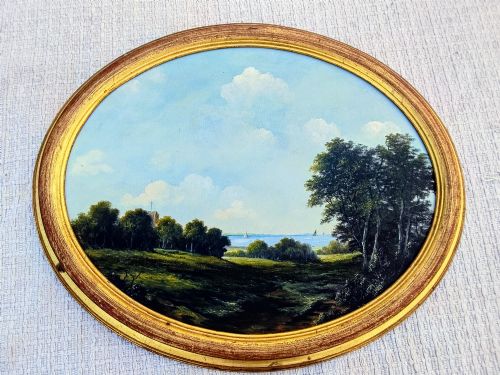
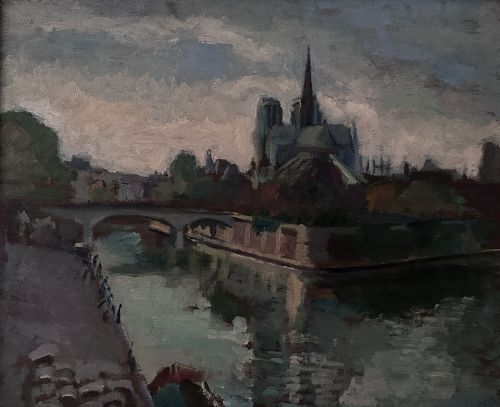
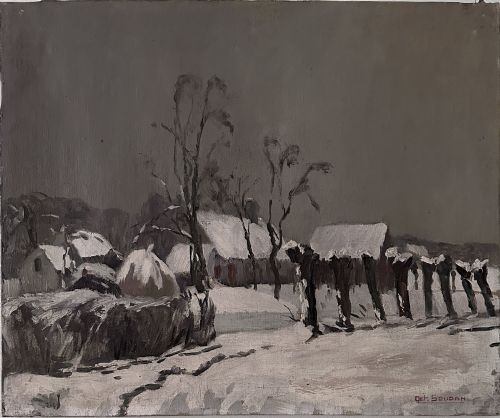
Vintage landscape wall decor encompasses framed artworks depicting rural views, coastal scenes and urban vistas produced across the nineteenth and twentieth centuries. Buyers encounter framed oil paintings, watercolours on paper and pastel studies spanning Victorian, Edwardian and mid-century periods.
The selection ranges from British Impressionist river views and Cornish harbour scenes to Alpine mountain vistas and French countrysides. Mid-century examples introduce bolder impasto textures and larger canvas formats alongside traditional nineteenth-century oils on canvas.
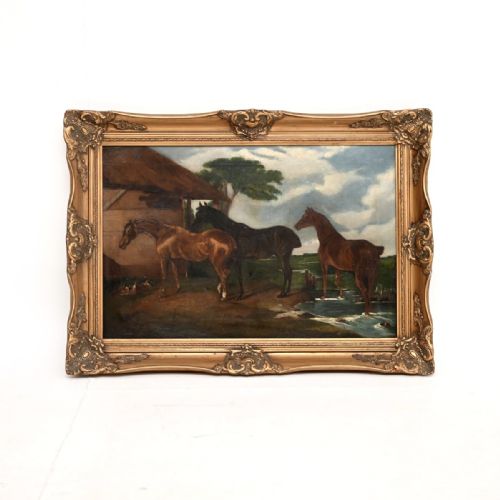
Works appear in various mountings, including traditional gilt wood frames, shadow boxes and simpler wooden surrounds. These pieces capture shifting light across fields, estuaries and city streets, reflecting the aesthetic priorities of their respective decades.
Materials and construction methods
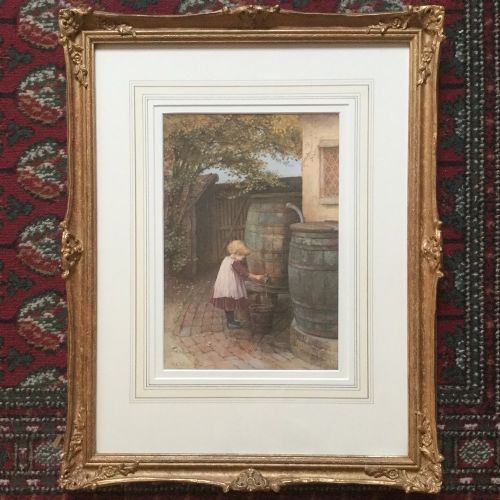
Artists relied primarily on oil paint applied to canvas, board or paper, utilising rich pigments to build texture and depth in skies and foliage. Watercolour and pastel on paper offer lighter, more translucent depictions of rivers and coastal views.
Frames combine wood, glass and gilt finishes, sometimes incorporating needlework or mixed media to construct layered shadow box displays. Canvases are occasionally laid onto modern boards during conservation to secure older textiles.
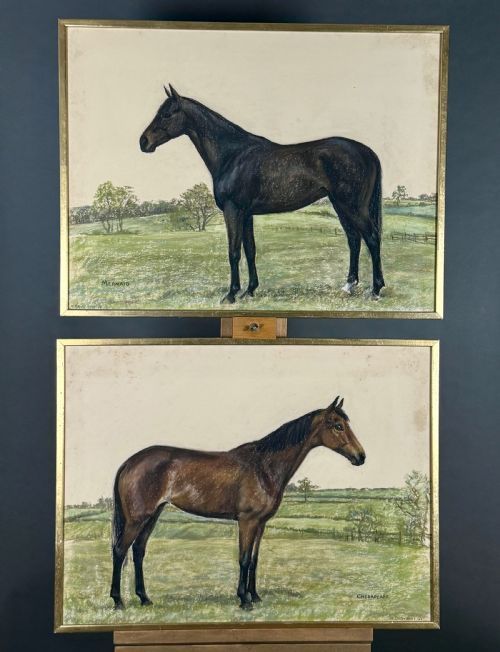
Several artists preferred painting horses, ducks and chickens over grand vistas, proving that farmyard animals make charming landscape companions.
Factors determining quality
Superior works demonstrate confident brushwork, accurate perspective and a successful capture of atmospheric light, particularly visible in Impressionist and academic landscapes. The handling of subtle colour gradients in skies and water distinguishes accomplished composition from stiffer execution.
Material preservation governs value, where stable paint surfaces free from excessive craquelure and original or period-appropriate framing retain the intended visual balance. The specificity of the subject, such as a named Cornish harbour or identifiable Alpine range, adds documentary weight.
Alfred Young Nutt·Charles Edward Wilson·Edward Matthew Elliott·Helen Layfield Bradley·John Frederick Herring Jnr·Sir David Murray·John Atkinson·Herbert Royle·Rowland Henry Hill·Frank Wood·H. Hadfield Cubley
The Vintage Landscape Wall Decor Glossary
- Impasto
- Paint applied in thick layers that stand out from the surface, creating a tangible texture on the canvas. This technique allows artists to build physical relief into clouds, water or foliage.
- Gilt Wood
- Wood treated with a thin layer of gold leaf or metallic gilt, commonly used for nineteenth-century and Victorian picture frames. It adds reflective warmth around the perimeter of the artwork.
- Watercolour Painting
- Pigments suspended in a water-soluble base applied to paper, producing luminous and delicate imagery. These works require protective glass framing to prevent moisture damage.
- Shadow Box
- A deep, glass-fronted framed box designed to display three-dimensional objects, needlework or dioramas. It creates physical depth by distancing the artwork from the outer glazing.
- Canvas
- Woven fabric stretched across a wooden support to serve as a foundation for oil and acrylic painting. It provides a flexible yet durable surface for large-scale compositions.
Vintage Landscape Wall Decor: Frequently Asked Questions
How do I date a landscape painting?
Dating relies on stylistic clues, framing materials and any inscribed signatures or dates on the reverse of the canvas. Victorian and Edwardian works often feature heavier gilt frames and traditional academic brushwork.
Mid-century pieces shift toward looser impressionistic techniques and simpler wooden mouldings. Examining the canvas weave and stretcher construction provides further confirmation of the period.
Where should I hang these artworks?
These landscapes suit living rooms, studies and hallways where natural light complements the painted tones. Placing them away from direct sunlight protects oil pigments and watercolours from fading over time.
Pairing similar frames creates a cohesive gallery wall, while larger single canvases anchor a room above a fireplace or sideboard.
How do I care for antique watercolours?
Watercolours require hanging away from direct sunlight and damp environments to protect the paper and pigments. Glazing keeps dust and atmospheric pollutants from settling directly onto the delicate painted surface.
Professional framing with acid-free mounts prevents the paper from discolouring over the decades.
What is the difference between oil and watercolour?
Oils use slow-drying paint suspended in oil, allowing artists to build thick textures and rich, saturated colours. These works are typically painted on canvas or wooden boards and do not strictly require glass protection.
Watercolours utilise water-soluble pigments on paper, resulting in lighter, transparent effects that demand glass framing for physical preservation.