


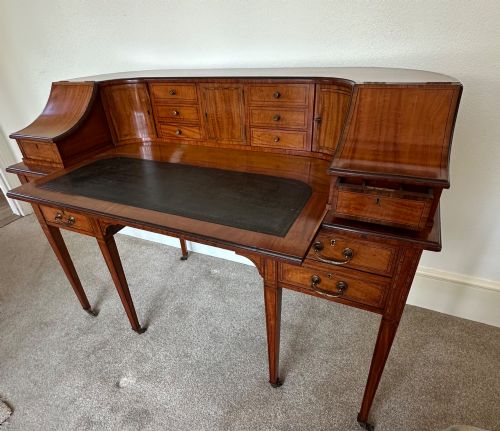
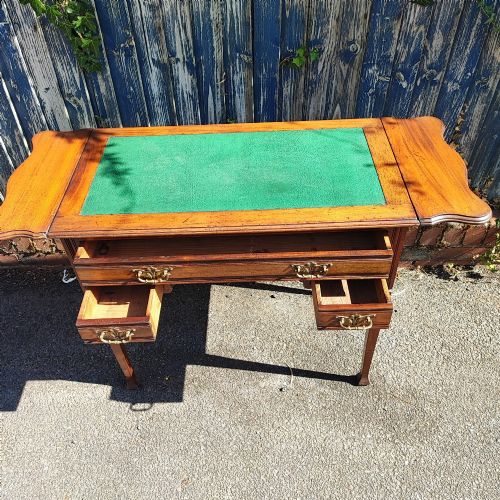

Vintage Ladies Bureau
These vintage ladies bureau pieces provide compact writing surfaces and fitted storage, combining practical function with refined period craftsmanship.
Vintage Ladies Bureau
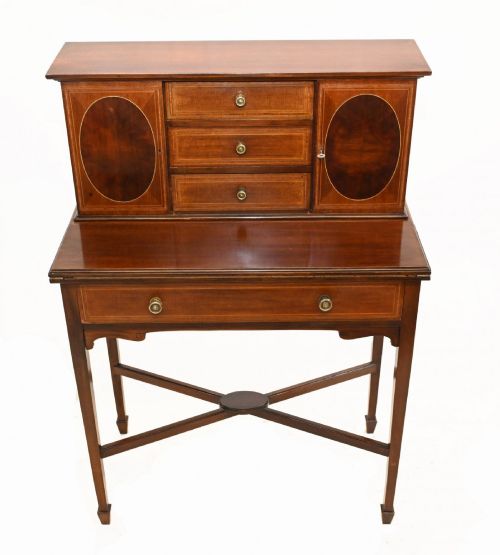
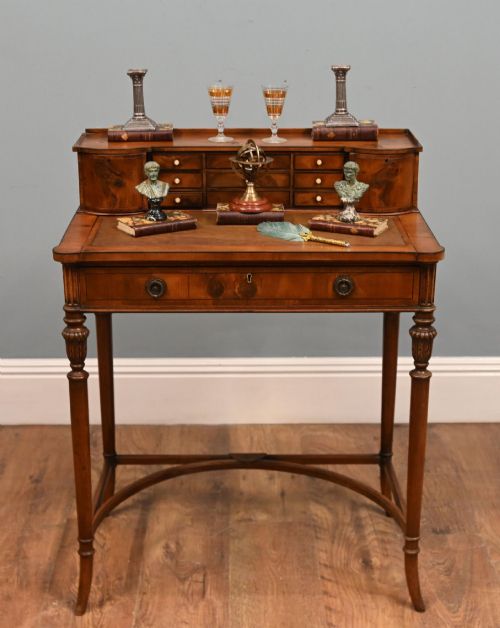
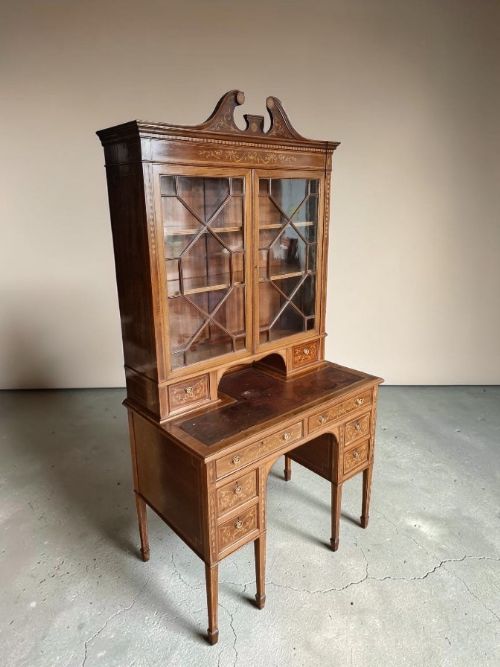
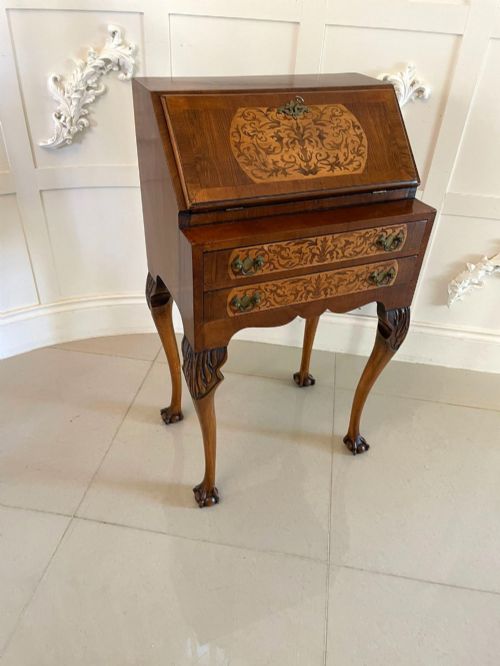
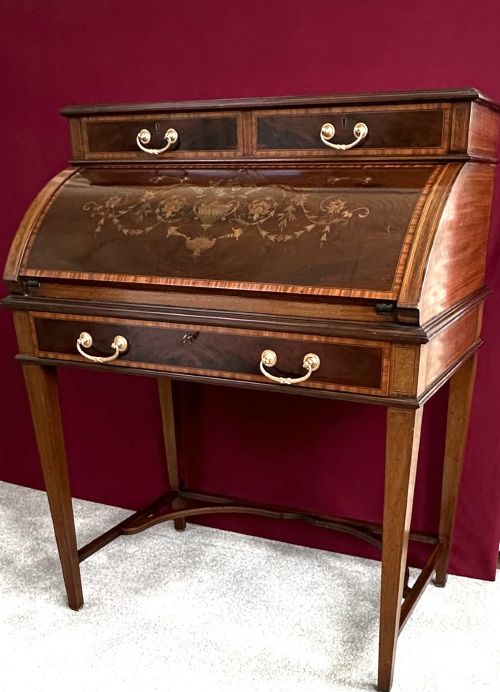
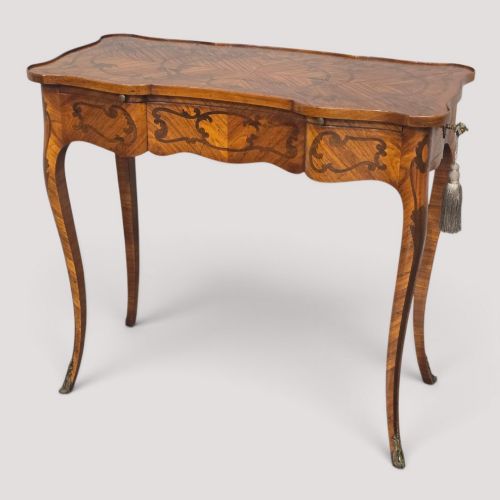
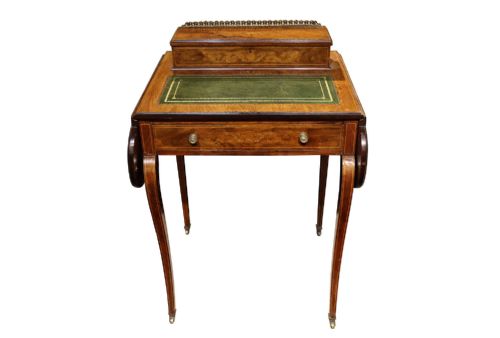
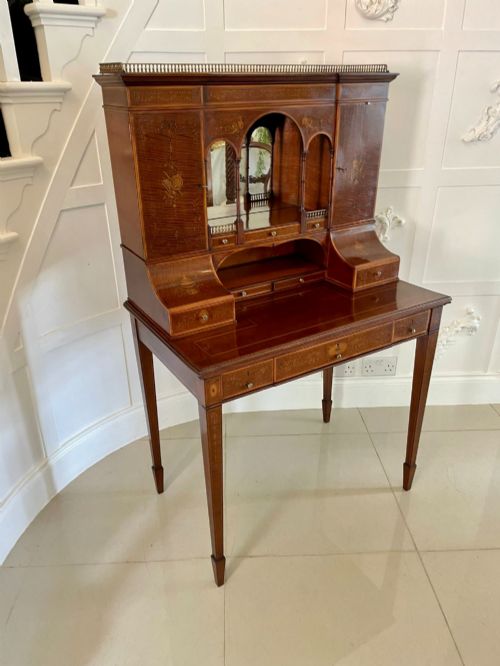
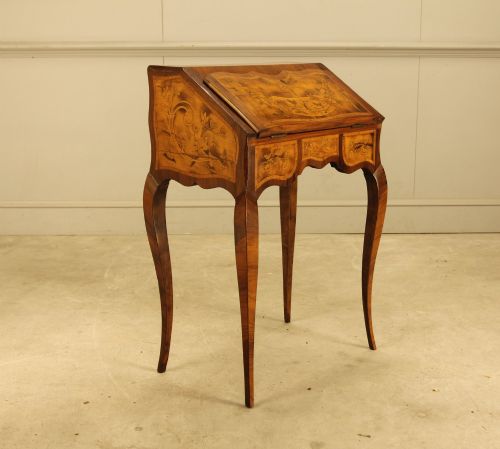
A vintage ladies bureau serves as a dedicated writing surface, often featuring compact proportions suited to smaller rooms and domestic study. When searching for a vintage ladies bureau, buyers encounter various forms including fall-front writing desks, cylinder top desks, and bureau du dame designs.
The pieces on this page span several distinct periods, with Edwardian examples appearing most frequently alongside Victorian and early twentieth-century variations. Common stylistic influences range from Sheraton Revival to French Louis XV style, incorporating classical furniture motifs into domestic writing furniture.
Makers utilised specific timber types to distinguish these smaller desks from larger library furniture, frequently selecting figured mahogany, satinwood, and walnut. Interior fittings typically comprise small drawers, pigeonholes, and occasionally leather-lined writing slides.
Materials and construction methods
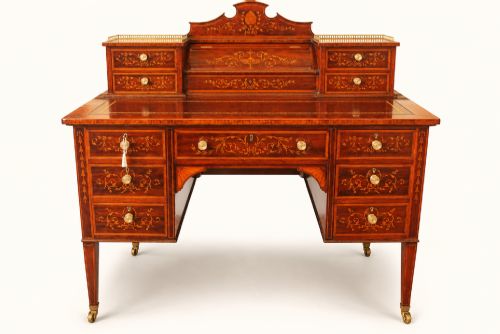
Cabinetmakers constructed these desks using solid hardwoods like mahogany, walnut, and oak for internal framing and drawer linings, applying decorative veneers to visible exterior surfaces. Satinwood, kingwood, and burr walnut appear alongside marquetry inlay and crossbanding to create contrasting decorative panels on fall fronts and tabletops.
Metal components such as brass handles, hinges, and ormolu mounts provide both functional support and decorative accents. Writing surfaces frequently integrate tooled leather inserts, while specialised mechanisms operate cylinder tops, fall-front supports, and drop-side flaps.
Vintage Ladies Bureau Retail Price Guide 2026
Typical asking prices for vintage ladies bureau among the pieces listed under this phrase on Sellingantiques today, from the lower quarter to the upper quarter. They describe what is for sale here now, not the wider market.
Many Edwardian ladies desks retain secret compartments hidden behind tiny internal drawers for storing private correspondence.
Distinguishing quality across pieces
Superior examples demonstrate precision in timber selection, matching grain patterns across drawer fronts and incorporating finer marquetry or stringing details. The integration of secondary timbers such as oak for drawer linings indicates higher workshop standards compared to standard commercial production.
Construction integrity shows in the smoothness of operational elements, including sliding surfaces, fall-front hinges, and fitted interior compartments. Original brass hardware, well-preserved leather inserts, and retained structural stability separate exceptional items from simpler desk forms.
The Vintage Ladies Bureau Glossary
- Bureau
- A desk featuring a sloping flap or fall front that opens to reveal a fitted interior of small drawers and pigeonholes. This form provides a concealed writing surface when closed.
- Bureau de Dame
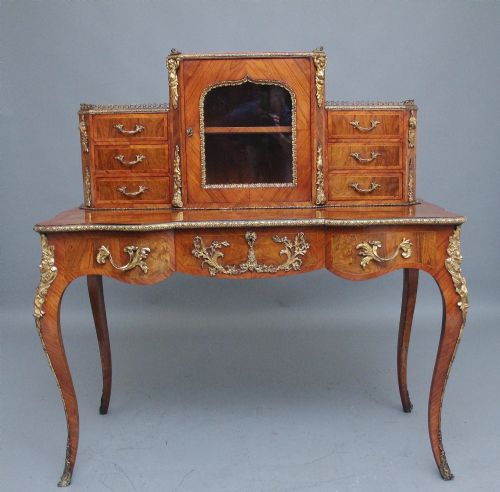
- A small ladies writing desk, frequently of French origin, often featuring cabriole legs and delicate ormolu mounts. These pieces were designed for boudoir or withdrawing room use.
- Carlton House Desk
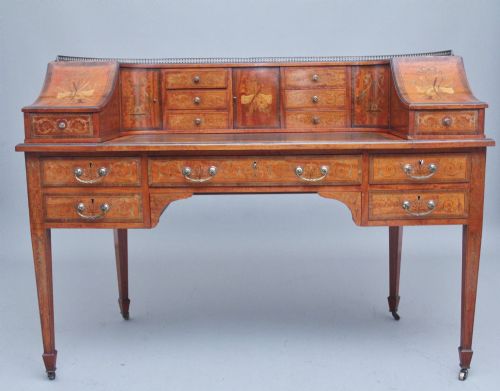
- A distinctive writing table featuring a raised superstructure of small drawers and compartments curving around the back and sides of the desk. Sheraton and Edwardian makers frequently produced variations of this form.
- Marquetry
- Decorative veneer work formed by fitting together small pieces of different coloured woods to create pictorial or geometric designs. Craftsmen applied this technique to desktop surfaces and fall fronts.
- Crossbanding
- A narrow strip of veneer applied around the border of a furniture panel with the grain running perpendicular to the centre wood. This technique creates a distinct framing effect on tabletops and drawer fronts.
Vintage Ladies Bureau: Frequently Asked Questions
What is a bureau de dame?
A bureau de dame is a compact French ladies desk typically featuring curved cabriole legs and delicate decorative mounts. These pieces were designed primarily for domestic correspondence rather than heavy administrative work.
They often incorporate fine veneers such as kingwood or mahogany, alongside fitted interior compartments for stationery.
What is a Carlton house desk?
A Carlton house desk is a specialised writing table featuring a curved superstructure of small drawers and pigeonholes enclosing the rear and sides of the writing surface. This form originated in the late eighteenth century and was revived by Edwardian cabinetmakers.
They provide extensive compartmentalized storage while maintaining a compact footprint in a room.
Where were ladies writing desks used?
These smaller desks were designed for private chambers, boudoirs, and withdrawing rooms where full-sized library furniture proved too cumbersome. Ladies used them for writing correspondence, managing household accounts, and reading.
Their compact dimensions allowed placement against bedroom walls or beneath windows without dominating the interior space.