
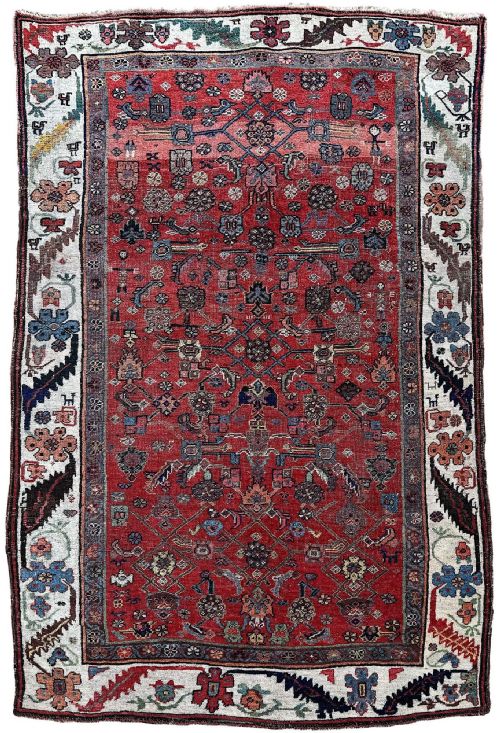
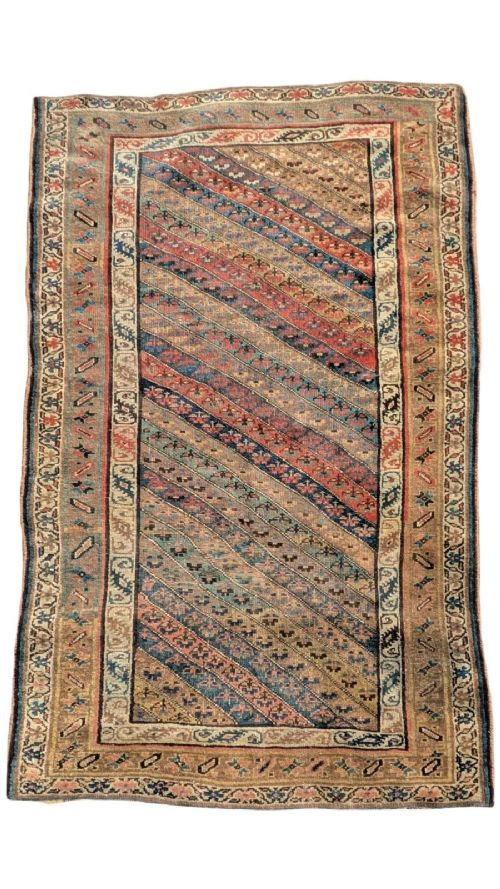
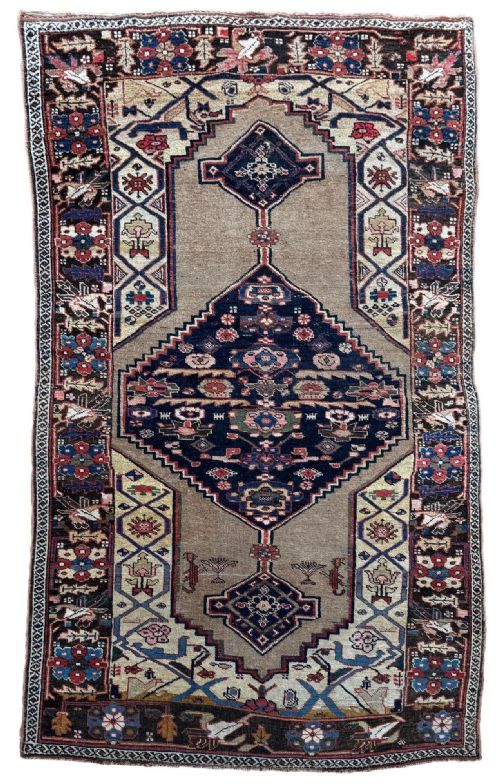
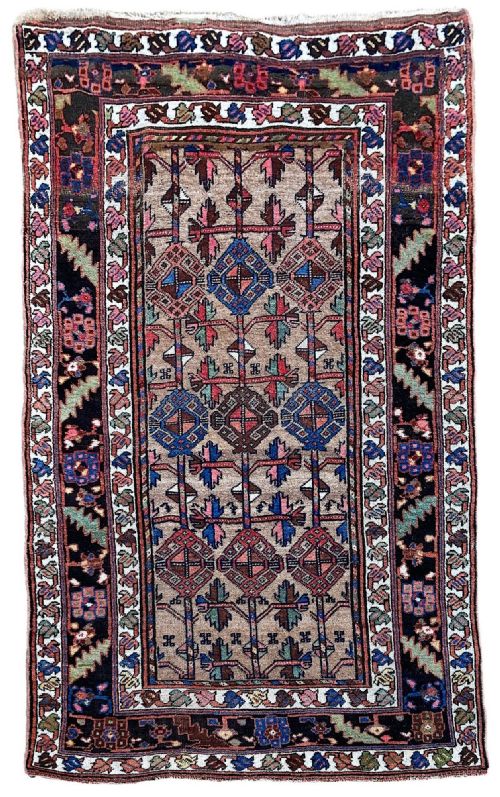
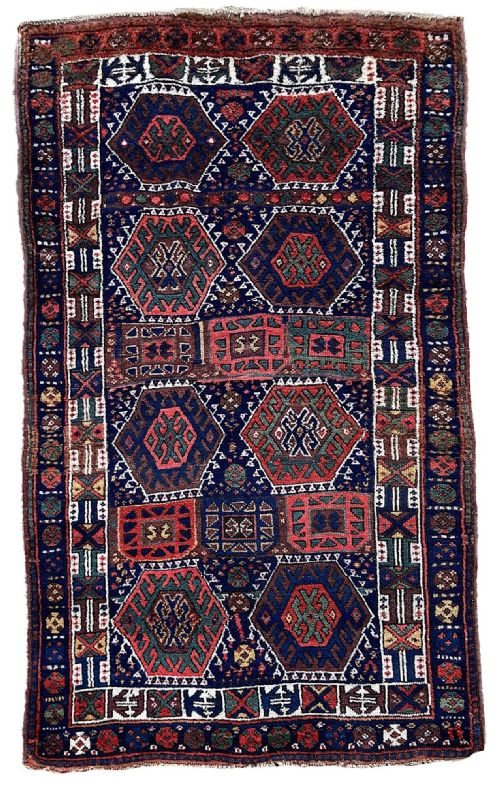
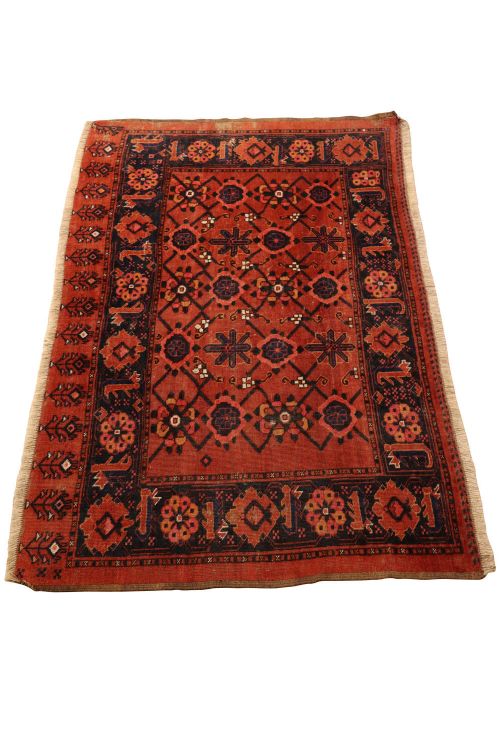


Vintage Kurdish Area Rug
A vintage kurdish area rug brings robust tribal character and deep wool pile into a room through geometric motifs and rich dye palettes.
Vintage Kurdish Area Rug
A vintage kurdish area rug originates from the tribal and village communities inhabiting regions spanning West Persia, Anatolia, and the Caucasus. These floor coverings reflect the distinct cultural weaving traditions of nomadic and semi-nomadic groups rather than urban workshops.
Buyers frequently encounter pieces dating from the late nineteenth century through the early decades of the twentieth century. The formats range from standard area sizes to longer kelleh runners suitable for corridors and substantial living spaces.
The aesthetic is rooted in tribal geometry, incorporating repeated guls, shrub motifs, and medallion structures. These designs connect modern interiors with centuries of rural craftsmanship.
How they were made
Makers utilised resilient wool and hand-spun wool for the foundation and pile, ensuring a dense, durable structure capable of withstanding generations of use. Cotton also appears in foundations, providing structural stability to the heavier village formats.
Weavers dyed their materials using natural dyes derived from local plants and minerals, creating harmonious colour variations that mellow gracefully over decades.
The listings span multiple production periods, ranging from nineteenth-century examples to pieces created in the nineteen-thirties.
What varies in quality
The integrity of the wool and the tightness of the knotting dictate the structural longevity of the piece. Finer village weavings exhibit crisp precision in their geometric borders and field patterns.
The richness and depth of the natural dye palette separate standard examples from exceptional ones. Subtle tonal shifts within the wool indicate skilful dye baths and careful material selection.
The Vintage Kurdish Area Rug Glossary
- Kelleh
- A long, rectangular rug format traditionally utilised for specific floor areas in Persian homes. These pieces often feature extended proportions compared to standard area formats.
- Gul
- A medallion or floral-inspired rosette motif repeated across the field of tribal carpets. This geometric device holds symbolic and decorative significance in regional weaving.
- Hand-Spun Wool
- Yarn processed manually on a spindle rather than by industrial machinery. This method creates variable thickness and texture within individual threads.
- Natural Dyes
- Colourants extracted from organic sources such as plants, roots, and insects. These substances yield complex tones that interact distinctively with wool fibres.
Vintage Kurdish Area Rug: Frequently Asked Questions
Where were these rugs made?
These pieces originate from tribal and village weaving groups located across West Persia, Eastern Anatolia, and the Caucasus. Different districts developed distinct variations in colour, wool quality, and geometric layout.
Nomadic families and settled villagers alike produced these textiles for domestic utility and traditional trade. Their designs reflect the specific heritage of regional groups such as the Jaf, Bidjar, and Senneh communities.
How do I care for my rug?
Vacuum the piece regularly on a gentle setting without a rotating power brush to protect the vintage wool pile. Professional cleaning by specialists in antique textiles ensures the natural dyes remain stable.
Keep the floor covering out of direct, harsh sunlight to prevent fading of the natural dye palette. Using a suitable underlay prevents slipping and cushions the foundation against heavy foot traffic.
How are different regional types told apart?
Distinctions between regional types rely on knotting density, structural materials, and specific motif repertoires. West Persian pieces often display heavy construction, while Anatolian examples utilise different village palettes.
Examining the fringe, side cord finishes, and back of the weave reveals clues regarding the specific tribe or valley of origin. Local aesthetic preferences dictate the arrangement of guls and borders.
Can I place these rugs in heavy traffic areas?
The dense wool construction and sturdy hand-knotted structure make these textiles well-suited for everyday living spaces. Their durable materials were originally engineered for demanding domestic environments.
Placing a quality rug pad underneath distributes weight and reduces friction against the floorboards. This simple measure protects the vintage foundation during daily use.