

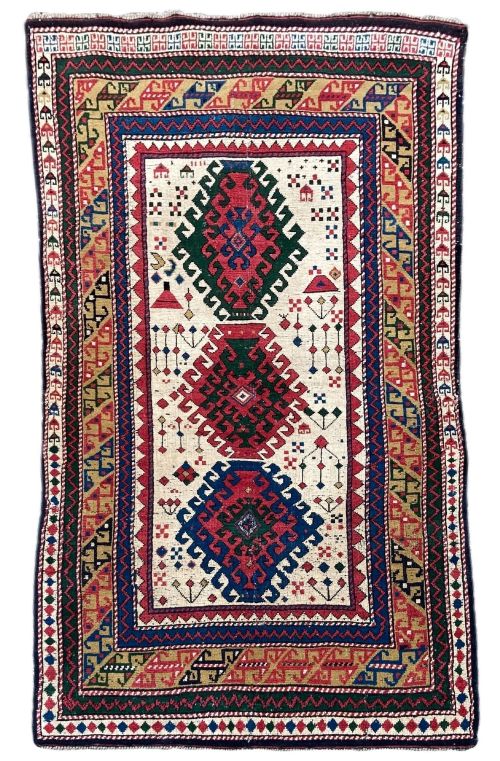
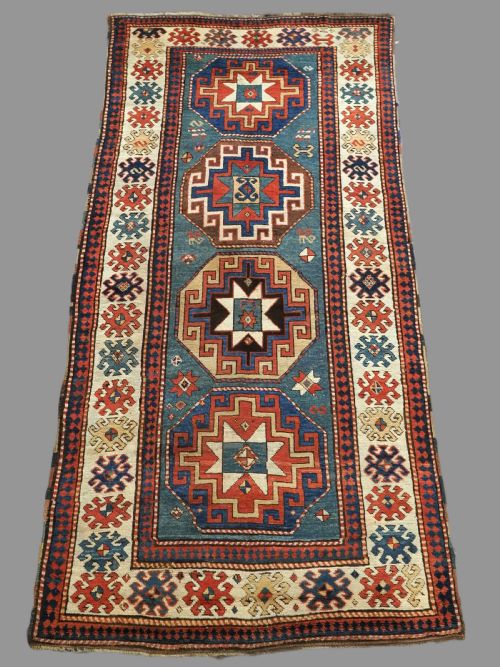
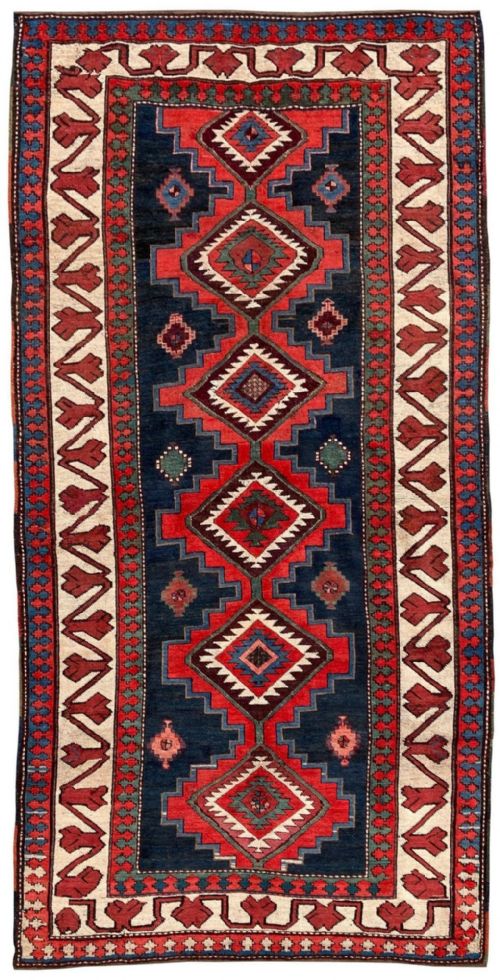
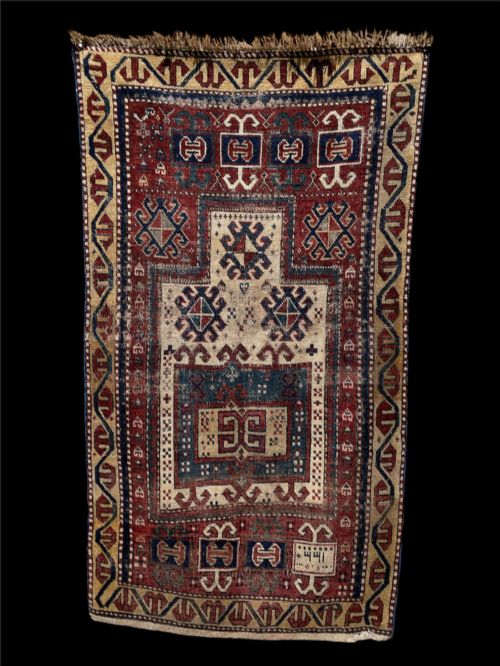
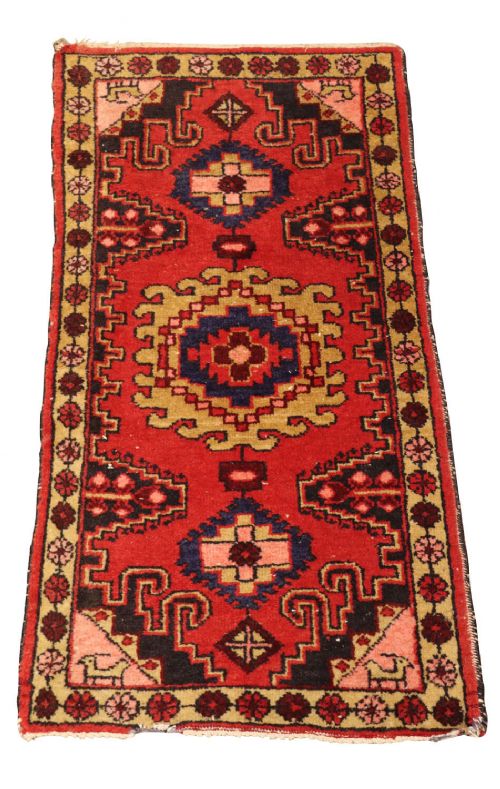
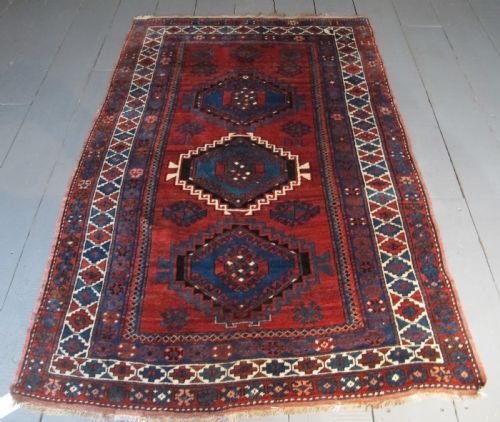
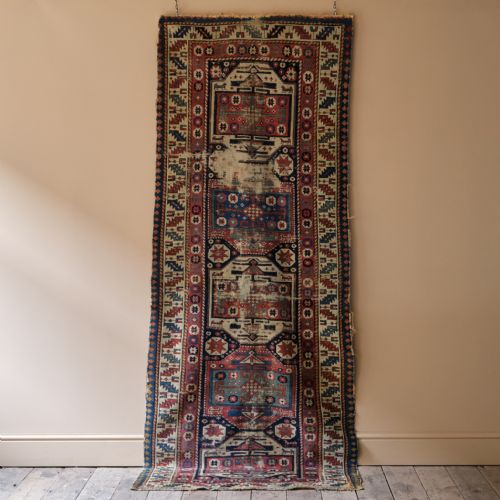


Vintage Kazak Runner
A vintage kazak runner brings bold geometric motifs and rich dye work from the Caucasus directly onto your floor.
Vintage Kazak Runner
A vintage kazak runner sits firmly within the tradition of Caucasian weaving, taking elongated formats designed for hallways and narrow spaces. These textiles emerge primarily from the late nineteenth and early twentieth centuries, spanning periods from the 1870s through to the 1930s.
The pieces appearing on this page span rugs, long rugs, and runners featuring characteristic tribal designs. Collectors encounter specific regional subtypes such as Gendje, Moghan, Fachralo, and Chelaberd within the broader Kazak grouping.
Makers in the Caucasus constructed these elongated formats for domestic use, utilising repeating medallions, latch hooks, and distinct geometric fields. Each runner reflects the specific regional weaving traditions of the South Caucasus.
Materials and construction
Weavers relied on wool and hand-spun wool for the pile, providing durability and a tactile surface texture. Foundations typically incorporate cotton or wool warps and wefts to anchor the hand-knotted structure securely.
Vintage Kazak Runner Retail Price Guide 2026
Typical asking prices for vintage kazak runner among the pieces listed under this phrase on Sellingantiques today, from the lower quarter to the upper quarter. They describe what is for sale here now, not the wider market.
Listings span production dates from the 1870s through to the 1930s, constructed predominantly from wool and hand-spun wool.
Assessing quality and character
Quality rests upon the crispness of the geometric drawing and the saturation of the wool pile. Tighter knotting and precise execution of hooked medallions and animal motifs separate finer examples from standard production.
The handling of secondary borders and the integrity of the natural dyes dictate visual depth. Examples retaining strong, uncompromised pile alongside well-balanced regional designs command greater attention from discerning collectors.
The Vintage Kazak Runner Glossary
- Kazak
- A term applied to rugs woven in the Caucasus by various tribal groups, known for bold geometry and primary colours. These pieces often feature prominent medallions and rectilinear patterns.
- Latch hook
- A common geometric motif resembling a stepped square or hook projecting from a central medallion. This decorative element appears frequently across Caucasian runner formats.
- Gendje
- A specific regional designation within the Caucasus producing rugs and runners often characterised by diagonal stripes or boteh motifs. Gendje pieces share the robust wool construction typical of the area.
- Moghan
- A sub-type of Caucasian weaving distinguished by hooked medallion designs arranged along the central vertical axis. These runners display disciplined geometric repetition.
- Fachralo
- A distinct village or tribal style associated with prayer rugs and runners featuring large square medallions and characteristic niche designs. The palette tends towards strong contrasts.
- Boteh
- An almond-shaped or paisley motif of ancient origin representing a floral shoot or cypress tree. This pattern frequently fills the field of Gendje and Kazak runners.
Vintage Kazak Runner: Frequently Asked Questions
How do I clean a vintage kazak runner?
Vacuum gently without using a rotating beater bar to protect the hand-knotted wool pile from undue stress and fibre loss.
Professional specialist cleaning remains essential for addressing deep soil and preserving the stability of natural wool and cotton foundations.
Where should I place a runner?
Hallways, corridors, and narrow entryways provide the traditional placement where elongated formats balance architectural space effectively.
Placing the textile in rooms with moderate foot traffic prevents excessive wear while showcasing the geometric design to visitors.
Are these runners durable for daily use?
Hand-spun wool combined with dense hand-knotting creates a robust structure capable of withstanding regular domestic activity over generations.
Utilising a quality underlay prevents slippage and cushions the foundation against hard flooring surfaces.
How do I identify a regional Kazak style?
Examine the primary field for characteristic markers such as diagonal stripes in Gendje pieces or hooked medallions in Moghan examples.
Colour distribution and border arrangements offer further clues to pinpointing whether a piece originates from Fachralo, Karabagh, or neighbouring Caucasian workshops.