


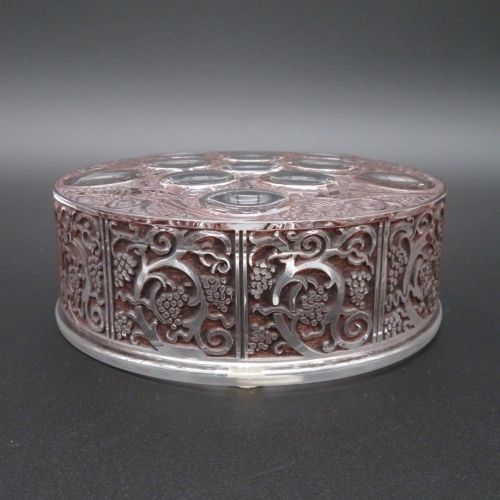


Vintage Jewellery Container
A vintage jewellery container keeps your dressing table tidy while holding daily rings and necklaces.
Vintage Jewellery Container
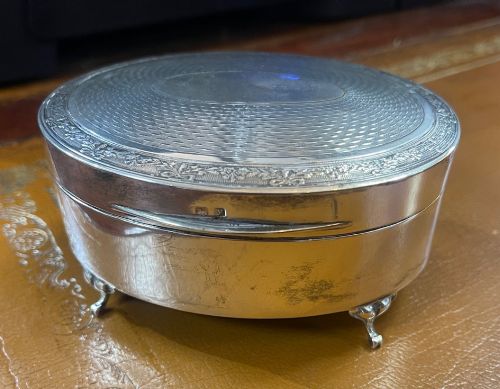
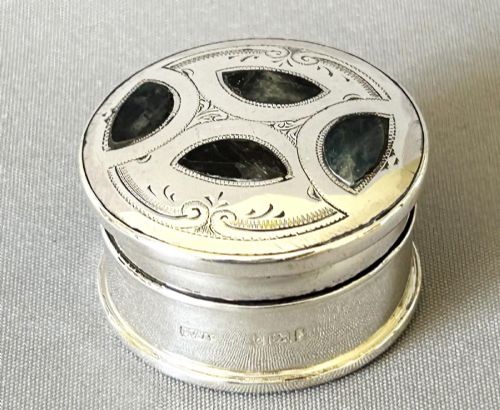
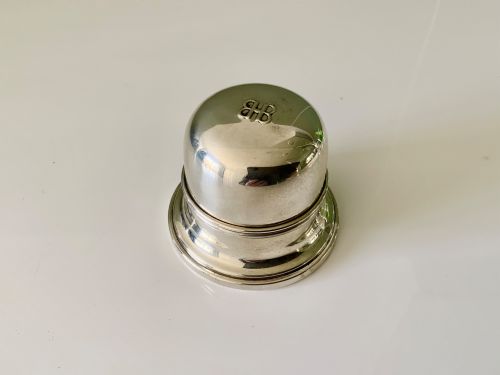
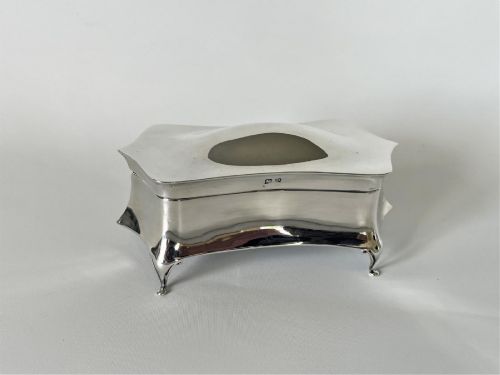
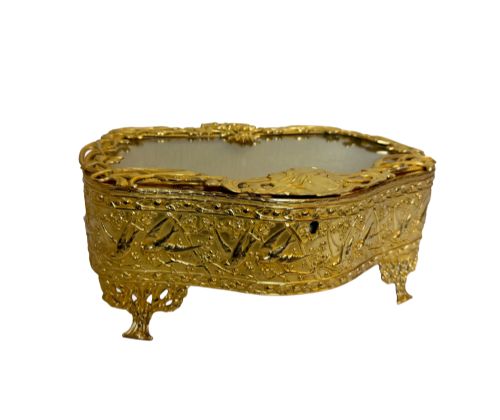
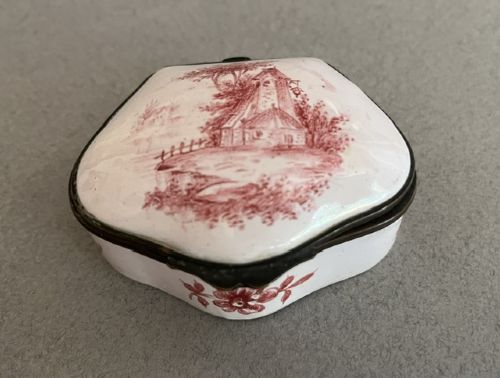
When you search for vintage jewellery container, you encounter trinket boxes, dressing table jars, and small caskets designed to hold precious items. These pieces span from the nineteenth century through the Art Deco era and into mid-century design.
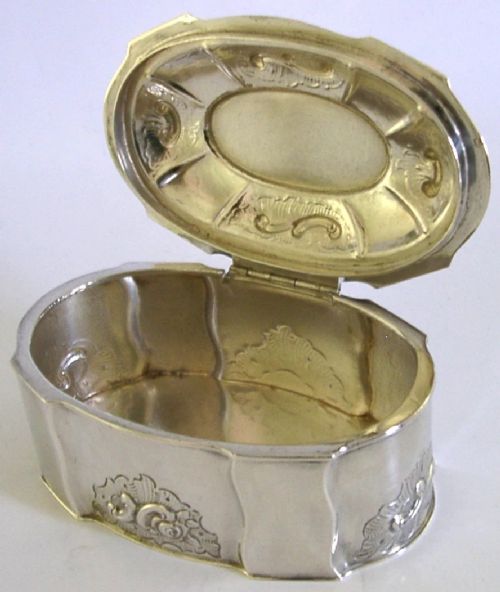
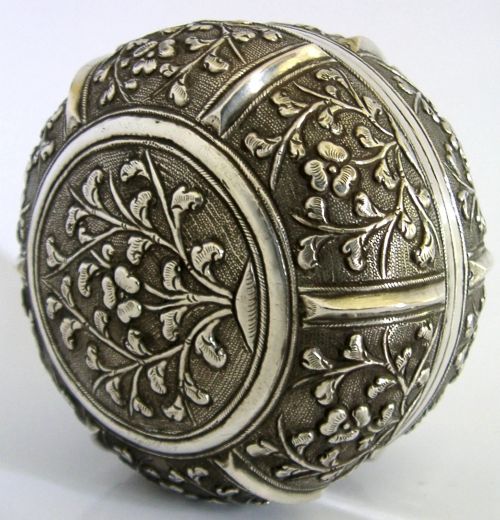
You meet various forms on this page, including heart-shaped silver boxes, porcelain powder jars, and carved wooden receptacles. Styles range from Victorian and Edwardian work to Art Nouveau, Art Deco, and Anglo-Indian export pieces.
Silver and silver plate dominate the selection alongside brass, gilt bronze, glass, and porcelain. The origins stretch from British workshops to Scandinavian studios, French provincial makers, and Asian export houses.
How they were made
Silversmiths formed sterling silver and silver plate through stamping, chasing, and repousse work, often creating hinged lids with fabric linings inside. Cast metals such as brass and gilt bronze provided heavier foundations for decorative glass inserts.
Glassmakers utilised pressing, cutting, and frosting techniques to shape powder boxes and crystal jars, sometimes pairing them with metal mounts. Woodworkers employed marquetry, such as Tunbridge Ware, or carved dense timbers like rosewood into rectangular caskets.
Vintage Jewellery Container Retail Price Guide 2026
Typical asking prices for vintage jewellery container among the pieces listed under this phrase on Sellingantiques today, from the lower quarter to the upper quarter. They describe what is for sale here now, not the wider market.
Geographic origins span from British and French workshops to Scandinavian studios and Indo-Chinese export houses.
What varies in quality
The distinction between standard examples and superior pieces rests on the crispness of surface detail and the weight of the metal. Hand-chased motifs and substantial gauge silver demonstrate greater skill than light pressed metal.
The integrity of the construction, such as whether hinges align properly and lids close flush, defines the execution. Finer examples often feature maker marks or hallmarks that confirm the origin and silver standard.
Henry Williamson Ltd·Georg Jensen
The Vintage Jewellery Container Glossary
- Trinket Box
- A small receptacle intended for holding rings, pins, and other small personal adornments. These containers typically feature hinged or lift-off lids.
- Powder Box
- A vanity jar designed to hold cosmetic face powder, frequently fitted with a matching glass or ceramic lid. They appear often in Art Deco designs.
- Repousse
- A metalworking technique where the artisan hammers the design from the reverse side to raise relief ornamentation on the surface. This method creates tactile floral or geometric patterns.
- Tunbridge Ware
- A form of British woodwork characterised by mosaic tile decoration made from tiny coloured wood blocks. It creates intricate geometric patterns on small boxes.
- Silver Plate
- A base metal substrate coated with a thin layer of sterling silver through electroplating or older fusion methods. It offers the appearance of solid silver at a different weight.
Vintage Jewellery Container: Frequently Asked Questions
How do I clean an antique silver trinket box?
Use a soft microfibre cloth to remove dust from crevices without disturbing patination. Avoid harsh chemical dips that strip away age and character from the metal.
For intricate repousse work, a gentle application of specialised silver polish on a cotton bud helps clear tarnish. Rinse carefully and dry immediately with a clean cloth.
Were these containers only used for jewellery?
Many boxes served multiple purposes on dressing tables and desks throughout the nineteenth and twentieth centuries. Powder boxes held cosmetics, while pandan boxes stored masticatory leaves.
Smaller caskets often held calling cards, cuff links, or stamps rather than precious gems. The interior lining usually indicates the intended contents of the box.
How can I tell a Victorian box from an Art Deco one?
Victorian examples tend to display floral repousse, naturalistic hearts, and heavy ornamentation in silver or brass. They often reflect revival styles and romantic motifs.
Art Deco containers favour geometric lines, streamlined symmetry, and materials like frosted crystal or Bakelite. Designers from this later period embraced minimalism and industrial forms.
What does a hallmark tell me about a box?
British hallmarks provide official stamps indicating the silver standard, the assay office, and the date letter for the year of manufacture. Maker marks identify the firm responsible for entering the piece.
Foreign pieces often carry export stamps or standard marks that designate metal purity instead of British town offices. These symbols help verify the authenticity and age of the container.