




Vintage Ironstone Plates
These vintage ironstone plates deliver robust utility and striking decoration for everyday service.
Vintage Ironstone Plates
Vintage ironstone plates represent a durable category of heavy ceramic tableware designed to withstand rigorous daily use. Spanning periods from the Georgian era through to the Edwardian period, these robust items provide substantial service surfaces.
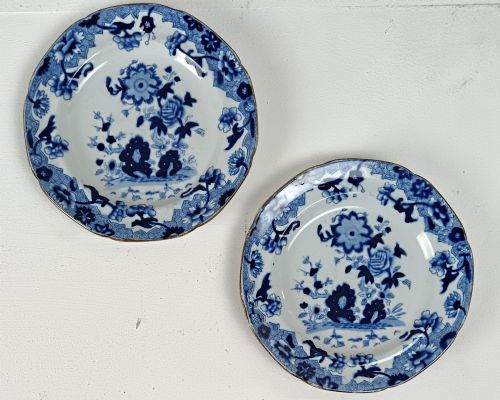
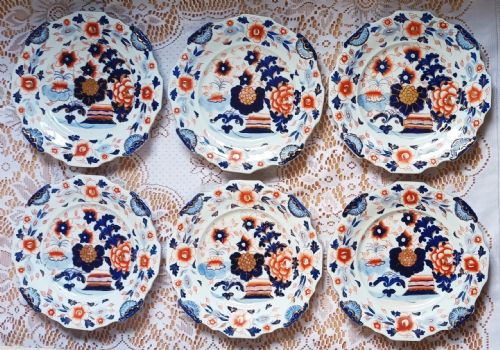
Designs on these ceramic items draw heavily from traditional aesthetics, showing Victorian Chinoiserie, Japan patterns, and blue and white transfer printing. Many pieces originate from English workshops operating across the nineteenth and early twentieth centuries.
How they were made
Potters constructed these heavy objects using dense earthenware and ceramic bodies designed for maximum durability. The resulting fabric forms a thick, heavy base that resists chipping much better than standard porcelain.
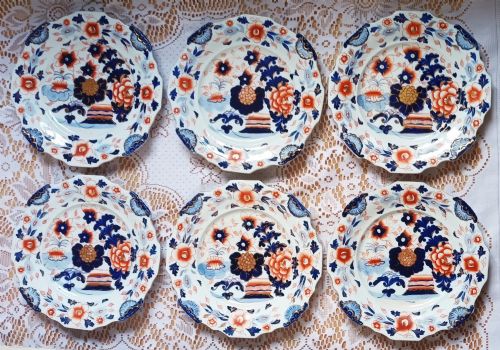
Workers applied rich enamel colours, gold leaf, and gilt accents over glazed ceramic surfaces to create vivid pictorial scenes. Transfer printing and hand painting frequently decorated patterns like exotic birds, pagodas, and traditional floral motifs.
Vintage Ironstone Plates Retail Price Guide 2026
Typical asking prices for vintage ironstone plates among the pieces listed under this phrase on Sellingantiques today, from the lower quarter to the upper quarter. They describe what is for sale here now, not the wider market.
Available forms range from standard tea plates and dinner services to specialised advertising scale plates and cheese dishes.
What varies in quality
The precision of hand-painted details and the crispness of transfer-printed patterns separate standard utilitarian wares from finer decorative examples. Artisans who executed complex scenes with vibrant orange or yellow grounds produced items of superior visual impact.
The preservation of delicate gilt highlights and gold leaf across the glazed surface indicates how carefully a piece has survived decades of service. Uniformity in the heavy ironstone body and the stability of the glaze further distinguish exceptional items.
Spode·Mason’s
The Vintage Ironstone Plates Glossary
- Ironstone
- A heavy, durable type of earthenware patented in the nineteenth century to provide a sturdy alternative to porcelain. This dense ceramic material forms the structural core of all pieces found in this category.
- Charger
- A large decorative plate utilised historically for formal service or placed beneath smaller course plates. These oversized items often display the most elaborate painted patterns.
- Ashet
- A regional term for a large serving platter or meat dish used at the centre of the dining table. They provide substantial surface area for presenting joints of meat.
- Chinoiserie
- A European decorative style interpreting Chinese artistic traditions through painted motifs like pagodas, exotic birds, and imaginary landscapes. This aesthetic appears frequently on nineteenth-century ceramic services.
- Transfer printing
- A mechanical method of applying complex designs to ceramics by transferring inked patterns from an engraved copper plate onto the bisque body. This technique enabled the consistent production of intricate blue and white scenes.
Vintage Ironstone Plates: Frequently Asked Questions
What is ironstone?
Ironstone is a dense, heavy ceramic material developed to offer the durability of stoneware combined with the refined appearance of porcelain. It creates a robust foundation suitable for heavy domestic service.
The pottery body resists everyday wear, making these plates remarkably resilient despite their age and frequent historical usage in nineteenth-century kitchens and dining rooms.
How do I date these plates?
Dating relies on maker marks stamped or printed onto the base, stylistic indicators like transfer-printed Chinoiserie motifs, and the specific form of the earthenware body. Georgian and Victorian examples often feature distinct ironstone registration marks.
Examining the depth of the glaze and the complexity of hand-painted enamel decoration also helps narrow the period of manufacture between the early nineteenth and early twentieth centuries.
Can I use them daily?
These robust plates were originally manufactured for heavy utilitarian service, meaning their thick ceramic bodies handle regular use quite well. Their solid construction makes them well-suited for serving food.
However, pieces featuring delicate gold leaf, gilt accents, or hand-painted enamel require careful handling and gentle washing to preserve the surface decoration over time.
What patterns are common?
Common patterns include traditional blue and white transfer prints, Japan-inspired motifs, and elaborate Chinoiserie scenes featuring exotic birds and pagodas. Makers utilised rich background colours like orange and yellow on larger chargers.
These decorative choices reflect the shifting aesthetic tastes of the Victorian and Edwardian periods, moving from simple two-tone printing to vibrant polychrome painted designs.