



Vintage Iron Plant Stands
These vintage iron plant stands bring structural weight and organic grace to conservatories and patios alike.
Vintage Iron Plant Stands
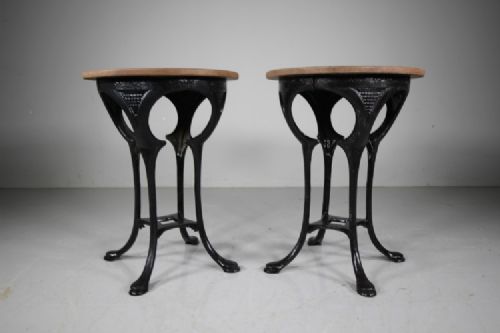
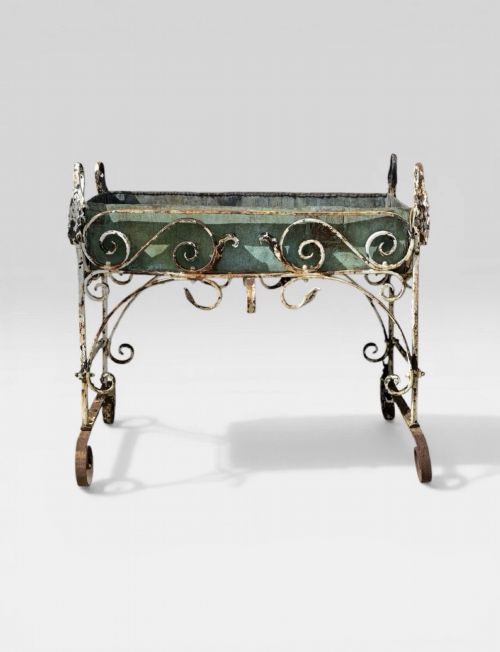
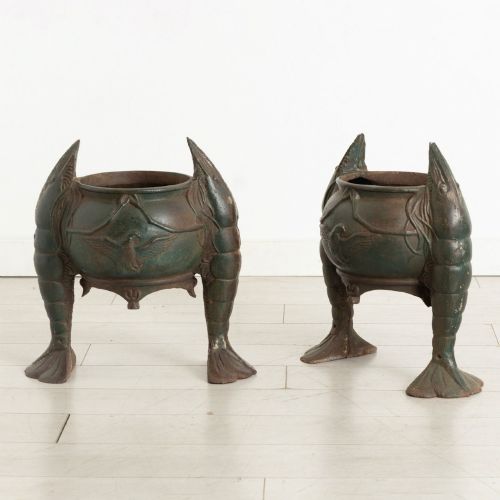
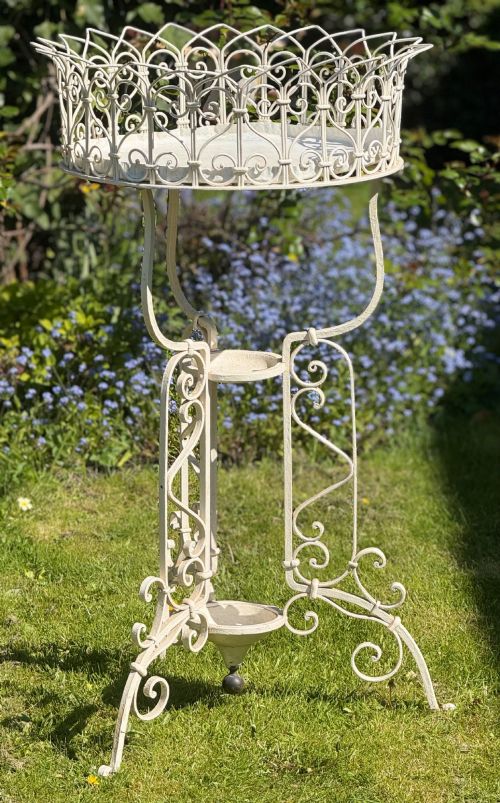
Vintage iron plant stands serve as sturdy display pieces for indoor greenery, conservatory flowers and garden urns. These pieces range from modest three-tier stands to grand architectural lanterns and estate-made racks.
Buyers browsing this selection frequently encounter nineteenth-century scrollwork designs, cast iron tables and tiered wirework frames. Many items originate from English and French country houses, showcasing utilitarian forms adapted for decorative display.
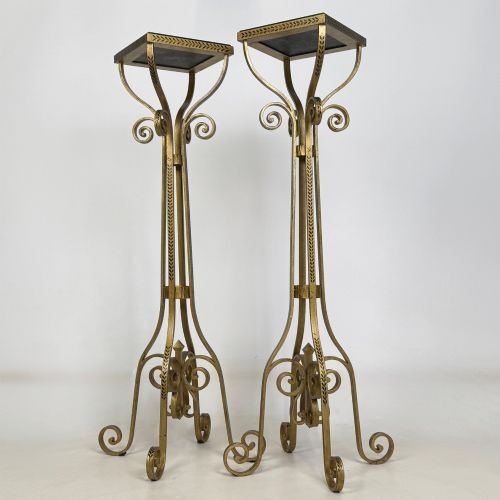
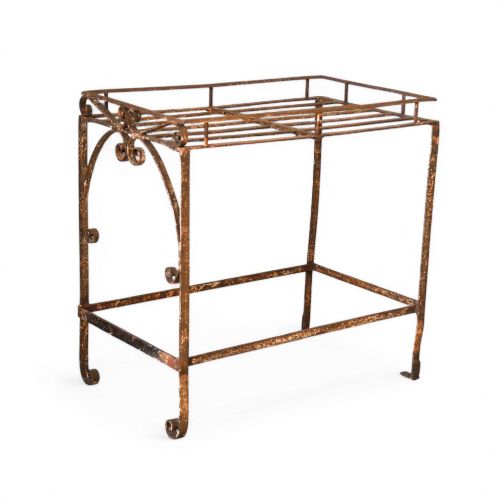
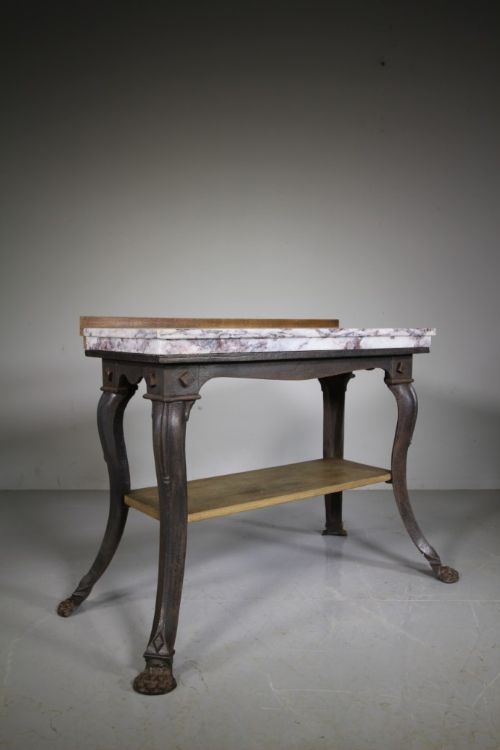
Alongside conventional stands, the selection includes related forms such as baker racks, jardiniere tables and marble-topped pedestals. Each piece demonstrates how historical makers combined structural metalwork with botanical display needs.
How they were made
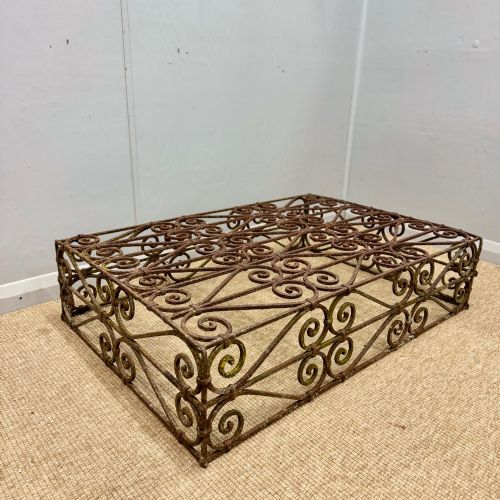
Makers shaped these stands primarily from wrought iron and cast iron, employing forging, riveting and scrollwork techniques. Many items incorporate supplementary materials like wirework mesh, sheet metal and timber or marble inserts.
Surfaces frequently feature protective or decorative coatings, including historic paint layers and weathered patinas developed through decades of garden use. Joinery relies on traditional riveting and forge-welding rather than modern assembly methods.
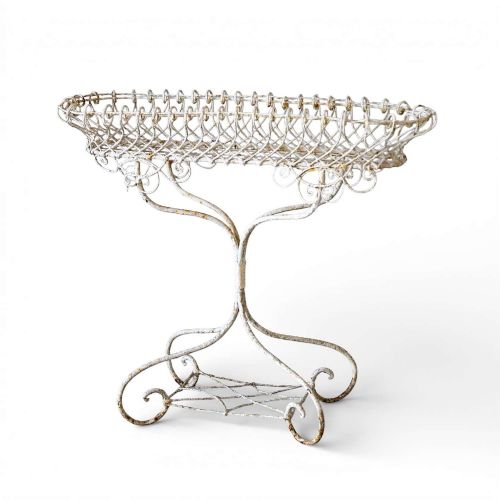
Object forms range from traditional plant stands and wirework jardiniere tables to industrial baker racks and marble-topped side tables.
What varies in quality
Quality in these metal stands rests upon the sophistication of the smith's scrollwork, the crispness of cast details and the overall structural integrity. Pieces featuring complex lattice baskets or figural cast elements demonstrate superior craftsmanship.
The degree of original survival, such as intact wire mesh, uncompromised marble tops and stable riveted joints, distinguishes standard utilitarian racks from finer decorative examples.
Archibald Knox
The Vintage Iron Plant Stands Glossary
- Wrought iron
- A tough, malleable iron form heated and hammered by smiths into decorative scrolls and structural supports. This material allows for slender, graceful curves that retain high load-bearing strength.
- Cast iron
- Molten metal poured into moulds to create rigid decorative shapes and sturdy bases. It permits complex surface relief work and sculptural forms like campana urns.
- Wirework
- Metal strands woven or soldered into open lattice frames for lightweight conservatory staging. This technique creates airy plant stands that resist moisture accumulation.
- Jardiniere
- An ornamental pot or stand designed specifically to hold indoor plants and floral displays. These items often feature waterproof liners or decorative trays.
- Gueridon
- A small round occasional table supported by a central column or legs, frequently utilised for display purposes. French examples often incorporate painted iron frames with round tops.
Vintage Iron Plant Stands: Frequently Asked Questions
How do I care for a vintage iron plant stand?
Keep the metal clean with a soft brush and dry cloth to preserve existing paint or patinated surfaces. Avoid placing damp pots directly onto unprotected iron to prevent active corrosion.
For pieces kept in conservatories or gardens, check stability periodically and apply appropriate conservation waxes where paint finishes are vulnerable.
Can these plant stands be used outdoors?
Many of these pieces were originally built for gardens, conservatories and estate grounds, making them well-suited for exterior settings. However, prolonged exposure to heavy moisture can accelerate weathering on delicate wirework and unpainted iron.
Protect fragile nineteenth-century wirework and marble-topped examples by storing them under shelter during harsh winter months.
How do I identify a nineteenth-century piece?
Look for construction methods such as hand-riveted joints, forged scrollwork, and heavy cast iron components typical of Victorian production. Surface textures often reveal layered historical paint and natural oxidation developed over generations.
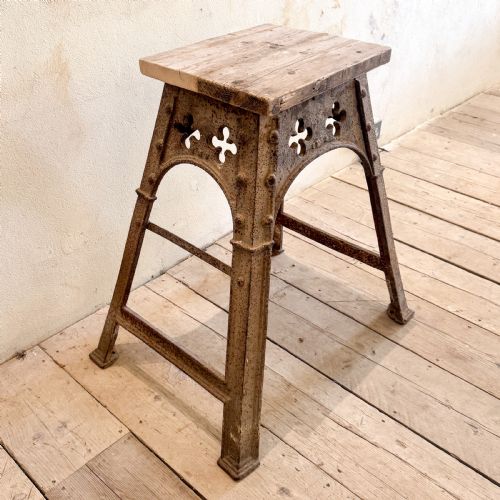
Design motifs like gothic arches, naturalistic leaves and campana urn forms also point directly toward Victorian and Edwardian manufacturing periods.
What is the difference between cast and wrought iron?
Cast iron is poured into moulds, resulting in rigid, heavy forms with detailed surface relief and sculptural quality. Wrought iron is heated and hammered by hand, producing flexible, fibrous bars shaped into curves and scrolls.
Recognising these methods helps buyers appreciate the specific techniques used by period smiths and foundries.