
Vintage Iron Outdoor Table
A vintage iron outdoor table brings enduring structure to a garden, offering a solid surface designed to weather the seasons.
Vintage Iron Outdoor Table
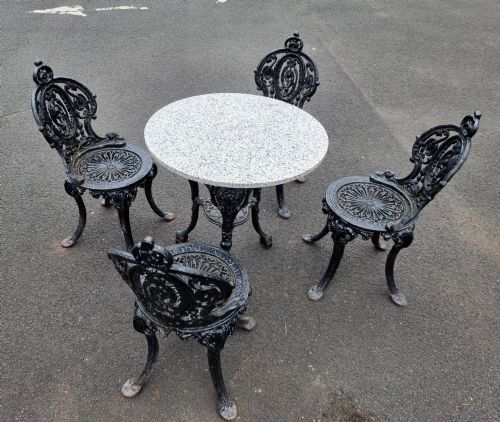
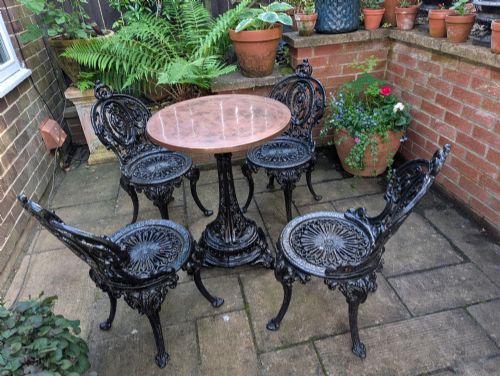
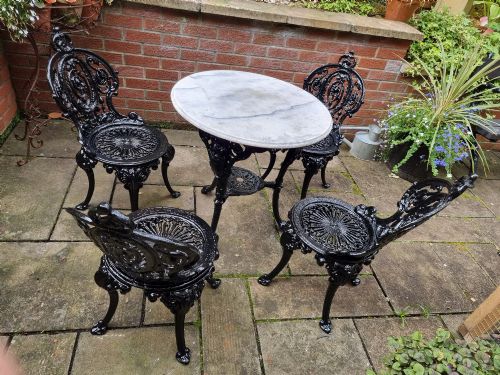
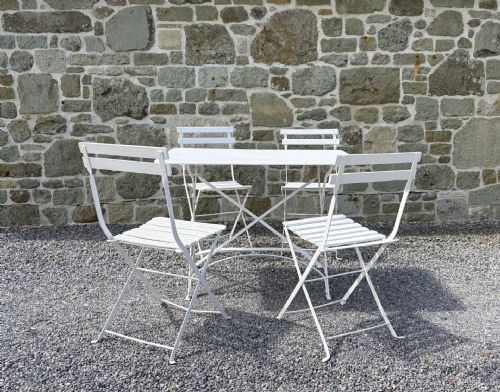
When you search for a vintage iron outdoor table, you encounter heavy functional furniture designed to endure outside use across generations. The pieces listed here span the nineteenth century through the 1930s, encompassing formal Victorian designs, provincial French bistro forms, and industrial variations.
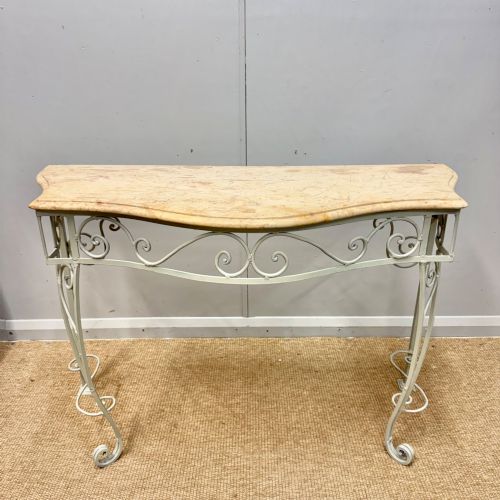
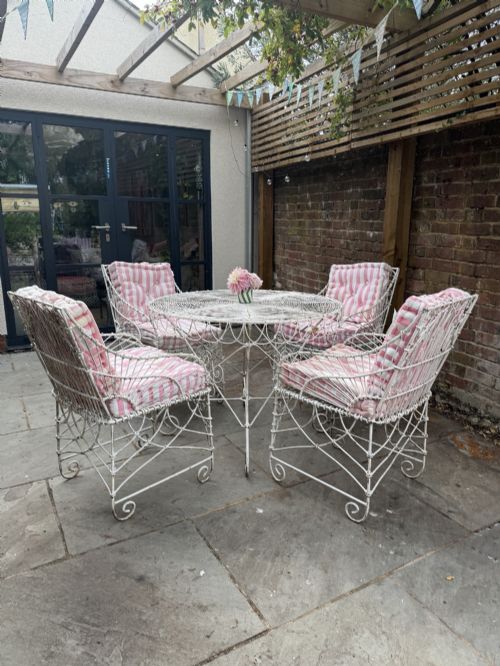
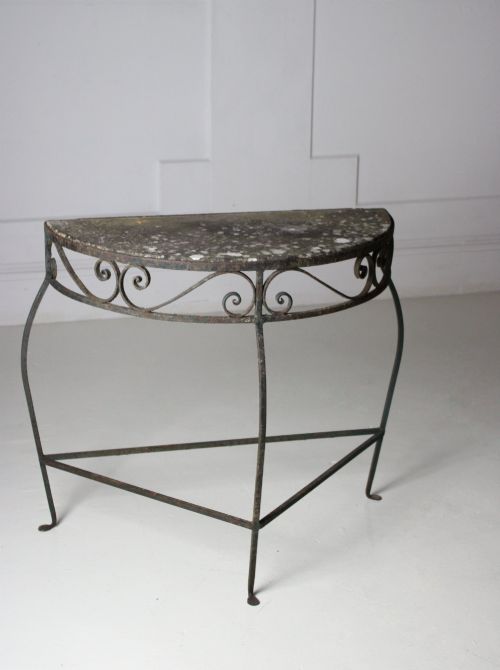
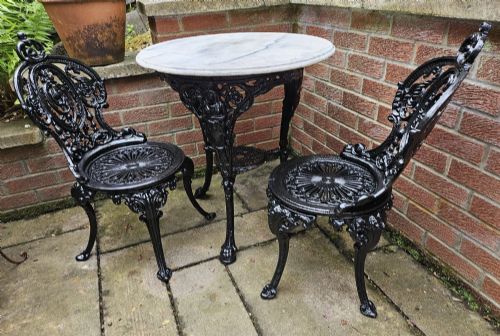
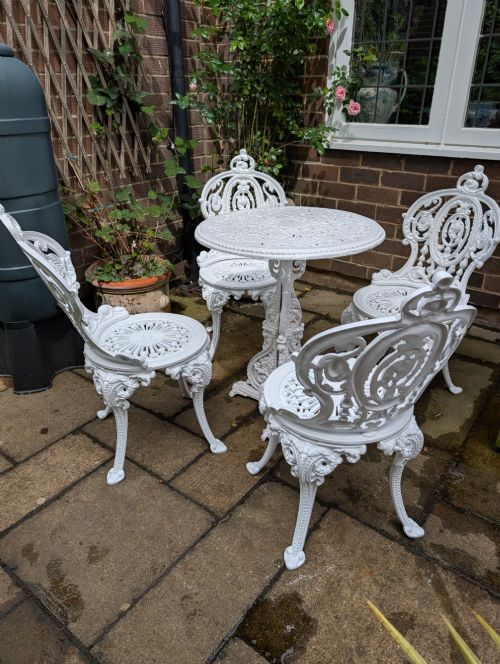
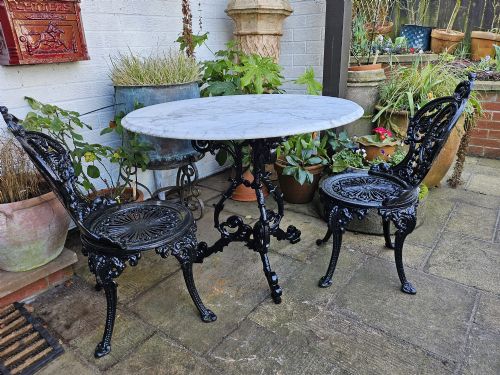
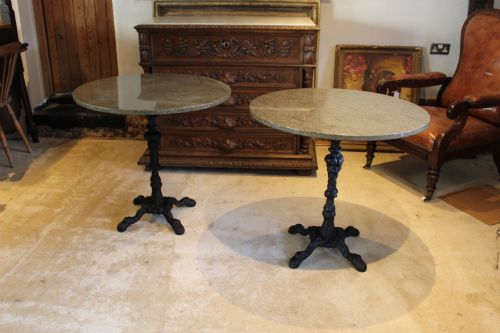
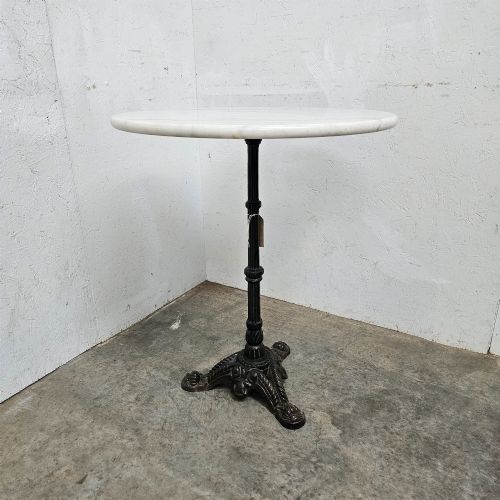
You are most likely to meet round or console forms constructed from cast iron or wrought iron, frequently paired with contrasting tops in marble, wood, or stone. These tables appear singly or as part of garden dining sets accompanied by matching chairs.
Origins stretch across British, French, and Spanish workshops, reflecting both domestic patio requirements and continental café culture. The selection ranges from compact side tables to substantial estate dining pieces.
How they were made
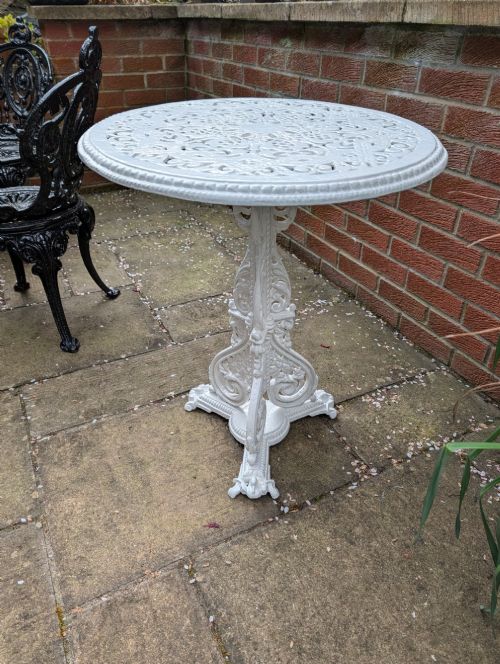
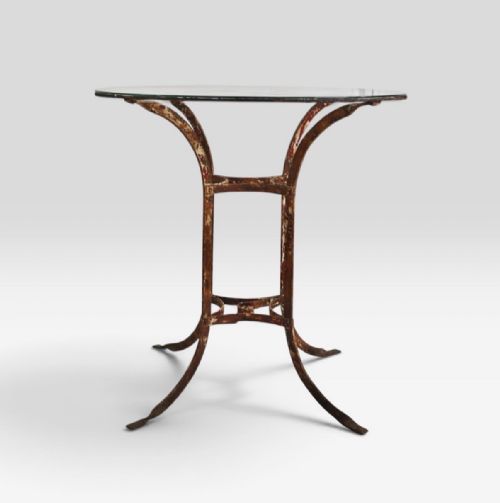
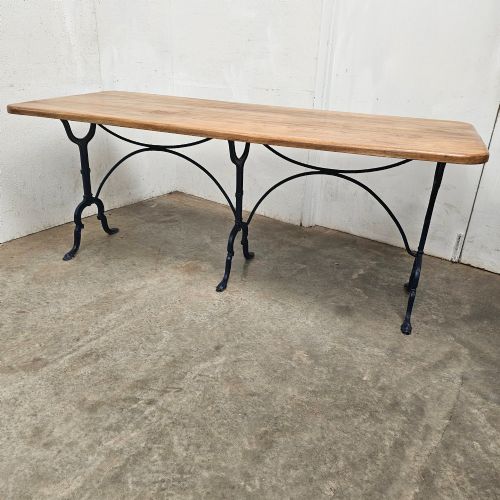
Makers utilised cast iron for intricate moulded pedestals and frames, pouring molten metal into detailed moulds to achieve elaborate Victorian scrollwork and structural rigidity. Wrought iron was shaped by hand through heating and hammering, producing fluid strapwork and linear framework for lighter tables.
Tops were selected for durability and utility, combining heavy iron bases with slabs of white marble, polished granite, zinc, or resilient timbers such as elm and pine. Original surface treatments included protective layers of paint, which aged through decades of exposure.
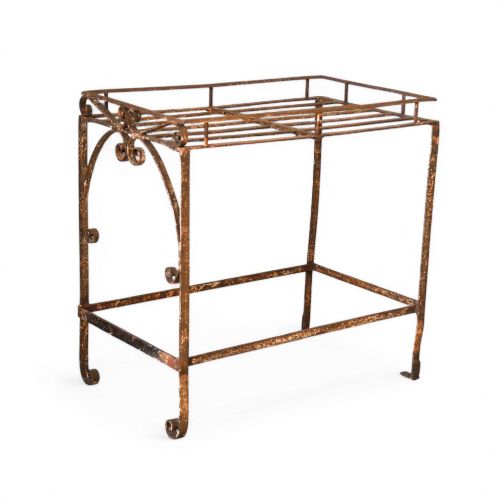
Estate-made racks and heavy garden tables share space with folding café chairs, ready for unexpected guests in the shrubbery.
What varies in quality
The sophistication of the casting separates standard utility tables from exceptional design pieces, particularly those associated with specific aesthetic movements or named designers. Crispness of detail in the ironwork indicates superior pattern-making and skilled foundry production.
The integrity of the top material and its junction with the iron base dictates the success of the piece. Heavy marble or stone slabs fitted securely to robust cast bases represent the upper tier of construction quality.
Christopher Dresser
The Vintage Iron Outdoor Table Glossary
- Cast iron
- Iron alloy poured into a mould to create solid, highly detailed structural forms. It provides the heavy weight and ornate decorative motifs seen on Victorian garden tables.
- Wrought iron
- Iron heated and worked by hand with tools to create strong, flexible components. This material produces the linear frames and curved stretchers typical of French bistro furniture.
- Britannia table
- A nineteenth-century pub or garden table featuring a heavy cast-iron base depicting Britannia or similar figural motifs. These sturdy tables support circular wooden tops.
- Strapwork
- Ornamental scrollwork formed from flat bands of iron pinned or welded together. It creates openwork patterns on garden table bases and surface supports.
- Bistro table
- A small café table designed for compact outdoor or indoor seating. These tables combine iron pedestals with marble or wooden tops.
Vintage Iron Outdoor Table: Frequently Asked Questions
Can I leave my iron table outside all winter?
Iron tables tolerate outdoor conditions well due to their heavy metal construction, though prolonged dampness can accelerate surface oxidation.
Storing marble-topped or wooden-surfaced variants under cover during severe weather helps preserve vulnerable top materials and joint connections.
How do I clean a vintage iron table?
Routine maintenance requires simple washing with mild soap and water to remove dirt and organic debris from the metal surface.
Avoid harsh chemical strippers that might disturb aged paint layers or damage sensitive stone and wood tops.
Are these tables heavy to move around?
Cast iron and stone components create considerable weight, making these tables remarkably stable in windy outdoor locations.
Moving larger dining sets or marble-topped consoles typically requires two people to prevent structural strain.
How can I tell a Victorian table from a later one?
Nineteenth-century examples frequently exhibit deep casting marks, heavier proportions, and specific Victorian aesthetic motifs such as Britannia pedestals or complex scrollwork.
Twentieth-century pieces tend towards simpler lines, lighter steel or iron framing, and French café styling from the 1920s and 1930s.