
Vintage Iron Garden Seating
These pieces of vintage iron garden seating bring enduring structure to lawns and terraces through heavy metal frameworks.
Vintage Iron Garden Seating
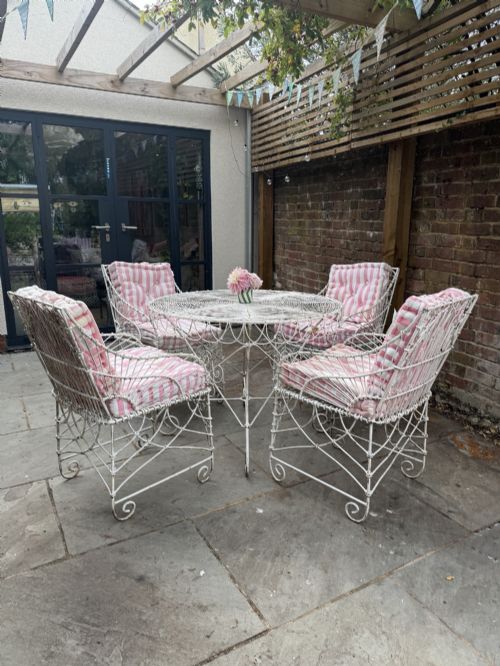
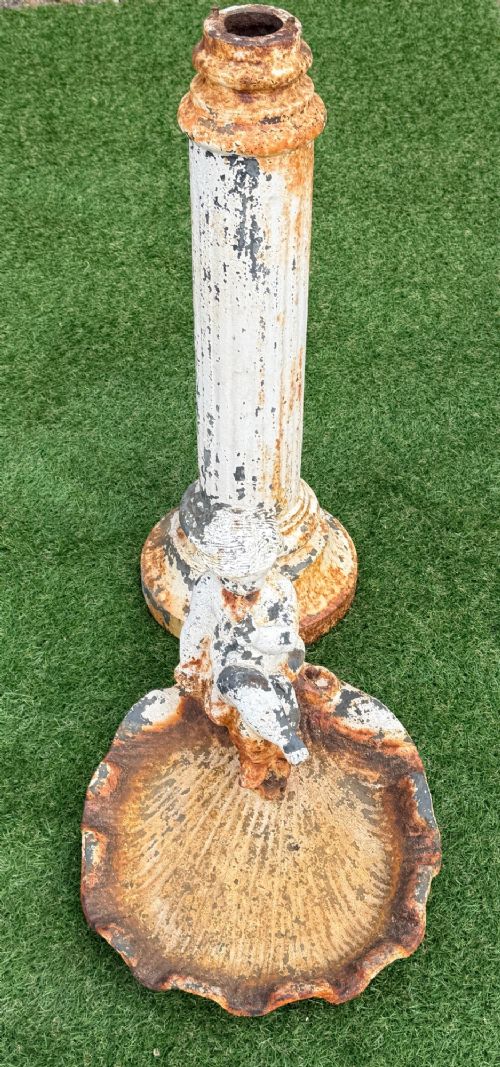
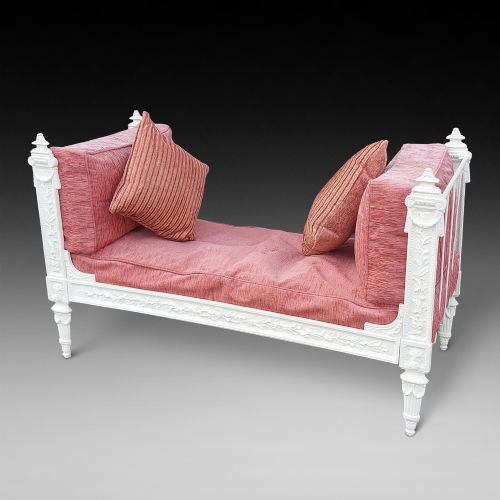
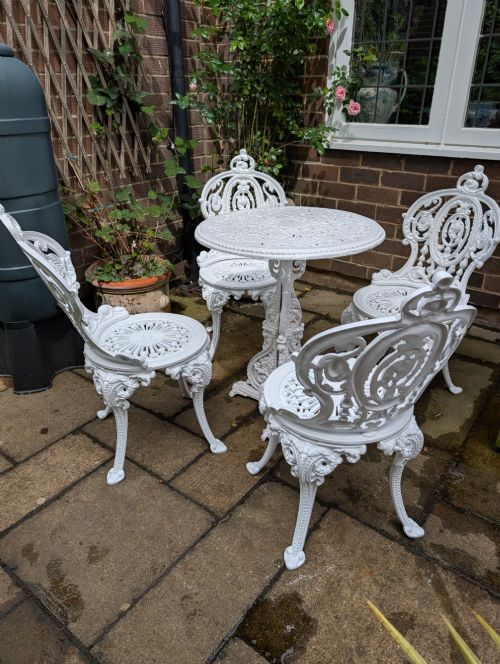
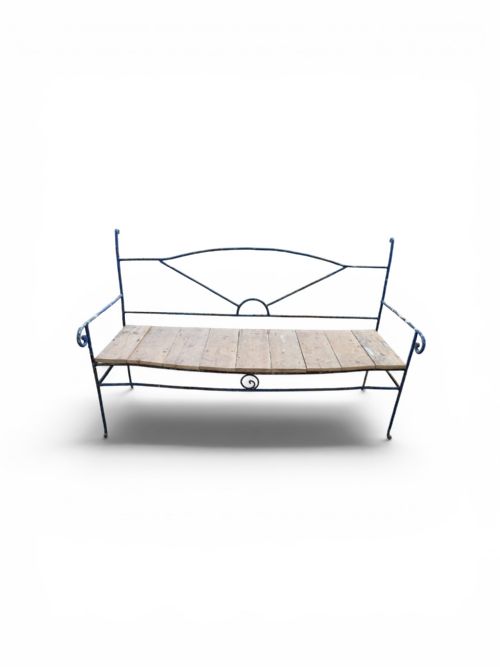
Vintage iron garden seating encompasses benches, chairs, dining sets, and daybeds intended for outdoor placement. The selection relies heavily on nineteenth century designs, spanning Victorian, Regency, and Edwardian periods.
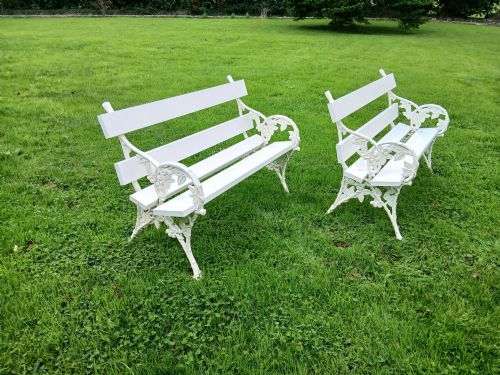
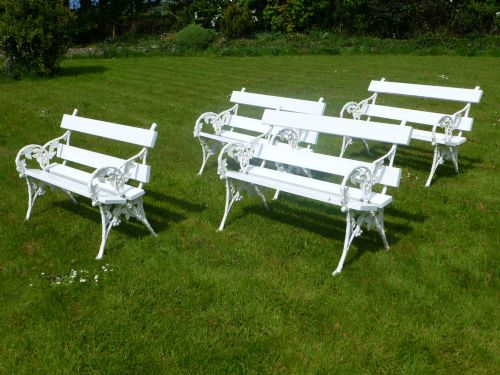
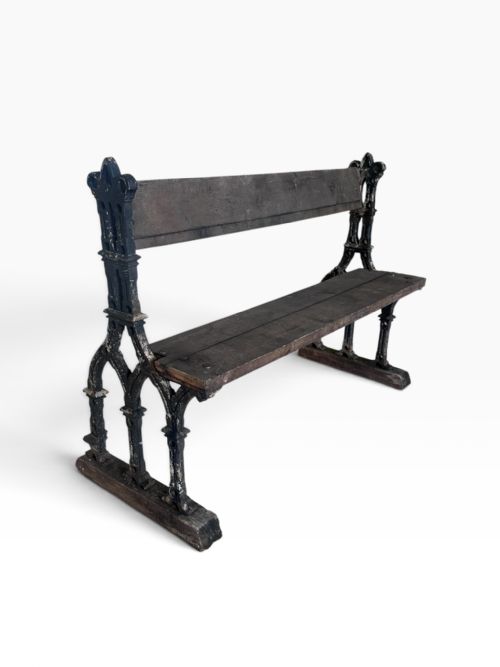
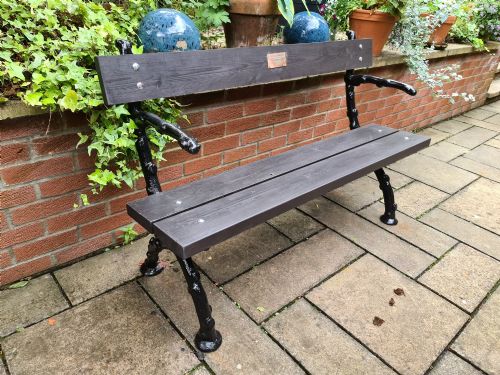
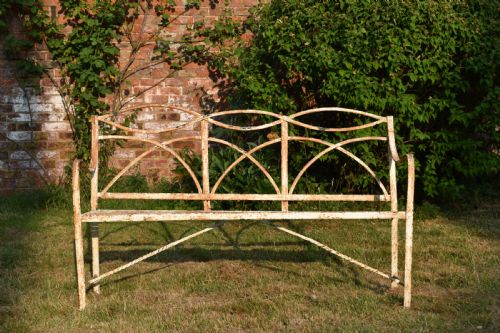
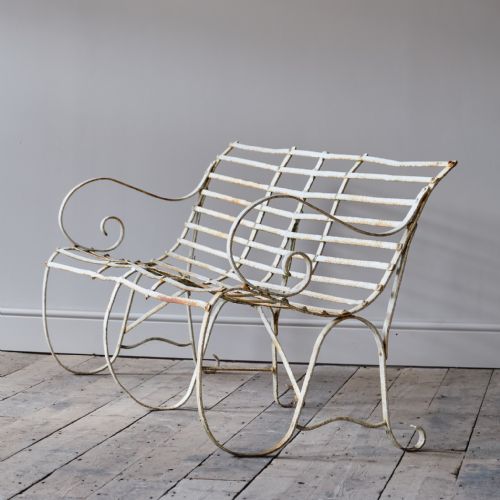
Buyers routinely encounter cast iron and wrought iron variants, often shaped into garden benches or matching chair sets. French country influences and gothic revival patterns appear frequently alongside utilitarian railway station forms.
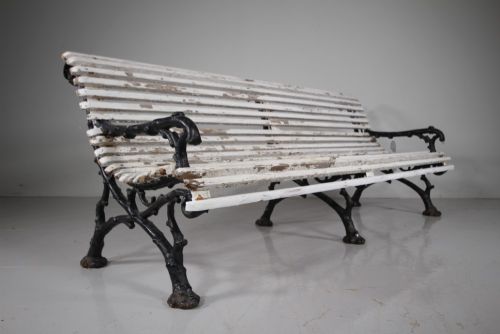
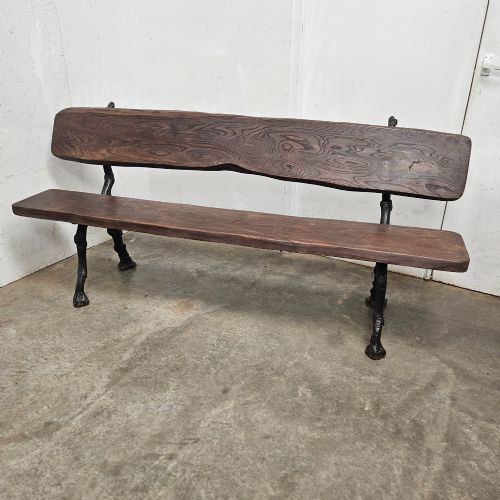
Production origins extend from English foundries to French workshops, yielding diverse configurations such as folding chairs, strapwork benches, and faux bois timber combinations.
Materials and Technique
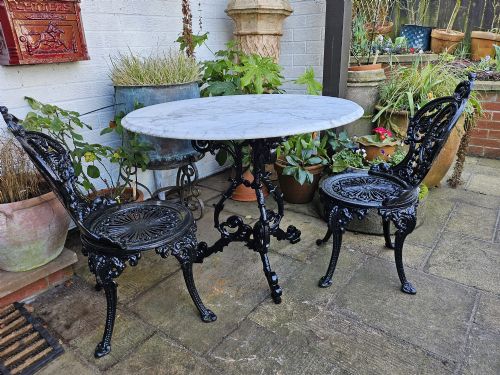
Foundries utilised cast iron and wrought iron as principal structural media, pouring molten metal into detailed moulds or hammering bars into strapwork. Timber slats, wood, and marble tops frequently supplement the metal frames.
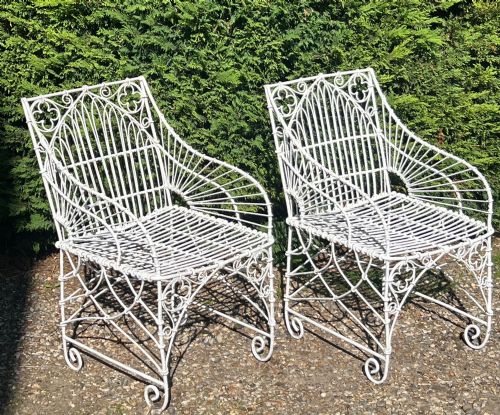
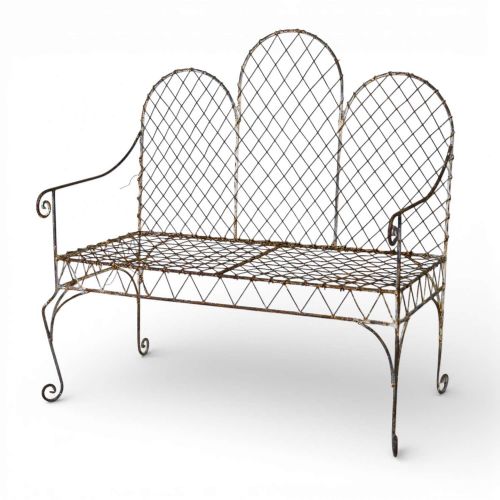
Wirework techniques shape delicate garden arbours and seating frames, while protective layers of paint preserve the exposed iron against weathering.
Craftsmanship and Proportion
Quality rests upon the crispness of the iron casting, where intricate botanical motifs like blackberry and leaf patterns retain sharp relief. Finer examples display balanced proportions in strapwork and structural integrity across heavy armrests and legs.
The integration of secondary materials, such as fitted timber seats or marble tabletops, distinguishes superior workshop output from simpler utilitarian output.
Falkirk Carron Foundry·Coalbrookdale·Christopher Dresser
The Vintage Iron Garden Seating Glossary
- Cast iron
- Iron poured into a mould to create complex decorative patterns like foliage and scrollwork. This technique produces heavy, rigid garden benches and chairs.
- Wrought iron
- Iron heated and hammered into shape by hand to form flexible structural bands and strapwork. It provides sturdy support for lighter outdoor seating.
- Faux bois
- Imitation wood grain rendered in metal or concrete. This style mimics natural timber branches on nineteenth century garden benches.
- Strapwork
- Flat strips of metal interlaced to form geometric patterns. It appears frequently on Regency and Victorian garden seats.
Vintage Iron Garden Seating: Frequently Asked Questions
How do I protect iron garden seating outdoors?
Apply suitable metal paint regularly to prevent rust formation on exposed surfaces during wet seasons.
Store pieces under cover or use protective outdoor covers during severe winter weather.
Are these iron seats heavy to move?
Cast iron benches and chairs possess considerable weight due to the dense metal construction.
Two people are typically required to reposition larger garden settees and dining sets safely.
Can iron garden benches stay outside year round?
Most pieces withstand outdoor elements effectively when painted and maintained properly against moisture.
Wooden slats or fabric elements require additional attention to prevent decay or weathering.
How do I identify a Victorian iron bench?
Look for characteristic design elements such as gothic revival patterns, shell motifs, or heavy foliate casting.
Nineteenth century pieces often feature maker marks or distinct foundry registration details on the frame.