
Metal Outdoor Seating
These metal outdoor seating designs bring lasting structure to gardens, spanning graceful strapwork benches and sturdy Victorian cast iron seats.
Metal Outdoor Seating
Metal outdoor seating encompasses a durable range of garden benches, armchairs, dining sets, and arbours designed to weather the elements. When exploring metal outdoor seating, buyers frequently encounter pieces originating from the nineteenth and early twentieth centuries.
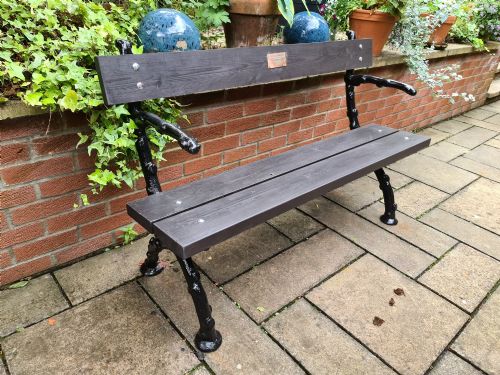
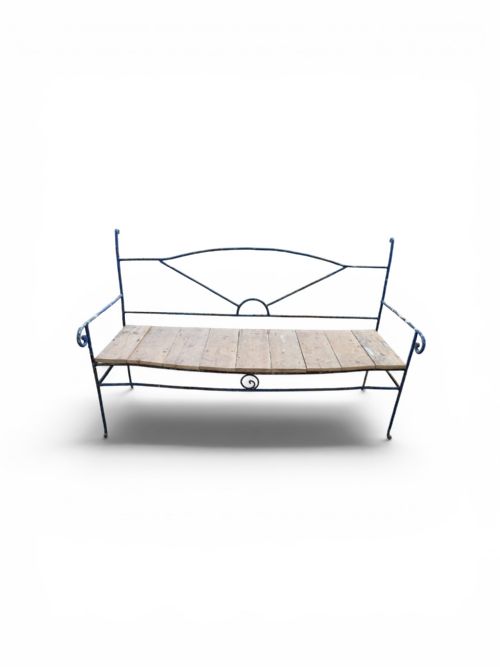
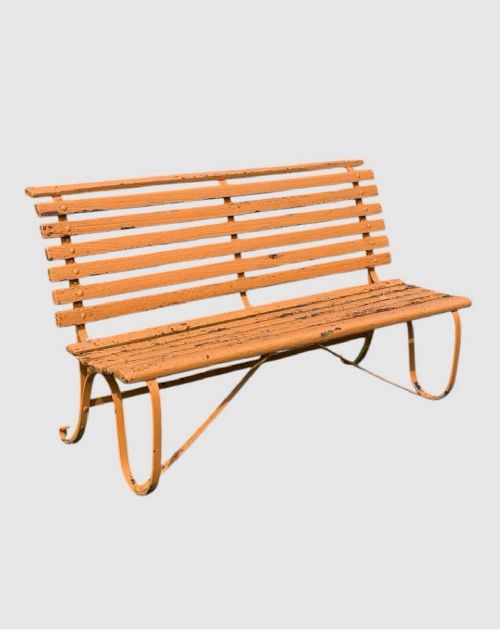
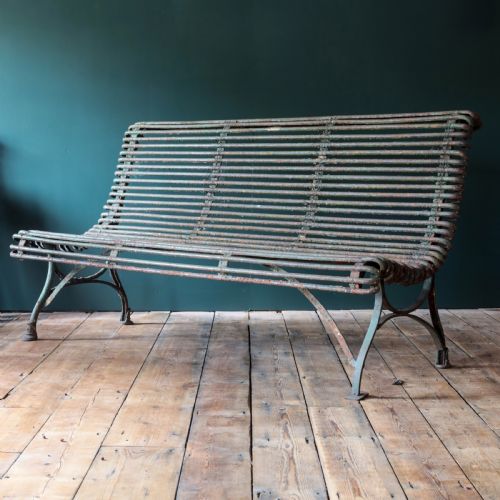
The selections span distinct stylistic movements, including Victorian, Regency, Gothic Revival, and Edwardian designs. Benches and chairs often feature heavy cast iron or flexible wrought iron, sometimes paired with timber slats or fabric elements.
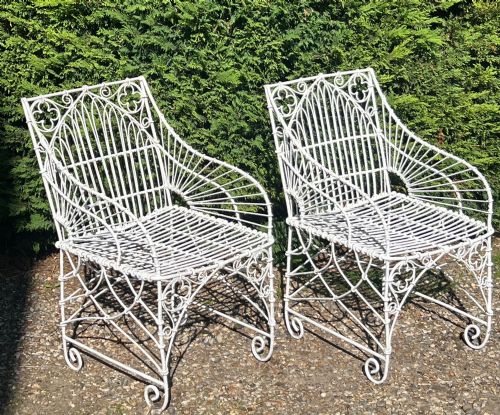
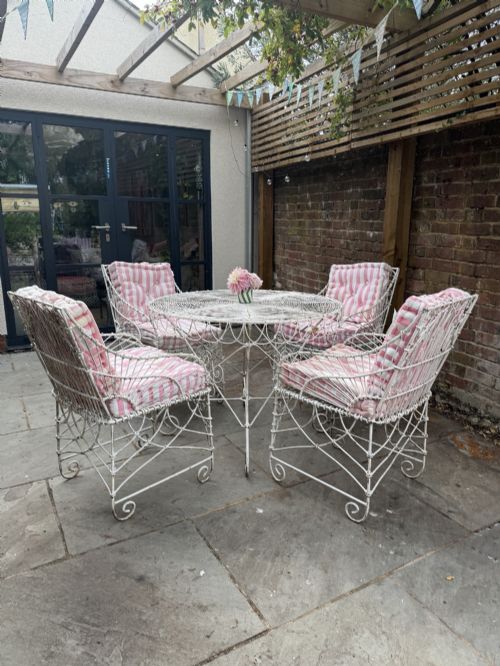
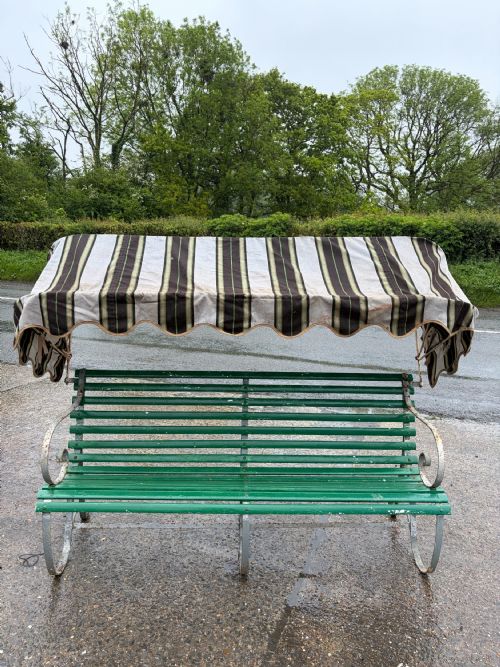
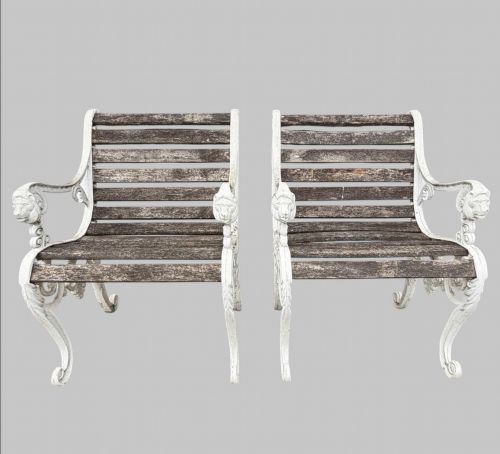
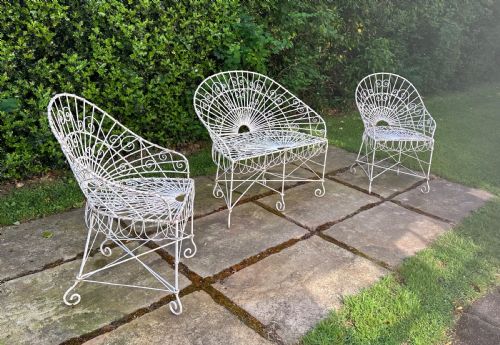
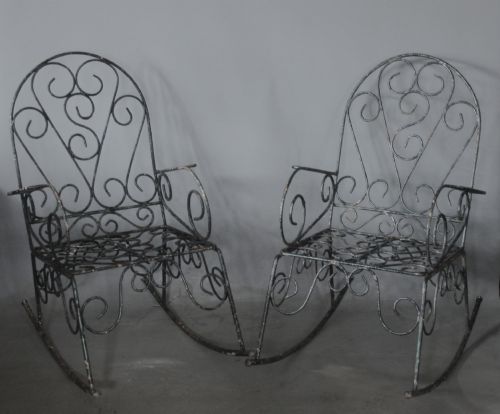
Configurations range from simple folding chairs and single garden seats to elaborate settees with canopies and lion mask armrests. French country influences also appear, alongside intricate wirework arbours and scrolling structural frames.
What varies in quality in metal outdoor seating
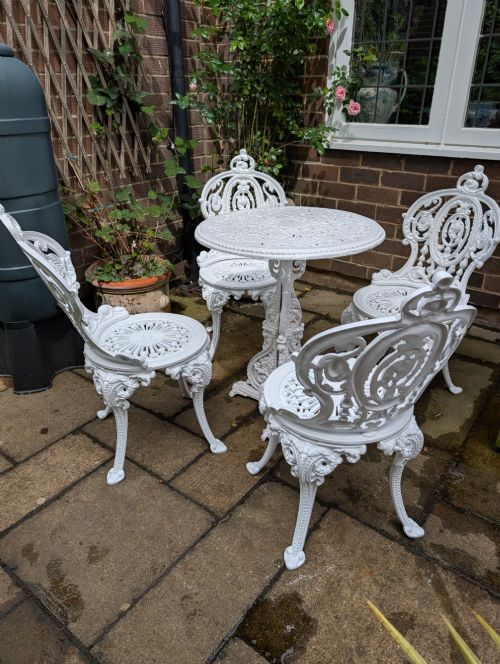
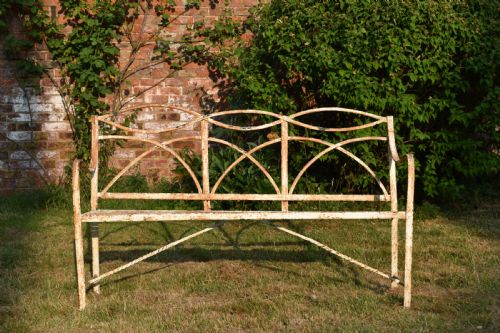
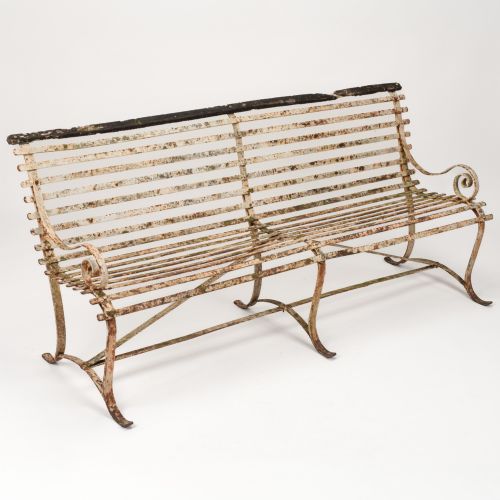
Quality rests in the intricacy of the ironwork and the integrity of the original construction. Heavily ornamented Victorian castings and precise Regency strapwork demonstrate superior metalworking skill compared to simpler utilitarian forms.
The survival of original surface finishes, such as layered historical paint, elevates a piece. Structural completeness, including matching pairs or intact wooden components, further distinguishes the finer examples.
Certain Victorian armchairs feature fierce cast iron lion masks guarding the armrests, daring weeds to grow too close.
Christopher Dresser·Coalbrookdale
The Metal Outdoor Seating Glossary
- Strapwork
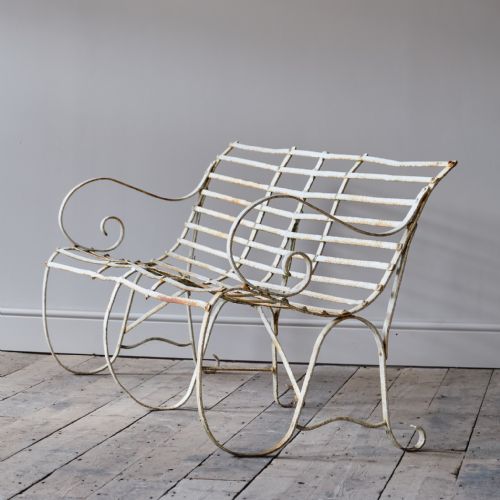
- Flat bands of metal interwoven or arranged in geometric patterns. This technique defined many Regency and Victorian garden benches.
- Cast iron
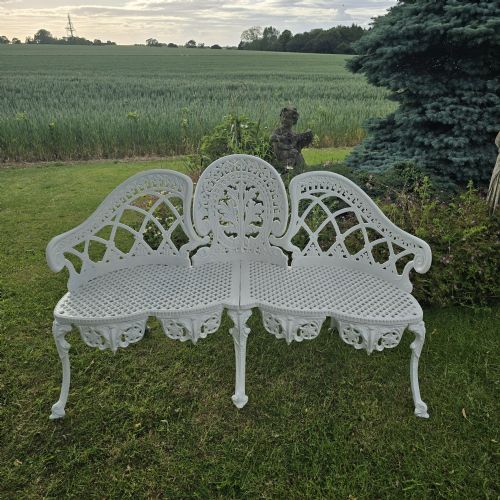
- Molten iron poured into a mould to create rigid and ornate decorative forms. It enabled nineteenth-century foundries to produce complex garden seats and bench ends.
- Wrought iron
- Iron heated and hammered into shape by hand or machine. It offers greater tensile strength than cast iron, suiting scrolling and linear frames.
- Wirework
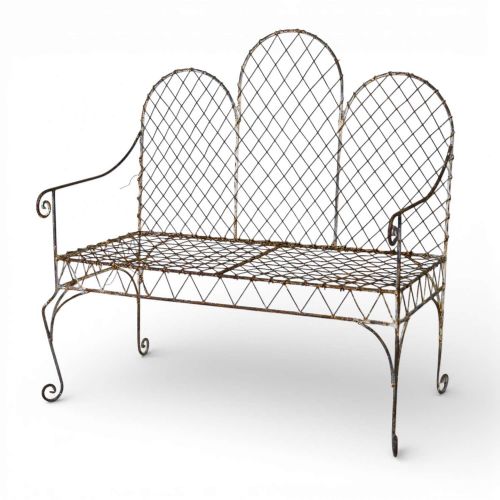
- Thin metal rods welded or twisted into open mesh structures. It is commonly found on lighter garden seating and arbours from the Victorian era.
- Gothic Revival
- An architectural and decorative style drawing on medieval motifs such as pointed arches and trefoils. This style influenced iron garden chairs and benches around the turn of the twentieth century.
Metal Outdoor Seating: Frequently Asked Questions
How do I care for antique metal garden seats?
Keep the metal clean and dry during harsh winter months to preserve the structure and any surviving historic paint.
Apply protective coatings carefully if the iron shows vulnerability to moisture, ensuring you respect the existing surface finish.
Are cast iron and wrought iron benches heavy?
Cast iron garden benches are exceptionally heavy and solid, making them stable permanent fixtures on lawns and patios.
Wrought iron designs tend to be slightly lighter and more resilient to sudden impacts, though larger settees still require multiple people to move safely.
How do I distinguish Regency strapwork from Victorian cast iron?
Regency strapwork relies on linear, flat bands of wrought iron arranged in restrained geometric patterns. The overall aesthetic is lighter and more architectural.
Victorian cast iron embraces heavy, ornate ornamentation, often featuring foliage, animal masks, or Gothic arches produced through moulding.
Can these garden seats stay outside all year?
Most of these pieces were built specifically for outdoor use and tolerate weathering well if placed on firm, dry ground.
However, pieces incorporating timber slats or delicate wirework benefit from sheltered storage during the coldest winter weeks.