




Vintage Inlay Tables
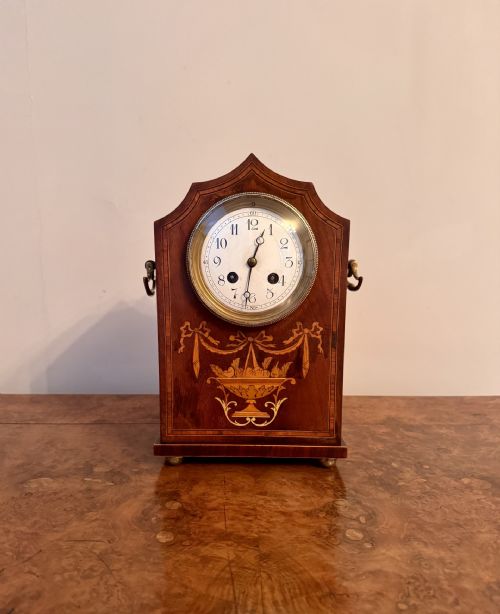
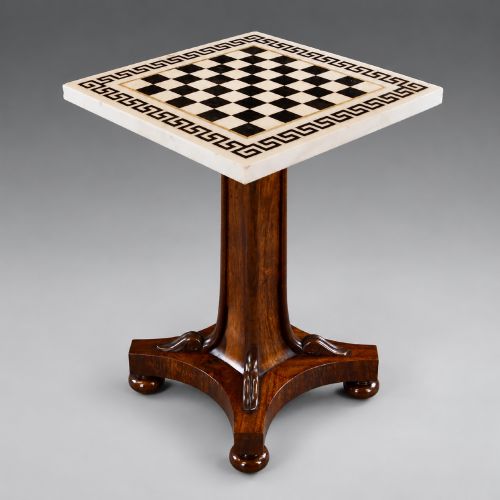
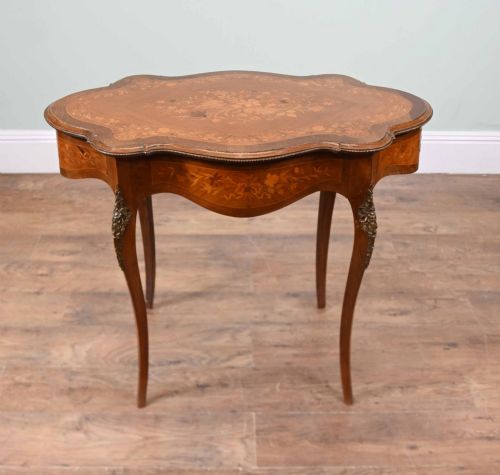
Vintage inlay tables bring character and decorative marquetry into a room, spanning Edwardian mahogany designs and French walnut pieces.
Vintage Inlay Tables
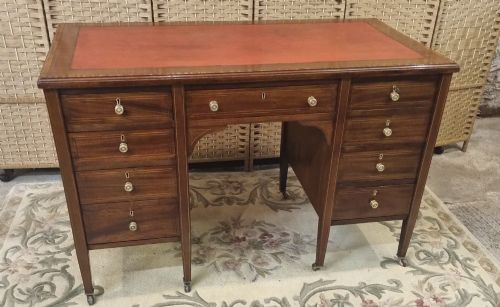
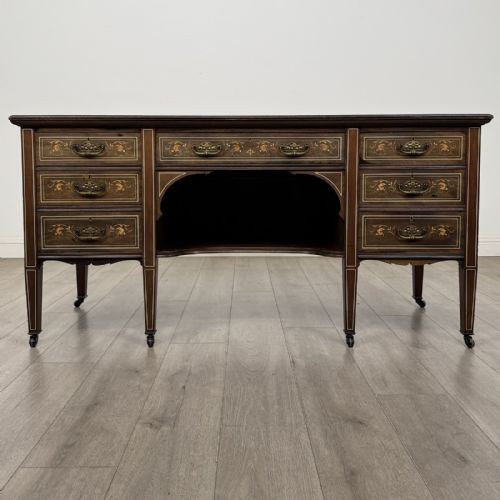
Vintage inlay tables encompass a wide assortment of occasional furniture, coffee tables, bedside cabinets, and writing desks produced across the nineteenth and twentieth centuries. Buyers searching for vintage inlay tables encounter pieces originating from Edwardian and Victorian periods alongside Georgian revivals and French models.
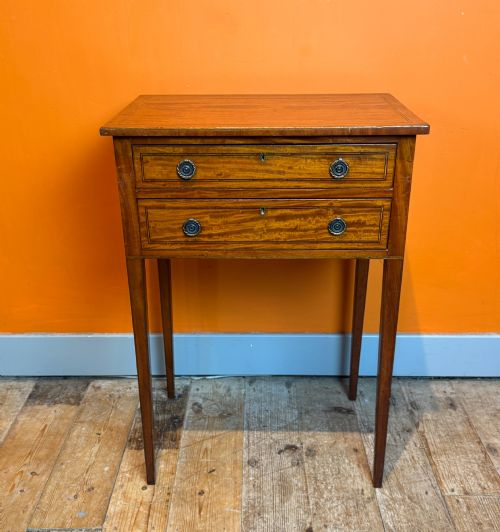
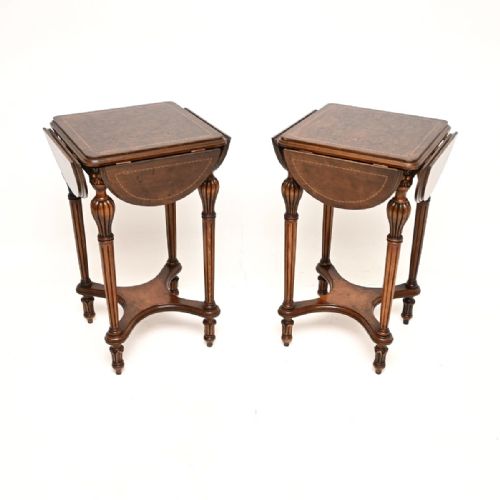
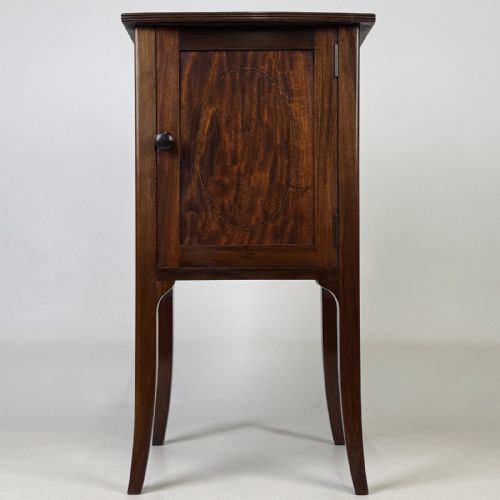
The most frequent forms found in this selection include mahogany occasional tables, lamp tables, and bedside cabinets detailed with contrasting boxwood and satinwood inlay. Makers also applied intricate marquetry and parquetry patterns to surfaces like walnut, kingwood, and amboyna.
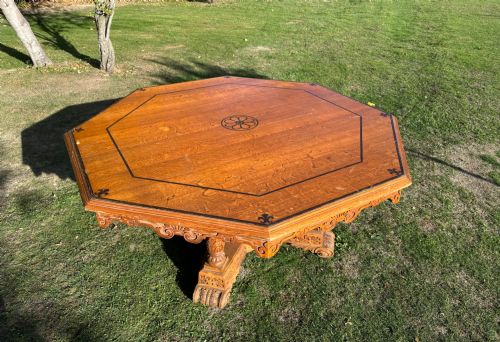
Geographic styles range from British Sheraton Revival pieces to Anglo-Indian Hoshiarpur octagonal tables and continental French Rococo or Louis XVI designs. These versatile items served various domestic roles, from holding bedside lamps to supporting afternoon tea or writing correspondence.
How they were made
Cabinet makers constructed the foundational carcass using timber such as mahogany, walnut, or oak, often veneered with choice cuts of flame mahogany, burr walnut, or kingwood. They then channelled the primary surface to recess delicate contrasting woods.
Artisans utilised boxwood, satinwood, and various dyed veneers to create intricate foliate marquetry and geometric parquetry patterns. Many continental and revival pieces incorporate cast brass or ormolu mounts, edging, and gallery rails to accentuate the woodwork.
Vintage Inlay Tables Retail Price Guide 2026
Typical asking prices for vintage inlay tables among the pieces listed under this phrase on Sellingantiques today, from the lower quarter to the upper quarter. They describe what is for sale here now, not the wider market.
Listings feature Edwardian, Victorian, and Georgian eras, alongside 1930s continental furniture.
What varies in quality
The precision and intricacy of the marquetry define the tier of craftsmanship, where tightly fitted natural wood veneers demonstrate superior skill compared to painted substitutes or simpler motifs. The choice of underlying timber, such as solid mahogany or richly figured burr walnut, elevates the standing of a piece.
Construction details such as dovetailed drawer boxes, tapered legs, and the retention of original brass hardware or marble tops influence how well a table maintains its structural integrity and visual coherence over decades.
Bath Cabinet Makers·Flashman & Co·Taylor of London
The Vintage Inlay Tables Glossary
- Marquetry
- Decorative veneer work forming pictorial or foliate patterns using various coloured woods. It differs from inlay by covering the entire surface of the ground timber rather than sitting within recessed channels.
- Parquetry
- Geometric mosaic woodwork used for tabletops and flooring. Artisans arrange small blocks of timber in repeating triangular, square, or diamond patterns.
- Satinwood
- A durable tropical hardwood with a lustrous yellowish sheen. Cabinet makers utilised it extensively for contrasting inlay borders and stringing during the Georgian and Edwardian periods.
- Kingwood
- A dense, richly coloured timber featuring dark violet and brown zones. French workshops favoured it for veneering high-end bedside cabinets and occasional tables.
- Ormolu
- Gilded bronze mounts and decorative trims applied to furniture. This technique gained popularity on French Rococo and Louis XVI style tables.
Vintage Inlay Tables: Frequently Asked Questions
Where did Hoshiarpur tables originate?
Hoshiarpur tables originated in the Punjab region of India during the late nineteenth century. Local artisans carved dense geometric and floral patterns into wood before inlaying intricate sections of bone, brass, or lighter timbers.
ब्रिटिश and European buyers acquired these octagonal occasional tables as exotic decorative accents for drawing rooms. Their distinct construction relies on folding or modular panels rather than standard western joinery.
How do I care for inlaid wood?
Inlaid wooden surfaces require protection from direct sunlight and extreme humidity fluctuations to prevent veneer lifting or timber cracking. Dusting regularly with a soft, dry cloth preserves the polished finish without introducing moisture.
Applying a quality wax polish occasionally nourishes the grain and protects the delicate boxwood or satinwood stringing. Avoid placing damp items directly onto antique tabletops to safeguard the historical finish.
What is Sheraton Revival style?
Sheraton Revival furniture draws inspiration from the late eighteenth-century neoclassical designs of Thomas Sheraton. Makers during the Edwardian period recreated these lighter forms using mahogany framed with satinwood inlay and tapered legs.
These pieces emphasise refined proportions, symmetrical geometry, and delicate foliate marquetry rather than heavy proportions. They suit period interiors seeking an elegant writing desk or side table.
How do I identify Edwardian pieces?
Edwardian furniture, produced between nineteen hundred and nineteen ten, typically utilises lightweight mahogany frames with boxwood or satinwood inlay. Common forms include occasional tables, writing desks, and side cabinets featuring slender tapered legs.
These items often reflect a revival of Georgian or Sheraton aesthetics combined with factory-assisted precision. Makers prioritized domestic utility, resulting in functional bedside cabinets and lamp tables with bright, polished finishes.