
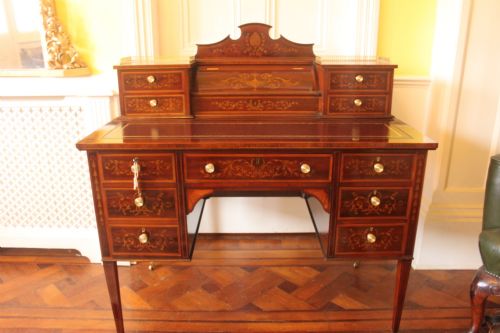
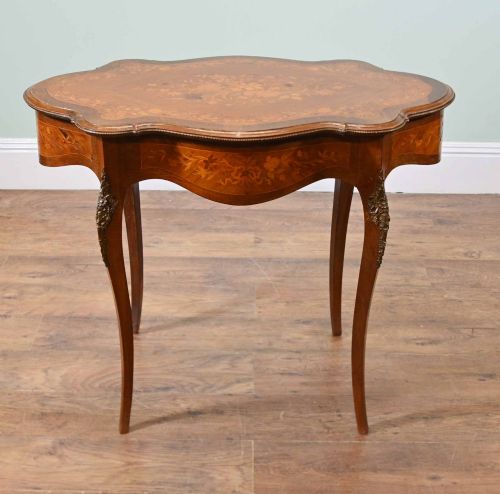
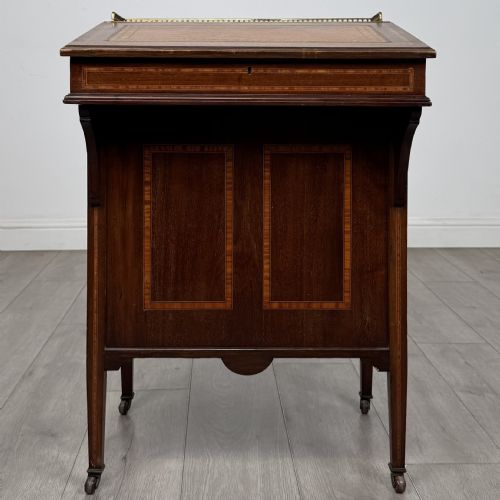
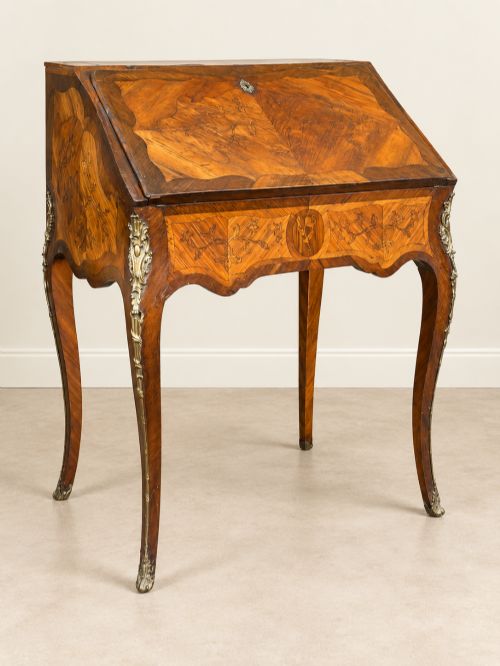
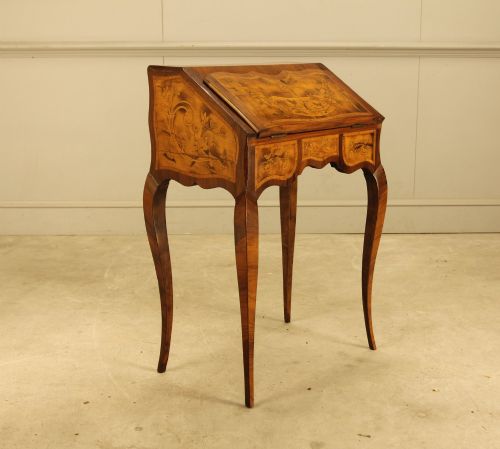
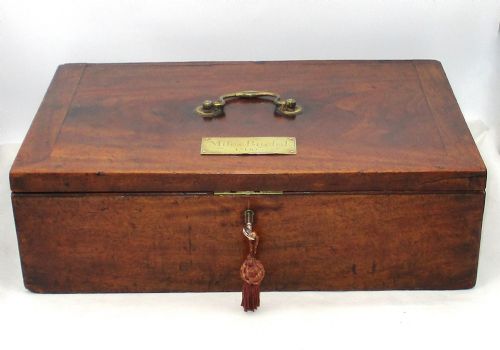
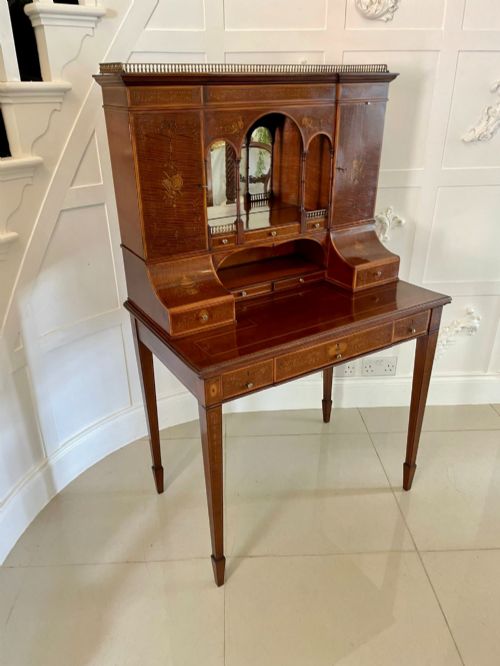
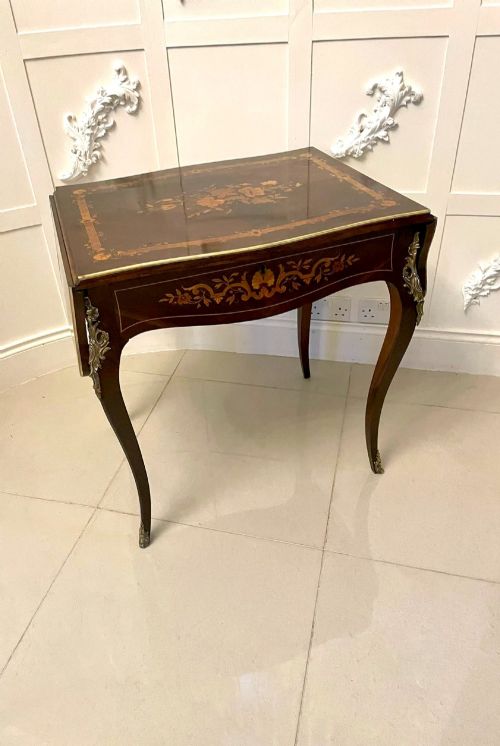


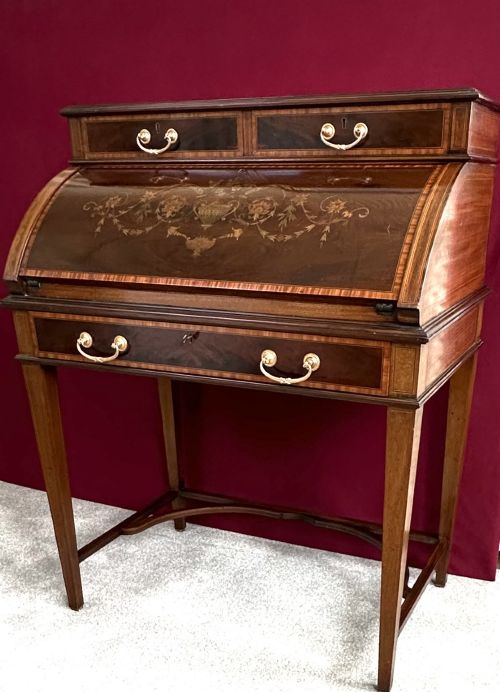
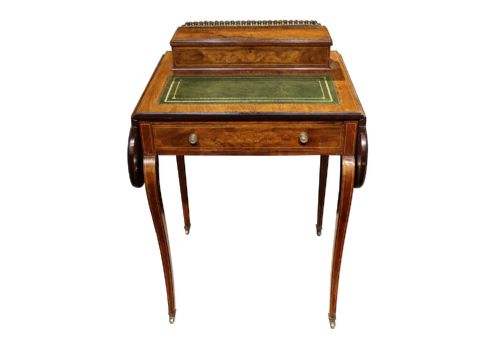
Vintage Inlaid Writing Desk
A vintage inlaid writing desk brings tactile warmth and refined craftsmanship to a room, offering a dedicated space for correspondence and study.
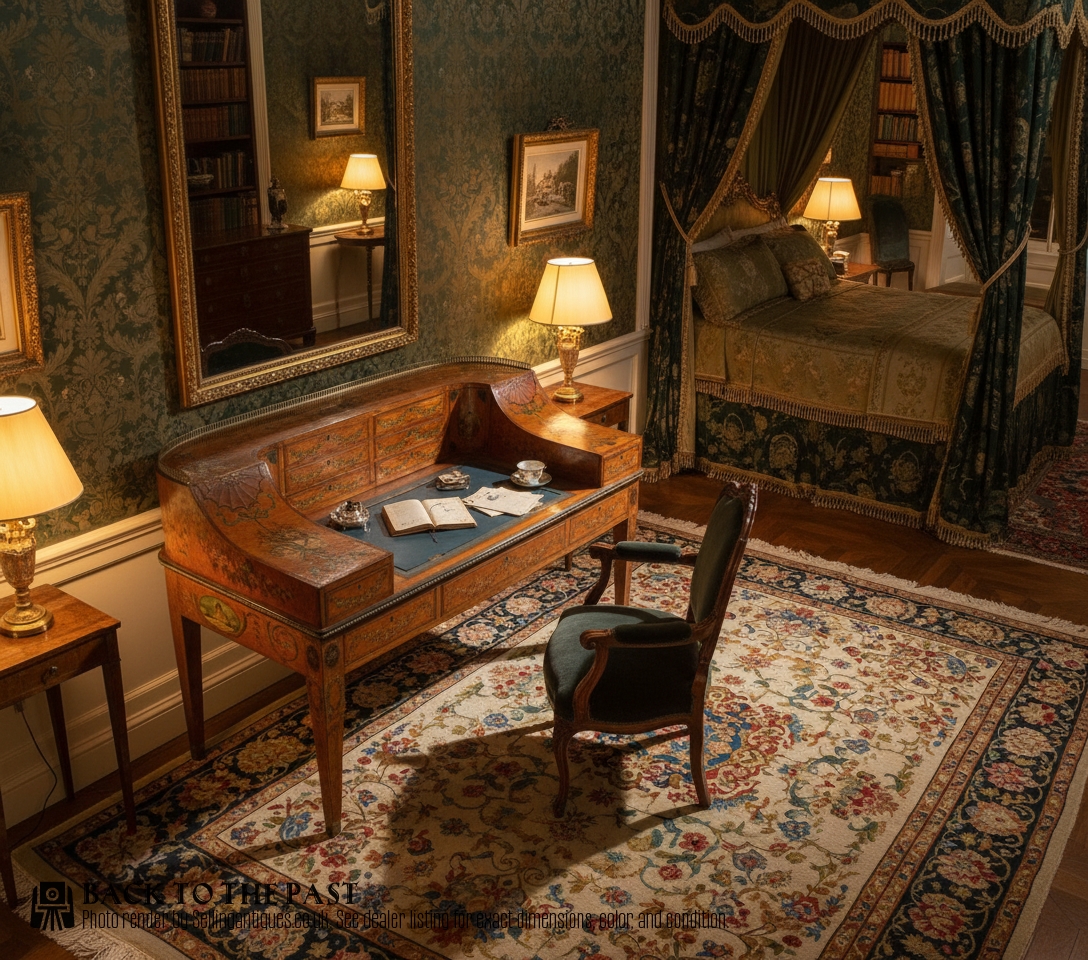
Vintage Inlaid Writing Desk
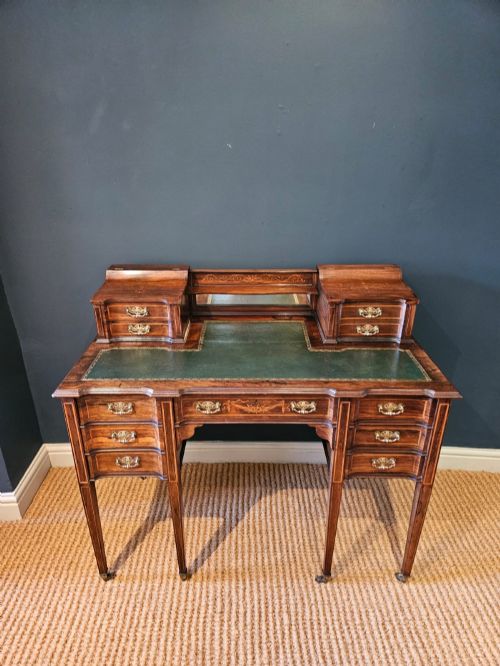
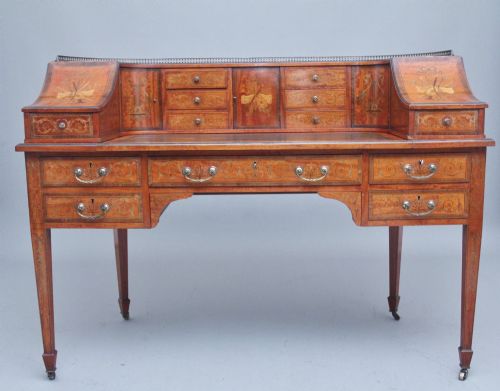
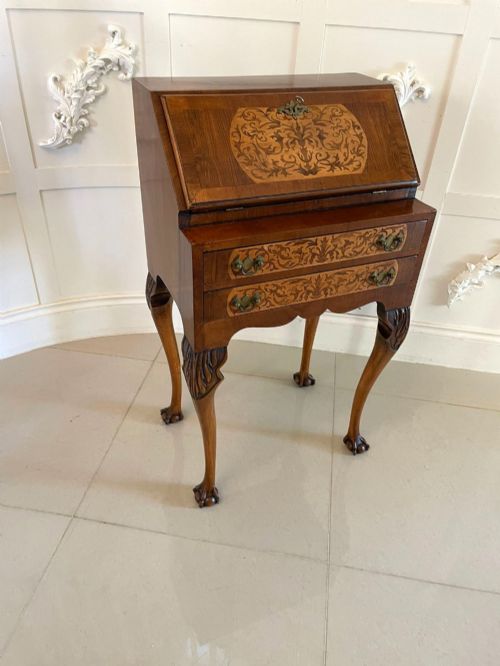
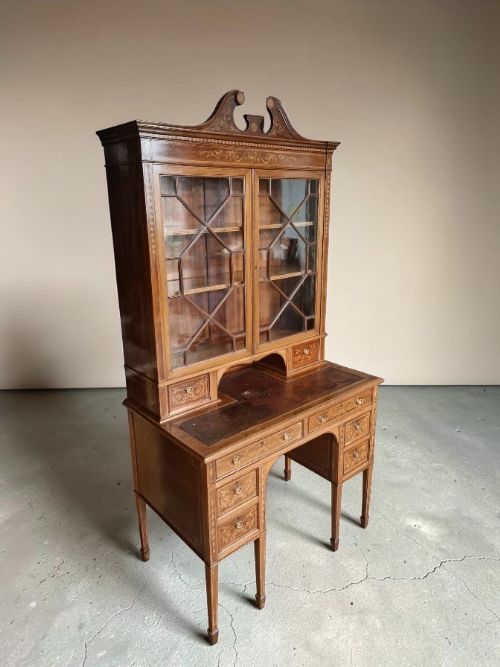
A vintage inlaid writing desk combines practical workspace with decorative marquetry, frequently appearing in Edwardian and Georgian forms. Buyers encounter pedestal desks, bureau bookcases, and kidney-shaped writing tables fashioned with detailed surface ornament.
Most examples hail from the nineteenth and early twentieth centuries, showcasing the enduring popularity of mahogany, satinwood, and walnut carcasses. These pieces range from compact lady's writing tables to substantial freestanding centre tables.
How they were made
Cabinet makers built the primary carcass using timbers such as mahogany, walnut, and oak, often selecting flame or burr veneers for visual depth. Satinwood and rosewood provided contrasting tones for intricate banding and decorative panels.
Craftsmen applied contrasting wood veneers and brass stringing by hand to create geometric or floral marquetry patterns. Leather inserts were frequently tooled with gold leaf to form the writing surface on tables and pedestal desks.
Secret compartments hidden within fitted desk interiors allowed Victorian writers to secure confidential letters away from prying eyes.
What varies in quality
The precision and complexity of the marquetry dictate the upper tier of execution, where intricate floral motifs and contrasting veneers integrate seamlessly into the timber. Lesser examples rely on simpler banded borders with minimal hand shaping.
Internal fittings, such as secret compartments, fitted pigeonholes, and original brass hardware, separate standard production pieces from master cabinet work. The choice of secondary timbers and the integrity of the dovetail joinery in drawers further distinguish the finer pieces.
Edwards & Roberts·Wolfe & Hollander
The Vintage Inlaid Writing Desk Glossary
- Marquetry
- Decorative patterns formed by fitting together thin slices of wood veneer onto a solid ground. This technique creates pictorial or geometric designs across the desktop.
- Bureau bookcase
- A writing cabinet featuring a fall-front desk compartment positioned beneath glazed or panelled bookshelves. These dual-purpose pieces provide both storage and writing space.
- Carlton house desk
- A writing table shaped in a concave curve, fitted with a raised tier of small drawers and compartments around the back and sides. Thomas Chippendale famously produced early versions of this form.
- Satinwood
- A durable, lustrous yellowish timber native to India and Ceylon used extensively for decorative banding and stringing. It provides bright contrast against darker woods like mahogany.
- Secretaire
- A piece of furniture containing a concealed writing drawer or a fold-down writing flap disguised as a chest of drawers. This form maintains a neat exterior facade while offering functional desk space.
Vintage Inlaid Writing Desk: Frequently Asked Questions
How do I identify an Edwardian desk?
Edwardian desks frequently utilise lighter timbers like satinwood and mahogany, often featuring delicate marquetry and Sheraton Revival motifs. They tend to be lighter in proportion than their heavy Victorian predecessors.
Look for refined Edwardian hallmarks such as kidney shapes, barrel fronts, and fitted interiors designed for early twentieth-century correspondence.
What is a bureau plat?
A bureau plat is a freestanding French writing table, typically featuring a leather-inset top and multiple frieze drawers. These tables are finished on all sides to allow placement in the centre of a room.
Originating in France, they often incorporate ormolu mounts and intricate marquetry inspired by Louis styles.
How do I care for leather desk tops?
Leather writing surfaces require gentle cleaning with a slightly damp cloth, avoiding harsh chemical cleaners that strip the original tooling and colour. Regular conditioning with appropriate leather balm prevents cracking and preserves the gold leaf.
Keep these desks away from direct sunlight and heat sources to protect both the leather insert and the underlying timber veneer.