

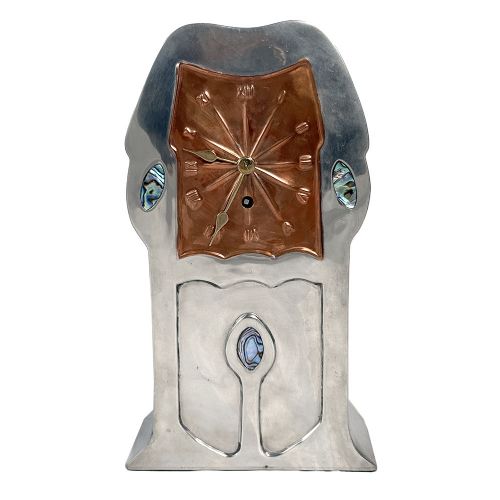
Vintage Inlaid Mantel Clock
These vintage inlaid mantel clocks sit on shelves and tables, bringing mechanical timekeeping and decorative woodwork into a room.
Vintage Inlaid Mantel Clock
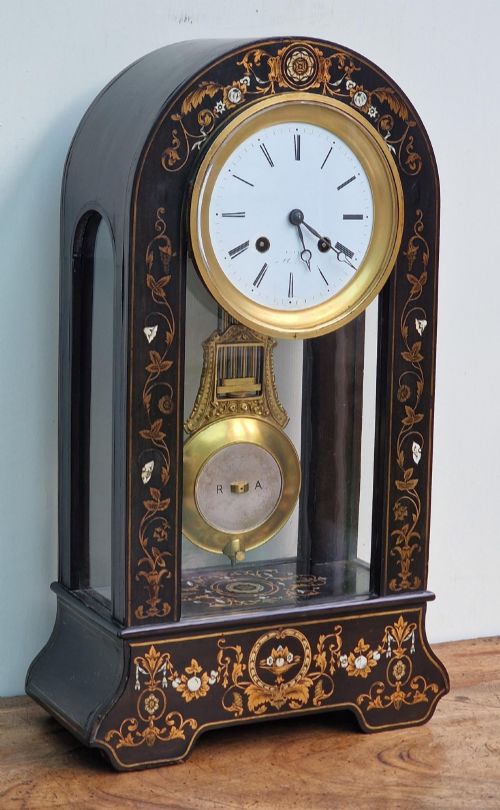
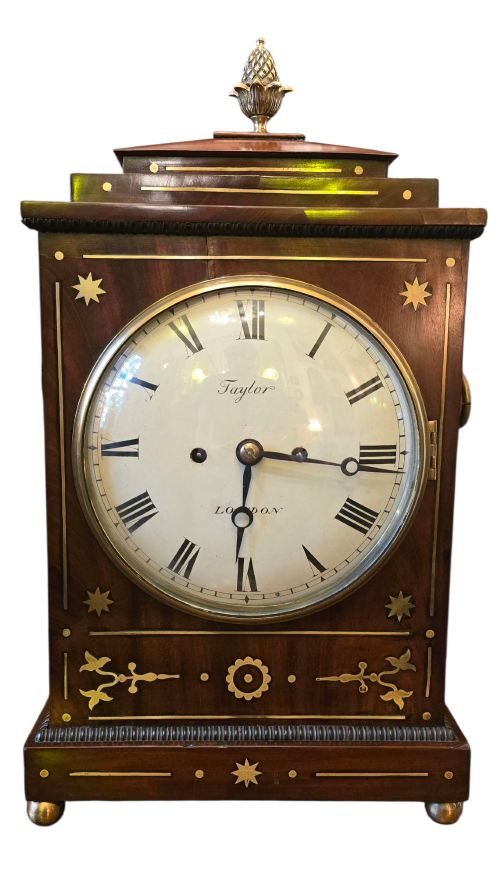
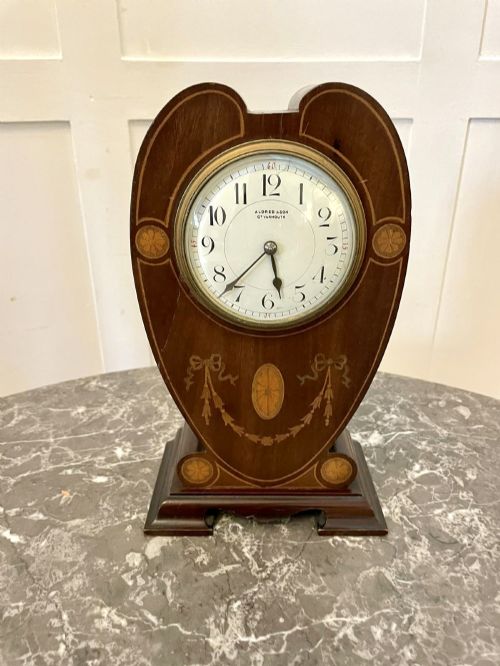
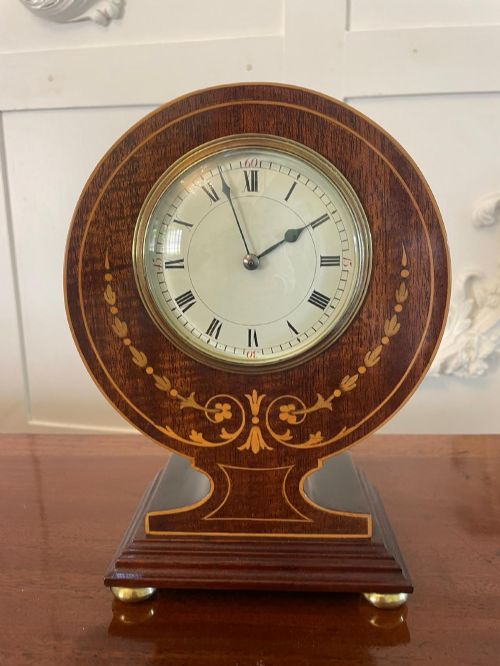
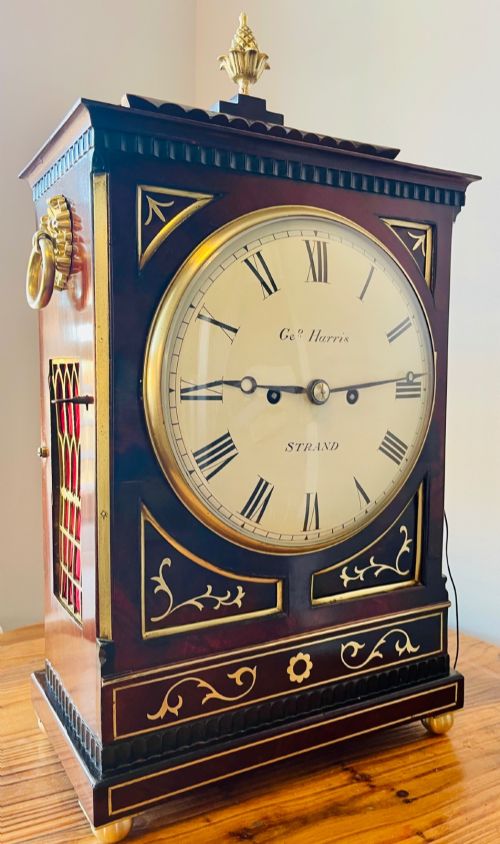
A vintage inlaid mantel clock sits upon household mantelpieces, desks and tables to measure hours while displaying decorative woodwork. When searching for a vintage inlaid mantel clock, buyers meet numerous examples originating from the Edwardian period, the Victorian era and the Regency years.
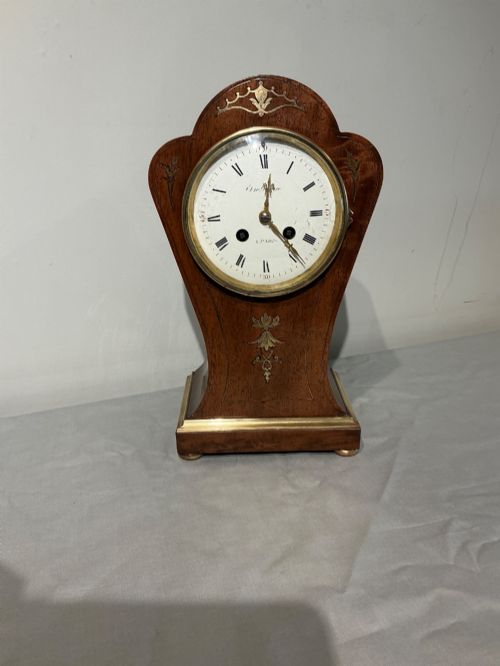
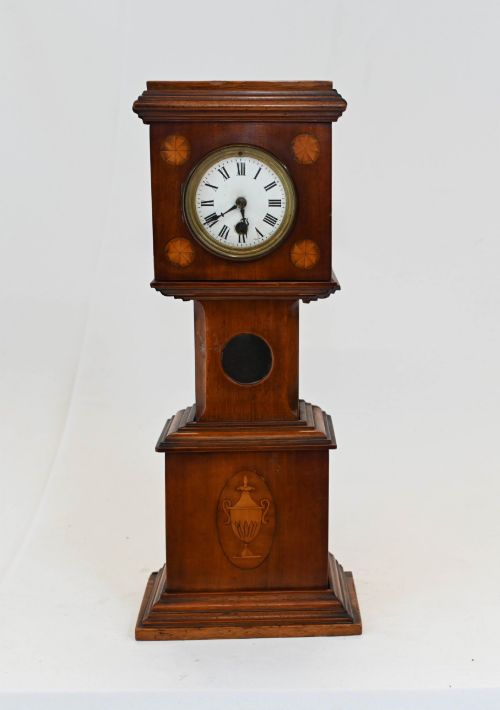
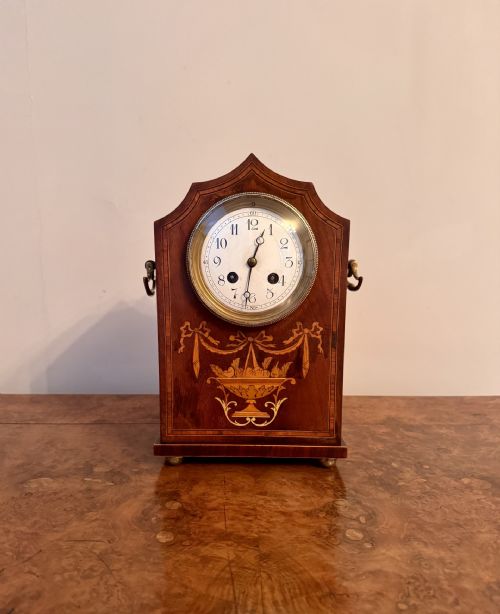
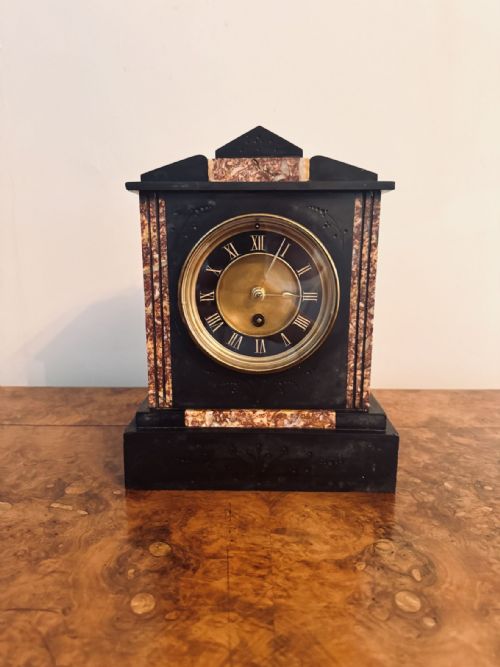
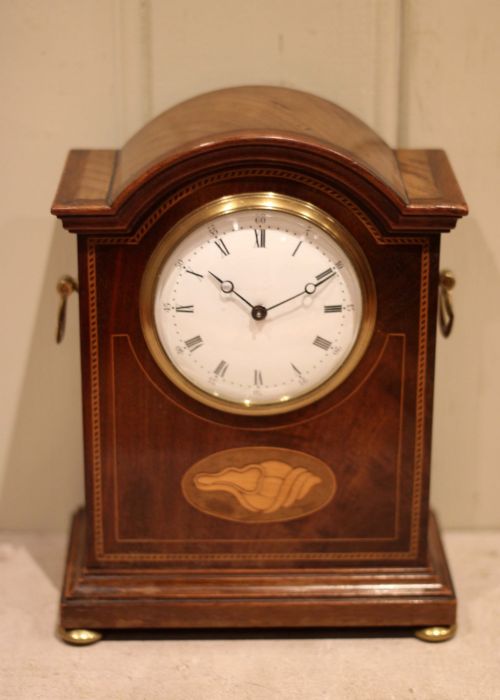
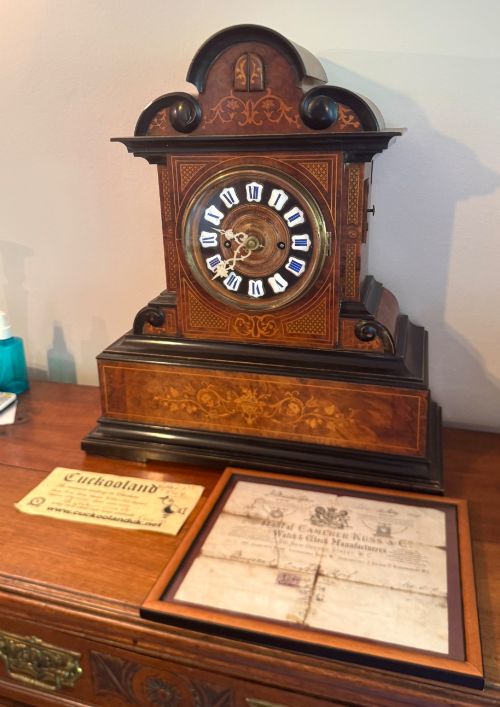
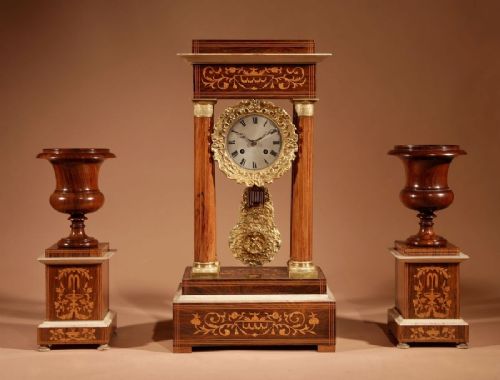
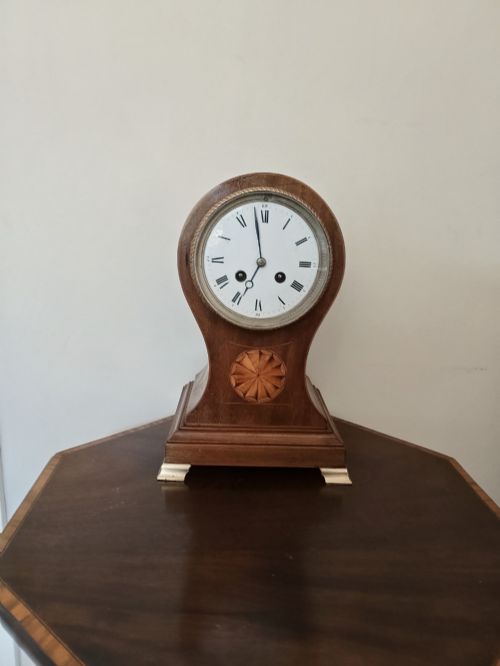
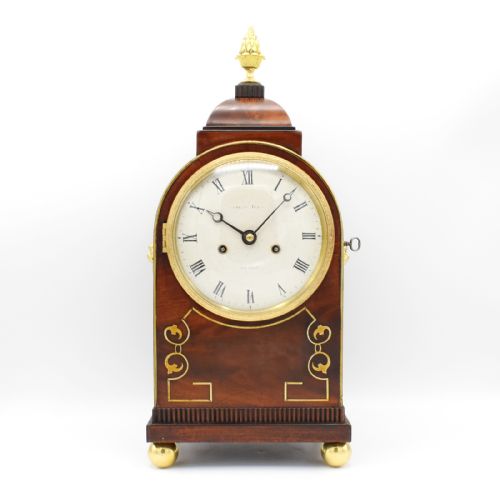
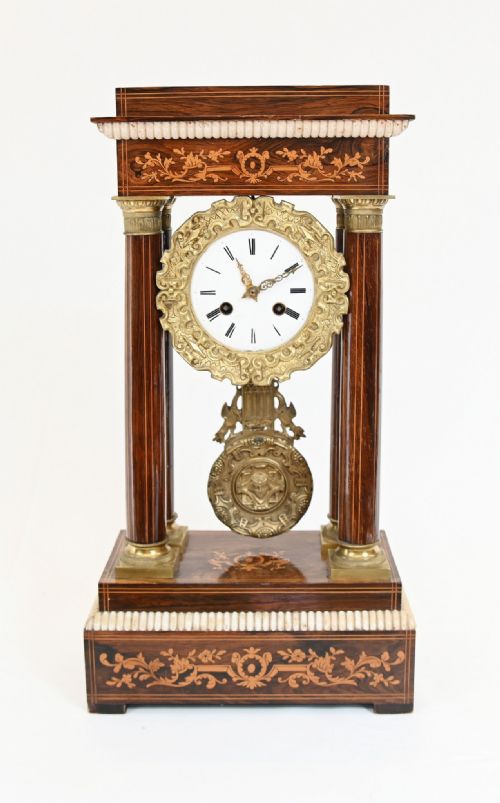
The objects take various structural forms including traditional bracket clocks, balloon-shaped cases, lancet tops and portico designs. Most pieces on this page utilise mahogany, rosewood or walnut as their primary body timbers, enriched with contrasting wooden or brass stringing.
Origins span English workshops by makers such as George Orpwood and Bush of London, alongside French manufacturers and German firms like W&H or Junghans. Buyers encounter both simple timepieces and striking or chiming mechanisms housed within these decorative wooden cases.
Materials and Construction
Cabinetmakers constructed the wooden housings using timbers such as mahogany, rosewood, oak and walnut, often shaping them into balloon, lancet or architectural bracket forms. Artisans then executed precision inlay work utilising lighter woods like satinwood and boxwood, alongside brass stringing and marquetry patterns.
Makers integrated brass clock movements powered by single fusee mechanisms, eight-day trains or striking gear behind enamel, brass or silvered dials. Glass doors and bezels protected these dials, while ormolu mounts occasionally decorated the exterior woodwork of French and Regency pieces.
Vintage Inlaid Mantel Clock Retail Price Guide 2026
Typical asking prices for vintage inlaid mantel clock among the pieces listed under this phrase on Sellingantiques today, from the lower quarter to the upper quarter. They describe what is for sale here now, not the wider market.
Factors of Quality
Superior examples display crisp, intricate marquetry and precise wood inlay without gaps in the contrasting satinwood, boxwood or brass elements. The joinery of the mahogany, rosewood or walnut case shows tight mitres and balanced proportions across architectural bracket and balloon shapes.
The refinement of the internal movement, signed dials by recorded makers such as George Orpwood or L. Vick, and original glass and brass components separate standard pieces from exceptional ones. The retention of original finishing surfaces on the cabinet timber contributes to the overall integrity of the clock.
George Orpwood·Bush of London·L. Vick of Stroud·Seller of Reading·Thomas Moss·W. Burton·Wilkinson Leicester·Henry Marc·Junghans
The Vintage Inlaid Mantel Clock Glossary
- Fusee
- A conical pulley connected to the mainspring by a cord or chain, designed to equalize the driving force as the spring unwinds. This mechanism improves timekeeping accuracy throughout the running period.
- Inlay
- A decorative technique where pieces of contrasting material such as boxwood, satinwood, ebony or brass are inserted into recessed cavities in the wood surface. The resulting design sits flush with the surrounding timber.
- Marquetry
- Elaborate veneer patterns assembled from various woods and shell to create pictorial or decorative designs across the clock case. Artisans cut these veneers together before applying them to the primary structure.
- Bracket Clock
- A portable clock originally designed to sit on a wall bracket or table, typically featuring a handle on top for carrying. These clocks often possess sophisticated striking or chiming movements.
- Balloon Clock
- A mantel clock housed in a case shaped like a hot air balloon, characterised by a rounded top tapering down to a narrow base. This curved silhouette became particularly popular during the Edwardian period.
Vintage Inlaid Mantel Clock: Frequently Asked Questions
How do I wind a mantel clock?
Insert the appropriate winding key into the dial arbor and turn it gently until you feel resistance from the mainspring. Take care not to overwind the movement, as this can damage the internal components.
Most eight-day movements require winding once a week on the specified arbors for time and strike trains. Ensure you keep the winding key in a consistent location to avoid losing it.
Where should I place a mantel clock?
Position the clock on a stable, level surface such as a mantelpiece, sideboard or table away from direct sunlight and damp conditions. A level foundation allows the pendulum and escapement to beat evenly.
Avoid placing mechanical clocks near draughty windows or heat sources which can cause the wood case to expand or contract. Stability ensures the movement runs continuously without stopping.
What maintenance do these clocks need?
Keep the exterior wood clean using a soft, dry cloth and avoid applying harsh chemical polishes to antique finishes. Dust accumulation around the bezel and glass can be cleared gently with a soft brush.
Mechanical movements benefit from professional cleaning and lubrication every few years to prevent wear on the pivots and gears. Regular servicing preserves the functional lifespan of the clock.