
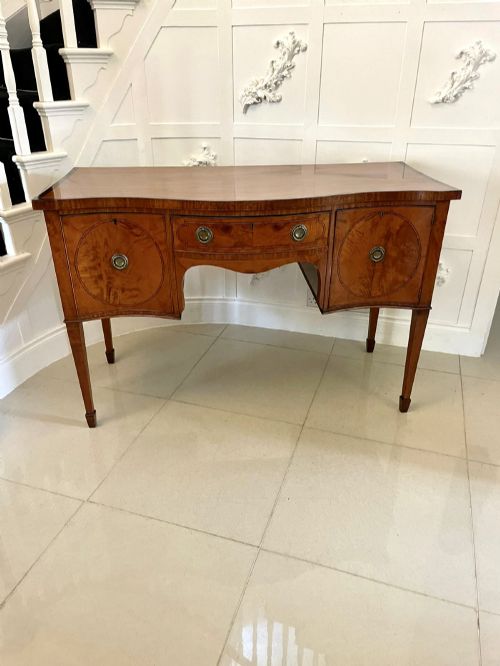
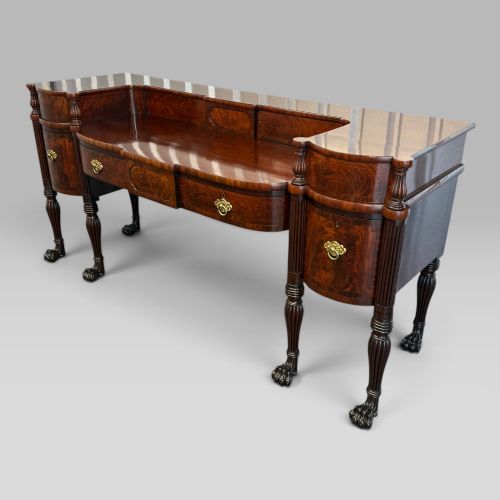
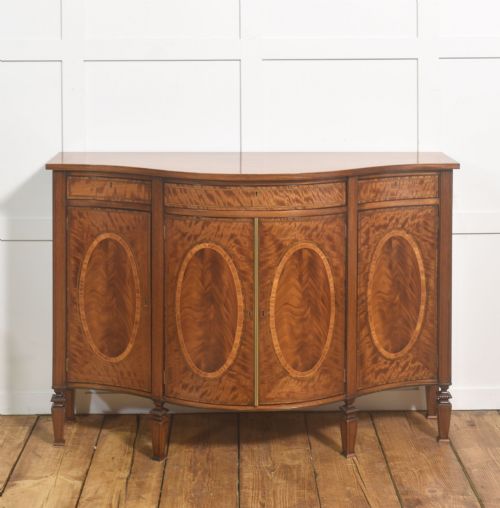
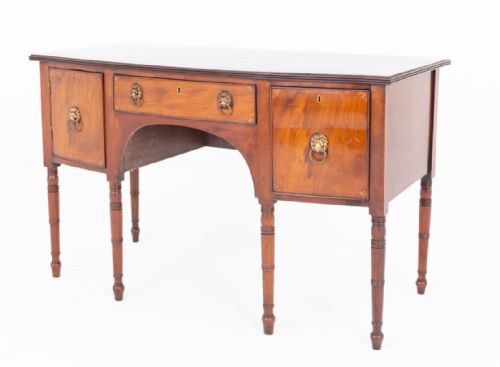

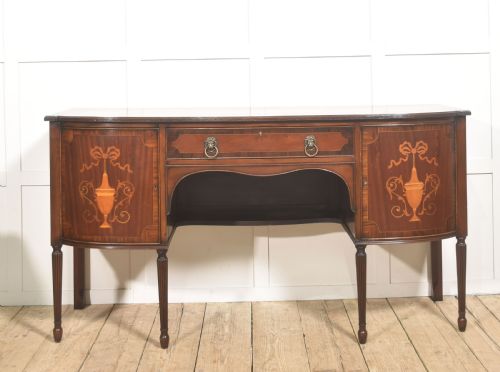
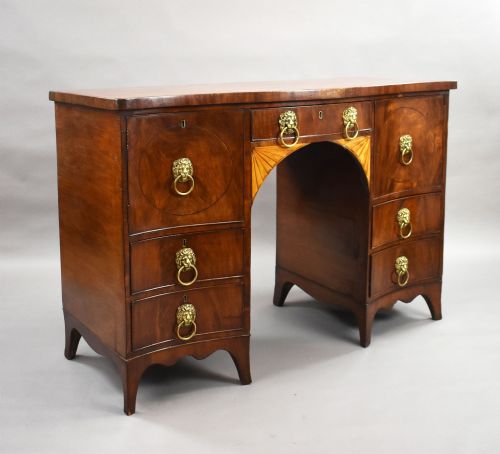

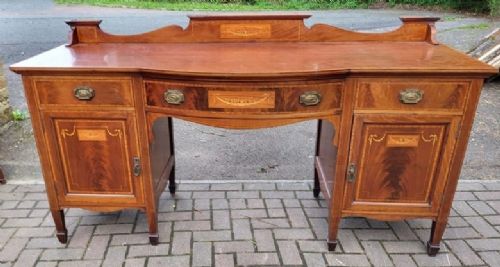


Vintage Inlaid Buffet Cabinet
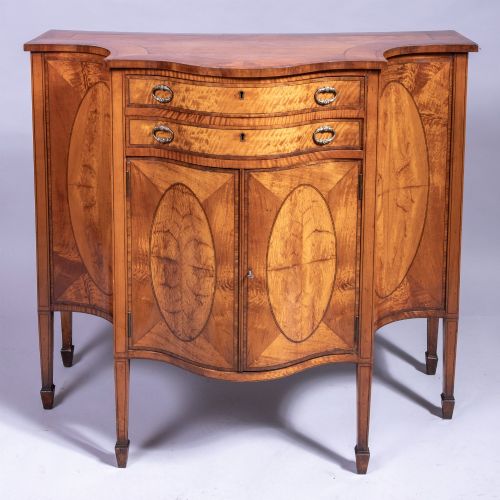
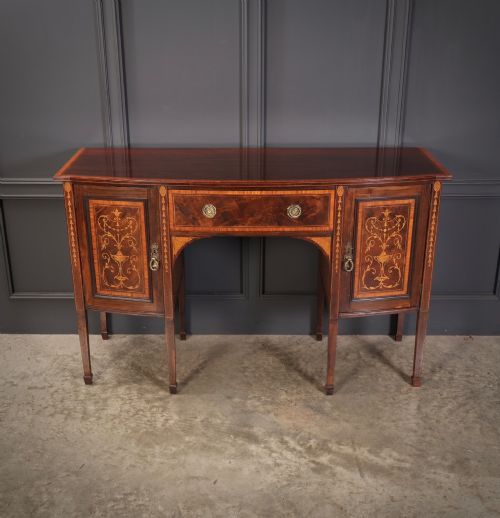
A vintage inlaid buffet cabinet brings formal dining storage to a room through figured woods and delicate marquetry.
Vintage Inlaid Buffet Cabinet
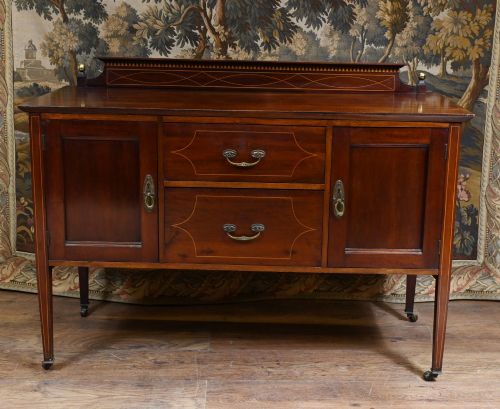
A vintage inlaid buffet cabinet serves as a principal dining room storage piece, frequently appearing under descriptions of sideboards, credenzas, and side cabinets. The examples here span multiple periods, ranging from original Georgian and Regency pieces to later Edwardian and Victorian revivals.
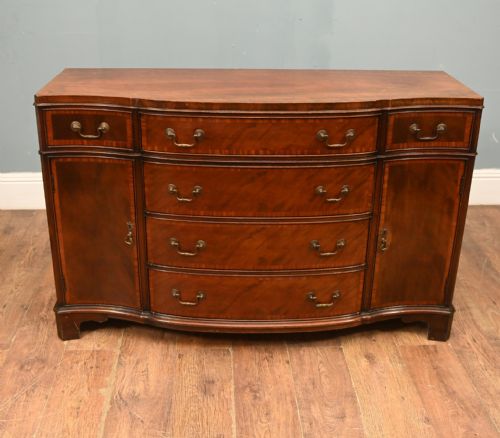
Buyers encounter various timber carcases, most commonly mahogany and walnut, augmented by satinwood, boxwood, and kingwood veneers. Forms range from straight-fronted server units to serpentine and bow-front shapes, alongside breakfront and pedestal configurations.
Origin details in the evidence extend across English workshops, Continental makers, and French ateliers featuring marble tops. These items function practically for serving and storage while displaying decorative surface patterns.
Materials and construction methods
Cabinet makers constructed the foundational carcase from solid timber such as mahogany, oak, or walnut, often applying figured veneers like flame mahogany or burr walnut across the visible exterior surfaces. Craftsmen then executed decorative detailing by cutting contrasting timbers into the surface.
Inlay and marquetry techniques utilise satinwood, boxwood, and various exotic woods to form floral, geometric, or pictorial motifs. Metal mounts in brass or ormolu, glass doors, and inset marble tops appear on specific French and Victorian pieces.
Object classifications on this marketplace link sideboards, credenzas, and dressers under shared dining room storage categories.
Judging quality and execution
Quality separates through the crispness of the marquetry and the choice of timber figure, where selected flame mahogany or burr walnut displays natural depth. The precision of the inlay work, showing tight joints without excessive filler, indicates superior craftsmanship.
Edwards and Roberts·Robson and Sons
The Vintage Inlaid Buffet Cabinet Glossary
- Marquetry
- A decorative technique applying fitted pieces of wood veneer to a structure to form pictorial or geometric patterns. It differs from simple inlay by covering the entire surface in a mosaic design.
- Bow-front
- A convex curved furniture front that swells outward in the centre. This shape requires specialised joinery to curve the timber and drawers accurately.
- Ormolu
- Gilded bronze ornamentation mounted onto furniture surfaces. It provides metallic contrast against dark timbers like mahogany and walnut.
- Serpentine
- A shaped furniture front featuring a concave centre flanked by two convex ends, or the reverse. The undulating profile demands high skill from the cabinet maker.
- Credenza
- A sideboard or display cabinet originating in Italy and frequently elevated on short legs or plinths. In later periods, these pieces incorporate glass doors and intricate marquetry.
Vintage Inlaid Buffet Cabinet: Frequently Asked Questions
What is a vintage inlaid buffet cabinet?
A vintage inlaid buffet cabinet is a large storage furniture piece designed for dining rooms, typically functioning as a sideboard, server, or credenza. These items combine practical cupboards and drawers with decorative wood veneers and contrasting decorative bandings.
Craftsmen produced them across several centuries, leading to diverse silhouettes including bow-front, serpentine, and breakfront shapes. They serve to store dining silver and linen while acting as a focal point in a room.
How do I distinguish Georgian from Edwardian pieces?
Georgian pieces originate from the eighteenth and early nineteenth centuries, displaying structural proportion and period specific timber handling. Edwardian examples often represent revivals produced around nineteen hundred, utilising lighter satinwood details and machine-assisted veneers.
Examining the interior secondary woods and construction marks helps confirm the manufacturing era. Revival pieces frequently combine earlier stylistic motifs with turn-of-the-century workshop practices.
Where should I place a buffet cabinet?
These cabinets suit dining rooms, large hallways, or living spaces where surface display and enclosed storage are required. Their generous length makes them ideal against a primary dining wall beneath a mirror or artwork.
Ensure adequate floor space allows the cupboard doors and drawers to open fully without obstruction. Positioning the piece away from direct heat sources protects the fragile wood veneers and marquetry.
What woods were used in these cabinets?
Mahogany forms the primary carcase timber for the majority of English sideboards, often selected in figured grains such as flame veneer. Walnut, burr walnut, and oak also appear across various nineteenth-century examples.
Contrasting light woods like satinwood and boxwood provide the materials for intricate stringing and marquetry panels. French pieces occasionally incorporate kingwood alongside inset marble tops.