




Vintage Ink Stand Desk
These vintage ink stand desk pieces are functional works of art designed to organise writing implements and hold ink.
Vintage Ink Stand Desk
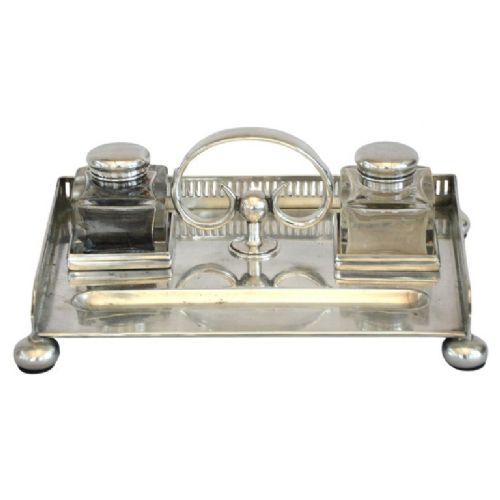
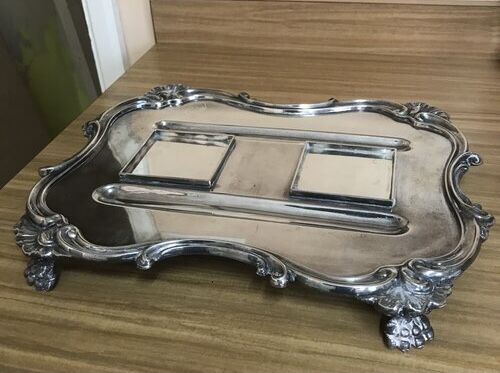
When you examine a vintage ink stand desk, you encounter a specialised piece of desk furniture designed to hold inkwells, pens and sometimes additional items like stamps or tapers. The pieces available span several eras, including Victorian, Edwardian and early twentieth century examples, reflecting changing domestic habits. You are likely to meet brass, silver plated, ceramic and wooden trays equipped with fitted glass or ceramic ink inserts.
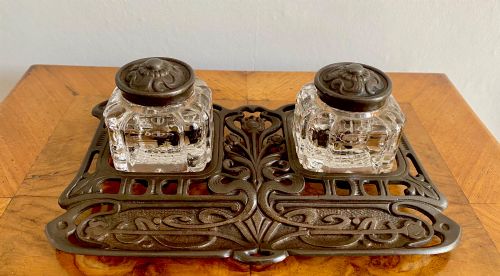
Forms range from simple solid oak trays to ornate cast brass models, Art Nouveau copper designs and novelty silver pieces. Some feature integrated desk tidies with pen rests, while others incorporate clocks, marble bases or detailed hand painted ceramic bodies. These objects served as essential desktop fixtures in studies and offices before the widespread adoption of the ballpoint pen.
Materials and construction
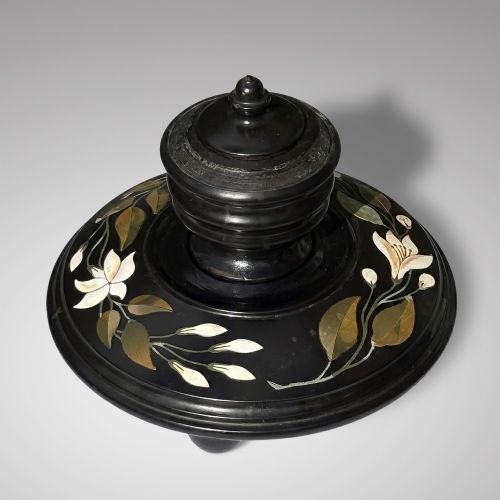
Makers utilised a variety of materials including brass, sterling silver, silver plate, copper, oak, marble, onyx and hardstones such as lapis lazuli. Ceramic elements feature porcelain, Staffordshire earthenware, Dutch Delft and Kashmiri papier-mâché, often combined with cast metal or glass inserts. Metal components involve casting, silver plating, champlevé enamelling, and silvered bronze finishes.
Construction techniques combine metalworking, woodworking and ceramic firing, alongside specialist decorative arts like hand painting, gold leaf application and stone inlay. Glass ink inserts were typically blown or moulded to fit snugly into dedicated recesses within the metal, wood or stone bases.
Featured forms span across multiple decades, encompassing Victorian oak trays, Edwardian capstan inkwells and Art Nouveau bronzes.
Assessing quality and craftsmanship
Quality separates through the weight of the metal, the precision of the casting, and the refinement of hand painted or enamelled details. Superior pieces utilise heavy gauge metals, solid sterling silver or substantial brass, paired with undamaged cut glass or quality porcelain inserts.
The integration of materials also defines the tier of the piece, where fine stone bases like Ashford marble or onyx are meticulously fitted with hallmarked silver mounts. Finer examples retain original matched ink bottles and display crisp decorative casting characteristic of recognised makers.
Walker And Hall·Harrods·James Cartland And Sons·Minton·Maurice Dufrene·Elkington·Zimmermann
The Vintage Ink Stand Desk Glossary
- Inkstand
- A complete desk accessory comprising one or more inkwells alongside pen rests and sometimes a sander or bell. These assemblies sat centrally on writing tables.
- Capstan inkwell
- An inkwell shaped like a ship's capstan, featuring a wide circular base tapering upwards towards a hinged lid. This form proved popular in sterling silver during the Edwardian period.
- Desk tidy
- An extended desk stand incorporating partitions or compartments for envelopes, stamps and pens alongside the primary inkwell. These pieces kept writing materials organised.
- Champlevé
- An enamelling technique where troughs or cells are carved into a metal surface and filled with vitreous enamel before firing. This method creates colourful, patterned designs on brass or bronze bases.
- Papier-mâché
- A durable composite material made from paper pulp or layers of paper mixed with glue, then moulded and painted. Kashmiri craftsmen utilised this technique for decorative desk stands.
Vintage Ink Stand Desk: Frequently Asked Questions
What is a vintage ink stand desk used for?
These stands provided a dedicated desktop station for holding wet ink, dip pens and blotting sand. They kept writing implements orderly and protected wooden surfaces from ink spills.
Today, they function as decorative objects, paperweights or practical desk tidies for modern stationery.
How do I date a silver ink stand?
Dating relies heavily on hallmarks stamped onto the silver components, which indicate the assay office and year of manufacture. Stylistic clues such as Art Nouveau curves or Edwardian proportions also help narrow the era.
Matching the maker's mark against historical records confirms the exact period of production.
Are original glass inserts important?
Original glass or ceramic ink inserts add to the integrity and completeness of the piece. Finding matched bottles that fit the collar perfectly indicates that the stand remains undisturbed.
Replacements are common due to the fragility of glass, but matching liners enhance collectability.
How do I care for mixed material stands?
Care depends on the specific combination of materials, keeping silver polished gently and brass free from harsh abrasives. Wooden bases benefit from occasional waxing, while ceramic and glass parts require careful hand washing.
Avoid submerging pieces that combine metal with paper-mâché or delicate stone inlay.