

Vintage Industrial Storage Cabinet
These vintage industrial storage cabinet pieces bring honest utility and utilitarian charm into modern interiors through multi-drawer banks, lockers, and metal cupboards.
Vintage Industrial Storage Cabinet
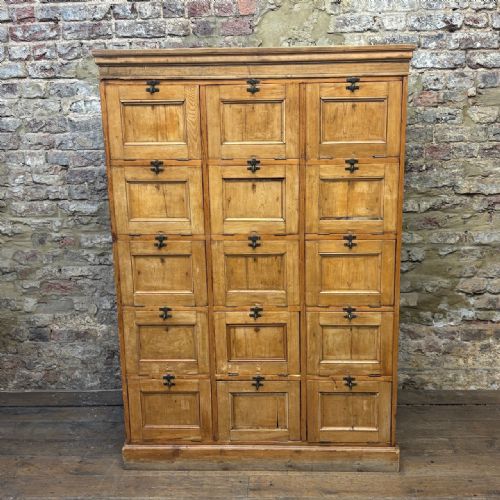
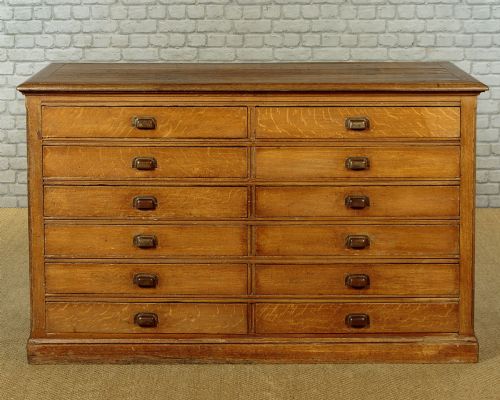
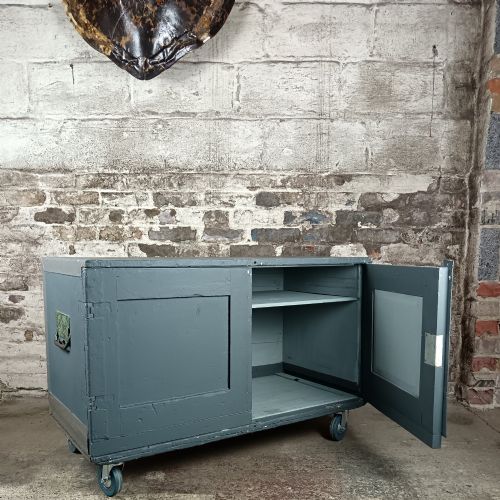
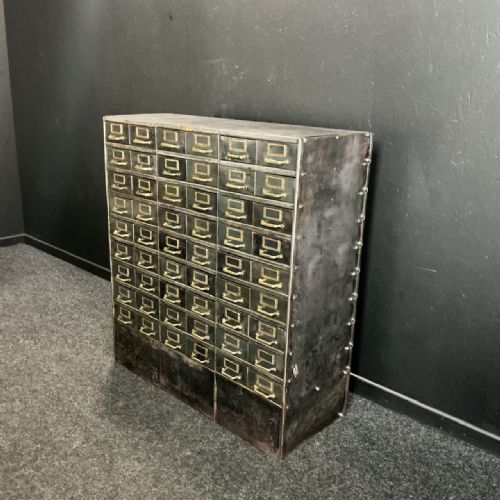
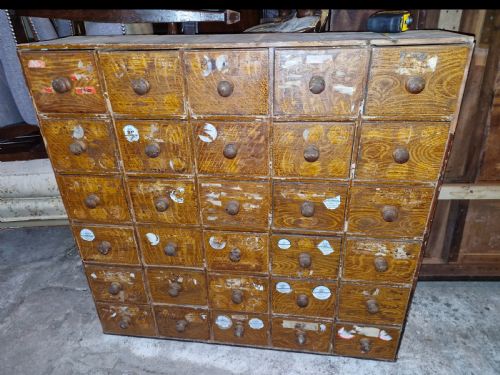
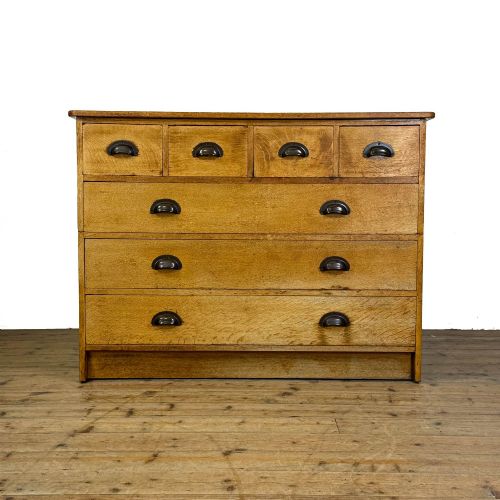
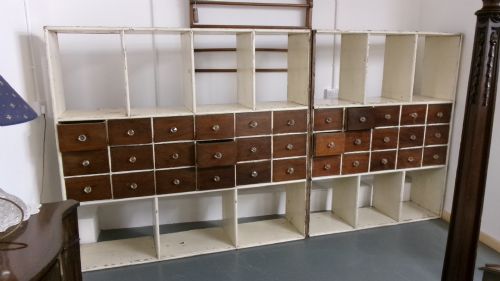
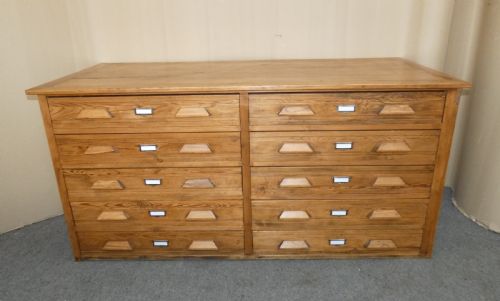
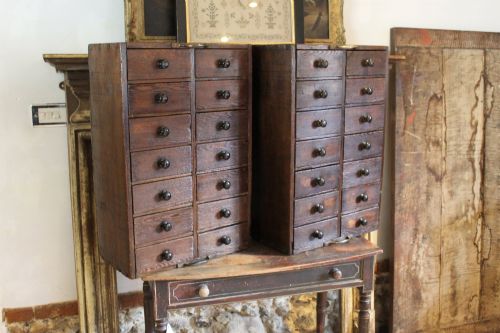
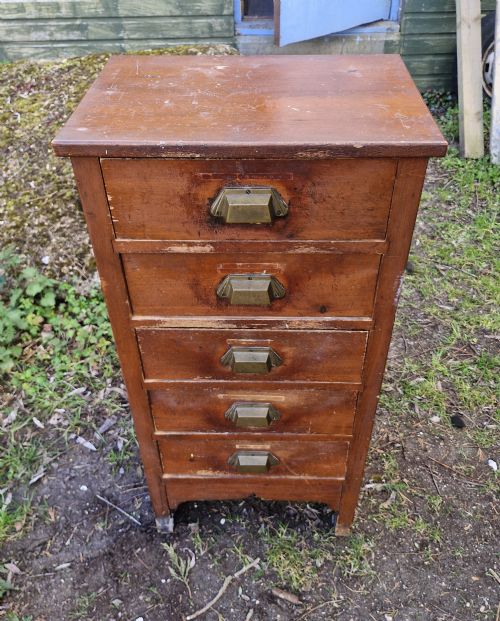
When searching for a vintage industrial storage cabinet, you encounter sturdy utilitarian forms originally built for workshops, offices, chemist shops, and railway stations during the nineteenth and early twentieth centuries. Banks of drawers, plan chests, filing cabinets, and locker cupboards dominate the available selection.
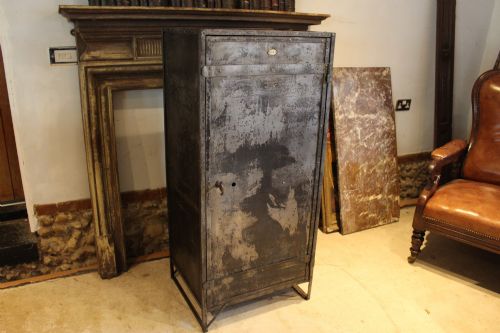
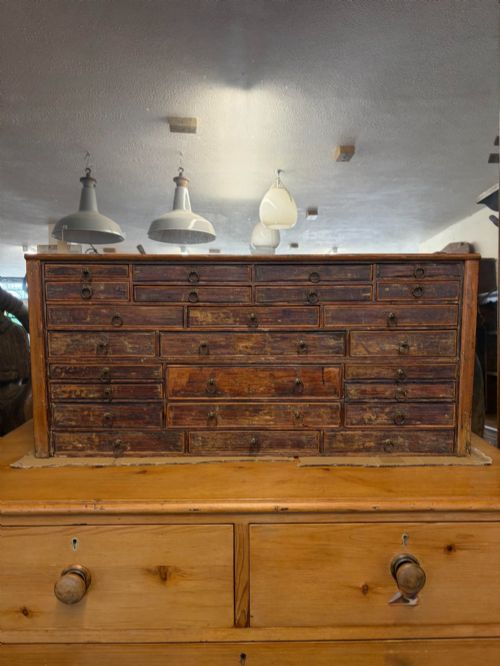
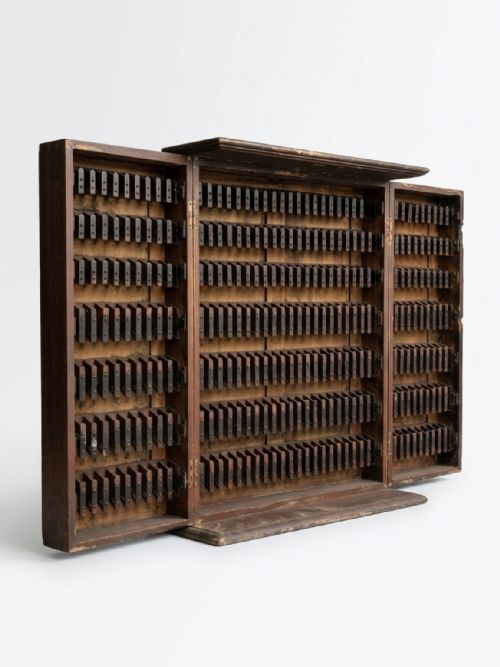
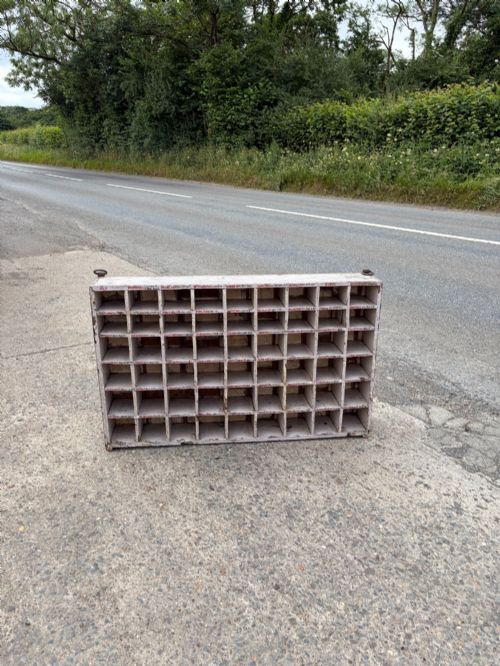
The pieces on this page span from the Victorian era through the nineteen-thirties, reflecting robust commercial and institutional origins. You will frequently find multi-drawer configurations, pigeon holes, and tall metal or timber cupboards designed for heavy everyday use.
Materials and construction
These items rely on heavy timbers such as pine, oak, mahogany, and fruitwood, paired with durable metals including iron, steel, and brass for handles and fittings. Construction prioritises practical longevity over decorative flourish, utilising solid joints and functional hardware.
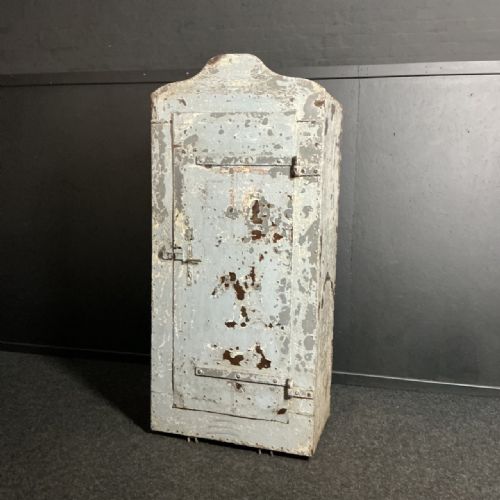
Surfaces often show original paint remnants, distressed patination, or natural wood finishes resulting from decades of workshop and commercial application.
Some nineteenth-century filing systems included patent cabinet letter files specifically engineered to keep frantic Victorian clerks from losing correspondence.
Variations in quality
Quality in these pieces rests upon the integrity of the original construction, the scale and complexity of the drawer banks or cupboards, and the survival of authentic hardware like brass pulls and label holders. Original paint finishes or untouched patination distinguish pieces that retain their genuine commercial character.
Finer examples often bear specific institutional provenance, specialist patent mechanisms, or robust workshop origins that elevate them beyond standard utility furniture.
D Napier And Sons·Amberg
The Vintage Industrial Storage Cabinet Glossary
- Bank of drawers
- A modular set of multiple small drawers stacked together, commonly utilised in shops, offices, and workshops for sorting parts or paperwork. These units form a staple of the vintage industrial storage cabinet category.
- Plan chest
- A wide, shallow set of drawers designed for storing large architectural drawings, maps, or art prints. They are typically constructed from pine or oak.
- Haberdashery drawers
- Glass-fronted or counter-height drawer units originally built for fabric shops and drapery stores to display small goods. Collectors prize them for their abundant small compartments.
- Pigeon holes
- An open grid of small rectangular compartments used for sorting mail, letters, or documents. They provide straightforward vertical sorting.
- Campaign chest
- A portable trunk or chest manufactured in sections with recessed handles for military transport during the nineteenth century. These pieces combine practical storage with robust mobility.
Vintage Industrial Storage Cabinet: Frequently Asked Questions
What is a vintage industrial storage cabinet used for?
These pieces serve as practical storage furniture in modern homes, functioning as kitchen larders, hallway organizers, or living room sideboards. Their numerous compartments make them ideal for sorting everyday items.
Originally built for commercial, railway, or workshop settings, they translate easily into contemporary spaces that require durable storage solutions with a strong visual character.
How do I identify the period of a cabinet?
Dating relies on observing construction materials, handles, and timber types alongside the structural form. Victorian and nineteenth-century examples often feature heavier mouldings and traditional dovetailing, while nineteen-twenties and thirties pieces introduce painted steel and patent filing mechanisms.
Analysing the original hardware, such as brass pulls or patent letter files, offers further clues to the manufacturing decade.
Are these cabinets made of solid wood?
Most examples utilise solid timbers including pine, oak, mahogany, and fruitwood, selected for their strength in commercial environments. Metal elements like iron and steel frequently appear in lockers, filing cabinets, and workshop cupboards.
Construction focuses on functional durability rather than decorative veneering, ensuring the pieces withstand decades of heavy use.
How do I care for a painted metal cupboard?
Maintaining painted metal surfaces involves gentle dusting and avoiding harsh chemical cleaners that might strip original paint remnants or patination. Preserving the existing surface character keeps the historic integrity intact.
Applying a neutral wax or appropriate protective coating to unpainted metal parts helps prevent oxidation while maintaining the finish.
Where were these cabinets originally used?
These units originated in busy commercial and institutional environments such as railway offices, chemist shops, drapery stores, and engineering workshops. They were designed strictly for efficient organisation and heavy daily utility.
Their robust construction allowed them to survive decades of demanding service before entering the collector market.