


Vintage Indoor Plant Pedestal
These vintage indoor plant pedestal pieces lift greenery to eye level, bringing architectural height and botanical display to any room.
Vintage Indoor Plant Pedestal
A vintage indoor plant pedestal serves to elevate pots, urns and jardiniere containers above floor level to display foliage properly. Buyers seeking a vintage indoor plant pedestal find stands designed specifically to hold heavy planters securely indoors.
The pieces on this page span several distinct eras, from mid-nineteenth century examples through to twentieth-century designs. Most items encountered here belong to the Edwardian and Victorian periods, alongside earlier Georgian forms and later alabaster works.
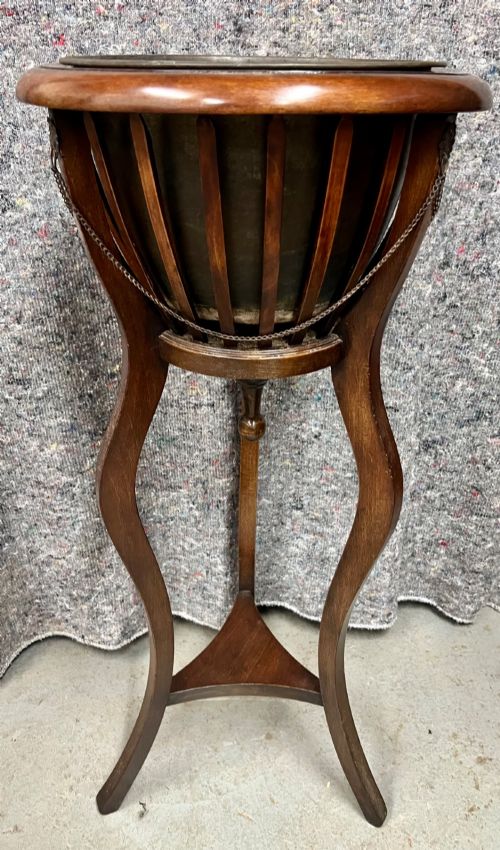
Forms vary from simple columnar stands to coopered barrels and inlaid tripod tables. Object types include plant stands, jardiniere stands, and dedicated planters suited for domestic reception rooms and halls.
How they were made
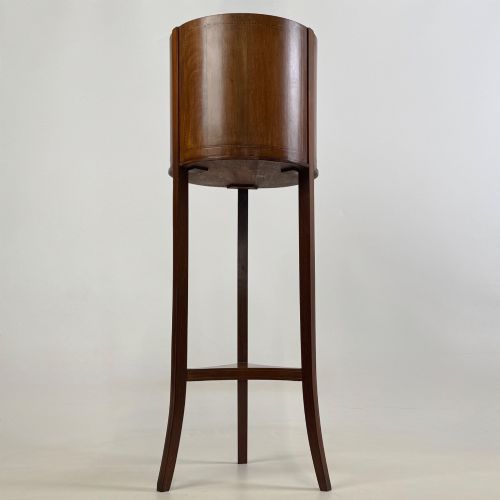
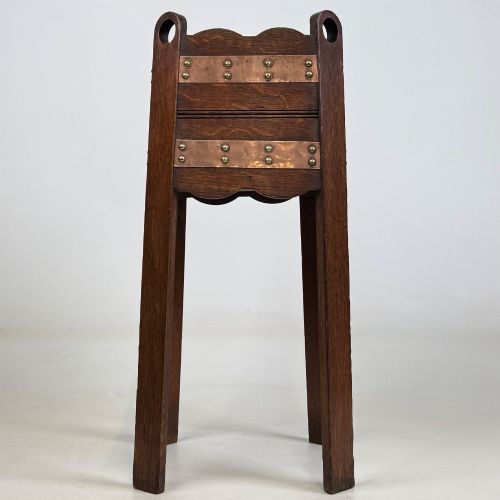
Cabinetmakers utilised dense timbers such as mahogany, walnut and oak, often incorporating boxwood inlay for decorative contrast. Certain examples feature coopered construction, binding wooden staves with brass bands to hold moisture safely.
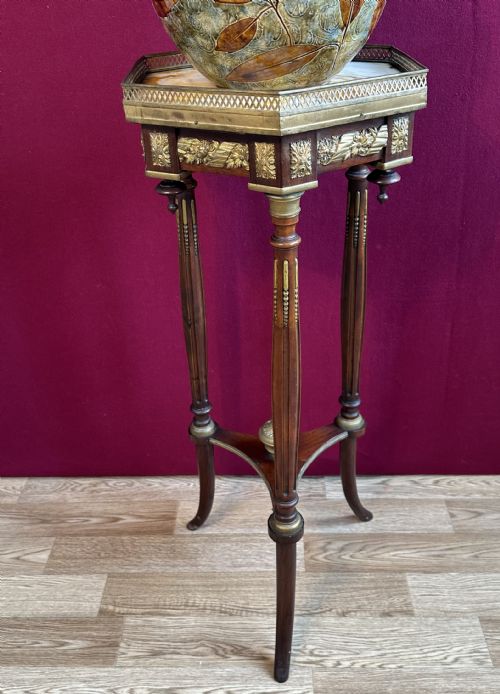
Stonework and metalwork also define the physical structure of these stands, utilising carved alabaster and polished brass alongside traditional woodworking. Surfaces display turned columns, carved details and smooth polished timber finishes.
A bush planter from 1750 stands ready to host indoor foliage with eighteenth-century horticultural style.
What varies in quality
Excellence in these stands rests upon the stability of the frame and the depth of material figure in the timber or stone. Superior examples combine robust joinery with crisp carving and well-executed inlay work.
Simpler utilitarian pieces meet basic domestic requirements, whereas finer decorative models display refined proportions and specialised techniques like coopered staves or intricate boxwood stringing.
The Vintage Indoor Plant Pedestal Glossary
- Jardiniere
- An ornamental pot or stand for holding plants and flowers. These vessels often sit atop dedicated pedestals to showcase interior greenery.
- Coopered
- Constructed from curved wooden staves joined side by side and bound with metal hoops, much like a traditional barrel. This method suits pieces designed to hold damp soil or plants.
- Inlay
- A decorative technique where contrasting materials such as boxwood are inserted into recesses within the primary timber surface. It creates geometric or floral patterns across the top and sides.
- Alabaster
- A fine-grained, translucent stone used for carving decorative objects and architectural stands. It provides a smooth, pale surface that takes a high polish.
Vintage Indoor Plant Pedestal: Frequently Asked Questions
What is a plant pedestal used for?
These pieces elevate potted plants to improve room lighting and showcase botanical displays at a comfortable viewing height. They act as decorative furniture that integrates greenery into interior spaces.
Historically, they held large potted ferns or flowering plants in parlours and drawing rooms, protecting floor surfaces and improving plant health by increasing air circulation.
How do I identify an Edwardian plant stand?
Edwardian stands often feature lighter timbers such as mahogany and oak, frequently decorated with subtle boxwood inlay. They date from the early twentieth century and tend to display refined, slender proportions.
Compare these with heavier Victorian examples which utilise darker walnut and more robust, carved structural elements reflecting mid-to-late nineteenth-century tastes.
Can these stands hold heavy pots?
Many sturdy oak and mahogany pedestals easily support substantial weight, provided the structural joints and base remain firm. Coopered barrel stands and solid timber columns offer particularly stable platforms.
Care should be taken with delicate stone or slender tripod designs to ensure the combined weight of the pot and soil does not compromise balance.
What is a coopered planter?
A coopered planter is built using curved wooden staves held together by metal bands, following traditional barrel-making techniques. This construction method handles moisture effectively.
English oak and brass fittings frequently appear in these barrel-style jardiniere stands, which date predominantly from the Edwardian era.