
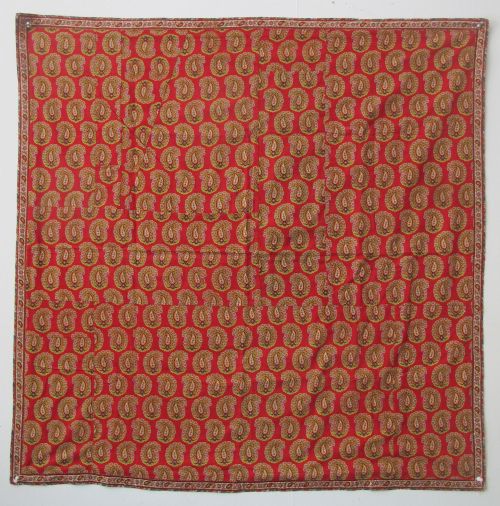


Vintage Indian Wall Panel
These vintage indian wall panel examples bring warmth and narrative to a room, ranging from carved hardwoods to embroidered silks.
Vintage Indian Wall Panel
A vintage indian wall panel search reveals a diverse mix of architectural salvage, framed textiles, and carved woodwork. Buyers encounter items ranging from painted wooden doors and stained hardwood carvings to intricate silk embroideries.
The selection spans from the late nineteenth century through to the early decades of the twentieth century. Traditional motifs, architectural elements, and religious narratives such as Krishna with his wives appear frequently across the pieces.
How They Were Made
Maker techniques rely heavily on traditional woodworking, joinery, and textile embellishment. Woods such as teak, rosewood, walnut, and specimen timbers are carved, inlaid, or assembled into panels and framed mirrors.
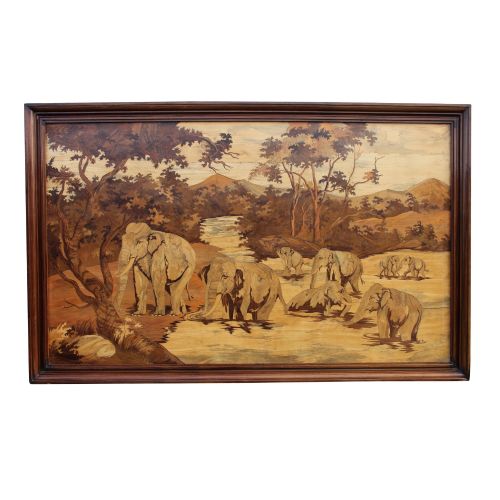
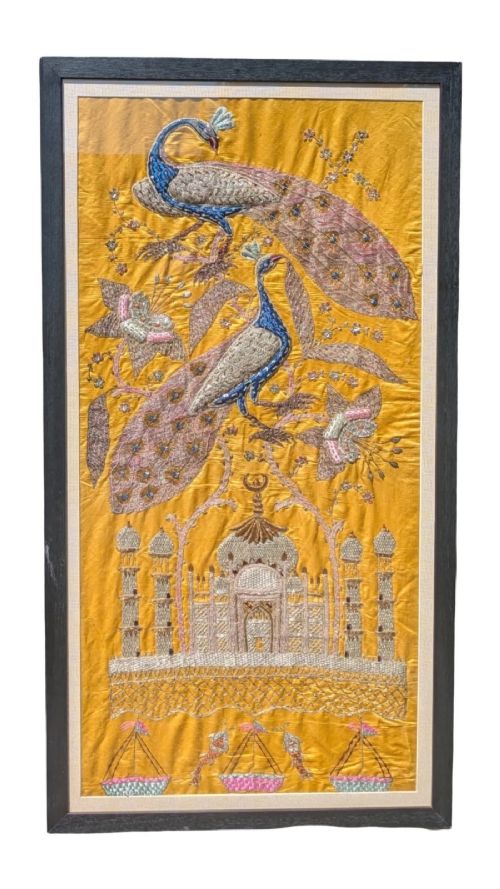
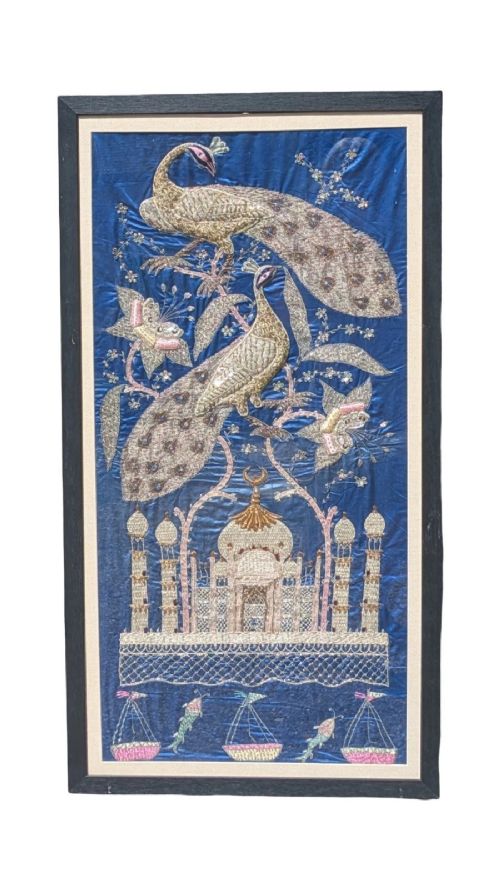
Textile works utilise cotton and silk grounds decorated with blockprinting, painting, or metallic thread embroidery. Velvet grounds also appear, alongside intricate marquetry depicting figures like elephants.
What Varies in Quality
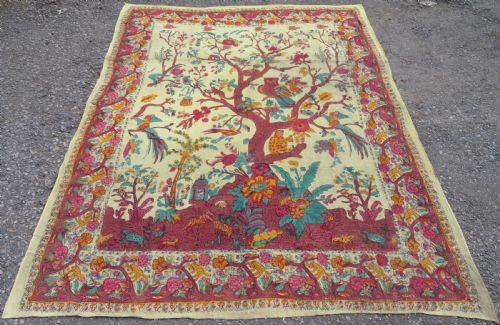
Quality rests on the depth of the carving and the intricacy of the needlework. Finely detailed silk embroidery and precise marquetry indicate superior craftsmanship compared to simpler blockprinted designs.
The preservation of original frames, paint, and organic materials significantly influences the character of each piece. Intact structures and vibrant, undisturbed surfaces elevate the visual impact of the work.
The Vintage Indian Wall Panel Glossary
- Marquetry
- The art of applying pieces of veneer to a structure to form decorative patterns. It involves meticulous cutting and fitting of various woods.
- Palampore
- A large, hand-painted or blockprinted cotton bed cover or hanging. These textiles often feature elaborate tree of life or floral motifs.
- Blockprint
- A technique for printing text, images or patterns onto textiles using carved wooden blocks. This method requires careful alignment for repeating patterns.
- Architectural Salvage
- Building components rescued from demolition or remodelling for reuse. These elements often form the structural basis for decorative wall art.
Vintage Indian Wall Panel: Frequently Asked Questions
How do I hang a heavy wooden panel?
Heavy wooden panels require secure fixings into structural wall studs or appropriate masonry anchors. The weight of teak or hardwood carvings demands robust hardware to ensure safety.
Consulting a professional installer is advisable for particularly large architectural salvage pieces or framed doors.
Are silk textiles sensitive to sunlight?
Silk and cotton embroidery will fade when exposed to direct, strong sunlight over long periods. Placement away from bright windows preserves the original vibrancy of the threads.
Protective glass or UV-filtering framing can further safeguard delicate fabric panels displayed on walls.
What periods do these panels come from?
The available pieces predominantly date from the late nineteenth century through the Edwardian era and the 1930s. This period encompasses traditional craftsmanship alongside diverse regional styles.
Stylistic markers and material types help differentiate nineteenth-century works from later twentieth-century examples.
How do I clean an antique textile panel?
Antique textiles require gentle care, typically limited to very careful surface dust removal with a soft brush. Professional textile conservators should handle any deeper cleaning needs.
Water and standard cleaning agents can cause irreversible damage to aged silk, velvet, and metallic threads.