



Indian Temple Carving
An indian temple carving brings centuries of ritual craft and architectural heritage directly into a modern interior.
Materials and methods
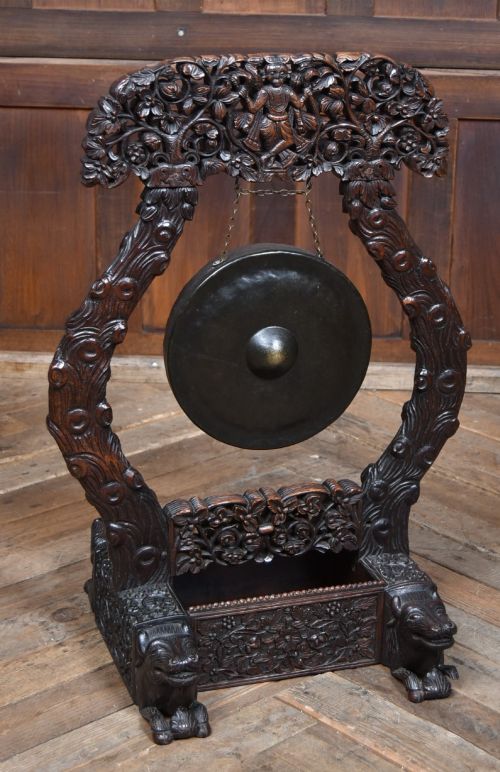
The makers utilised dense hardwoods such as teak alongside sandstone, shaping the medium with hand chisels to create deep relief carvings and freestanding figures.
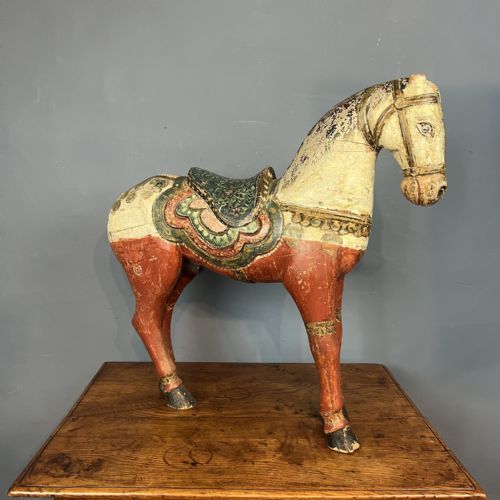
Many surfaces retain traces of historic polychrome paint, stain, or natural weathering, highlighting the tactile grain of the carved wood.
Assessing quality and depth
Quality rests in the sculptural precision of the anatomy and drapery, where master carvers achieved fluid movement within rigid stone or timber blocks.
The significance of the surviving architectural context, such as an intact pediment or an authentic ritual function, elevates the standing of individual pieces.
Historic temple cattle continue watching over modern living rooms through centuries-old wooden Nandi bulls.
The Indian Temple Carving Glossary
- Relief carving
- A sculptural technique where figures project from a flat background. This method defines many architectural panels and decorative friezes.
- Architectural salvage
- Elements rescued from buildings during demolition or renovation. These fragments often include roof decorations and structural brackets.
- Polychrome
- The practice of decorating architectural elements and sculptures in multiple colours. Traces of this pigment frequently survive on older wooden surfaces.
- Nandi
- The sacred bull mount of the deity Shiva. Statues of this animal appear frequently in traditional temple iconography.
Indian Temple Carving: Frequently Asked Questions
How do I hang a heavy wooden carving?
Heavy wooden panels and architectural fragments require robust wall anchoring into structural studs or masonry rather than standard plasterboard fixings.
Employing a professional installer ensures the weight of the timber is safely supported without damaging the historic material.
Are these pieces from actual temples?
Many items originate from sacred structures, shrines, and ancestral homes, serving ritual, decorative, or structural purposes within their original settings.
Architectural salvage pieces typically entered circulation during building clearances or modernization projects across various regions.
How should I clean historic carved wood?
Dust surfaces gently using a dry, soft-bristled brush to remove accumulation from deep crevices without disturbing fragile paint or dry timber.
Avoid applying water, chemical polishes, or modern waxes that might seal the historic pores or alter the natural patina.
How can I tell stone from wood pieces?
Stone examples, such as early sandstone reliefs, display mineral weight, cooler temperatures to the touch, and carved crystalline surfaces.
Wooden items reveal organic grain patterns, tool marks from hand chisels, and lighter relative mass compared to architectural stone.