





Vintage Imari Porcelain Plates
Vintage imari porcelain plates bring rich palettes of iron red, cobalt blue and gold leaf to the table, and collectors prize them for their striking decoration.
Vintage Imari Porcelain Plates
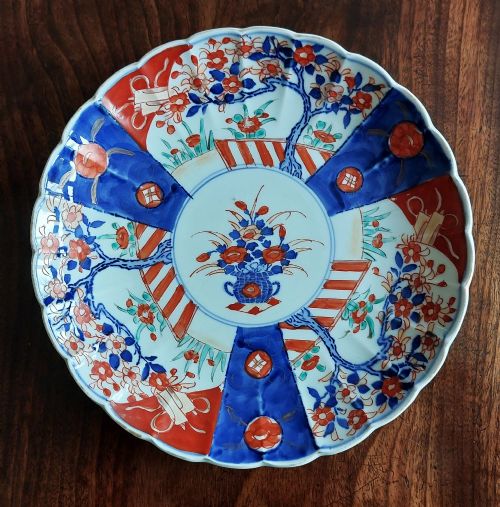
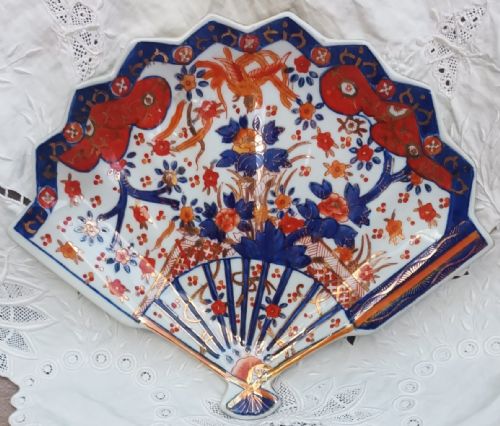
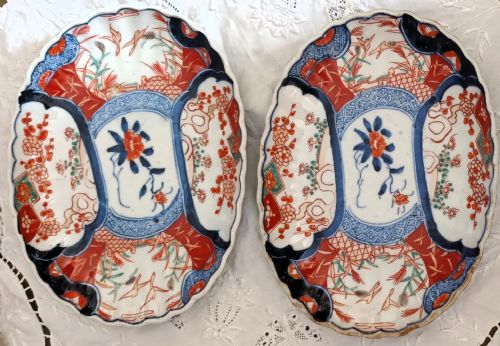
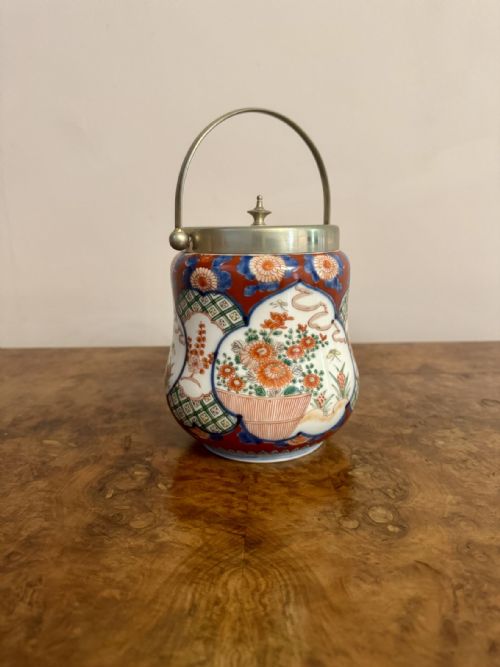
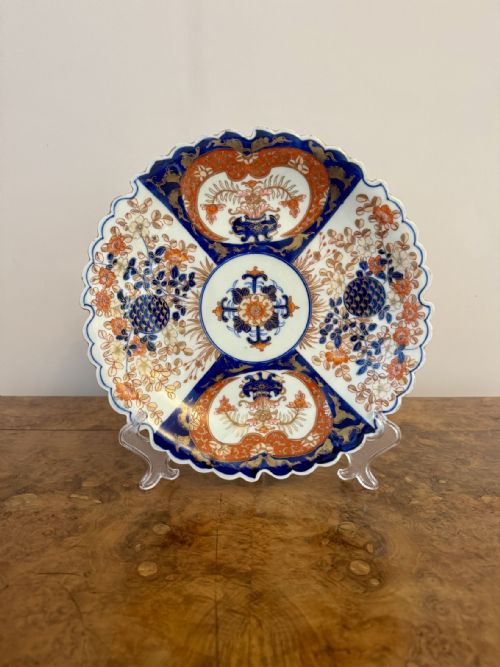
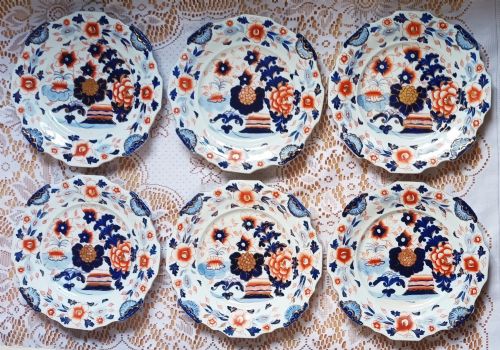
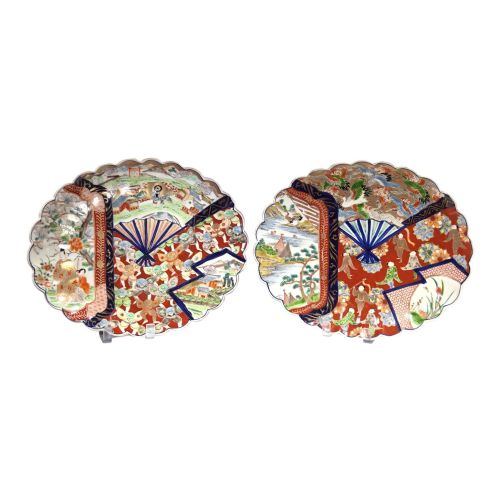
Vintage imari porcelain plates encompass both imported Japanese wares from the Meiji period and English interpretations produced during the nineteenth century. Buyers searching this phrase most frequently encounter Japanese chargers and decorative plates featuring traditional scalloped edges, square forms and circular charger shapes. English factories also adopted the distinctive palette on ironstone and ceramic bodies, creating services that echoed the aesthetic.
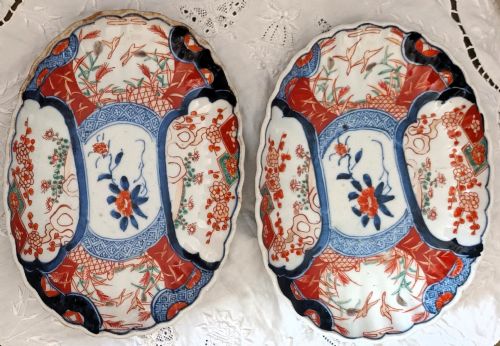
The objects span periods from the nineteenth century through the early decades of the twentieth century, with many examples originating around nineteen hundred. Forms range from single decorative dishes and large chargers depicting motifs such as the Seven Lucky Gods to matched pairs and dessert services. Each piece displays the characteristic cobalt underglaze combined with overglaze enamel colours.
Origin plays a defining role in identifying these items, separating traditional Japanese production centres like Arita from British makers. The surface ornamentation remains the primary identifier, uniting disparate forms under a shared visual language of cobalt, red and gilt.
How they were made
Potters shaped porcelain, ceramic and ironstone bodies before applying cobalt blue pigments under the glaze, followed by high-temperature firing. Artisans then added overglaze enamels in iron red alongside accents of gold leaf and gilding to complete the intricate patterns.
Hand painting governed the decoration of these plates and chargers, ensuring individual character across square plates, scalloped dishes and round chargers. Enamel colours sat above the glaze layer, creating a distinct tactile contrast against the smooth white porcelain beneath.
Listings include porcelain, enamel, gold leaf, glaze, ceramic, gilt, gilding and ironstone across periods spanning the eighteenth, nineteenth and twentieth centuries.
What varies in quality
Precision and crispness in the hand-painted brushwork separate standard examples from superior specimens. The depth of the cobalt blue underglaze and the richness of the gold leaf application determine the visual impact of the decoration.
Structural complexity such as scalloped moulding, unusual square shapes or large charger diameters demands greater skill from the potter. Preservation of the overglaze enamels and original gilding across decades of handling dictates the standing of individual pieces.
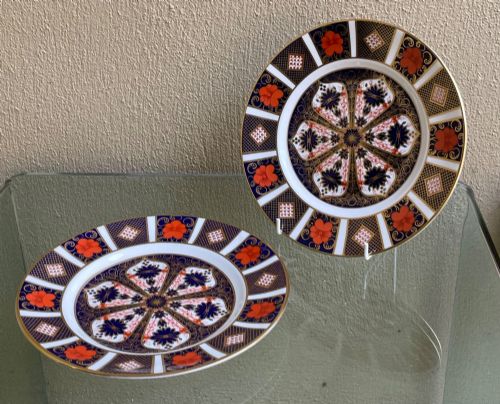
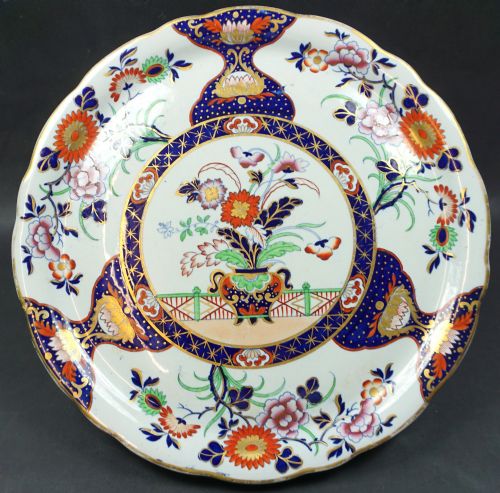
Royal Crown Derby·Hicks And Meigh
The Vintage Imari Porcelain Plates Glossary
- Charger
- A large decorative plate or dish, typically measuring over twelve inches in diameter, designed for display on a wall or sideboard rather than daily dining.
- Meiji Period
- The era in Japanese history spanning from eighteen sixty-eight to nineteen twelve, associated with the opening of trade and prolific porcelain export.
- Ironstone
- A durable type of heavy ceramic developed in nineteenth-century Britain as a robust alternative to imported oriental porcelain.
- Overglaze
- Enamel decoration applied to the surface of fired and glazed ceramic, then fixed at a lower temperature than the initial glaze firing.
- Arita
- The Japanese town and surrounding region renowned as the historic heartland of porcelain production and the source of exported imari wares.
Vintage Imari Porcelain Plates: Frequently Asked Questions
How do I hang a heavy charger?
Large chargers require robust wall fixings and wire plate hangers designed to distribute weight evenly across the rim. Ensure the mounting secures the base firmly without putting pressure on the delicate porcelain body.
Position the display away from high traffic areas and direct heat sources to protect the overglaze enamels and gold leaf details from accidental impact.
Are these plates safe for daily dining?
Most vintage imari porcelain plates feature delicate overglaze enamel and gold leaf decorations that suffer from the abrasion of cutlery and frequent washing. Hand washing in lukewarm water preserves the painted surface.
Utilise them for special occasions or display them as decorative art rather than everyday tableware to prevent wear on the historical pigments.
How can I tell Japanese imari from English imari?
Japanese examples usually utilise a finer porcelain body with cobalt blue painted under the glaze alongside iron red and gold enamels. English interpretations often appear on heavier ironstone ceramic bodies marked by nineteenth-century Staffordshire potteries.
Examining the foot ring and the weight of the piece helps clarify the origin, as British ironstone feels substantially heavier than traditional oriental porcelain.
What does imari style mean?
The term refers to a specific decorative scheme originating in Japan that combines deep cobalt blue, iron red enamel and gold leaf in intricate floral and geometric panels. English and European factories subsequently copied this distinctive aesthetic.
Pieces described in this style borrow the colour palette and compositional layout of traditional Japanese exports while often employing local ceramic techniques.