


Vintage Hunting Equestrian Print
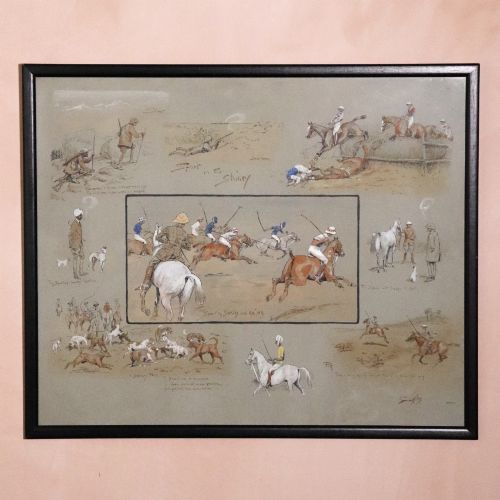
These vintage hunting equestrian print pieces capture the motion and tradition of field sports through works created across the nineteenth and twentieth centuries.
Vintage Hunting Equestrian Print
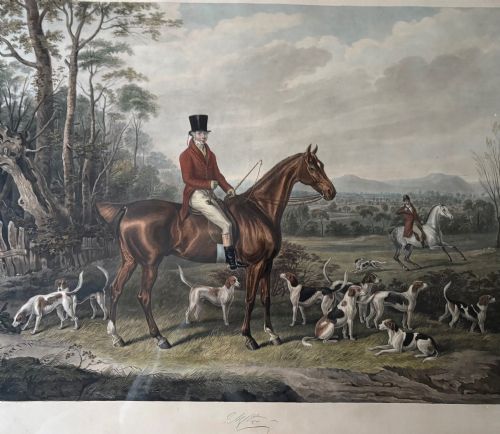
A vintage hunting equestrian print brings traditional field sports into domestic interiors through framed works originating in the nineteenth and early twentieth centuries. Buyers examine framed engravings, lithographs, and watercolours depicting hounds, riders, and rural chases.
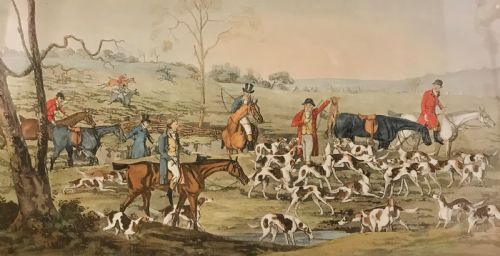
The selection includes hand-coloured engravings by publishers and artists working within British sporting art traditions. Pieces range from single plates to sets documenting sequences like the Quorn, Belvoir, and Cottesmore hunts.
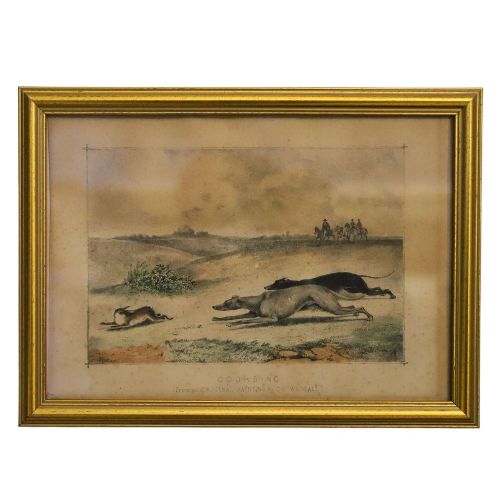
Framed wall art and original prints dominate the assortment, often retaining period framing in wood or giltwood. Subjects focus closely on fox hunting, coursing, and racing scenes from Victorian and Edwardian periods.
Materials and Techniques
Makers utilised paper supports for engravings, lithographs, and watercolours, frequently applying hand-colouring in watercolour or ink over printed outlines. Many plates were published by specialists and subsequently framed behind glass.
Frames rely on wood, gilt wood, and giltwood construction to protect and display the works on paper. Selected pieces incorporate gold leaf highlights and are paired with wax seals or archival book materials.
One hunting breakfast scene plate hints that nineteenth-century riders required substantial sustenance before chasing foxes across Leicestershire.
Assessing Quality
Quality rests upon the crispness of the original impression and the preservation of the paper substrate beneath the glass. Early printings maintain fine plate marks and sharp linework that later impressions lose.
The presence of contemporary hand-colouring separates standard mass-produced plates from superior watercoloured works. Original framing materials and clear signatures by known artists elevate the standing of individual items.
Charles Johnson Payne Snaffles·Francis Calcroft Turner·J F Herring·Frank Algernon Stewart·C H Weigall
The Vintage Hunting Equestrian Print Glossary
- Aquatint
- A printmaking technique that produces tonal areas resembling watercolour washes. It was frequently used in sporting art to render atmospheric landscapes.
- Lithograph
- A planographic printing method based on the repulsion of oil and water. Artists drew directly on stone to capture fluid lines in hunting scenes.
- Chromolithograph
- A colour lithographic printing process using multiple stones. This technique allowed publishers to produce vibrant multi-coloured sporting plates.
- Engraving
- A method of cutting design lines directly into a metal plate with a burin. It yields precise, permanent details visible in nineteenth-century sporting prints.
- Sporting Art
- A genre dedicated to depicting animals, field sports, and rural pursuits. It forms the core artistic classification for these equestrian works.
Vintage Hunting Equestrian Print: Frequently Asked Questions
How should I hang these prints?
Keep framed pieces out of direct sunlight to protect the paper and any hand-applied watercolour pigments from fading over time.
Group related sets together on neutral walls to recreate the traditional aesthetic of a nineteenth-century country house interior.
Are these works original period pieces?
The collection spans nineteenth and early twentieth-century printmaking, featuring original engravings, lithographs, and watercolours from those eras.
Check individual listings for specific publication dates and artist attributions recorded from the plate margins.
What framing is typically included?
Many works arrive in period wood, giltwood, or glass-fronted frames that complement the traditional character of the art.
Review the specific description for each piece to confirm whether the frame is contemporary to the print or a later addition.
How do I identify different print types?
Engravings display subtle plate impressions in the paper where the metal plate pressed down during the printing process.
Lithographs and chromolithographs present smoother surface textures without deep plate indentation, often showing fine dot patterns under magnification.