

Vintage Hunting Art
Vintage hunting art encompasses oil paintings, watercolours, prints and carved wooden decoys celebrating field sports.
Vintage Hunting Art
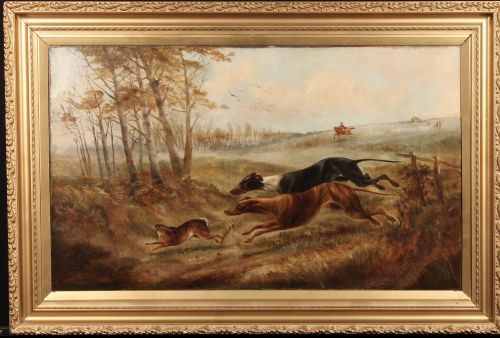
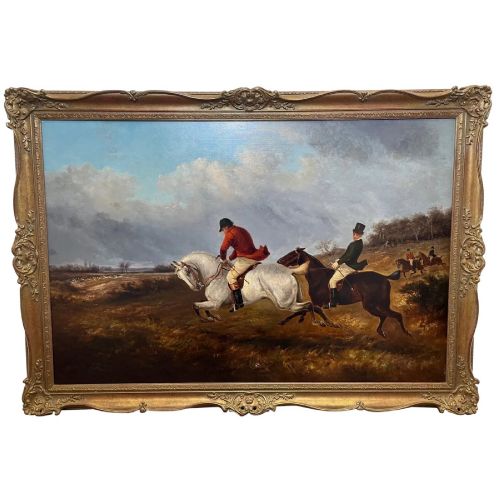
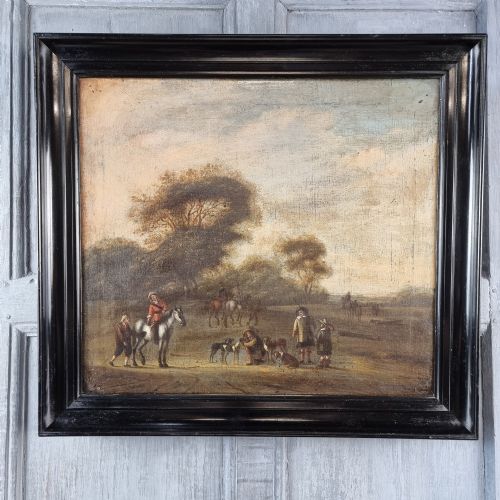
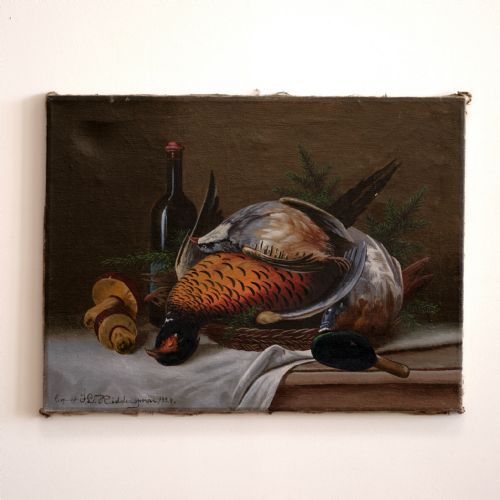
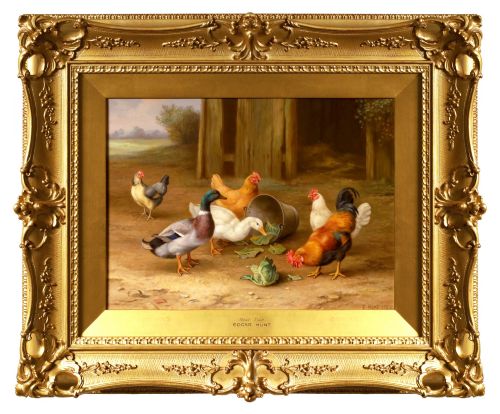
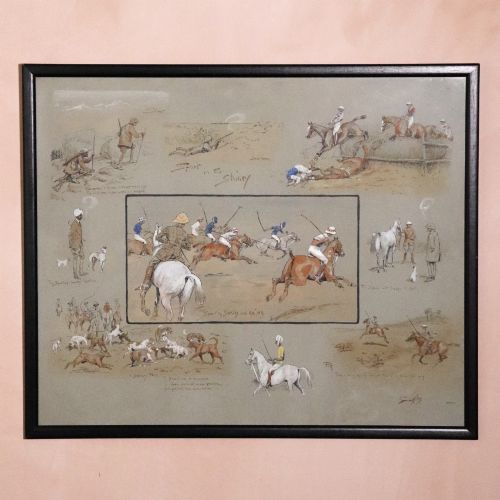
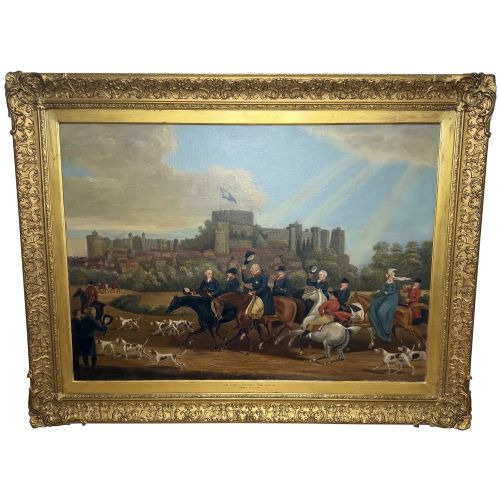
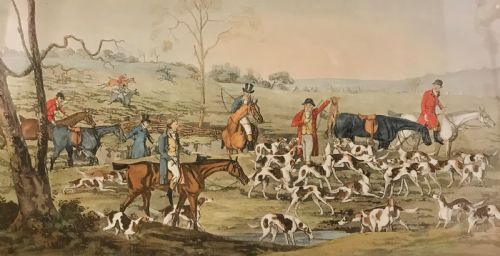
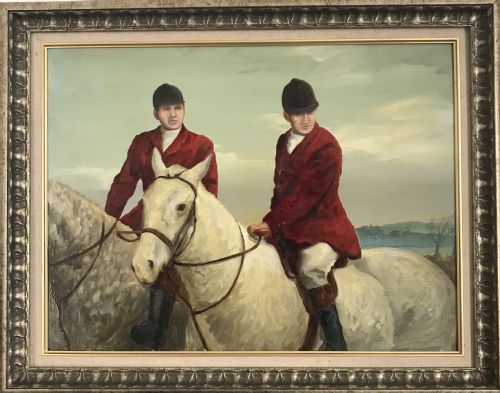
Vintage hunting art captures the traditional pursuits of field sports through various media including oil paintings, watercolours, lithographs and framed prints. These works portray hound packs, horses, riders, and game across rural landscapes.
The selections on this page span several periods, with Victorian and Edwardian sporting art forming a significant portion of the offerings. Buyers encounter framed canvas works alongside carved wooden duck and pigeon decoys.
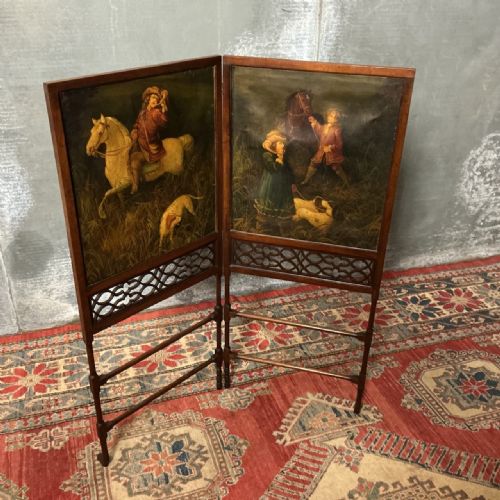
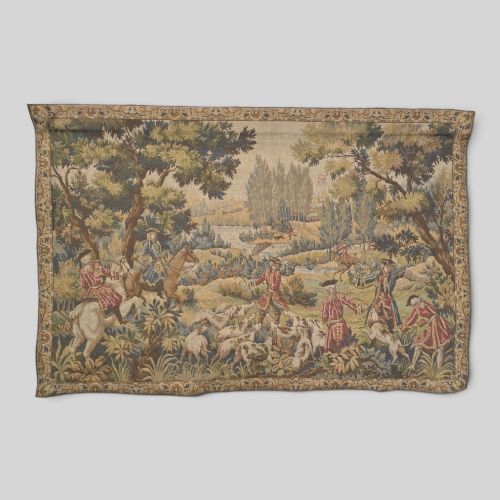
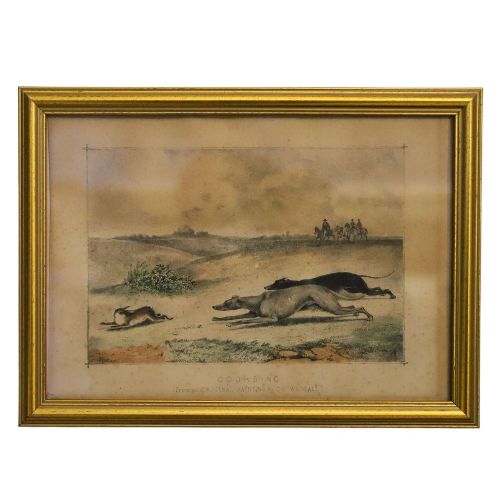
Subjects range from fox hunting scenes and hare coursing to individual portraits of pointers and hounds. Alongside paintings, decorative objects such as tapestries and carved trophies represent the theme.
Materials and Techniques
Oil paint on canvas is a primary medium for equestrian and hound paintings, utilising layered pigments to render horses, riders and changing light in landscapes. Watercolours and hand-coloured engravings on paper offer finer illustrative detail.
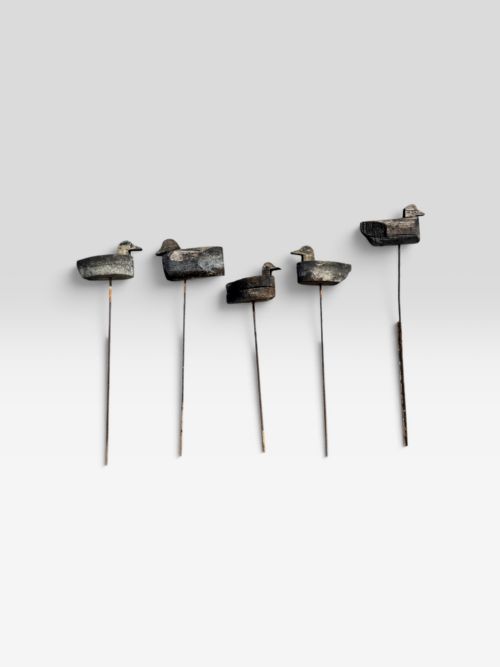
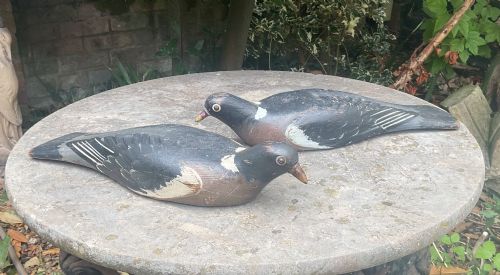
Carved wood provides the material for three-dimensional duck, goose and pigeon decoys, often finished with painted surface details. Gilt wood frames frequently house the paintings and prints of the period.
Wooden decoy pigeons carved around nineteen hundred now rest peacefully on tables instead of luring birds in muddy fields.
Distinguishing Quality
Quality rests in the anatomical accuracy of horses and hounds, the artist's handling of movement, and the preservation of the canvas or paper surface. Works by recognised painters command attention for their accomplished brushwork.
In wooden decoys, the strength of the carving, original paint preservation and authentic surface wear determine the standing of the piece. Framed prints depend on the clarity of the impression and the vibrancy of hand colouring.
George Armfield·Thomas Smythe·Edgar Hunt·C H Weigall·John Frederick Herring Senior·Thomas Hicks·Arthur Wardle·George Wright·Basil Nightingale·Philip Henry Rideout·Michael Lyne·Henri Joseph Pauwels·Rene Lalique
The Vintage Hunting Art Glossary
- Hare coursing
- The pursuit of hares with greyhounds running by sight rather than scent. This subject appears in nineteenth century lithographs and paintings.
- Decoy
- A carved wooden bird utilised by hunters to attract wildfowl. Examples include painted wooden ducks, geese and pigeons.
- Lithograph
- A print produced from a flat stone or metal plate treated to retain ink. These methods reproduced sporting art for broader distribution.
- Aquatint
- An etching technique that produces tones resembling watercolours. This process was common in coloured sporting prints.
- Sporting art
- Depictions of rural pastimes, horses, hounds and field sports. The genre encompasses paintings, drawings and engravings.
Vintage Hunting Art: Frequently Asked Questions
What periods do these pieces date from?
The works span from the seventeenth century through the Victorian and Edwardian eras into the mid twentieth century.
Most items originate from the nineteenth and early twentieth centuries, reflecting the height of traditional sporting art production.
How were hunting decoys used?
Carved wooden ducks, geese and pigeons were placed on water or fields to lure wildfowl within range of hunters.
These working objects now function as decorative folk art items.
What subjects appear most often?
Fox hunting scenes with horses and hounds dominate the paintings and prints, alongside individual portraits of pointer and hound dogs.
Other common subjects include coaching scenes, hare coursing and game birds.
How do I care for antique paintings?
Keep oil paintings and watercolours away from direct sunlight and steady humidity levels to protect canvas and paper.
Dust carved wooden items gently with a dry cloth without using liquid cleaners.