



Vintage Hoshiarpur Table
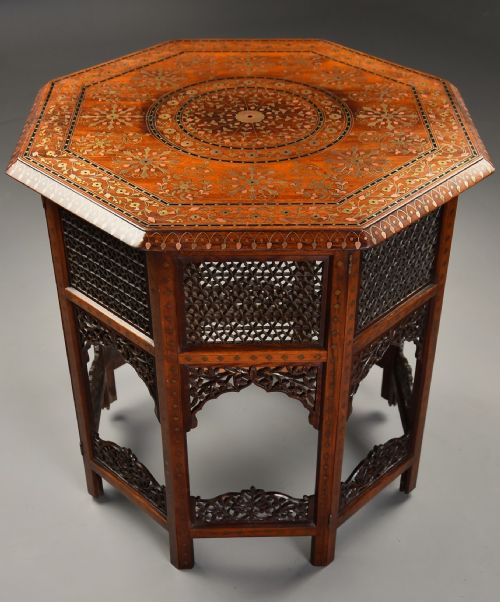
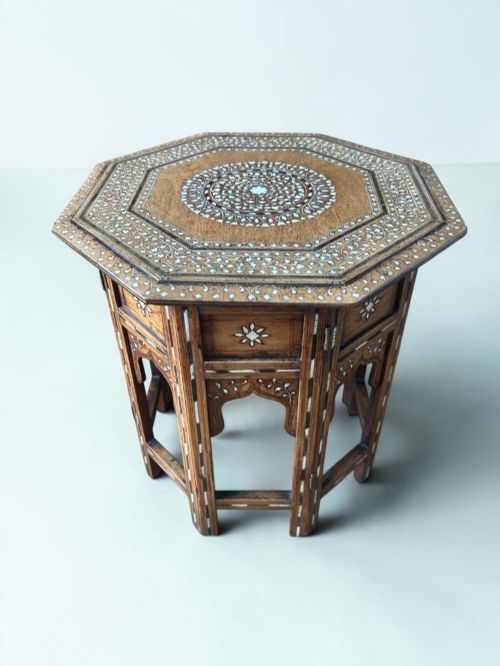
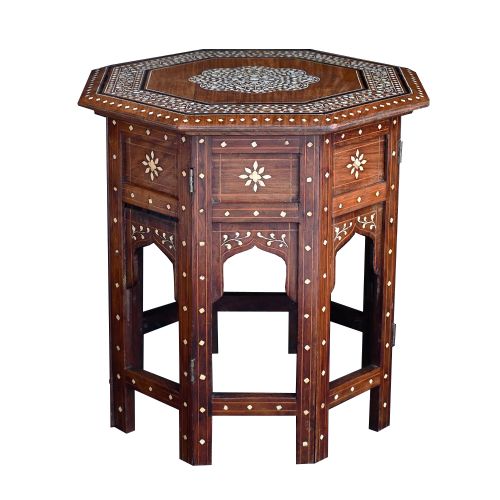
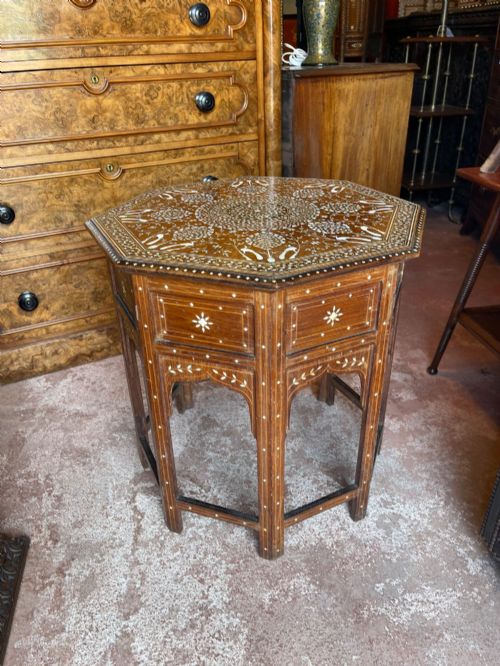
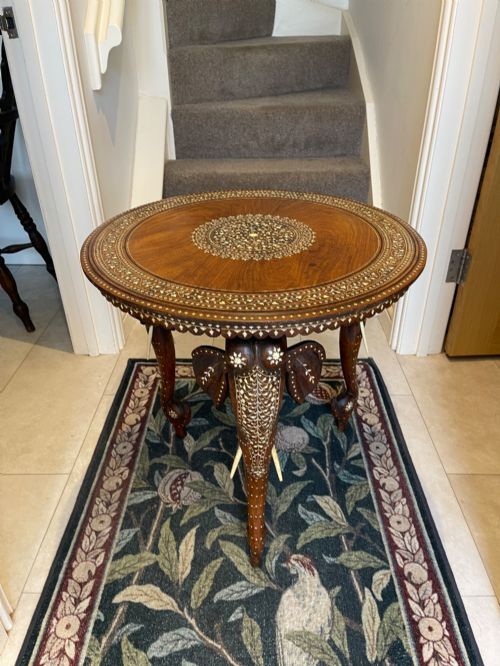
A vintage hoshiarpur table brings intricate craftsmanship into a room through dense carving and fine inlay work.
Vintage Hoshiarpur Table
When searching for a vintage hoshiarpur table, you encounter pieces that originate from North India during the nineteenth and early twentieth centuries. These items fall under the Anglo-Indian style, blending traditional Indian woodworking methods with forms suited to British colonial tastes.
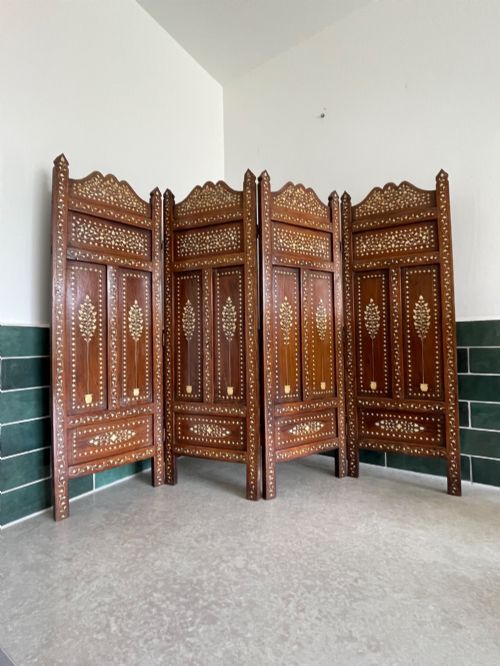
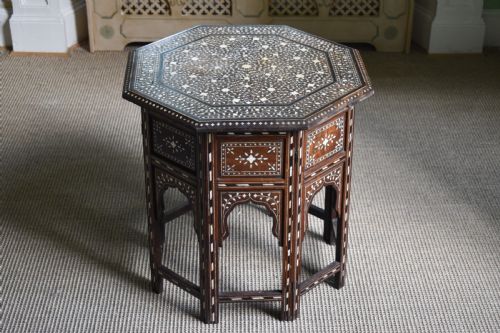
The most common forms on this page are octagonal occasional tables, alongside side tables, tripod tables, and occasional table screens. Many examples feature specialised shapes, including elephant tables and pedestal tables designed for domestic display.
Dating across the listings ranges from the mid nineteenth century through to the 1920s. These pieces demonstrate the rich export tradition of Hoshiarpur craftsmanship during the Victorian and Edwardian eras.
How they were made
Makers constructed these tables using dense timbers such as teak, rosewood, and hardwood as the primary structural body. Artisans carved these woods deeply to create continuous floral and geometric surface patterns across the entire structure.
Inlay work defines the aesthetic, incorporating materials like bone and brass into the timber base. Some pieces also employ ebony inlay to create sharp contrast against the lighter wood tones.
Vintage Hoshiarpur Table Retail Price Guide 2026
Typical asking prices for vintage hoshiarpur table among the pieces listed under this phrase on Sellingantiques today, from the lower quarter to the upper quarter. They describe what is for sale here now, not the wider market.
Listings span from the 1860s to the 1920s, utilising teak, rosewood, bone inlay, and brass inlay within the Anglo-Indian style.
What varies in quality
Quality rests upon the density and precision of the carving across the timber surface. Superior examples maintain crisp, deep relief work without shallow cutting or smoothed details.
The integration of the inlay work further separates categories. Finest pieces exhibit precise fitting of bone and brass elements directly into the wood ground with minimal filler material.
The Vintage Hoshiarpur Table Glossary
- Anglo-Indian
- A design style produced in India during the British colonial period for export and domestic use. It combines traditional local motifs with Western furniture forms.
- Bone inlay
- A decorative technique where small pieces of bone are shaped and set flush into recesses carved in wood. This method creates pale, contrasting geometric or floral patterns.
- Octagonal occasional table
- A small movable table featuring an eight-sided top. This shape is characteristic of Hoshiarpur production.
- Table screen
- A folding or standing decorative panel designed to sit on a tabletop rather than the floor. These items share the carved and inlaid vocabulary of matching tables.
Vintage Hoshiarpur Table: Frequently Asked Questions
What is a hoshiarpur table?
A hoshiarpur table is a piece of wooden furniture originating from the Punjab region of India, specifically the town of Hoshiarpur. They are known for dense surface carving and inlaid details.
These items were produced primarily during the nineteenth and early twentieth centuries for both local use and the British export market.
What materials are used?
The primary structure consists of tropical hardwoods such as teak and rosewood. Artisans selected these woods for their ability to hold intricate carved detail.
Surfaces are frequently decorated with contrasting elements made from bone, brass, or ebony set directly into the timber.
How do I date a hoshiarpur table?
Dating relies on stylistic clues and construction methods spanning the nineteenth and early twentieth centuries. Evidence on this page includes pieces marked to specific decades from the 1860s through to the 1920s.
Earlier examples often display heavier timber construction, while later pieces can feature refined brass and bone inlay work.
How should I live with one?
These tables function well as occasional pieces in a living space or study, holding lamps or small objects. Their detailed surfaces reward close inspection.
Maintenance involves gentle dusting and avoiding placement in direct sunlight or overly dry environments to protect the inlaid materials.